Welcome to your next lesson in the Investment Due Diligence module.
In our previous session, we designed a systematic, four-stage due diligence process, creating a playbook to guide your investment decisions. We identified four key pillars for evaluation: Team, Market, Product/IP, and Legal. We also established that for pre-seed startups, the Team is by far the most critical pillar.
This lesson is a deep dive into that first pillar. Our learning outcome is to evaluate founder capabilities, coachability, and team dynamics from an investor's perspective. With your background in consulting startups, you have significant experience working with founders. Today, we'll build on that by shifting your perspective from that of a consultant helping a founder, to that of an investor evaluating them as a potential investment. This distinction is crucial for your success as a solo GP.
1. The Primacy of the Team in Early-Stage Investing
At the pre-seed stage, you are not investing in a spreadsheet with predictable cash flows. You are investing in a group of people with an idea and the ambition to build something massive. The product will change, the market will evolve, and the initial business plan will almost certainly be wrong in some aspects. The only constant is the founding team. Their ability to learn, adapt, and execute is what you are betting on.
Let's begin with a short clip that underscores why the team is the central focus of early-stage due diligence.
[VC Unlocked] The Basics of Due Diligence
In this segment from '[VC Unlocked] The Basics of Due Diligence' by 500 Global, the speaker highlights the key areas of focus for early-stage investors, emphasizing the team's importance.
Watch from 11:23 to 13:05. Note the speaker's conviction when he says, 'You really want to make sure you feel comfortable with the team and you believe in the team... diligence related to that area is absolutely key.'
This sentiment—that you are ultimately betting on the people—is the core philosophy of pre-seed investing. Every interaction, from the first email to the final negotiation, is a data point in your evaluation of the team.
This requires a specific mindset, one that's different from a founder's.

As an investor, you must look past the technical details of the product and assess the commercial viability and, most importantly, the capabilities of the people driving it.
2. A Framework for Founder Evaluation
To move beyond a "gut feeling" and into a structured assessment, we need a framework. A systematic approach ensures you evaluate every team consistently and thoroughly.
The following article provides a comprehensive and practical framework for assessing founders, which we will use as the foundation for this lesson.
How to Assess Founders During Due Diligence
The article 'How to Assess Founders During Due Diligence' by Allied Venture Partners breaks down founder evaluation into five key criteria. It's a great roadmap for structuring your thinking.
Please read the section 'Key Criteria for Evaluating Founders.' As you read, focus on understanding the five main criteria: Experience and Track Record Skills and Capabilities Commitment and Motivation Team Dynamics and Collaboration Vision and Market Alignment
Let's use these five criteria to structure our deep dive.
Experience, Skills, and Commitment
This is about determining if the founders have the raw materials to succeed.
- Experience & "Founder-Market Fit": Does the team have unique insights into the problem they are solving? As the article notes, this doesn't strictly mean prior entrepreneurial success. It could be deep domain expertise from a previous job, academic research, or even a personal passion that gives them an "unfair advantage" in understanding the customer.
- Skills: A balanced team often combines technical expertise (the ability to build the product) with commercial acumen (the ability to sell it). A key skill to assess is their ability to attract talent and capital. Can they tell a compelling story that makes others want to join them on their journey?
- Commitment: This is non-negotiable. As an investor, you need to see that the founders are all-in. Are they working full-time? Have they invested their own time and money (bootstrapping) to get the venture off the ground? This signals conviction and aligns their interests with yours.
The 500 Global video provides a concise summary of what to look for in this area.
[VC Unlocked] The Basics of Due Diligence
Let's revisit the 500 Global video, where the speaker details specific diligence items related to the team.
Watch the clip from 13:05 to 15:47. Pay attention to the questions raised about background checks, relevant experience, and the founder's level of commitment to see the business through challenges.
Team Dynamics
A startup is an intense, high-pressure environment. How the founding team interacts, communicates, and makes decisions is a strong predictor of their ability to survive challenges.
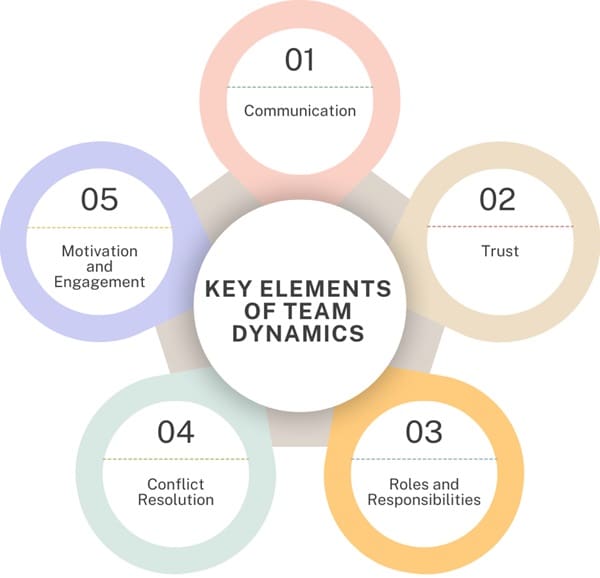
During your diligence meetings, you are an observer of these dynamics in real-time.
- How do they communicate? Do they speak over each other, or do they build on each other's points?
- Are roles clear? Who is the ultimate decision-maker (the CEO)?
- How is equity split? As the Allied VC article notes, highly unequal splits can be a red flag for unresolved tension. A ~10-20% larger stake for the CEO is common, but a 90/10 split between two co-founders warrants serious questions.
- How do they handle disagreement? Ask them directly: "Tell me about a time you two had a significant disagreement about the business. How did you resolve it?" Their answer is far more revealing than asking if they get along.
Vision, Adaptability, and Coachability
A strong vision is important, but in a startup, adaptability is paramount. The market provides feedback, and founders must be willing to listen and adjust. This is the essence of coachability.
A founder who is resistant to feedback, defensive when challenged, or believes they have all the answers is one of the biggest red flags for an early-stage investor. As their investor and board member, your primary role will be to provide guidance and perspective. If they aren't open to it, you cannot add value beyond your capital.
Here's a direct take on why a lack of coachability can be a deal-killer.
[VC Unlocked] The Basics of Due Diligence
In this final clip from the 500 Global video, the speaker answers a question about what can kill a pre-seed deal. His answer is laser-focused on this trait.
Watch from 43:43 to 45:03. Listen to how he frames a team's response to being challenged on their assumptions as a critical test.
You can test for coachability throughout the diligence process. When you question their market size assumption or their go-to-market strategy, observe their reaction. Do they dismiss your point, or do they engage with curiosity and thoughtfulness? The latter is the mark of a coachable founder.
3. Identifying Red Flags
Just as important as identifying positive traits is knowing what warning signs to look for. Your experience as a consultant has likely exposed you to many of these, but now you need to view them through the lens of investment risk.
Why VCs and Angel Investors Say "No" to entrepreneurs | Alicia Syrett | TEDxFultonStreet
In this TEDx talk, investor Alicia Syrett gives a rapid-fire overview of common reasons investors say 'no.' Many of these are behavioral red flags related to founder character and judgment.
Watch from 03:07 to 06:05. Pay attention to the themes of integrity ('character matters') and interpersonal fit ('fit matters'). These are powerful signals you can pick up during your interactions.
Beyond these behavioral red flags, there are more systematic ones to look for.
How to Assess Founders During Due Diligence
The Allied VC article provides an excellent checklist of common red flags that suggest deeper issues.
Read the section 'Common Red Flags.' Note how these connect to the core criteria we discussed earlier (e.g., 'team instability,' 'market disconnect,' 'lack of adaptability').
4. Special Consideration: Evaluating AI Founders
Given your goal of launching an AI-focused accelerator, you need an additional layer in your evaluation framework. AI startups have unique challenges and opportunities, which require a specific blend of founder skills.
Evaluating Ai Founding Teams: Technical Vs Business Acumen ...
This report on 'Evaluating Ai Founding Teams' offers a sophisticated perspective on the balance between technical and business skills required to build a successful AI company.
Read the introduction and the first long paragraph that details the six key predictors of success. Focus on understanding the concepts of 'compositional balance,' the importance of a 'data strategy,' and 'governance, ethics, and risk management' as non-negotiable elements.
For an AI startup, you must assess:
- Technical Depth vs. Business Acumen: Is there a true technical expert on the team who understands the models and data, paired with someone who can build a go-to-market strategy? A team of only PhDs may struggle to sell, while a team of only salespeople with a superficial AI layer will have no defensible moat.
- Data Strategy: How are they acquiring, labeling, and protecting their data? A unique and proprietary dataset can be a more powerful competitive advantage than the model itself.
- Ethical & Risk Posture: Do the founders understand the risks associated with their AI (e.g., bias, security, privacy)? A team that is thoughtful about governance is more likely to build a sustainable, enterprise-ready company.
5. From Theory to Practice: How to Gather Information
You've learned what to look for. But how do you get this information? The process is a combination of direct interaction and indirect verification.
The Allied VC article outlines a clear, step-by-step process.
How to Assess Founders During Due Diligence
Let's return to the Allied VC article for a final, practical guide on how to execute this evaluation.
Quickly read the section 'Step-by-Step Process for Founder Evaluation.' Focus on the four main activities: Initial Screening, Background and Reference Checks, In-Depth Interviews, and Scenario Testing.
Here are some pro-tips for two of the most critical steps:
-
Reference Checks: Don't just ask "Is she a good leader?". Ask targeted, behavioral questions:
- "What is the one thing you think [Founder's Name] could improve on?"
- "Tell me about a time you saw them handle immense pressure."
- "On a scale of 1-10, how would you rate their ability to recruit top talent? Why that score?"
- The best references are often from former direct reports, not just previous bosses.
-
Scenario Testing: During your interviews, pose hypothetical challenges:
- "Imagine your largest customer, representing 40% of your revenue, churns tomorrow. What are the first three things you do?"
- "A major competitor just raised $20M and is offering your product for free. How do you respond?"
- The goal isn't to get the "right" answer, but to see their thought process, how they handle pressure, and their strategic creativity.
Test your understanding!
You are interviewing a two-person founding team. The CEO is polished and answers all your strategic questions, while the CTO is quiet and only speaks when asked a direct technical question. After the meeting, the CEO follows up with a thank-you note, but you hear nothing from the CTO. What are your initial hypotheses, and what would be your next step?
Show answer
This is a common scenario. Here are a few initial hypotheses:
- Role Specialization: This could simply be a team with clearly defined roles. The CEO handles investor relations, and the CTO focuses on product. This isn't necessarily a red flag.
- Imbalance in Vision/Commitment: The CTO might not be as engaged in the business/fundraising side, which could be a risk. Is the CEO "dragging" the CTO along?
- Communication/Dynamic Issues: The CTO might be uncomfortable with the CEO's narrative or feel unable to contribute. This could signal a deeper communication problem.
Next Step: Your goal is to test these hypotheses. You should request a follow-up call specifically with the CTO, perhaps framed as a "deeper technical dive." This gives you a chance to:
- Hear the CTO describe the vision and strategy in their own words.
- Assess their passion for the business beyond the technology.
- Ask them directly about their working relationship with the CEO and how they handle disagreements.
This direct interaction is crucial to determine if the dynamic is a functional specialization or a potential point of failure.
Conclusion
You now have a comprehensive framework for evaluating what is arguably the most important asset of any pre-seed startup: its founders. Your role as an investor is to be a skeptical optimist—believing in the potential while rigorously testing every assumption.
Key Takeaways:
- At the pre-seed stage, the investment is primarily a bet on the team's ability to execute, learn, and adapt.
- A structured evaluation should cover five key areas: Experience, Skills, Commitment, Team Dynamics, and Vision/Coachability.
- Coachability—the willingness to accept and act on feedback—is a critical, testable trait that strongly correlates with success.
- Identifying red flags, both behavioral and operational, is as important as finding strengths.
- For AI startups, you must add a layer of diligence focusing on the team's compositional balance, data strategy, and ethical posture.
Preview of the Next Lesson
We have completed our deep dive into the "who" of due diligence. Now, we will turn our attention to the "where" and "what." In the next lesson, we will tackle the second pillar of our diligence process: "Assess market size, competitive landscape, and go-to-market strategy for scalability."