Hello! Welcome to the first lesson in our module on Investment Due Diligence.
In our last lesson, we configured a CRM to manage your deal flow, establishing a pipeline with clear stages. We ended with a crucial question: once a promising startup moves into the "Deeper Due Diligence" stage, what happens next? This lesson answers that question.
Our learning outcome is to design a systematic due diligence process for pre-seed startups. This isn't about finding a "perfect" company—they don't exist at this stage. Instead, it's about building a structured, repeatable process to verify a founder's claims, understand the inherent risks, and build the conviction needed to write a check. This process will become the operational core of your investment decision-making.
Let's start by framing the philosophy behind pre-seed diligence.
1. The Purpose and Mindset of Pre-Seed Due Diligence
At the pre-seed stage, there's often limited data, no revenue, and sometimes not even a complete product. Diligence here is less about auditing historical performance and more about validating the potential for future success.
To understand this mindset, let's hear from the team at 500 Global.
[VC Unlocked] The Basics of Due Diligence
This video, '[VC Unlocked] The Basics of Due Diligence,' provides a concise explanation of the goal of due diligence at the early stages.
Watch from 01:50 to 04:07. Pay close attention to the idea that diligence is for verifying information and understanding risk, not for discovering perfection. Note when a formal diligence process typically kicks off.
The key takeaway is that due diligence is a tool for informed risk-taking. Your job isn't to eliminate all risks but to identify and understand them. A "red flag" doesn't always kill a deal; it might influence valuation or lead to a requirement that the founders fix an issue post-investment.
From an investor's point of view, the entire diligence process is an attempt to answer a series of fundamental questions. Answering these questions systematically is the essence of your process.
6 Reasons Pre-Seed / Seed Investors Say NO (in One Chart)
The video '6 Reasons Pre-Seed / Seed Investors Say NO' offers an excellent framework for the questions that drive an investor's evaluation. While it's framed as reasons to say 'no,' it provides a clear roadmap of what you need to verify to get to 'yes.'
Watch from 03:53 to 12:20. As you watch, listen for the core questions the investor is trying to answer: How big is the market? Why now? What's different? Why you (the founder)? Is there validation (traction)? Does the founder have 'founder-market fit'?
These questions form the "why" behind your process. The checklists and stages we will design are simply the tools you'll use to find credible answers to them.
2. The Core Components of a Due Diligence Framework
Now that we understand the guiding questions, let's break down the "what." A comprehensive due diligence process examines a startup from multiple angles. While later-stage investors might scrutinize years of financial statements, pre-seed diligence is more focused.
[VC Unlocked] The Basics of Due Diligence
Let's return to the 500 Global video, which outlines the critical focus areas for pre-seed investments.
Watch the segment from 11:10 to 13:05. The speaker identifies four key areas to focus on for early-stage diligence. What are they?
As the video highlights, for a pre-seed company, your diligence should be concentrated on four primary pillars:
- The Team: The founders' capabilities, experience, and commitment.
- The Market: The size and accessibility of the opportunity.
- The Product & IP: The solution and its defensibility.
- The Legal & Corporate Structure: The basic corporate hygiene.
Let's turn these pillars into a practical checklist. The following article outlines the best practices for building a structured diligence workflow.
Startup Due Diligence Process and Timing
The article 'Startup Due Diligence Process and Timing' from Qubit Capital provides a great list of the critical aspects investors evaluate. We'll use this as our high-level framework.
Read the section 'Critical Aspects Investors Evaluate in Startup Due Diligence.' This will give you a clear, categorized list that we can build upon.
Building on that framework and adding practical detail, here are the two main checklists you'll work through: a Commercial Checklist and a Legal/Financial Checklist.
Commercial Due Diligence Checklist
This is where you verify the business story. Your background in business model validation and product-market fit assessment will be invaluable here.
[VC Unlocked] The Basics of Due Diligence
The 500 Global video provides an excellent, practical checklist for commercial diligence.
Watch from 13:05 to 17:26. This section details specific diligence items for the team, market, and product. You don't need to memorize the list, but understand the types of questions asked.
Legal & Financial Due Diligence Checklist
This part is about checking the company's plumbing. Given your goal is to identify requirements and work with legal experts, your role is not to be a lawyer but to be an effective "project manager" of this process. You need to know what to ask for.
[VC Unlocked] The Basics of Due Diligence
Finally, let's look at the legal checklist. This will form the basis of the 'document request list' you'll send to founders and review with your legal counsel.
Watch from 18:13 to 25:07. This is a dense but critical section. Focus on understanding what each document is and why it's important (e.g., IP assignments prove the company owns the code). Then, watch through 30:46 to learn about the common problems you will inevitably encounter, such as missing documents or messy cap tables.
This legal checklist is your starting point for engaging with your lawyer. You'll gather these documents, perform a preliminary review, and then hand them over to counsel with your specific questions and concerns.
3. Designing Your Systematic, Staged Process
Having checklists is good, but executing them systematically is what separates professional investors from hobbyists. A structured process ensures consistency, efficiency, and thoroughness. You can think of this like a software development lifecycle, with stage gates to ensure quality and manage risk before committing more resources.
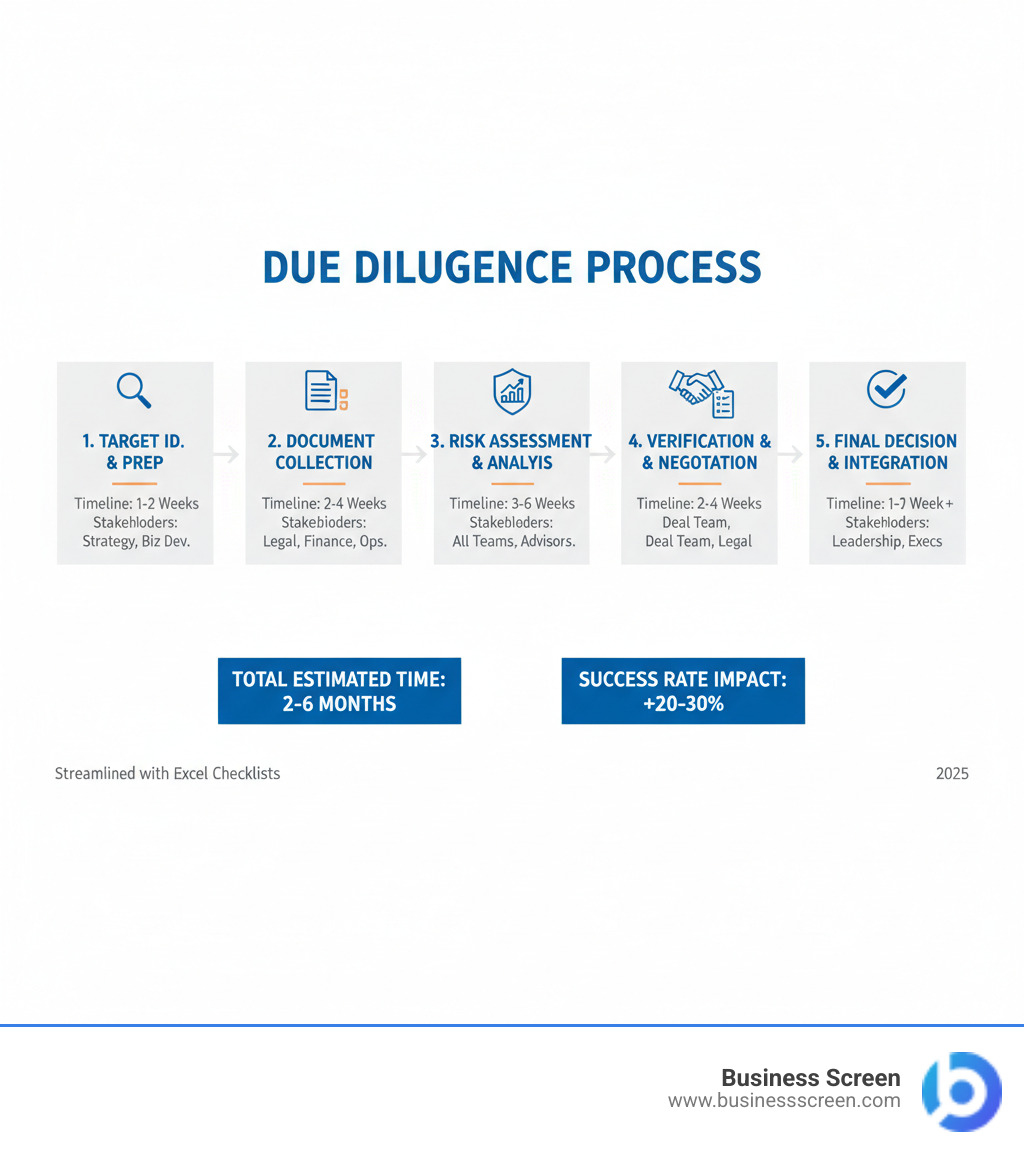
We can formalize this into a "stage-gate" model. Each stage has a clear objective and a gate (a decision point) at the end.
AI-Driven Due-Diligence Checklist for Venture Associates (2025 Edition)
The article 'AI-Driven Due-Diligence Checklist' from Rebel Fund provides an excellent model for a staged diligence process. While it's AI-focused, the structure is universally applicable.
Read the sections 'Mapping to Internal Gating Criteria' and 'Best Practices for Implementation.' This provides a 4-stage model and practical advice for standardizing your process.
Let's adapt this model for your solo GP operation:
Stage 1: Initial Screening (Pre-Diligence)
- Objective: Filter for basic fit with your investment thesis.
- Activities: Quick review of the pitch deck against your scoring rubric (from Module 6).
- Gate: Does this company warrant a first meeting?
Stage 2: Deeper Commercial & Team Diligence
- Objective: Build conviction in the team, market, and product.
- Activities:
- First and subsequent founder meetings.
- Work through your Commercial DD Checklist.
- Conduct founder background checks and reference calls.
- Perform initial market and competitive analysis.
- Gate: Are we confident enough to issue a term sheet and begin legal/financial diligence?
Stage 3: Confirmatory Legal & Financial Diligence
- Objective: Verify the company's corporate structure and identify legal/financial risks.
- Activities:
- Send a formal DD Request List to the founder.
- Set up a secure Data Room for document sharing.
- Work through your Legal & Financial DD Checklist.
- Engage legal counsel to review key documents (incorporation, cap table, IP assignments).
- Gate: Have all major issues been resolved or accepted? Are we ready for a final decision?
Stage 4: Final Decision & Investment Memo
- Objective: Synthesize all findings into a final investment decision.
- Activities:
- Write a concise Investment Memo summarizing the opportunity, your findings, and the risks.
- Make the final go/no-go decision.
- Gate: Invest.
This staged approach ensures you invest your time efficiently, doing the most time-consuming legal and financial work only on the most promising deals that have already passed your commercial evaluation.
Test your understanding!
A founder sends you a link to a messy, disorganized Google Drive folder with 100+ files in response to your diligence request list. What does this signal, and how does it relate to the purpose of due diligence?
Show answer
This is a significant signal about the founders and their operational discipline. Due diligence is not just about the documents themselves but also about observing how the team operates under scrutiny.
A disorganized data room suggests:
- Lack of Preparation: They haven't anticipated an investor's request and are not "transaction-ready."
- Poor Operational Hygiene: If their documents are a mess, other parts of their business might be too.
- Potential for Hidden Issues: It makes it harder for you to find what you need and increases the chance that something critical is missing or incorrect.
This is a classic example of diligence being about more than just "verifying facts." It's an early test of the team's professionalism and ability to execute.
4. Layering AI into Your Process & Evaluation
Given your goal to run an AI-centric accelerator, your diligence process has two additional dimensions:
- Using AI to enhance your own process.
- Evaluating the AI of your potential investments.
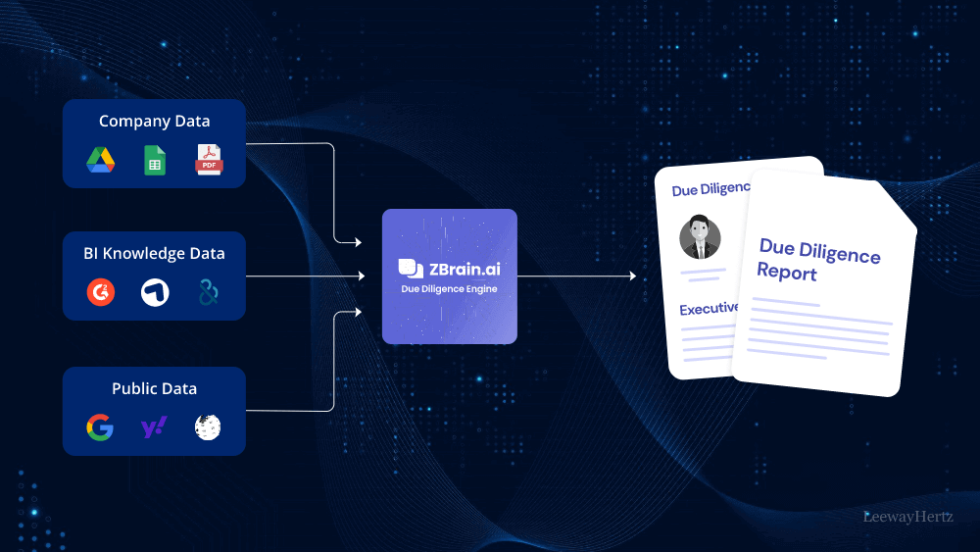
For your own process, AI tools can help you analyze documents in a data room, summarize customer interview transcripts, or track news about a target company.
More importantly, you need a framework to diligence the AI startups themselves. This goes beyond a standard checklist.
AI-Driven Due-Diligence Checklist for Venture Associates (2025 Edition)
The Rebel Fund article contains a detailed framework for exactly this. It's a gold standard for what a sophisticated, AI-focused investor looks for.
Read 'The 15-Point AI-Driven Due Diligence Framework.' Focus on the first three points: (1) Data Quality and Integrity, (2) Model Architecture and Performance, and (3) Technical Infrastructure. These are the unique diligence areas for AI companies.
When you evaluate an AI startup, you must add these questions to your process:
- Data: Is their training data proprietary and defensible? Is it high-quality and free of critical biases?
- Model: How good is their model? Is it just a thin wrapper around an open-source model, or have they developed genuine IP?
- Infrastructure: Can their tech stack scale efficiently?
We will dive much deeper into this topic in Module 8, "Special Topic: Diligence for AI Startups," but it is essential to build these questions into your core process design from day one.
Conclusion
You have now designed a complete, systematic due diligence process for your accelerator. This is a critical piece of intellectual property for your firm—a repeatable system that enforces discipline, manages risk, and ultimately leads to better investment decisions.
Key Takeaways:
- Pre-seed due diligence is a forward-looking process of verification and risk assessment, not a hunt for perfection.
- Your process should be structured in stages to use your time effectively, moving from broad commercial diligence to deep, confirmatory legal diligence.
- The core pillars of investigation are the Team, Market, Product/IP, and Legal/Corporate Structure.
- Your role as a solo GP is to create and manage this playbook, knowing what to ask for and when to bring in experts like lawyers.
- For an AI-focused fund, your process must include specific diligence on a startup's data, models, and technical infrastructure.
Preview of the Next Lesson
We've established that the "Team" is the most critical pillar of pre-seed investing. In our next lesson, we will do a deep dive into the first item on our diligence checklist: how to evaluate founder capabilities, coachability, and team dynamics from an investor's perspective.