Hello! Welcome back to your course on building your incubator and accelerator.
In our last lesson, we conducted a deep dive into the first and most critical pillar of due diligence: the team. We established a framework for evaluating founder capabilities, coachability, and team dynamics, concluding that at the pre-seed stage, you are fundamentally betting on people.
Now, we shift our focus from the "who" to the "where." A world-class team can't build a venture-scale business in a tiny market. This lesson addresses the second pillar of your diligence framework: the market opportunity. Our goal is to assess a startup's market size, competitive landscape, and go-to-market strategy for scalability. Your experience helping startups prepare pitch decks means you're familiar with these topics, but today, we'll analyze them with the critical and skeptical eye of an investor responsible for generating fund returns.
1. The "Big Ass Market"
Venture capital is a game of outliers. A fund's returns are typically driven by a very small number of investments that become massive companies. For a company to become massive, it needs to operate in a market that is large enough to support exponential growth.
Let's start with a short video from Stephanie Palmeri, a partner at a VC firm, who explains why a "big ass market" is a non-negotiable prerequisite for venture investment.
Startups: Know Your Competitive Landscape and Market Sizing - Stephanie Palmeri from SoftTech VC
This clip from 'Startups: Know Your Competitive Landscape and Market Sizing' clearly articulates why investors fixate on market size and what 'big enough' really means.
Watch from 00:46 to 02:30. Pay close attention to the reasoning behind the '$1 billion market' rule of thumb and how it connects to an investor's return expectations.
The key takeaway is that to build a $100 million revenue business (a common threshold for a venture-backed success), a startup needs to capture a significant share of its market. Capturing 10% of a $1 billion market is ambitious but plausible. Capturing 50% of a $200 million market is highly unlikely. This is the fundamental math that drives an investor's analysis.
2. Market Sizing: From Theory to Credible Numbers
Founders often present flashy, top-down numbers for their market size. Your job is to deconstruct these claims and build a more realistic, bottom-up picture of the actual opportunity. The standard framework for this is TAM, SAM, and SOM.
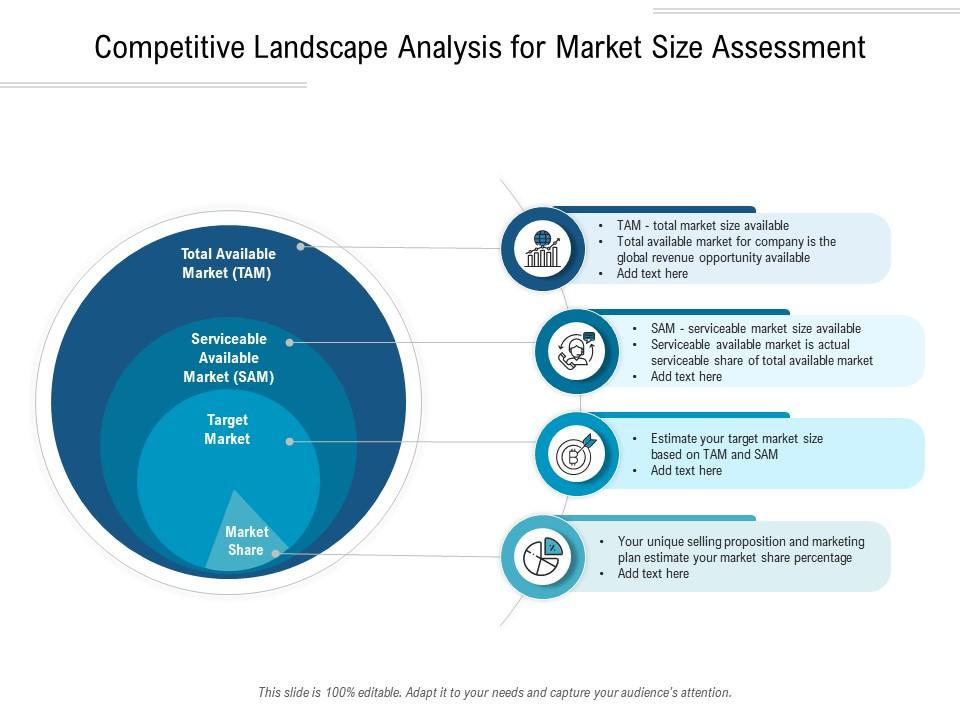
To get a precise understanding of these terms from an investor's viewpoint, let's turn to a clear guide.
How Investors Use TAM, SAM, SOM to Evaluate Startups
The article 'How Investors Use TAM, SAM, SOM to Evaluate Startups' from GoingVC provides excellent definitions and explains what investors are looking for in each metric.
Read the sections 'What Is TAM, SAM, SOM?' and 'TAM, SAM, SOM Explained From the Investor’s Point of View'. Focus on the key question each metric answers for a VC.
In summary:
- Total Addressable Market (TAM): The total global demand for a product or service. This answers: Could this become a multi-billion dollar company if everything goes perfectly?
- Serviceable Available Market (SAM): The portion of the TAM that the startup's current business model can realistically serve (e.g., limited by geography, language, or product features). This answers: Where can this team win today with what they've built?
- Serviceable Obtainable Market (SOM): The portion of the SAM the startup can realistically capture in the short term, given its competition and GTM strategy. This answers: What can this team realistically achieve in the next 1-2 years?
Top-Down vs. Bottom-Up Calculation
There are two ways to calculate these numbers. Founders often prefer the "top-down" approach, which starts with a large market report number and takes a percentage. As an investor, you should be skeptical of this and push for a "bottom-up" analysis, which is built from the ground up based on the company's actual business model.
Stephanie Palmeri's video provides a great, practical explanation of these two approaches.
Startups: Know Your Competitive Landscape and Market Sizing - Stephanie Palmeri from SoftTech VC
Let's return to the video to understand the two main methods for sizing a market.
Watch from 06:56 to 10:42. Note the example of the children's apparel company and why the bottom-up approach, while harder, is a more credible 'gut check' for investors.
A bottom-up SOM calculation looks like this:
(Number of target customers) x (Price per customer) x (Realistic capture rate) = SOM
This is more credible because it forces the founder to defend their assumptions about who their customer is, what they will pay, and how the company will reach them.
A More Sophisticated View of TAM
While the TAM/SAM/SOM framework is essential, it's not the full story. A simple revenue projection can be misleading because, as you'll see, not all revenue is valued equally. Furthermore, truly disruptive companies don't just capture a market; they often expand it.
Why Everyone Gets TAM Market Sizing WRONG: Total Addressable Market Explained by a VC
This video, 'Why Everyone Gets TAM Market Sizing WRONG' by VC Wayne Hu, offers a more advanced perspective that will be invaluable for your analysis.
Watch from 02:57 to 09:57. Focus on two key ideas: How industry-specific multiples affect a company's ultimate valuation (e.g., SaaS vs. consumer subscription). The five reasons why TAM is often underestimated, such as creating new markets (like Uber) or adding adjacent products (like Brex).
This nuanced view is critical. When you evaluate a startup, don't just ask, "Is the market big?" Ask, "What is the structure of this market? Is it one where a winner can take most of the share? Can this company expand the market's boundaries?"
Test your understanding!
A startup pitches you an AI-powered tool that helps boutique law firms (1-10 lawyers) in the US manage their case files. They present the following:
- TAM: The global legal services market is $900 billion.
- SAM: The US legal services market is $350 billion.
- SOM: We will capture 1% of the US market in two years, for a $3.5 billion opportunity.
What is wrong with this analysis? How would you guide them to build a more credible, bottom-up SOM?
Show answer
The analysis is a classic, flawed top-down approach.
- TAM is too broad: The $900B global legal market includes everything from corporate M&A at giant firms to criminal defense, most of which is irrelevant to their product.
- SAM is also too broad: Even the $350B US market is not their "serviceable" market. Their product is for boutique firms, not all legal services.
- SOM is unrealistic: Claiming they'll capture 1% of the entire US legal market is unbelievable. Their SOM should be a percentage of their actual target customer segment.
To build a bottom-up SOM, you would ask them:
- How many boutique law firms (1-10 lawyers) are there in the US? (This is the number of potential customers).
- What is your pricing model? How much will each firm pay per year? (This is the average revenue per customer).
- Based on your go-to-market plan for the next two years, how many of these firms can you realistically sign up? (This is the realistic capture rate).
A credible bottom-up SOM would sound like: "There are approximately 45,000 boutique law firms in the US. We charge an average of $5,000 per year per firm. In year two, we project we can capture 400 of these firms, resulting in a SOM of $2 million in annual recurring revenue." This is a much smaller, but far more believable, number.
3. Analyzing the Competitive Landscape
The second part of your market diligence is understanding the competition. A common mistake for founders is to claim "we have no competition." This is a major red flag. It either means they haven't done their research or the market doesn't exist.
Your goal isn't to find startups with no competitors; it's to find startups with a clear, defensible differentiation.
Startups: Know Your Competitive Landscape and Market Sizing - Stephanie Palmeri from SoftTech VC
Let's go back to Stephanie Palmeri's talk, where she discusses how to think about the competitive landscape.
Watch from 16:40 to 32:48. This is a longer segment, but it's packed with actionable advice. Focus on: The Ecosystem View (16:40-20:30): Understanding direct, indirect, and future competitors. How to Analyze Competitors (20:30-26:29): The importance of knowing who is well-funded and why that matters to a seed investor. Competitive Advantage & Moats (27:17-28:50): What makes a business defensible over the long term? What Investors Really Mean (28:50-32:48): Deconstructing the common questions investors ask about competition.
Sustainable Competitive Advantage ("Moat")
A temporary feature advantage is not enough. You are looking for a sustainable competitive advantage, or a "moat," that protects the business from competition over the long term. This is especially important for the AI-focused startups you plan to support.
When and how fast to scale your business | Stage 2 Capital
For a deeper, more strategic look at competitive moats, this article by Mark Roberge (former CRO of HubSpot) is excellent. It frames this in the context of scaling a business.
Scroll down to 'Phase 3: Growth and Moat.' Read the subsection titled 'Pricing: Assess for Disruption.' It provides a powerful framework for identifying true, sustainable moats versus temporary ones.
As the article highlights, true moats in software include:
- Network Effects: The product becomes more valuable as more people use it (e.g., LinkedIn).
- Brand/Category Leadership: The company is the category (e.g., "HubSpot" for inbound marketing).
- Viral Distribution: The product has built-in mechanisms for growth.
- High Switching Costs: It is painful for customers to leave (e.g., Salesforce).
- Learning Algorithms: The AI model gets better with more data, creating a defensible data asset.
For your AI accelerator, this last point is paramount. A startup's unique, proprietary dataset and the feedback loops that improve its models are often a more powerful moat than the initial algorithm itself.
4. Go-to-Market (GTM) Strategy for Scalability
You can have a great team in a huge market with a defensible product, but if you can't acquire customers efficiently and scalably, the business will fail. The Go-to-Market (GTM) strategy is the playbook for how a startup will reach, acquire, and retain customers.
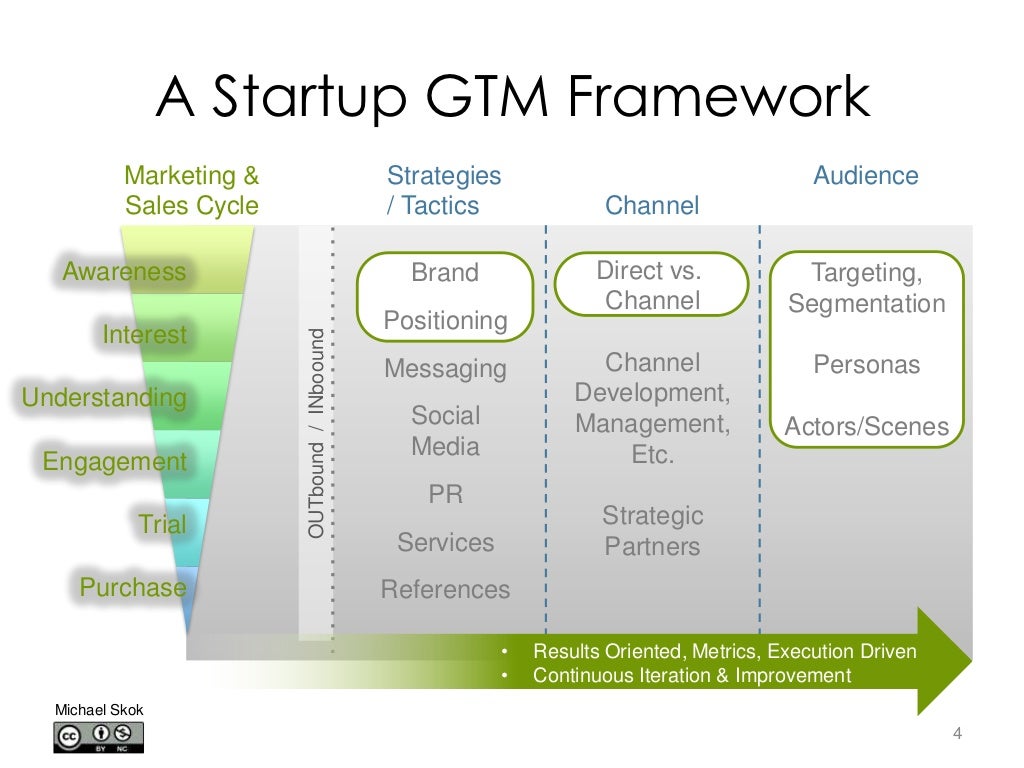
During due diligence, you aren't just checking if they have a GTM plan; you're assessing if that plan is scalable. Scalability is not about "winning at all costs." It's about building a repeatable, profitable customer acquisition engine. The best measure for this is Go-to-Market Fit.
When and how fast to scale your business | Stage 2 Capital
Mark Roberge's 'Science of Scaling' provides the definitive framework for this. We'll focus on his concept of 'Go-to-Market Fit.'
Read the section 'Phase 2: Go-to-Market Fit.' Don't worry about memorizing all the details. Focus on understanding the core idea: GTM Fit means acquiring customers scalably, which is measured by strong unit economics (LTV/CAC > 3). Note how he breaks this financial goal down into more tangible, non-financial activities you can track.
Since you have no background in finance, let's simplify the key concepts:
- Customer Lifetime Value (LTV): The total profit a company expects to make from a single customer over the entire time they are a customer.
- Customer Acquisition Cost (CAC): The total cost of sales and marketing to acquire one new customer.
- LTV/CAC Ratio: A healthy, scalable SaaS business typically has an LTV that is at least 3 times its CAC. This means for every $1 spent to acquire a customer, the company expects to get at least $3 in profit back over time.
Your job in diligence is to probe for evidence that this ratio is achievable. You can ask questions like:
- "What are your different customer acquisition channels (e.g., paid ads, content, direct sales)?"
- "What does it cost you to acquire a customer through each channel?"
- "How much revenue do you expect from that customer over their lifetime? What's your churn rate?"
Early on, a startup won't have perfect data. But you are looking for a team that thinks in these terms and has a clear plan to build a profitable customer acquisition engine. A team that only focuses on revenue growth without understanding the associated costs is scaling toward a cliff.
Conclusion
Today, we've moved from evaluating the jockey (the team) to evaluating the racecourse (the market). You now have a set of frameworks to dissect a startup's opportunity and determine if it's truly venture-scale.
Key Takeaways:
- Market Size: A venture-backable opportunity must exist in a large (>$1B) Total Addressable Market (TAM). You must pressure-test a founder's claims with a credible, bottom-up analysis of their TAM, SAM, and SOM.
- Competitive Landscape: Competition is a given. Your focus is on identifying a startup's sustainable competitive advantage (moat). For AI companies, this often lies in proprietary data and learning effects.
- Go-to-Market Strategy: The ultimate test of a GTM strategy is scalability, measured by Go-to-Market Fit. This means proving they can acquire customers with strong and profitable unit economics (LTV/CAC > 3).
Preview of the Next Lesson
We have now covered the "who" (Team) and the "where" (Market). In our next lesson, we will complete our analysis of the core business by diving into the "what." We will address the third pillar of diligence: "Assess a startup's product and technology for feasibility and defensibility."