
Hello! Welcome back to your course on advanced topics in performance marketing.
In our last lesson, we focused on the significant limitations of attribution, particularly in complex multi-device and online-to-offline customer journeys. We concluded that relying solely on attribution for high-level strategic decisions can be misleading due to what we called the "streetlight effect"—valuing what's easy to measure over what's truly impactful.
Today, we pivot from the limitations of attribution to its strengths. While flawed for big-picture, cross-channel budget allocation, attribution is an indispensable tool for tactical, intra-channel optimization. Your learning outcome for this lesson is to formulate a strategy for using attribution for intra-channel optimization (e.g., optimizing campaigns within Google Ads). This skill is crucial for guiding your teams to make smarter decisions within the platforms you know well, like Google and Meta Ads, thereby improving performance from the ground up.
1. Attribution's Sweet Spot: Intra-Channel Optimization
First, let's clarify the distinction:
- Cross-channel optimization involves deciding how to allocate budget between different channels (e.g., Search vs. Social vs. Display). As we discussed, this is where attribution struggles.
- Intra-channel optimization is about making a single channel work better within itself. For example, within Google Ads, which keywords should you bid on? Which ad copy is most effective? Which campaigns are opening conversations versus closing deals?
Attribution is far more reliable for these intra-channel questions because the data is contained within a single platform's ecosystem, minimizing the cross-device and offline data gaps we explored previously.
So, what specific questions can you answer to optimize performance within a channel?
The Definitive Guide to Data-Driven Attribution
The 'Definitive Guide to Data-Driven Attribution' from Google provides an excellent framework for the kinds of tactical questions you can answer. This helps ground our strategy in concrete business objectives.
Please read the section titled '1 Intra-Channel Performance' (you'll find it under the main heading 'What Questions Does Data-driven Attribution Answer?'). Focus on the bulleted list of 'Intra-Channel Benefits'—these are the levers you can pull.
As the guide outlines, intra-channel optimization isn't just about conversions. It's about fine-tuning every element of your campaign: creative, messaging, placement, targeting, and frequency. This is where you can translate attribution insights directly into actionable tasks for your team.
2. Formulating Your Strategy: A Google Ads Deep Dive
A robust strategy starts with a clear goal. Before diving into reports, you must first define what you're trying to achieve within the channel. Are you trying to find new audiences, prove the value of upper-funnel keywords, or simply optimize your ad copy?
Once you have a goal, you can use attribution reports to find the answer. For Google Ads, one of the most powerful tools for this is the Attribution Paths report in Google Analytics 4 (GA4).
Using Attribution Paths To Transform Your Google Ads ...
The article 'Using Attribution Paths To Transform Your Google Ads Strategy' by Search Engine Journal provides a practical guide on how to leverage this GA4 report. It's perfect for moving from data to insight to action.
Please read from the beginning of the article down to the end of the sub-section 'Validate Budget Shifts'. Focus on how the report helps you see the entire journey and prove the value of campaigns that don't get the final click.
From Path Analysis to Optimization Plan
Let's synthesize those ideas into a strategic workflow. Imagine you're analyzing campaigns for an e-commerce client. The customer journey within Google Ads might look like this:
- First Touch: User clicks a Non-Brand Search Ad (e.g., for "running shoes for flat feet").
- Middle Touch: Days later, they see and click a Display Retargeting Ad showcasing the shoes they viewed.
- Last Touch: The next day, they click a Branded Search Ad (searching for your brand name) and make a purchase.
Different attribution models would interpret this very differently.
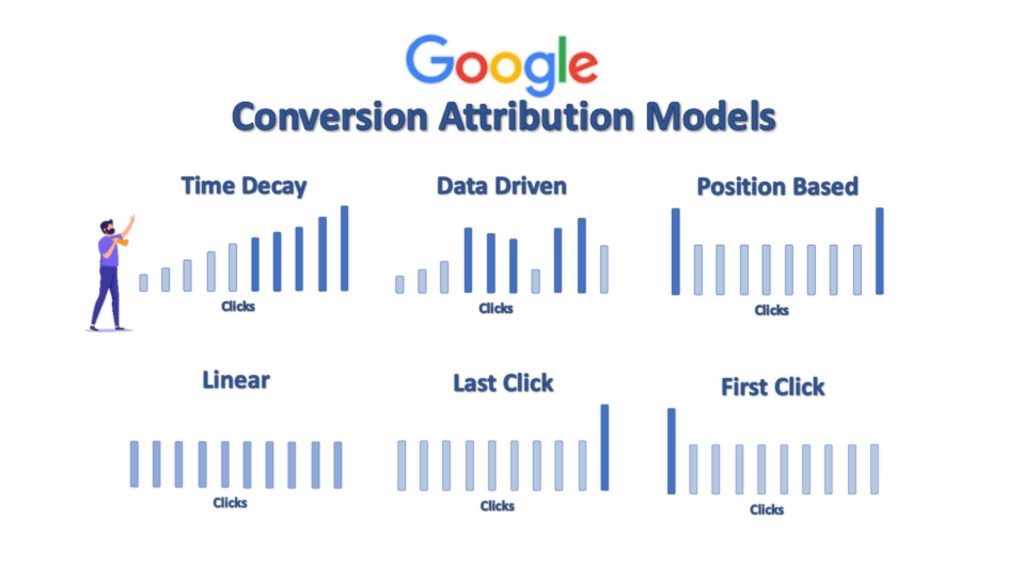
As a leader, your job is to look beyond the default last-click model. By using the GA4 Attribution Paths report and a more sophisticated model like Data-Driven Attribution (DDA), you can uncover the true roles of your campaigns and formulate a much smarter strategy.
Strategic Actions from Path Analysis:
Based on the path above, here’s how you would guide your team:
- Protect Upper-Funnel Budgets: The Non-Brand campaign might have a poor last-click ROAS, but the path report proves it's essential for initiating the customer journey. Instead of cutting its budget, you should protect it and evaluate it based on its DDA-reported value or its frequency in the "early touchpoints" part of the path.
- Differentiate Bidding Strategies: The Non-Brand campaign is an "Opener." The Branded Search campaign is a "Closer." They should have different goals. You might accept a higher Cost Per Acquisition (CPA) on the "Opener" because you know it fuels the pipeline for the highly efficient "Closer."
- Inform Creative and Landing Pages: Knowing the Non-Brand ad is the first touchpoint, the ad copy and landing page should focus on education and building trust. The Display ad should be a direct reminder. The Branded Search landing page should be optimized for a quick and seamless purchase.
Test your understanding!
Your team reports that a Google Ads "Competitor Campaign" (bidding on competitor brand names) has a very high CPA and low ROAS based on your account's last-click attribution model. A team member suggests pausing this campaign to improve overall account efficiency.
Using the concept of intra-channel path analysis, what is one critical insight you might be missing, and what specific action would you take before approving the recommendation?
Show answer
- Missing Insight: The Competitor Campaign might be serving as a crucial "assisting" or "opening" touchpoint. Customers may be starting their research by searching for competitors, clicking your ad to compare, and then converting later through a different campaign (like Branded Search). The last-click model makes this valuable campaign look like a failure.
- Action: Before pausing, you would instruct your team to analyze the Attribution Paths report in GA4. Specifically, you'd ask them to filter for paths that end in a conversion and see how often the Competitor Campaign appears as an early or middle touchpoint. If it consistently assists other high-converting campaigns, the correct strategy is not to pause it but to evaluate its performance using a model like Data-Driven Attribution or based on its "assisted conversion" value.
3. Application to Meta Ads: Strategic Settings and AI
Given your extensive experience with Meta Ads, you know the importance of attribution settings. Formulating a strategy here involves choosing the right settings for your business goals and understanding the advanced, AI-driven tools now available.
The Classic Trade-Off: Speed vs. Data Volume
First, let's watch a quick refresher on the standard attribution settings and the strategic thinking behind them.
Meta Ads Attribution Setting Deep Dive
Jon Loomer, a well-known expert in the space, provides a clear breakdown of when to use different attribution settings in Meta Ads. This connects directly to formulating a goal-driven intra-channel strategy.
Please watch from 02:21 to 06:30. Pay close attention to his reasoning for using a 7-day click window for sales campaigns versus a 1-day click window for simple leads.
As Jon Loomer explains, the strategic choice is clear:
- Short Consideration Cycle (e.g., free download): Use a tight window like 1-day click. This optimizes for immediate actions and prevents the algorithm from taking credit for conversions that would have happened anyway.
- Longer Consideration Cycle (e.g., e-commerce purchase): Use a broader window like 7-day click, 1-day view. This gives the algorithm more conversion data to learn from, which is especially important for products that require more thought. The risk, as you know, is that it may count low-impact view-through conversions.
The Future of Intra-Channel Optimization: Incremental Attribution
Meta is moving beyond these simple rules-based models. They have introduced a new, AI-powered option called Incremental Attribution, which attempts to optimize for causal conversions. This is a significant leap forward in intra-channel optimization.
Meta’s NEW Attribution Setting Changes Everything (Facebook Ads Incremental Attribution Explained)
This video from Max Rosewater provides an excellent explanation of Meta's new Incremental Attribution setting. He spoke directly with the Meta engineers who built it, giving us a clear view of how it works.
Please watch from 00:22 to 04:09. Focus on the difference between traditional rules-based attribution and this new incremental, AI-driven approach.
The strategy here represents a new paradigm for intra-channel optimization. Instead of you defining the rules (e.g., "7-day click"), you are trusting Meta's AI model—trained on thousands of conversion lift studies—to identify and optimize for users who are most likely to convert only because they saw your ad.
As a leader, your strategic formulation involves deciding whether to:
- Stick with rules-based attribution: Maintain direct control and clear-cut reporting (e.g., 7-day click), which is easier to explain to stakeholders.
- Test and adopt incremental attribution: Trust the platform's "black box" AI for potentially superior performance in finding genuinely incremental customers, and then use tools like conversion lift studies to validate the results.
Conclusion
Today, we've seen that while attribution has strategic blind spots, it remains a powerhouse for tactical, intra-channel optimization. By moving beyond simplistic, last-click thinking, you can guide your teams to unlock significant performance gains within the very platforms they manage daily.
Key Takeaways:
- Intra-channel optimization is attribution's strength, allowing you to fine-tune campaigns, keywords, and creative within a single platform.
- A clear strategy begins with a defined goal, which then dictates your analysis.
- In Google Ads, use the GA4 Attribution Paths report to understand the distinct roles of your campaigns (Openers, Assisters, Closers) and optimize them accordingly.
- In Meta Ads, strategically choose your attribution window based on your business's consideration cycle and test advanced options like Incremental Attribution to let AI optimize for causality.
Preview of the Next Lesson:
We ended this lesson by looking at Meta's attempt to merge attribution with incrementality. But what happens when these two measurement methodologies give you conflicting signals? In our next lesson, we will analyze scenarios where attribution reports and incrementality tests provide conflicting signals, tackling a common and complex challenge for marketing leaders who need to make confident budget decisions.