Recommended resources
The freely available resources this lesson will direct you to.
Introduction
Welcome to our final lesson in the "Analytics for Content Optimization" module! In our last session, you created a powerful, data-driven content schedule for the upcoming month. You now have a strategic plan for what to post and when to post it.
Today, we'll answer the question: "What am I trying to achieve with this plan?" A plan without a target is like a road trip without a destination. This lesson is about defining that destination. We will cover how to set a clear, motivating, and, most importantly, achievable growth goal for your social media channels.
By the end of this lesson, you will be able to set a realistic, measurable growth goal for the next month, giving you a benchmark to track your progress and measure the success of your new content strategy.
From Big Dreams to Concrete Objectives
Your overall goal is to become a successful influencer in the "cheap and cheerful lifestyle" niche. That's your North Star. But to get there, you need smaller, more specific objectives for each stage of your journey.
Let's watch a short video that explains this difference and why setting clear objectives is the most important part of any strategy.
Create a your social media strategy for 2025 [+ free template!]
In this clip from her video 'Create a your social media strategy for 2025,' creator Jade Beason breaks down the difference between big, aspirational goals and the specific, business-like objectives that actually drive your strategy forward.
Watch from 00:21 to 02:18. Pay close attention to how she distinguishes between a 'North Star goal' (like quitting your job) and a marketing objective (like growing your audience).
As Jade explains, if your goal is to eventually work with brands, a key objective is to grow your audience. For a new creator, follower growth is one of the clearest indicators that you are reaching the right people and that your content is resonating. So, for this month, our primary objective will be follower growth.
Making Your Goal SMART
To turn a general objective like "grow my audience" into something you can actually work toward, we'll use a popular and effective framework called SMART goals.
A SMART goal is:
- Specific
- Measurable
- Achievable
- Relevant
- Time-bound
To understand this framework better, let's turn to a helpful article from Buffer.
How to Create a Social Media Marketing Strategy in 7 Steps - Buffer
This article, 'How to Create a Social Media Marketing Strategy in 7 Steps,' has an excellent section on goal-setting. We'll focus on how it defines the SMART framework.
Read the subsection 'How do you convert a goal into a KPI?'. It clearly explains each component of the SMART acronym and gives a perfect example of turning a vague goal into a SMART one.
Let's apply this to your situation:
- Specific: You want to grow your follower count on a specific platform.
- Measurable: You will aim for a specific number or percentage increase.
- Achievable: The goal should be realistic based on your current situation. This is the trickiest part, and we'll focus on it next.
- Relevant: Growing your audience is directly relevant to your main goal of becoming an influencer.
- Time-bound: We've already set the timeframe: the next month.
Our main challenge is the "A" for Achievable. How do you know what's a realistic number of followers to aim for when you're just starting out?
How to Set a Realistic Goal
Setting a realistic goal prevents discouragement and helps you accurately assess if your strategy is working. A goal is realistic if it's based on data, not just wishful thinking. There are two ways to find this data.
1. Use Your Own Analytics
The best data is your own. Look at the tracking spreadsheet you created in our previous lessons.
- How many new followers did you gain on your primary growth platform last month?
A simple and effective way to set a realistic goal is to aim to match or slightly exceed your previous performance. For example, if you gained 80 followers last month, a realistic goal for this month could be to gain another 80-100 followers. This accounts for the improved strategy you've just implemented.
2. Use Industry Benchmarks
If you have very little data or are starting from scratch, you can use industry benchmarks. These are average performance stats for accounts in a similar niche.
Social media benchmarks: 2025 data + tips
The social media management platform Hootsuite publishes industry benchmark reports. Let's look at their article to understand what benchmarks are and find some relevant data.
First, read the section 'What is a social media benchmark?' to understand the concept. Then, scroll down to the data tables and find the section 'Social media benchmarks in retail.' Your 'cheap and cheerful lifestyle' niche has strong parallels with retail and consumer topics, making this a good starting point. Look for the 'Follower growth rate in retail' subsection and note the weekly growth percentages for your main platforms.
Let's turn that benchmark data into a monthly goal:
The Hootsuite data shows the weekly follower growth rate. To get a monthly goal, you can multiply that by four.
Example:
- The benchmark for Instagram follower growth in retail is 1.02% per week.
- Monthly growth ≈ 1.02% × 4 = 4.08%
- If you currently have 200 followers, a realistic monthly goal would be to gain:
This might seem small, but it's a realistic, data-backed starting point. As your account grows, the absolute number of new followers you gain from that percentage will increase. This perspective is crucial for staying motivated.
This next video reinforces the importance of setting conservative goals when you're starting out.
How to Create a Social Media Strategy from Scratch (Step-by-Step)
The agency High Season Co. provides some excellent advice for new creators on setting expectations for growth.
Watch from 01:46 to 03:18. Listen for the advice on what a good follower goal is for your first year and the reminder that a thousand followers is a thousand real people.
Your Action Step: Set and Track Your Monthly Goal
Now it's time to put it all together.
- Choose Your Primary Platform: Pick the single platform you want to focus your growth goal on for this month. This should likely be the platform you identified as your "top growth platform" in our earlier lesson.
- Calculate Your Goal: Use either your own past performance or the industry benchmarks to determine a realistic percentage or number of new followers to aim for.
- Write Your SMART Goal: Fill in the blanks in the template below.
"Over the next month, I will increase my follower count on [Platform Name] from [Current Follower Count] to [Goal Follower Count], for a total gain of [Number of New Followers]."
Example:
"Over the next month, I will increase my follower count on TikTok from 450 to 500, for a total gain of 50 new followers."
Tracking Your Progress
Finally, you need a simple way to track your progress toward your goal. You can use a simple printable log or a more detailed spreadsheet. Choose whichever fits your style.

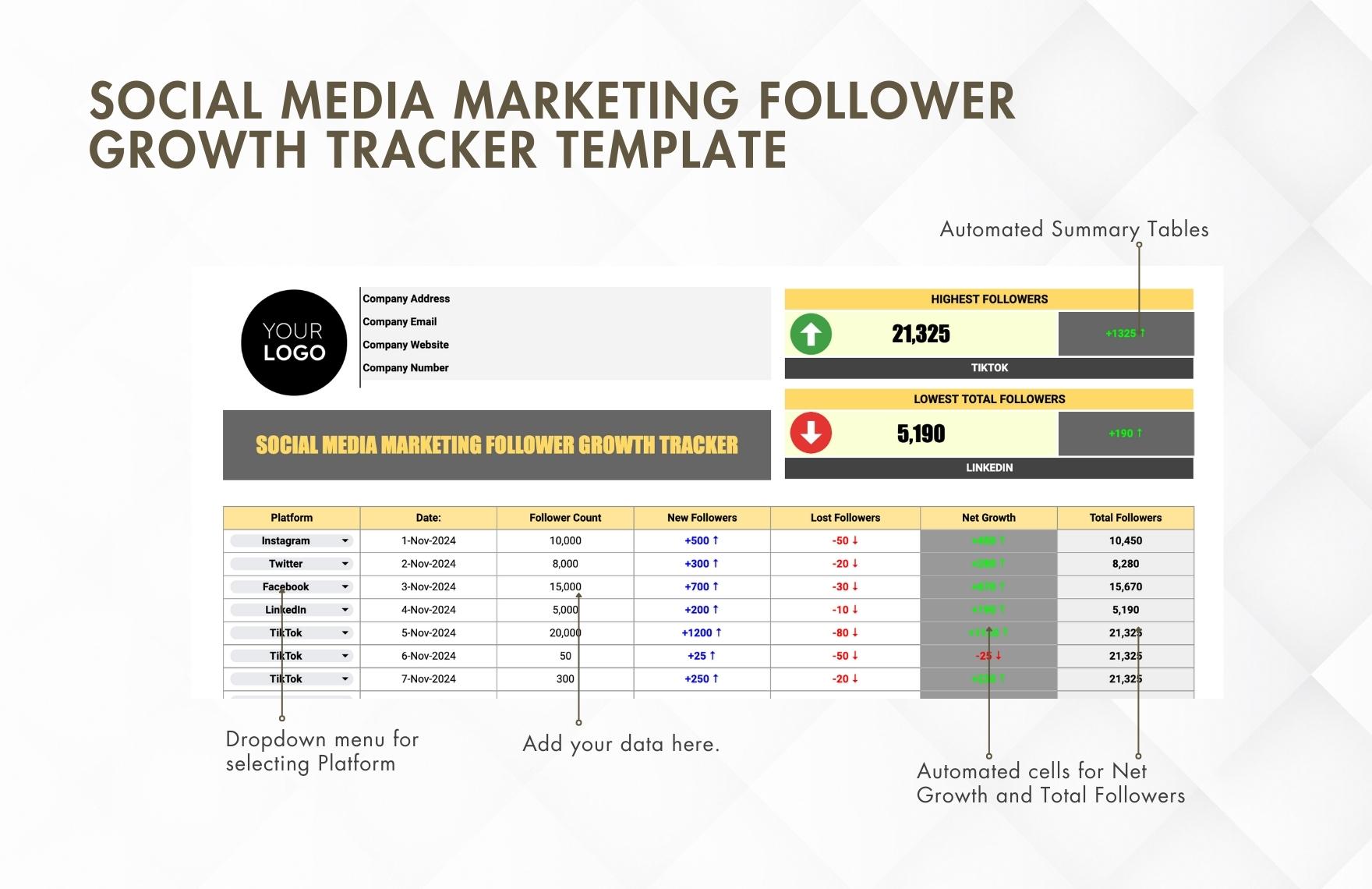
Record your starting follower count today. Then, set a reminder to log the number on the same day each week for the next month. This will show you if you're on track to hit your goal.
Conclusion
Congratulations! You have now set a clear, measurable, and realistic target for the month. This goal transforms your content schedule from a simple to-do list into a strategic tool for growth. You now know exactly what you're working towards and how to measure your success.
Key Takeaways:
- Clear objectives (like follower growth) give your content strategy purpose.
- The SMART framework helps you define goals that are Specific, Measurable, Achievable, Relevant, and Time-bound.
- Realistic goals are set using data—either your own past performance or industry benchmarks.
- Don't underestimate the power of slow, steady, and sustainable growth.
- Regularly tracking your progress is essential to know if you're on track.
Preview of the Next Module:
You've now completed the entire analytics module! You have a full system for creating content, analyzing its performance, and setting strategic goals. This is the engine that will power your growth as a creator.
In our next module, we'll shift our focus to Monetization & Business Growth. Now that you know how to build an audience, we'll start exploring the different ways you can turn your creative work into an income stream, starting with researching the primary monetization paths for influencers in the budget-living niche.