Recommended resources
The freely available resources this lesson will direct you to.
Introduction
Welcome to Module 9! In our previous module, we wrapped up by looking at how to manage your community, including how to handle the different types of feedback you'll receive. That was about understanding the qualitative side of your performance—the conversations and comments.
Now, we're shifting gears to the quantitative side: the numbers. To grow as a creator, you can't just post content and hope for the best. You need to understand what's working and what isn't, and data is the key to unlocking that insight.
This lesson is your first step into the world of social media analytics. Our goal is to define the key performance indicators (KPIs) for social media: reach, engagement rate, and follower growth. These three metrics are the foundation for understanding your performance and making smarter decisions about your content.
What are KPIs and Why Do They Matter?
A Key Performance Indicator (KPI) is simply a measurable value that shows how effectively you are achieving a key objective. Think of it as a grade for your content. Instead of just guessing, KPIs give you concrete data to answer questions like:
- "Are new people discovering my content?"
- "Does my audience actually like what I'm posting?"
- "Is my community growing?"
Before we dive into the specifics, let's get a high-level view.
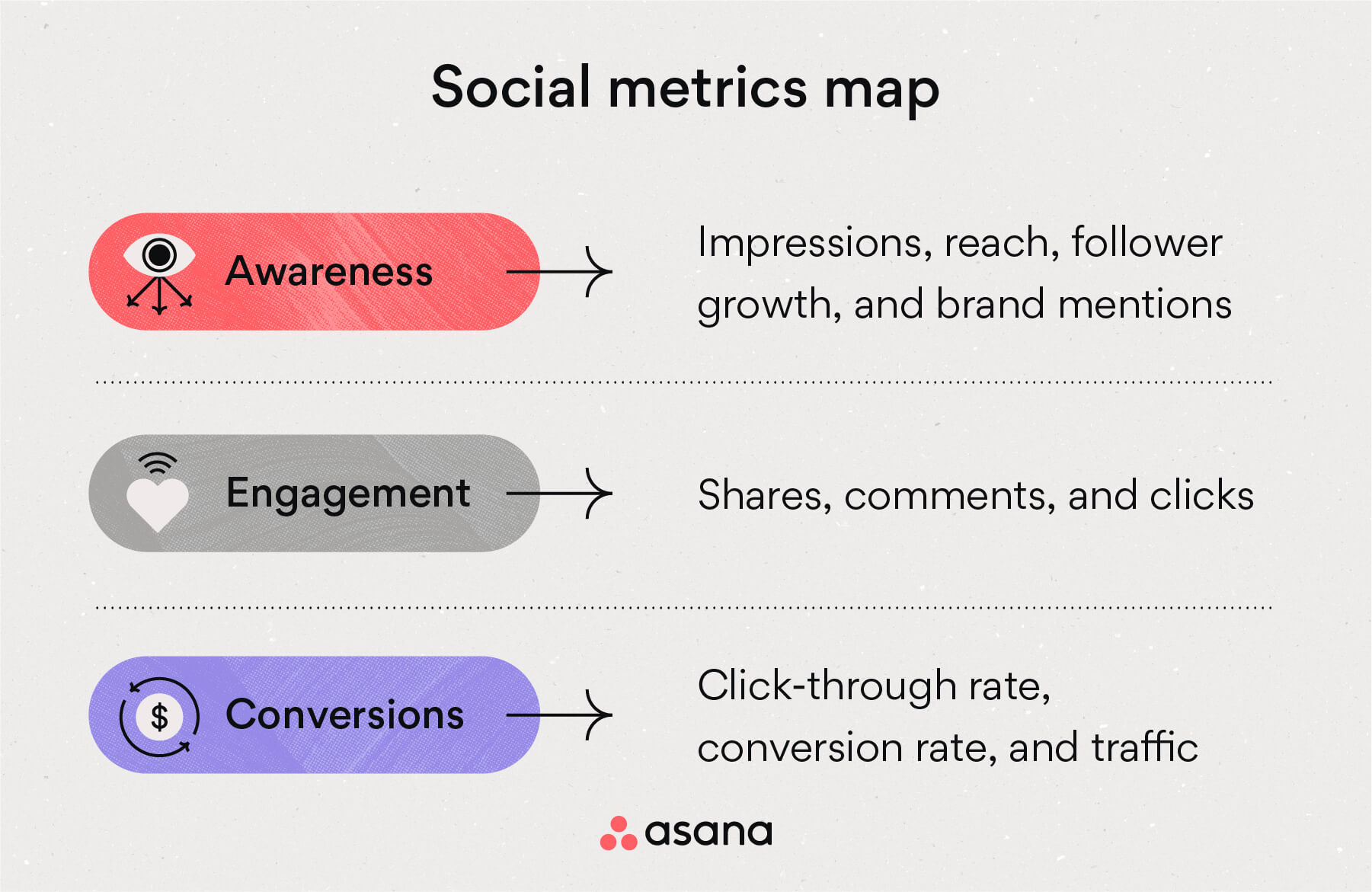
To understand why paying attention to these numbers is so critical, let's hear from an expert.
7 Social Media Metrics You Need to Track
In this short clip, digital marketing expert Neil Patel explains why tracking your metrics is non-negotiable for success. This sets the stage for why we're about to dive into the numbers.
Watch the first 58 seconds of the video. Notice his point that without tracking, all your effort might not be driving real results.
As he says, tracking these numbers helps you separate what feels good from what is good for your growth. Let's define the three most important KPIs you'll need to start tracking.
1. Reach: How Far Is Your Content Spreading?
The first fundamental KPI is Reach.
Definition: Reach is the total number of unique people who have seen your post.
It's crucial to distinguish this from a similar metric, Impressions.
- Reach: If one person sees your post five times, your reach is 1.
- Impressions: If one person sees your post five times, your impressions are 5.
Which social metrics should you be paying attention to?
This article from the Digital Culture Network clearly explains the difference between these two 'mega metrics' and why, while important, they shouldn't be your only focus.
Read the section titled 'Wait a minute, what about impressions and reach?'. Focus on the clear definitions provided and the explanation of why reach measures 'potential' viewership.
So, why does reach matter? It measures your brand awareness and how effectively your content is spreading to new audiences—people who don't follow you yet. This is the top of your funnel for attracting new followers.
This next video explains the significance of reach and how social media algorithms use your content's initial performance to decide whether to show it to a wider audience.
Top Social Media Metrics to Analyze and How to Measure Them Effectively 📚
The team at Metricool provides a great breakdown of what reach is and why it's a key goal for growth.
Watch from 00:28 to 03:56. Pay close attention to how they explain the algorithm's logic: if a post does well with your followers, the platform shows it to more people who might be interested.
Your Actionable Takeaway: Reach tells you how many people your content is getting in front of. High reach, especially among non-followers, is a sign that your content is discoverable and shareable—two key ingredients for growth.
2. Follower Growth: Is Your Community Expanding?
While reach tells you how many people see your content, Follower Growth tells you how many of those people decide to stick around.
Definition: Follower Growth is the change in your total number of followers over a specific period. You can measure it as a raw number (e.g., "+50 followers this week") or as a rate.
The Audience Growth Rate gives you a percentage, which is useful for comparing growth across different time periods.
Formula:
For example, if you start the month with 500 followers and gain 50 new ones, your growth rate is (50 / 500) * 100 = 10%.
However, it's not just about the number. The quality of your followers is far more important.
Top Social Media Metrics to Analyze and How to Measure Them Effectively 📚
Let's return to the Metricool video, where they discuss follower growth. They make a critical point about quality over quantity.
Watch from 05:43 to 07:16. Focus on the idea that it's better to have a smaller, engaged community than a large number of 'ghost followers' who don't interact with your content. This is a marathon, not a sprint.
Your Actionable Takeaway: Follower growth is the ultimate measure of whether your brand and content are compelling enough for people to want to see more. Aim for steady, sustainable growth of followers who are genuinely interested in your "cheap and cheerful" lifestyle niche.
3. Engagement Rate: Does Your Audience Care?
This might be the single most important KPI for a new creator. You can have massive reach and lots of followers, but if nobody interacts with your content, it signals to the algorithms that your content isn't very interesting.
Definition: Engagement is any action a user takes on your post. This includes:
- Likes or Reactions
- Comments
- Shares
- Saves
- Clicks
The Engagement Rate is the percentage of people who saw your post and chose to interact with it.
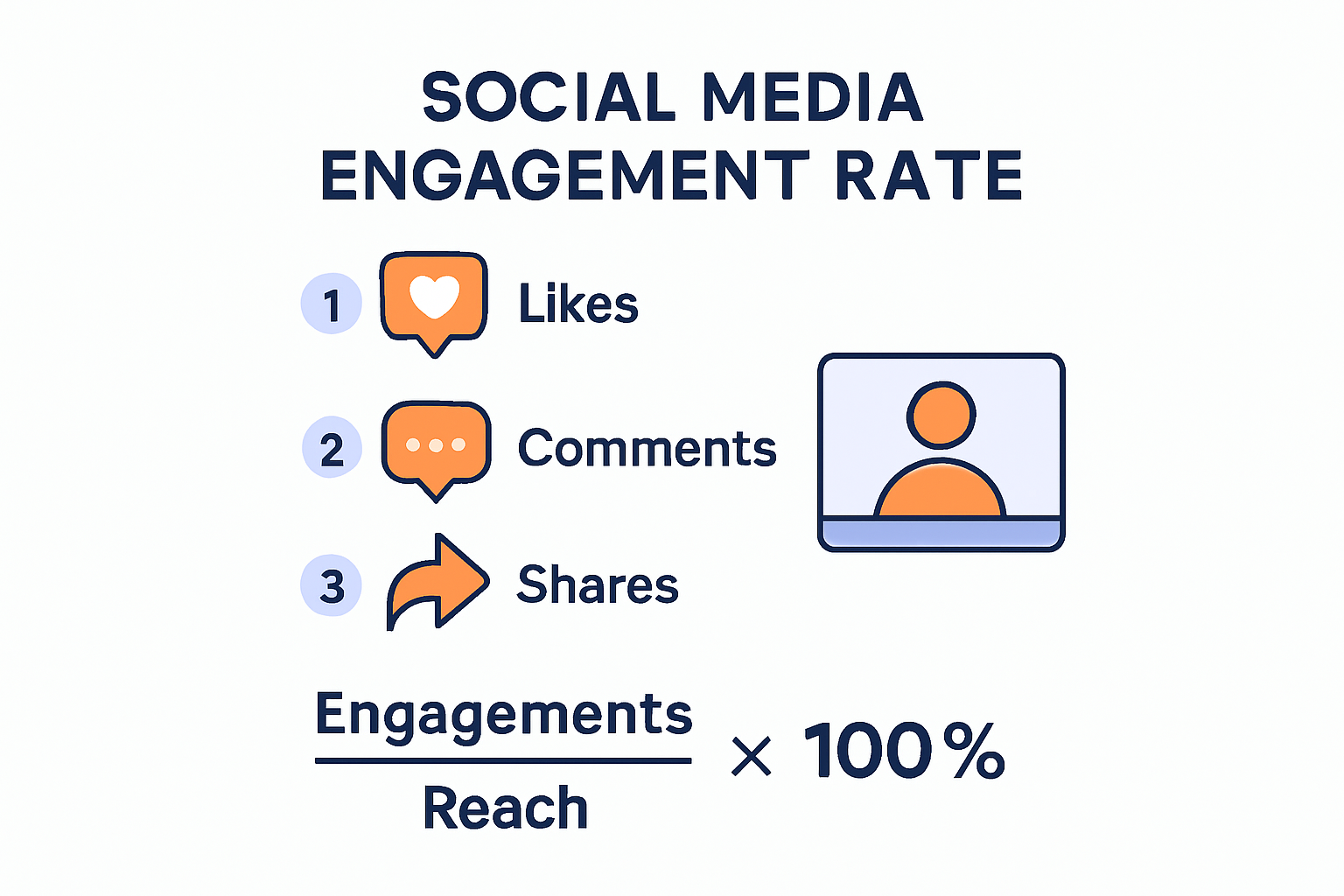
Formula:
Note: Some tools calculate this using Impressions or Follower Count in the denominator. Using Reach is generally the most accurate way to measure a specific post's performance. The most important thing is to be consistent in how you measure it.
A high engagement rate is a powerful signal to social media platforms that your content is valuable. This, in turn, often leads to them increasing your reach. The three KPIs are all interconnected!
This final video clip provides some excellent, practical tips for how you can increase your engagement rate.
Top Social Media Metrics to Analyze and How to Measure Them Effectively 📚
This last clip from Metricool is all about engagement. It not only defines it but also gives you actionable strategies you can start using right away.
Watch from 07:22 to 10:46. Take note of the tips provided, such as adding calls to action (CTAs), replying to comments to spark conversation, and maintaining a consistent posting schedule.
Your Actionable Takeaway: Engagement rate is your best measure of content quality and audience connection. Focus on creating posts that encourage interaction (e.g., asking questions, running polls, creating save-worthy tips). This tells the algorithm your content is valuable, which helps boost reach and attract new followers.
Conclusion
Congratulations, you've just completed your introduction to social media analytics! You now understand the "what" and "why" behind the three most fundamental metrics for any aspiring influencer.
Key Takeaways:
- Key Performance Indicators (KPIs) are essential numbers that tell you if your content strategy is working.
- Reach measures how many unique people see your content. It's a measure of your content's spread and potential for discovery.
- Follower Growth measures the expansion of your community. It's a sign that your brand is compelling enough for people to want to see more.
- Engagement Rate measures what percentage of your audience interacts with your posts. It is a powerful indicator of content quality and audience resonance.
These three KPIs are deeply interconnected. High engagement tells the algorithms your content is good, which increases your reach to new people, giving you the opportunity to gain more followers.
Preview of the Next Lesson:
Now that you know what to measure, the next step is to start doing it. In our next lesson, we will get very practical. You will learn how to create a simple spreadsheet to track your weekly KPIs for each of your social media platforms. This will become your command center for making smart, data-driven decisions to grow your influence.