Recommended resources
The freely available resources this lesson will direct you to.
- INSTAGRAM HASHTAG STRATEGY | EASY GUIDE TO HASHTAGS | HOW TO USE INSTAGRAM HASHTAGSwww.youtube.com
- HASHTAG RESEARCH for quick growth on Instagram 2020 (step-by-step process)www.youtube.com
- Instagram hashtags for 2025: Tips, ideas + free generatorblog.hootsuite.com
- 2022 Hashtag Strategy [Ultimate Guide]www.sociallyinfused.com
Introduction
Welcome to Module 6! In our last lesson, you mastered the art of scheduling, setting up a full week of content to post automatically. This is a huge step in building a sustainable and stress-free creator workflow. Now that your content is being published consistently, our next focus is ensuring it reaches the right audience.
This lesson is all about hashtags—one of the most powerful tools for discovery on platforms like Instagram and TikTok. While they might seem simple, using them strategically is key to growing your account. You'll learn not just what hashtags are, but how to find the perfect ones for your "cheap and cheerful lifestyle" niche and how to organize them for maximum impact.
By the end of this lesson, you will be able to research and compile a list of relevant hashtags for the budget lifestyle niche, categorized by size, creating a "hashtag vault" you can use for all your future posts.
1. Why Hashtags Matter for Growth
At its core, a hashtag is a simple label (e.g., #budgeting) that helps social media platforms understand and categorize your content. When you use hashtags, you're telling the algorithm, "My post is about this topic." This allows your content to be shown to users who are interested in that topic, even if they don't follow you yet.
The main goal is to get your content to appear in the Top Posts section for a given hashtag. Unlike the "Recent Posts" feed where content moves quickly, ranking in "Top Posts" can keep your content visible for days or even weeks, leading to a steady stream of new followers.
To understand this better, let's watch a short explanation.
HASHTAG RESEARCH for quick growth on Instagram 2020 (step-by-step process)
The video 'HASHTAG RESEARCH for quick growth on Instagram 2020' by Social Sam clearly explains how hashtags work and introduces the 'snowball effect' strategy that we'll be aiming for.
Watch the section from 01:20 to 03:16. Focus on the difference between 'latest posts' and 'top posts,' and the concept of using different hashtag sizes to create a 'snowball effect.'
As the video explained, the key is to use a mix of hashtags. Trying to compete on a massive hashtag like #fashion (1.1 billion posts) as a new creator is nearly impossible. Instead, you'll gain momentum on smaller, more specific hashtags first.
2. The Hashtag Ladder Strategy: Categorizing by Size
The most effective hashtag strategy for a new creator involves using a mix of hashtags with varying levels of popularity. Think of it as a ladder: you start on the lower rungs (smaller hashtags) and climb your way up.
- Small/Niche Hashtags: These are highly specific and have less competition. It's easier to rank in the "Top Posts" for these, which brings you initial engagement.
- Medium Hashtags: Once you get engagement from smaller hashtags, the algorithm is more likely to show your post on slightly larger, medium-sized ones.
- Large Hashtags: The combined engagement from small and medium hashtags gives you a chance to rank on large, popular hashtags, which can result in significant exposure.
The image below illustrates this "Hashtag Ladder Strategy" perfectly.
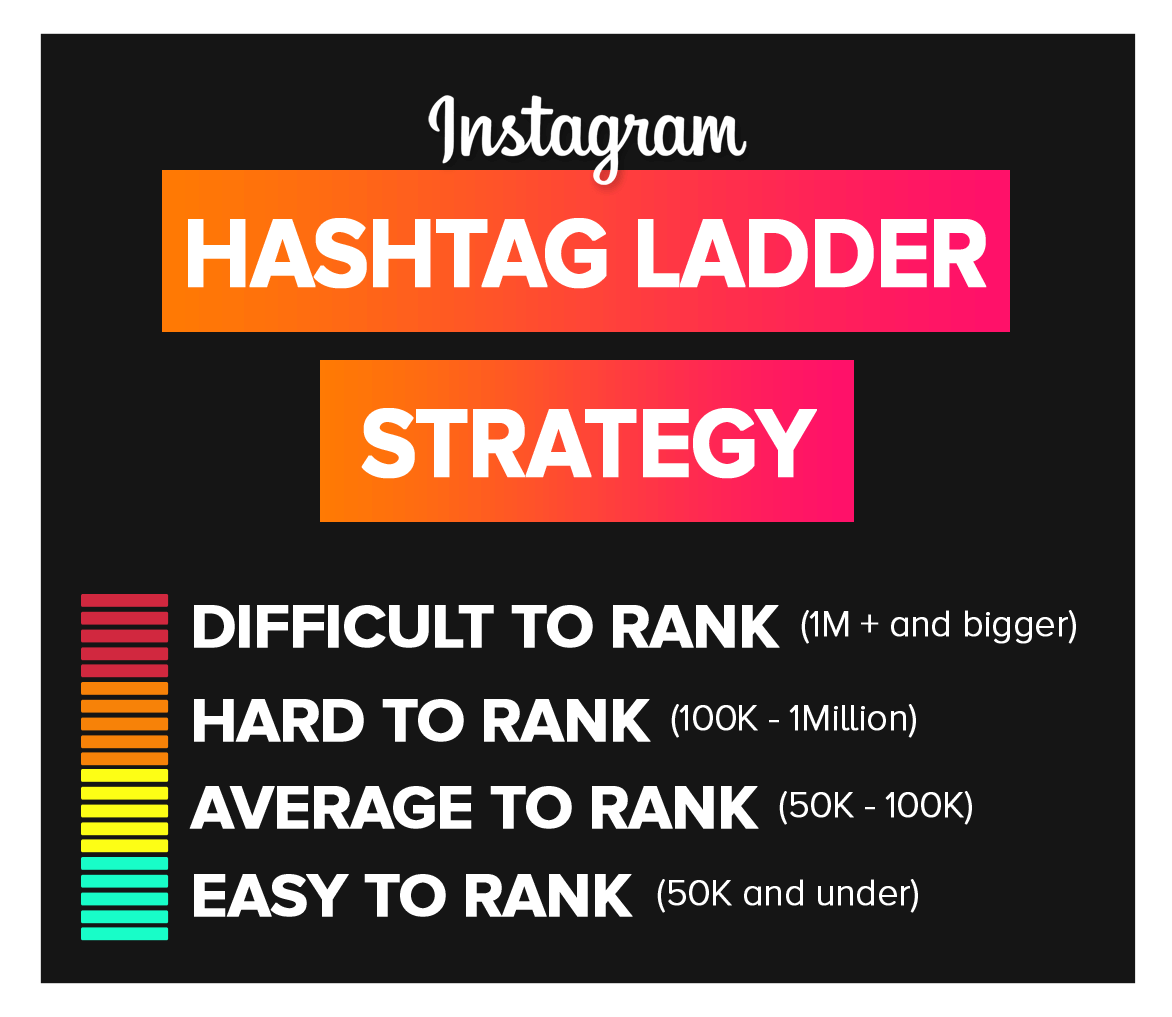
Here’s a simple framework for categorizing hashtags by size, based on the number of posts on Instagram:
- Small: Under 100,000 posts. These are your most niche and targeted tags.
- Medium: Between 100,000 and 500,000 posts. These offer a good balance of reach and competition.
- Large: Over 500,000 posts. These are broad and highly competitive, but offer massive reach if you can rank for them.
Your goal is to create a list that includes hashtags from all three categories.
3. How to Find Relevant Hashtags for Your Niche
Now for the practical part: finding the right hashtags for your "cheap and cheerful lifestyle" content. This is a research process with three key steps: Brainstorm, Find, and Vet.
Step 1: Brainstorm Your Core Topics
A great way to start is by brainstorming hashtags in three "buckets" or categories.
INSTAGRAM HASHTAG STRATEGY | EASY GUIDE TO HASHTAGS | HOW TO USE INSTAGRAM HASHTAGS
In this video, creator Jade Beason explains a simple but effective 'three-bucket' method for brainstorming hashtags. This will help you think about your brand from different angles.
Watch the clip from 02:44 to 06:42. You don't need to find 20 hashtags for each bucket right now, but focus on understanding the three categories: Bucket A: About You (e.g., #debtfreejourney, #frugallife) Bucket B: Your Ideal Follower (e.g., #studentbudget, #firsthomebuyer) Bucket C: Your Content (e.g., #budgetmeals, #moneysavingtips, #DIYhacks)
Step 2: Find Hashtag Ideas
With your core topics in mind, you can start searching for specific hashtags.
- Use the TikTok and Instagram Search Bars: Type in a core term like "frugal living" and see what suggested hashtags pop up. This is the simplest way to find related tags.
- Analyze Your Peers: Look at the successful influencers you researched in our first lesson. What hashtags are they using on their posts? Make a note of any that seem relevant to you.
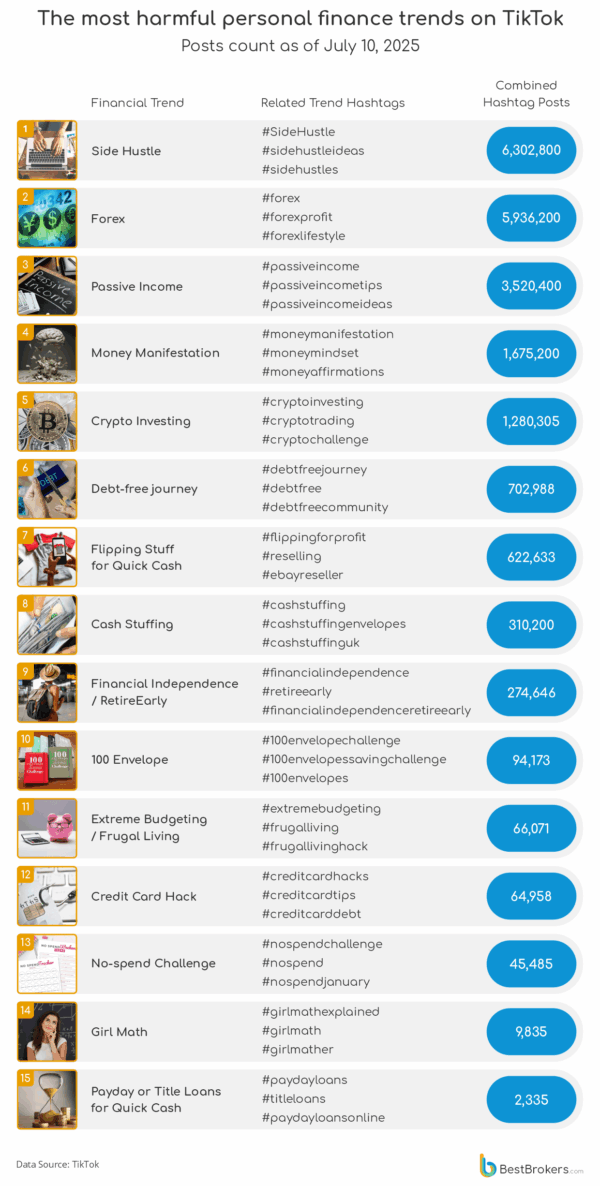
- Use Niche-Specific Data: The image below is a goldmine for you. It lists trending personal finance topics on TikTok, complete with the exact hashtags and their popularity.
Step 3: Vet Your Hashtags
Once you have a list of potential hashtags, you need to check them to make sure they're a good fit. For each hashtag on your list, do the following:
- Check the Size: Search for it on Instagram and note the number of posts. This tells you if it's small, medium, or large.
- Check for Relevance: Look at the 9-12 "Top Posts" for that hashtag. Does the content look like yours? Would your post fit in naturally? If the top posts are all memes and you're posting a recipe, it might not be the right tag.
- Check for Banned Hashtags: Occasionally, Instagram will ban or limit a hashtag if it's being used for spam. When you search for a banned hashtag, you'll often see a message saying recent posts are hidden. Avoid these.
INSTAGRAM HASHTAG STRATEGY | EASY GUIDE TO HASHTAGS | HOW TO USE INSTAGRAM HASHTAGS
The same video from Jade Beason has an excellent section on this vetting process. It shows you exactly what to look for.
Watch the segment from 06:42 to 10:31. Focus on her process for checking if a hashtag is banned, if the top content aligns with yours, and how she categorizes them by size based on her account's stage.
4. Your Action Plan: Build Your Hashtag Vault
It's time to put this all together and create your own "hashtag vault." This will be a document or spreadsheet where you store your researched hashtags, ready to copy and paste into your posts. This is a one-time setup that will save you hours in the future.
Your Task: Create a list of 30-50 relevant hashtags for your niche, categorized by size.
-
Set Up Your Vault: Open a spreadsheet (like Google Sheets or Excel) or a simple document. Create columns for:
- Hashtag
- Size (Post Count)
- Category (Small, Medium, or Large)
- Content Pillar (e.g., Budget Meals, Saving Tips, Frugal Hacks)
-
Start Researching: Use the brainstorming and finding techniques from Part 3.
- Start with the hashtags from the "Personal finance trends on TikTok" image.
- Look at your list of 10 successful influencers and see what they use.
- Use the Instagram search bar to explore related tags.
-
Fill Your Vault: For each hashtag you find:
- Look it up on Instagram.
- Add it to your spreadsheet with its post count.
- Label it Small (<100k), Medium (100k-500k), or Large (>500k).
- Assign it to one of your content pillars.
Your goal is to have a healthy mix of sizes. A good starting point is to have more small and medium hashtags than large ones.
Conclusion
Great work! You've just moved from randomly picking hashtags to building a strategic collection tailored to your niche and growth stage. This "hashtag vault" is a critical asset that will help your content get discovered by the people you want to reach.
Key Takeaways:
- Hashtags are essential for categorizing your content and reaching new audiences.
- The best strategy for beginners is the "Hashtag Ladder": use a mix of small, medium, and large hashtags to build momentum.
- The research process involves brainstorming core topics, finding ideas through search and competitor analysis, and vetting each hashtag for size and relevance.
Preview of the Next Lesson:
Now that you have your hashtags ready, the next step is to craft the perfect caption to accompany them. In our next lesson, you will learn how to write an Instagram caption with a strong hook, value-driven body, and a clear call to action, encouraging your new viewers to engage and follow.