
Introduction
Welcome back! In our last lesson, we journeyed to the Sierra Nevada de Santa Marta and established its incredible physical uniqueness—a "world in a mountain" that rises from tropical seas to glacial peaks. We saw how the Tairona designed their civilization in harmony with this landscape and introduced their descendants, the Kogi, who see themselves as guardians of this sacred place.
Today, we will delve much deeper into the central concept of the Kogi worldview. Your learning outcome is to explain the Kogi concept of the Sierra Nevada as the 'Heart of the World'.
We will move beyond the geographical description to unpack the cosmological, spiritual, and systemic meanings behind this powerful metaphor. For you as a designer and storyteller, this is like moving from the wireframe to the rich, interactive prototype. We're not just looking at the structure of the mountain anymore; we are exploring the belief system that gives it life and meaning, and defines the role of its people within the wider world.
1. The Mountain as a Living Being
The Kogi term for the Sierra Nevada is Gonawindua. For them, the phrase "Heart of the World" (El Corazón del Mundo) is not just a poetic label; it is a literal description. They perceive the entire mountain range as a single, conscious, living organism.
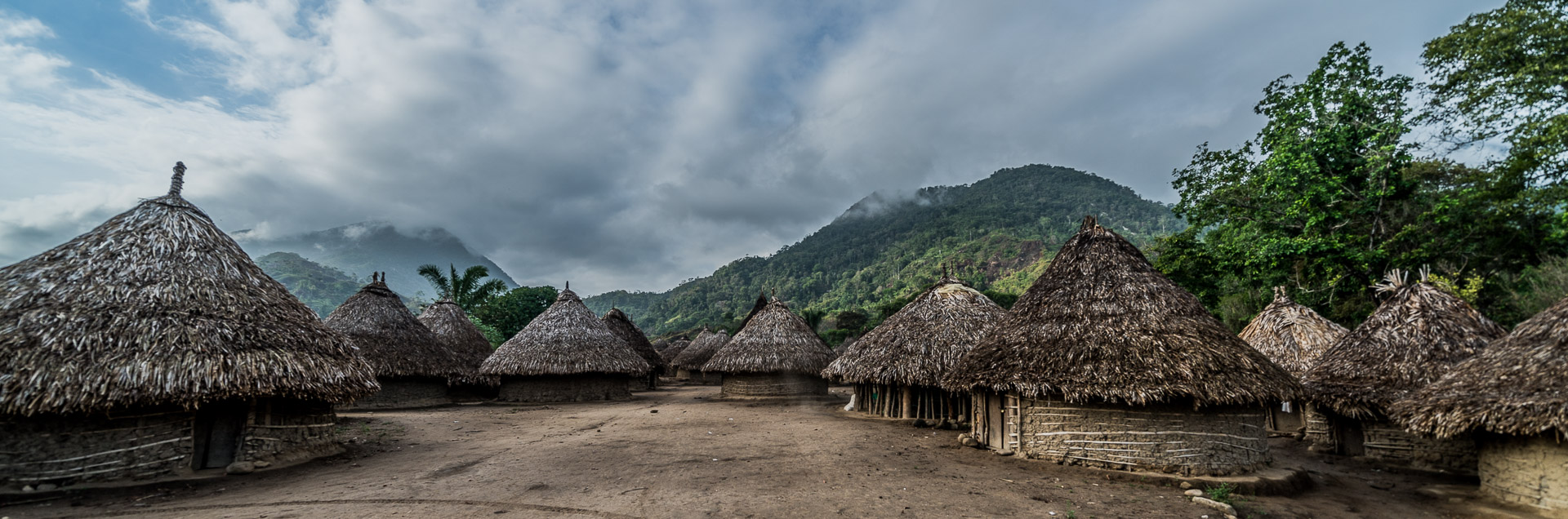
To begin, let's explore a resource that clearly articulates this foundational idea.
Gonawindua: The Spiritual Ecology of the Kogi People
The article 'Gonawindua: The Spiritual Ecology of the Kogi People' provides a direct and powerful explanation of how the Kogi perceive the mountain as a living body.
Please read the first main section of the article, down to the line '...caring for the land is the ultimate sacred act.' Then, skip down to the section titled 'Sacred Geography And Territory as a Living Being' and read it in full. Focus on the direct analogies the Kogi use: rivers as veins, peaks as the head, and so on.
As you've just read, this worldview transforms ecology into a spiritual practice. Every part of the mountain has a function, just like an organ in a body. This is the first layer of understanding the "Heart of the World": it is a living entity, and the Kogi see themselves as integral cells within its body, not as separate beings acting upon it.
2. A Microcosm of the Planet
The second layer of the concept stems from the Sierra's unique geography, which we touched on in the last lesson. Because it contains nearly every ecosystem on Earth in miniature, the Kogi believe it is a perfect model, or microcosm, of the entire planet.
This means the Sierra Nevada functions like a diagnostic center for the Earth. Its health is a direct reflection of the planet's health. If the "Heart" is sick, the entire body of the world is sick.
Let's watch a clip from the documentary From the Heart of the World, which powerfully illustrates this idea.
From the Heart of the World: The Elder Brothers' Warning - Kogi Message to Humanity
This segment from the landmark 1990 documentary explains why the Sierra's unique environmental structure makes it a 'copy of the whole planet in miniature.'
Watch from timestamp 11:38 to 13:10. Pay attention to how the narration describes the range of climates, from tropical to arctic, and how this makes the Sierra a self-contained model of the world.
This concept of a model or prototype should be familiar from your design work. By observing and tending to this smaller, representative system, the Kogi believe they can understand and maintain the balance of the much larger global system.
3. The Web of Connections: The Línea Negra
How is this living body connected? The Kogi worldview includes a system of invisible, energetic connections that link crucial points within the Sierra's "body." These are essential for maintaining its health.
These key points are sacred sites called ezuamas. You can think of them as the acupuncture points of the Earth. They are connected by an invisible spiritual current, which is often referred to as the Línea Negra (the Black Line). This "line" is both a conceptual boundary of their ancestral territory and a very real (to them) energetic circuit.
To help visualize this, let's read a clear explanation of these concepts.
On the intangible border of the Kogi's sacred mountains
This essay from Aeon, 'On the intangible border of the Kogi's sacred mountains,' provides a thoughtful description of the 'ezuamas' and the multi-layered meaning of the 'Línea Negra.'
Please read the two sections starting with 'On a sheet of paper, he draws a wobbly pyramid...' and 'Simigui tells me of the linea negra...'. These passages explain the concepts of 'ezuamas' as sacred nodes and the 'Línea Negra' as the connective thread.
This idea of an invisible network of energy and information that defines the health of a system is powerful. It extends the metaphor beyond a single body to a network.
The Kogi sought to make this invisible network visible to the "Younger Brother" (the outside world). The documentary Aluna follows the Mamos as they physically trace these connections with a gold thread, demonstrating how points on the coast are directly linked to points high in the mountains.
Aluna - An Ecological Warning by the Kogi People
In this clip from the follow-up documentary 'Aluna,' the Kogi Mamos undertake a journey to physically trace a 'black line,' making their worldview tangible.
Watch from timestamp 19:30 to 22:11. Observe how they describe the connections between 'aswamis' (places of authority, similar to 'ezuamas') in the mountains and on the shore. This is a real-world journey mapping exercise based on a spiritual principle.
Test your understanding!
From your perspective as a product and systems designer, how does the concept of the Línea Negra and the ezuamas resemble a framework like journey mapping or system architecture?
Show answer
The framework is remarkably similar. The ezuamas are like critical touchpoints or nodes in a system—the key moments or components that have a disproportionate impact on the overall health and function of the system. The Línea Negra is the pathway or data flow that connects them. The Kogi believe that if a node (ezuama) is damaged (e.g., through mining or pollution), the flow along the entire path (Línea Negra) is disrupted, causing the whole system to fail. This is analogous to how a broken API call or a poorly designed step in a user journey can bring down an entire service or create a negative user experience.
4. The Guardians of the Heart
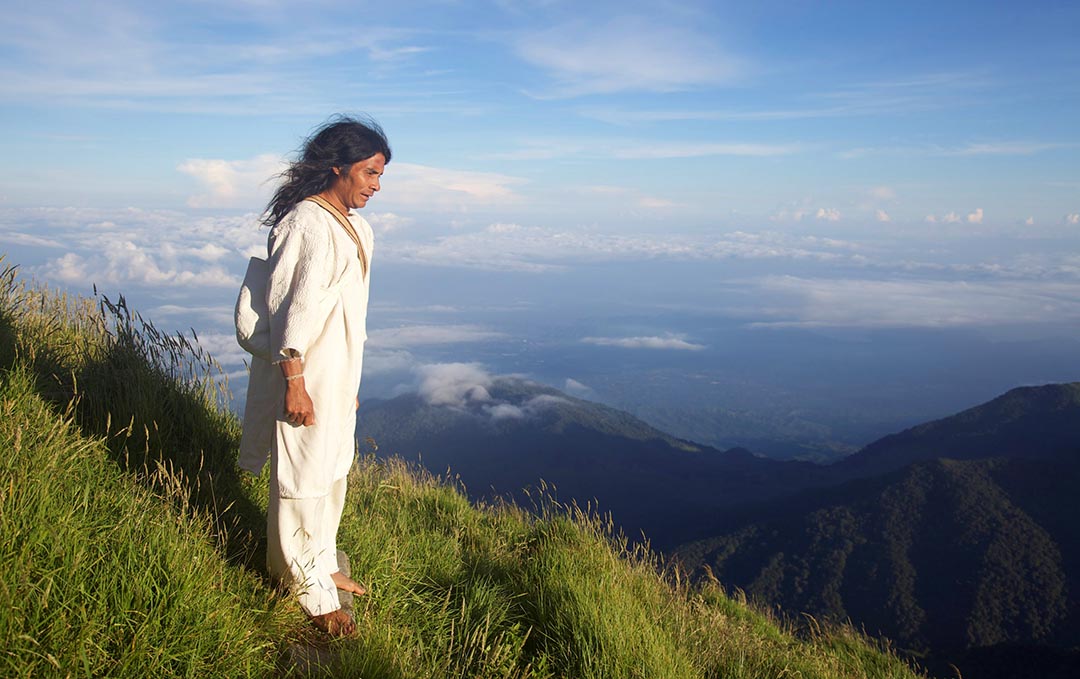
This complex understanding of the Sierra Nevada as a living, interconnected heart of the world leads to the Kogi's most important role: they are its caretakers. They call themselves the "Elder Brothers," and they believe they possess the ancient knowledge required to perform rituals and make offerings (pagamentos) at the sacred sites to keep the heart beating and the entire planet in balance.
Their warnings to the "Younger Brother" stem from the physical and spiritual damage they see being done to the ezuamas and the Línea Negra, which sickens the heart and, by extension, the world.
Let's watch one final clip that encapsulates this responsibility.
From the Heart of the World: The Elder Brothers' Warning - Kogi Message to Humanity
Returning to 'From the Heart of the World,' this segment features a Mamo explaining their duty to care for the world and the consequences of disturbing the sacred sites.
Watch from 38:09 to 39:04, where a Mamo explains their work is for everyone. Then, jump to 1:16:30 and watch until 1:17:20, where an expert explains how excavating sacred sites removes 'fundamental energy' from the system, disrupting the whole.
The Kogi see a direct causal link: when the Younger Brother extracts resources like gold and coal, they are not just taking minerals; they are removing the vital organs and disrupting the energetic balance of the living Earth, causing the world's "fever"—climate change.
Conclusion
Today we have unpacked the profound meaning behind the "Heart of the World." It is a concept built on several interconnected layers, moving from the literal to the cosmological.
Key Takeaways:
- A Living Body: The Kogi perceive the Sierra Nevada (Gonawindua) as a single, living organism, with peaks, rivers, and forests functioning as its organs.
- A Planetary Microcosm: Because it contains nearly every global ecosystem, the Sierra acts as a scale model of the entire planet, whose health reflects the health of the world.
- A Web of Energy: The mountain's body is held together by a network of sacred sites (ezuamas) connected by an invisible energetic circuit (Línea Negra), which ensures the flow of life.
- A Sacred Duty: As "Elder Brothers," the Kogi believe it is their responsibility to maintain the balance of this heart through rituals and offerings, thereby caring for the entire planet.
Preview of the Next Lesson:
Now that we understand the what—the Sierra as the Heart of the World—we need to explore the how. How do the Kogi perceive and interact with this web of life? In our next lesson, we will explore the Kogi cosmological principle of 'Aluna', the spiritual, non-physical world of thought and consciousness from which the material world originates. This will be key to understanding their creation myth.
Can't find a good explanation? Sign up and we'll make it for you
Sign up