
Hello! Welcome to the penultimate lesson of our course.
In our last session, we designed a production-grade deployment strategy for a conversational AI agent. We covered how to build and scale today's state-of-the-art systems using Kubernetes, microservices, and advanced cloud-native tools. You now have a comprehensive blueprint for taking a powerful audio AI model from the lab to a global, production-ready service.
Today, we pivot from engineering the present to researching the future. This lesson is designed to bridge the gap between being a skilled practitioner and an innovative researcher. We will explore the boundaries of what is currently possible in audio AI and identify the key open problems that researchers are actively trying to solve.
This lesson directly addresses the learning outcome: Identify and discuss current research frontiers in audio AI, such as low-resource languages, expressive synthesis, and robust recognition. By the end of this lesson, you'll have a map of the most exciting and challenging areas in the field, which will prepare you for our final lesson on formulating your own research proposal.
1. Robust Speech Recognition: ASR in the Wild
One of the biggest gaps between models in the lab and models in the real world is robustness. A model that achieves a low Word Error Rate (WER) on a clean dataset like LibriSpeech can fail spectacularly when faced with background noise, diverse accents, or long, rambling conversations. Robust recognition is the research frontier focused on closing this gap.
A key development in this area was OpenAI's Whisper, a model you have some familiarity with. Let's delve into the research principles that made it so robust.
OpenAI Whisper: Robust Speech Recognition via Large-Scale Weak Supervision | Paper and Code
The video 'OpenAI Whisper: Robust Speech Recognition via Large-Scale Weak Supervision' by Aleksa Gordić provides an excellent analysis of the Whisper paper. It highlights the core ideas that enable the model's impressive generalization capabilities.
Please watch the following segments: Large-Scale Weak Supervision (02:15 - 03:08): Understand how training on 680,000 hours of noisy, 'weakly supervised' web data was the key to Whisper's robustness, a departure from training on smaller, clean datasets. Effective Robustness (16:06 - 18:03): Focus on the concept of 'effective robustness' and how Whisper generalizes better to out-of-distribution and noisy datasets compared to models trained only on clean speech. Performance in Noise (22:18 - 23:01): Observe the charts showing Whisper's WER in the presence of white noise and pub noise, demonstrating its superior performance in adverse conditions. Decoding Heuristics (26:41 - 28:27): Pay attention to the practical decoding strategies (beam search, temperature fallback, VAD) that prevent common failure modes in long-form transcription, like repetition.
The video reveals several key research directions within robust ASR:
- Data Scaling and Curation: The "secret sauce" of Whisper is not a novel architecture but a paradigm shift in data philosophy. Instead of a small, high-quality dataset, it uses a massive, lower-quality dataset. Research here involves developing better heuristics for filtering web-scale data and understanding the trade-offs between data quantity and quality. The video's later discussion on data cleaning (section at 11:13) exemplifies this challenge.
- Zero-Shot Generalization: Whisper's ability to perform well on datasets it has never seen during training is a major focus. This is achieved by the sheer diversity of its training data.
- Robust Decoding Strategies: A perfect acoustic model can still produce poor transcripts due to decoding failures. Research into more robust beam search variants, temperature scheduling, and integrating voice activity detection (VAD) directly into the decoding loop are active areas for improving long-form transcription.
2. The Low-Resource Challenge: Speech AI for All Languages
Of the roughly 7,000 languages spoken worldwide, the vast majority are "low-resource," meaning they lack the large, transcribed datasets needed to train traditional supervised models. This is arguably one of the most important frontiers in making AI globally accessible.
The Power of Self-Supervision
How can we learn from audio if we don't have transcriptions? The dominant approach is self-supervised learning (SSL). Models like wav2vec 2.0 are pre-trained on vast amounts of unlabeled audio to learn fundamental representations of speech.
Wav2vec2 A Framework for Self-Supervised Learning of Speech Representations - Paper Explained
This video from DataMListic explains the wav2vec 2.0 paper, a landmark in self-supervised speech representation learning. It directly addresses the low-resource problem.
Please watch these key sections: The Premise (00:16 - 03:01): Note the core claim: pre-training on audio alone can outperform semi-supervised methods, especially for low-resource languages. The Architecture & Objective (04:03 - 05:47): Understand the core mechanism: masking parts of the latent audio representation and forcing the model to predict the correct 'quantized' version from a set of distractors. This is analogous to how BERT works for text. The Results (10:52 - 13:06): Focus on the astonishing result on the Libri-light dataset, where the model achieves a very low WER with only 10 minutes of labeled data.
Wav2vec 2.0 and similar models (like HuBERT) represent a major research frontier. Key research questions include:
- How can we design more efficient pre-training objectives?
- What are the best ways to fine-tune these models for various downstream tasks?
- How well do these representations transfer across different languages?
Multilingual Models and Cross-Lingual Transfer
Another powerful approach is to train a single, massive model on over 100 languages simultaneously. By learning from high-resource languages (like English and Spanish), the model can generalize to low-resource languages that share similar phonetic structures.
The Whisper video you watched earlier touched on this. Let's revisit a specific part that highlights the challenges.
OpenAI Whisper: Robust Speech Recognition via Large-Scale Weak Supervision | Paper and Code
Let's return to the Whisper video to see a concrete example of the challenges in multilingual modeling.
Please re-watch the segment from 18:38 to 21:54. Focus on two points: The correlation between data hours and performance, and why some languages are outliers (due to unique scripts or linguistic distance). The Welsh language example, where data quality issues (misclassification) led to poor performance despite a large amount of data.
This illustrates that simply throwing more data at the problem isn't enough. Active research frontiers in multilingual speech AI include:
- Data Curation: Developing automated methods to detect and correct labeling errors in massive multilingual datasets.
- Tokenizer Design: Creating tokenizers that work efficiently across diverse scripts and character sets.
- Tackling Dialectal Variation: Building models that can understand and synthesize the rich variations within a single language (e.g., the many dialects of Arabic), which is an even more data-scarce problem.
3. Expressive and Controllable Synthesis: Beyond Robotic Speech
The goal of Text-to-Speech (TTS) is no longer just intelligibility but achieving human-level naturalness and expressiveness. This frontier is about giving users fine-grained control over the synthesized voice's style, emotion, and prosody.
The Rise of Audio Language Models
The most significant breakthrough in this area has been the application of Large Language Model (LLM) paradigms to audio. This has led to a new class of models that can perform "in-context learning" for speech.
Recent Transformer-based and LLM-based TTS Systems
This LinkedIn article, 'Developments in Text-to-Speech Technology (2020–2025)', provides a great summary of the latest trends. We will focus on the section discussing LLM-driven TTS, which is at the heart of modern expressive synthesis.
Please read the section titled 'LLM-Driven TTS (Neural Codec Language Models)'. As you read, focus on the core ideas behind models like VALL-E and Voicebox: Neural Audio Codec: How they use a model like EnCodec to discretize continuous audio into a sequence of 'audio tokens'. Conditional Language Modeling: How they train a Transformer to predict these audio tokens, just like a text LLM predicts text tokens. Zero-Shot Voice Cloning: The emergent ability to clone a speaker's voice from just a 3-second audio prompt, preserving emotion and acoustic environment.
This paradigm opens up several research avenues:
- High-Fidelity Neural Codecs: The quality of the "audio tokenizer" is critical. Research into better audio codecs that can compress audio to low bitrates with perfect reconstruction is ongoing.
- Efficient Architectures: Models like VALL-E are autoregressive and can be slow. Research into non-autoregressive or diffusion-based models for generating audio tokens is a hot topic.
- Controllability: How can we explicitly control the emotion or style of the generated speech, beyond just what's inferred from the prompt?
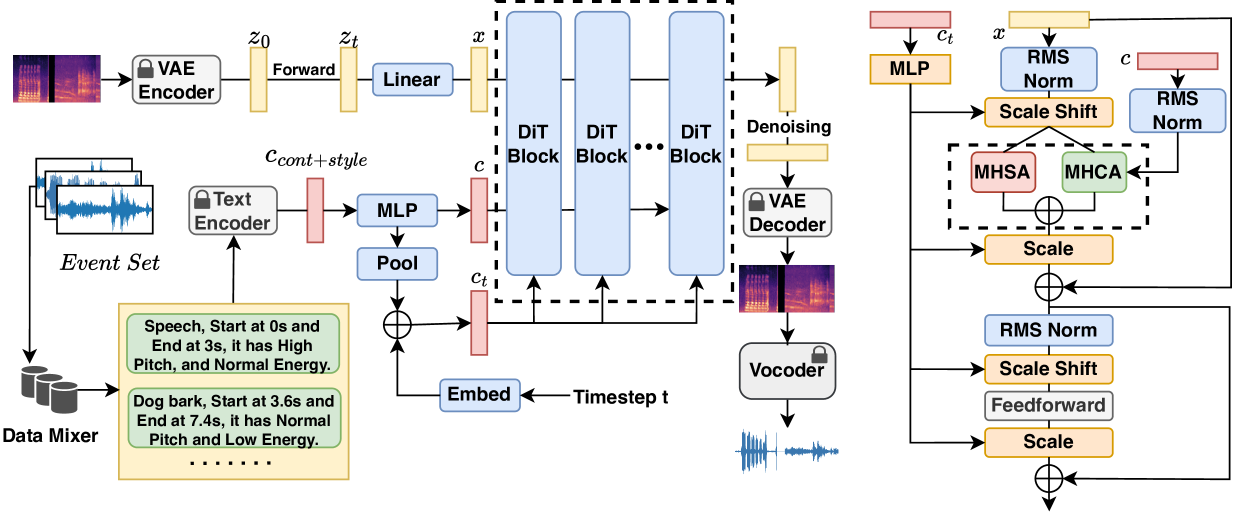
4. The Grand Challenge: End-to-End Speech Language Models (SpeechLMs)
The frontiers we've discussed—robustness, low-resource performance, and expressiveness—are all converging towards a single, unifying vision: the Speech Language Model (SpeechLM).
A traditional voice agent uses a cascaded pipeline: ASR -> LLM -> TTS. This pipeline forces all information through a text bottleneck, losing the rich paralinguistic data in speech (tone, emotion, pitch). SpeechLMs aim to eliminate this bottleneck by creating a single, end-to-end model that can understand and generate speech directly using discrete audio tokens.
Recent Advances in Speech Language Models: A Survey
The survey paper 'Recent Advances in Speech Language Models' provides the first comprehensive overview of this emerging field. It formalizes the concepts and maps out the current landscape.
This paper is a glimpse into the future. Please read the following sections: Introduction (Section 1): Understand the limitations of the cascaded 'ASR+LLM+TTS' framework and the motivation for SpeechLMs. Challenges and Future Directions (Section 6): This section directly lists key open research problems, including end-to-end training, safety risks (toxicity, privacy), and performance on rare languages. Downstream Applications (Appendix H): Skim this section and Table 9 to appreciate the vast range of tasks a single SpeechLM can perform, from spoken dialogue to emotion recognition and speech separation. Taxonomy (Figure 2): Look over this figure to get a sense of the different components (tokenizers, LMs, vocoders) and training recipes being explored.
The survey paper makes it clear that SpeechLMs are the ultimate research frontier in audio AI today. Key challenges include:
- Architectures: What is the best way to tokenize speech? What is the right balance between semantic and acoustic information? How do we build a language model that can reason over these complex audio tokens?

- End-to-End Training: Can we train the tokenizer, language model, and vocoder jointly to optimize for the final audio quality, rather than as separate components?
- Full-Duplex Conversation: How can we build models that support true bidirectional communication, allowing users to interrupt the model and enabling the model to generate backchannel responses (like "uh-huh") while listening? This is a step towards truly natural interaction.
- Safety and Ethics: As models like VALL-E make voice cloning trivial, how do we build safeguards against malicious use, such as creating deepfakes or generating toxic/harmful audio content?
Conclusion
In this lesson, we surveyed the current research frontiers in audio AI. We've seen that the field is rapidly moving beyond simple transcription and synthesis towards creating robust, multilingual, and expressive models that can interact with the world in a fundamentally more human-like way.
Key Takeaways:
- Robust Recognition is being driven by massive, weakly-supervised datasets (the Whisper paradigm) and robust decoding strategies.
- The Low-Resource Challenge is being tackled by self-supervised learning (wav2vec 2.0, HuBERT) and massive multilingual models that enable cross-lingual transfer.
- Expressive Synthesis is being revolutionized by LLM-inspired architectures (VALL-E, Voicebox) that use neural audio codecs to perform in-context learning for speech.
- All these threads are converging towards End-to-End Speech Language Models (SpeechLMs), which operate directly on audio tokens and promise to unlock truly natural, fully duplex conversational AI.
Preview of the Final Lesson:
This exploration of the research landscape has equipped you with the context needed for our final task. In the next lesson, you will take on the role of a researcher. Your task will be to formulate a research proposal for a novel problem in audio AI, outlining the methodology and evaluation plan. You will choose one of the frontiers we've discussed (or a related one you find interesting), identify a specific, unsolved problem, and design an experiment to address it. This will be the capstone of our entire course, where you synthesize everything you've learned to contribute your own ideas to the future of audio AI.