
Hello! Welcome to the final lesson of your comprehensive course on Audio AI.
In our previous lesson, we surveyed the bleeding edge of audio AI research, exploring frontiers like robust ASR, low-resource language modeling, expressive speech synthesis, and the grand vision of end-to-end Speech Language Models. You now have a map of the most exciting open problems in the field.
This capstone lesson is where you transition from student to architect. We will synthesize everything you've learned—from the physics of sound to the intricacies of Transformer models—into the practical skill of creating a research proposal. This is the blueprint for innovation, the essential document that turns a promising idea into a tangible project, whether in a top-tier PhD program or an industry R&D lab.
This lesson directly addresses the learning outcome: Formulate a research proposal for a novel problem in audio AI, outlining the methodology and evaluation plan. By the end of our session, you will understand the structure, strategy, and substance required to articulate a compelling research vision.
1. The Anatomy of a Research Proposal
At its core, a research proposal is a persuasive document that answers three fundamental questions: What do you want to do? Why is it important? And how are you going to do it?
A clear structure is essential for making your case effectively.
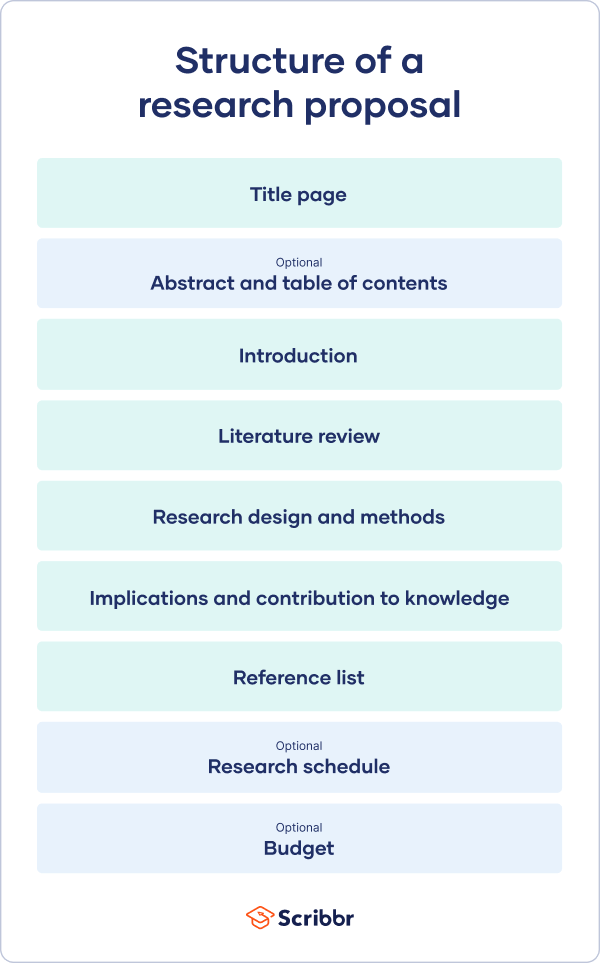
To get a detailed understanding of what each section entails, let's turn to a practical guide designed for students in your field.
[PDF] A Concise Guide to Writing Research Proposal to IT/Computing ...
The paper 'A Concise Guide to Writing Research Proposal to IT/Computing Students' provides an excellent, step-by-step breakdown of each section. It is written specifically for a technical audience.
Please read the following sections from this guide to understand the function of each part of a proposal: Section 2 (Introductory part): Skim the list of 12 sections to get a complete overview. Abstract: How to summarize your entire project in a brief paragraph. Introduction: How to set the stage and state your contribution. Problem statement: How to define the gap or issue your research will address. Research questions: How to formulate specific, answerable questions from the problem statement. Aim and objectives: How to define your overall goal (aim) and the specific steps to achieve it (objectives). Research significance: How to argue for the importance and potential impact of your work. Research methodologies: How to detail your plan for data, experiments, and analysis. \nFocus on understanding the purpose of each section.
While that guide provides the formal structure, a winning proposal also tells a compelling story. A useful framework for this story is "Why me? Why now? Why them?".
Write Your PhD Proposal in 1 Day Using These AI Prompts
The video 'Write Your PhD Proposal in 1 Day Using These AI Prompts' by Andy Stapleton offers a strategic perspective on framing your research. It emphasizes the persuasive aspects of a proposal.
Please watch the segment from 01:58 to 05:53. As you watch, focus on these three key questions your proposal must answer: Why me? How do your unique skills and background (e.g., your experience with ASR in Nepali, your technical skills in PyTorch and MLOps) make you the right person for this research? Why now? What recent technological shifts (like the rise of SSL models or neural codecs) make your proposed research possible and timely? Why them? Why is a specific lab, university, or company the right place to conduct this research (e.g., access to specific data, expertise, or computational resources)?
2. Identifying a Research Gap
A novel research project begins with identifying a "gap"—an unanswered question, an unsolved problem, or a limitation in existing work. The papers and models we've studied are filled with clues.
One common source of research ideas is the critique of prior paradigms. For example, many modern TTS systems were born out of frustration with the complex, multi-stage pipelines of the past.
End-to-End Adversarial Text-to-Speech (Paper Explained)
Let's revisit a paper that did exactly this. The 'End-to-End Adversarial Text-to-Speech' video explains a paper that identified a clear problem with existing methods and proposed a radical new solution.
Watch the following clips to see how a research problem is defined and a novel approach is justified: The Problem with TTS (01:51 - 03:46): The speaker explains the challenges of traditional TTS, including the high ratio of text-to-audio samples and the unknown alignment problem. The Proposed Solution vs. Traditional Pipelines (03:46 - 07:17): Pay attention to the contrast between the proposed 'end-to-end' adversarial approach and the traditional multi-stage pipeline that relies on intermediate representations like spectrograms. This contrast is the research gap the paper aims to fill.
This is a classic research pattern:
- Analyze the status quo: Traditional TTS involves separate models for text processing, spectrogram generation, and vocoding.
- Identify its limitations: This pipeline is complex, requires separate training for each component, and can accumulate errors. The alignment between text and audio is a major challenge.
- Propose a new paradigm: An end-to-end model trained adversarially to directly generate raw audio from text, attempting to solve all these problems in one go.
When you read a paper, always look for the "Limitations" or "Future Work" section. This is often where authors explicitly state the research gaps they didn't have time to fill.
3. Case Study: A Real Audio AI Research Proposal
Now, let's deconstruct a high-quality PhD proposal from a top university to see these principles in practice. This will serve as our exemplar.
[PDF] Structured Models for Audio Content Analysis Ph.D. Thesis Proposal
This document, 'Structured Models for Audio Content Analysis Ph.D. Thesis Proposal' from Carnegie Mellon University, is a perfect example of a well-formed research plan in our field.
Skim through this proposal to get a feel for its structure and tone. Then, focus on these key sections: Abstract: Notice how it starts with a grand hypothesis ('sound has its own language'), identifies the core methodology (learning 'acoustic unit descriptors' or AUDs), and states the proposed contribution (discovering hidden semantic structure from weakly-labeled data). Section 4.1 (Structured Event Sequences): The author defines the problem more formally, drawing an analogy to natural language parsing but also highlighting key differences (audio is noisy). This is a masterclass in framing a problem. Section 4.2 (Approaches to Leveraging Weakly Supervised Data): Here, the author directly addresses the biggest challenge: the lack of richly annotated data. They propose specific methodologies to overcome this, including semi-supervised learning and multi-instance learning (MIL). This is the 'how'. Section 4.3 (Future Tasks and Estimated Timeline): This section translates the high-level ideas into a concrete, actionable plan with clear tasks. This demonstrates feasibility to the reviewers.
This proposal excels because it clearly articulates:
- A compelling vision: Modeling audio with its own structured language.
- A core problem: The scarcity of labeled data to learn such a language.
- A concrete methodology: Using techniques from semi-supervised and multi-instance learning to learn from the abundant, weakly-labeled data that is available.
4. Your Turn: Brainstorming a Proposal
Let's walk through the process of formulating a proposal outline, combining your background, your interests, and the frontiers we've discussed.
Hypothetical Research Area: Expressive Zero-Shot TTS for Low-Resource Languages
This is a great topic because it combines the challenge of expressive synthesis with the low-resource problem, an area where you have personal context (Nepali) and technical experience.
Let's use the structure from our guide to flesh this out.
1. Title: "Cross-Lingual Prosody Transfer for Expressive Zero-Shot Speech Synthesis in Low-Resource Languages"
2. Introduction & Problem Statement:
- Problem: State-of-the-art TTS models can generate highly expressive speech, but they rely on large, professionally-recorded datasets that don't exist for most of the world's languages, including Nepali. Standard TTS for these languages sounds robotic.
- Gap: Models like VALL-E show zero-shot capabilities but are trained primarily on English. Their effectiveness on linguistically distant, low-resource languages is unproven and likely poor. How can we transfer expressive capabilities from a high-resource language (like English) to a low-resource one without requiring a large, expressive dataset in the target language?
3. Aim & Objectives:
- Aim: To develop and evaluate a framework that enables expressive, zero-shot voice cloning in a low-resource language by leveraging a multilingual speech model and a separate, pre-trained prosody encoder.
- Objectives:
- To design a prosody encoder that learns to extract speaking style (emotion, pitch, rhythm) from audio, independent of language.
- To adapt a pre-trained multilingual model (e.g., a variant of Whisper or SeamlessM4T) to accept conditioning from this prosody encoder.
- To fine-tune the system on a small, non-expressive dataset of the target low-resource language (e.g., Nepali).
- To evaluate the model's ability to synthesize expressive Nepali speech by providing it with a Nepali text and an English audio prompt exhibiting the desired style.
4. Methodology:
- Data: Use a large, multilingual, expressive dataset (e.g., for English) to train the prosody encoder. Use a standard, non-expressive ASR dataset for the target low-resource language (e.g., the open-source Nepali ASR dataset you may be familiar with).
- Architecture:
- Content Encoder: Use the pre-trained encoder from a massive multilingual model like SeamlessM4T to extract language-agnostic semantic content from the input text.
- Prosody Encoder: Design a VAE-based or SSL-based model trained on spectrograms to learn a latent representation of prosody. This would be trained on high-resource expressive data.
- Decoder: Use a Transformer-based decoder (similar to a SpeechLM) that takes both the content and prosody embeddings to predict discrete audio tokens (using a pre-trained neural codec like EnCodec).
- Training:
- Train the prosody encoder separately.
- Freeze the prosody encoder and the content encoder.
- Fine-tune the decoder on the low-resource dataset, teaching it to combine content and style information to generate the target language.

5. Evaluation Plan:
- Objective Metrics: Use metrics like Mel-Cepstral Distortion (MCD) to measure similarity to a ground truth (if available) and Speaker Similarity scores to evaluate voice cloning.
- Subjective Metrics: Conduct a Mean Opinion Score (MOS) study to evaluate Naturalness and Expressiveness. Ask human listeners to rate the synthesized audio on a 1-5 scale.
- Baselines: Compare your model against:
- A standard TTS model (e.g., FastSpeech 2) trained only on the low-resource data.
- A zero-shot attempt using a large, English-centric model like VALL-E (to demonstrate its failure on this task).
This structured outline transforms a vague idea into a concrete, plausible, and exciting research project.
Conclusion
Congratulations on completing this journey through the world of Audio AI! You have progressed from the fundamental principles of sound waves to the architectural blueprints of the most advanced models in existence.
In this final lesson, we demystified the process of research formulation. You learned how to structure a proposal, identify a meaningful research gap, and outline a robust methodology to address it. This is the skill that bridges the gap between using existing tools and inventing new ones.
Key Takeaways:
- A research proposal is a structured argument that defines a problem, proposes a novel solution, and details a feasible plan for execution.
- Key sections include the Introduction (What/Why), Literature Review (The Gap), Methodology (How), and Significance (So What?).
- Finding a research gap often involves critiquing existing work, identifying its limitations, and proposing a better way.
- A strong methodology is specific about data, architecture, training procedures, and, crucially, a clear evaluation plan with relevant metrics and baselines.
You began this course with the goal of becoming an audio researcher and developer. You now possess the foundational knowledge and the conceptual framework to not only contribute to the field but to help shape its future. The path ahead is one of constant learning and discovery. Good luck.