
Hello! Welcome to the sixth lesson in our module on Data Storytelling and Stakeholder Influence.
In our previous lesson, we learned how to add a narrative layer to our reports, using the Observation → Insight → Recommendation framework to guide decision-making. You now have the skills to not only present data but also to propose a clear path forward. However, proposing a change is often just the beginning of the conversation.
Today, we will focus on what comes next. Your learning outcome is to anticipate stakeholder questions and objections and prepare data-driven responses. This is a crucial skill for any leader. It's about moving from a defensive position, where you react to questions as they arise, to a proactive one, where you've already mapped the conversational battlefield and prepared your counterpoints. Mastering this will build your credibility, demonstrate your strategic foresight, and significantly increase the chances of getting buy-in for your ideas.
1. Thinking Like a Stakeholder: Speaking the Right Language
The first step in anticipating questions is to understand the person who will be asking them. As a marketing leader, your primary stakeholders—especially those in finance and the C-suite—operate with a different set of priorities and a different vocabulary. Your metrics of success (engagement rates, click-through rates) are often just noise to them. They care about business outcomes.
The HubSpot article, "Here’s how to prove marketing’s pipeline value & revenue impact to your CFO," provides an excellent overview of this disconnect and how to bridge it.
Here's how to prove marketing's pipeline value & revenue ...
This article clearly contrasts the metrics marketers often focus on with those that matter to financial leaders. Understanding this difference is the foundation for anticipating their questions.
Please read the introduction and the section titled 'What metrics do CFOs actually care about?'. Pay close attention to the table comparing 'Traditional Marketing Metrics' with 'CFO-Focused Revenue Metrics.' This is the language you need to speak.
As you read, you'll see that metrics like MQLs and traffic are replaced by marketing-sourced revenue, CAC Payback Period, and LTV:CAC ratio. When you frame your arguments and results in these terms, you are already answering their unasked first question: "Why should I care about this?"
To further solidify this mindset shift, let's watch a video on the core principles of communicating with executives.
5 Rules for Communicating Effectively with Executives
Dr. Grace Lee's video, '5 Rules for Communicating Effectively with Executives,' provides a powerful framework for senior-level communication. We'll focus on the rules that help us understand the executive mindset.
Watch the sections on 'Rule #1: Escape the minutiae' (00:54-02:20), 'Rule #4: Elongate your time frames' (05:57-08:20), and 'Rule #5: Exercise business acumen' (08:48-10:20). Notice how these rules push you to think about long-term value and business goals, not just daily campaign tasks.
The key takeaway is that executives are not interested in the details of your work; they are interested in the impact of your work on the business over the long term.
2. A Framework for Anticipating Objections
To be truly prepared, you need a systematic way to think through potential objections. A stakeholder analysis is a simple but effective tool for this. It forces you to consider each stakeholder's unique motivations, concerns, and power to influence your project.
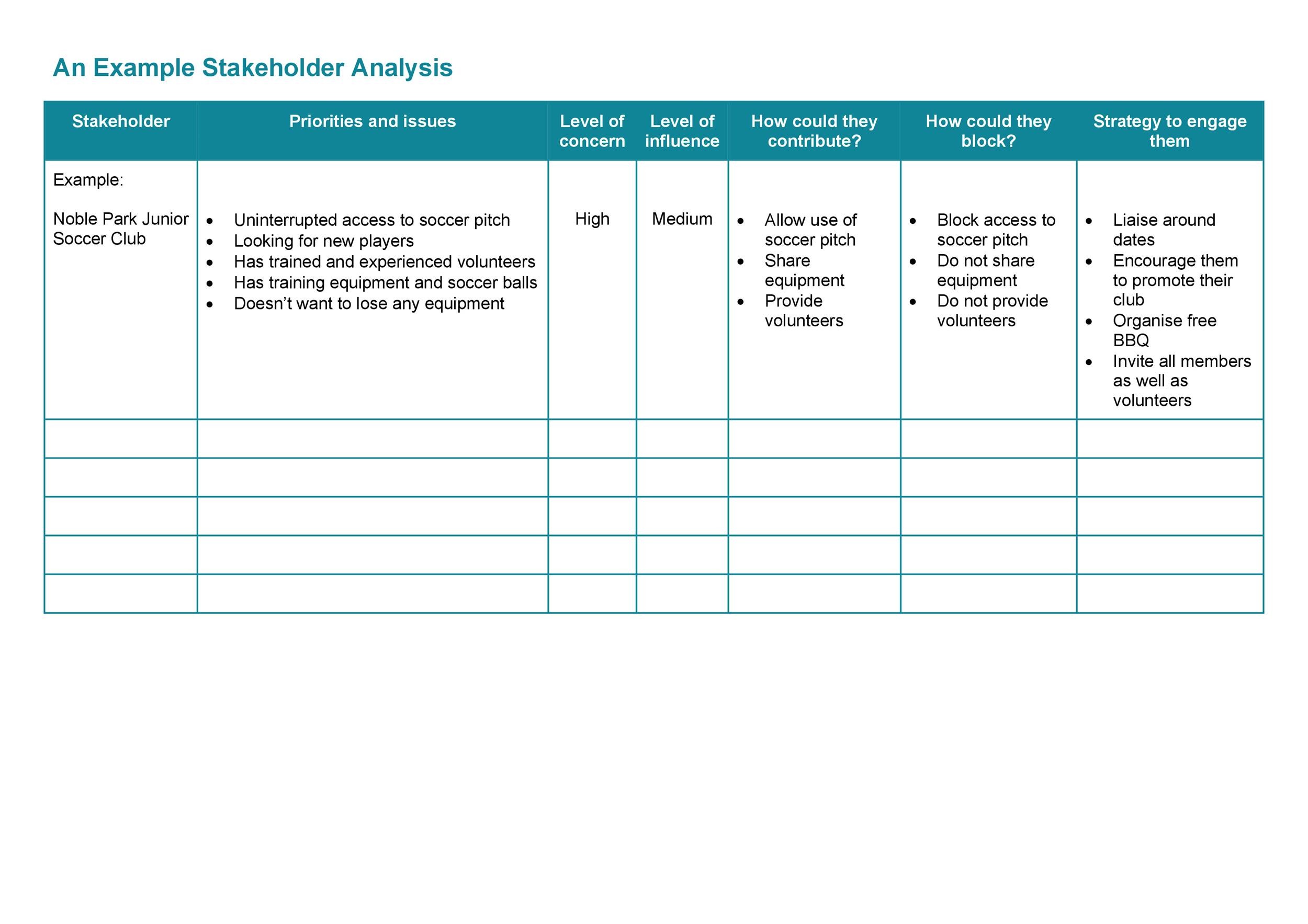
For each key stakeholder, ask yourself:
- Priorities: What is the single most important metric on their mind? (For a CFO, it might be ROI; for a Head of Sales, it might be qualified lead volume).
- Concerns/Fears: What are they worried about? (Wasting money, disrupting a process that "works," missing targets).
- How could they block this? What question or objection, if left unanswered, would cause them to say "no"?
This structured thinking will generate a list of likely questions, which we can now prepare to answer.
3. Common Objections and Data-Driven Responses
Most stakeholder objections fall into a few common categories. Let's tackle them one by one, using data to build compelling responses.
Objection 1: The "Prove It" Challenge
This is the most common objection, questioning the true value and ROI of your marketing efforts.
- Stakeholder might say: "These numbers look good, but how do we know marketing is actually causing these sales? Aren't you just taking credit for people who would have bought from us anyway?"
This question challenges the validity of platform-reported metrics like last-click ROAS. The most powerful response here is to introduce the concept of incrementality.

The following article is a fantastic resource for arming yourself with responses to this specific challenge.
Incrementality ≠ Last-Click: The 7 Myths Holding Mobile ...
The Appier blog post on incrementality myths is a practical guide to handling skepticism about marketing's true impact. It provides ready-made answers to tough questions.
First, read 'Myth 4: High ROAS from Last-Click Means Your UA is Truly Incremental.' This directly addresses the objection. Then, read the section 'Addressing Stakeholder Skepticism.' It provides a brilliant 'Response Framework' for the 'But Our Last-Click Data Shows We're Profitable' objection. Memorize this framework.
Your data-driven response, using the framework from the article, would sound something like this:
"You're asking a great question. Our platform ROAS is strong, and that's a good starting point. However, to understand our true impact, we need to measure incrementality—the sales that wouldn't have happened without our ads. Industry data shows 20-40% of attributed revenue can be non-incremental. To validate our spend, I propose we run a low-risk incrementality test on just 10% of one of our main campaigns. This will show us our true, incremental ROAS and ensure we're investing every dollar as efficiently as possible."
Objection 2: The "Too Risky / Too Expensive" Pushback
Even if stakeholders agree with your logic, they may object based on perceived risk, cost, or effort.
- Stakeholder might say: "We can't afford to run complex tests." or "What if holding back ads hurts our sales this quarter?" or "We don't have the team or time for this."
Your goal here is to reframe the conversation from "cost of testing" to "cost of not knowing" and to de-risk the proposal. The same Appier article gives you the exact language to do this.
Incrementality ≠ Last-Click: The 7 Myths Holding Mobile ...
Let's return to the Appier article to find responses for objections related to cost and risk.
Read the sections 'Common Implementation Barriers (And How to Overcome Them)' and 'Myth 2: Incrementality Tests Are Too Expensive and Time-Consuming'. Note the practical, low-cost starting points (e.g., simple holdouts) and the risk mitigation strategies (start small, short test windows).
Objection 3: The "What About..." Complications
Stakeholders will often point to complexities that your model might seem to ignore.
- Stakeholder might say: "Our sales cycle is over 12 months. How can you attribute this sale to a single ad?" or "What about word-of-mouth or that conference we attended? Your report ignores the 'dark funnel'."
Acknowledging these complexities shows you're a sophisticated marketer, not someone blindly following a simple model. The HubSpot article provides excellent strategies for this.
Here's how to prove marketing's pipeline value & revenue ...
Let's go back to the HubSpot article to see how to address objections about long sales cycles and untrackable influence.
Review the table under '3. Preempt CFO concerns with finance-ready narratives,' then read the sections 'How to Handle Long Sales Cycles...' and 'Addressing Dark Funnel and Offline Attribution.' This will equip you to respond confidently to questions about the messy reality of customer journeys.
Test your understanding!
A CFO looks at your proposal to shift budget from a campaign with a high last-click ROAS to a new, untested channel. They say, "Why would we move money away from our most profitable campaign?" Based on what you've learned, what is the strongest opening to your response?
A. "You're right, the ROAS is high, but I think the new channel could be even better."
B. "Because last-click ROAS doesn't tell the whole story. We need to think about multi-touch attribution."
C. "That's a valid concern. The campaign is indeed profitable on paper, but we need to verify how much of that profit is incremental. High-ROAS campaigns often get credit for sales that would've happened anyway. A small test showed this campaign's incremental ROAS is much lower."
D. "We need to diversify our channels to mitigate risk, and this new channel is trending in the industry."
Show answer
C. "That's a valid concern. The campaign is indeed profitable on paper, but we need to verify how much of that profit is incremental. High-ROAS campaigns often get credit for sales that would've happened anyway. A small test showed this campaign's incremental ROAS is much lower."
This is the strongest response because it:
- Acknowledges and validates the stakeholder's concern ("That's a valid concern").
- Introduces the key concept of incrementality as the solution.
- Directly addresses the flaw in the stakeholder's assumption ("High-ROAS campaigns often get credit for sales that would've happened anyway").
- Uses data (even hypothetical "a small test showed...") to support the claim.
4. Guiding the Conversation
Anticipating questions isn't just about having answers ready; it's about guiding the conversation from a stakeholder's initial, often broad, concern toward a concrete, data-driven solution that you have prepared.
This video demonstrates a masterclass in this kind of conversational guidance. It's a scripted role-play, but it perfectly illustrates the process.
Deconstructing Data Science Questions with Stakeholders
In 'Deconstructing Data Science Questions with Stakeholders', watch how the analyst engages with a business leader. This isn't just a Q&A; it's a strategic conversation.
Watch the entire video (01:11 - 10:32). As you watch, notice how the analyst: Listens to the stakeholder's core business problem (missed sales), not just his proposed question. Asks clarifying questions to understand current processes and data availability. Proposes a solution to the initial problem but then skillfully pivots to a much larger, more strategic opportunity (product lifecycle). Gains buy-in by framing the bigger vision in a way that excites the stakeholder ('pie-in-the-sky'). Concludes with a clear plan to build a roadmap.
This is the ultimate goal: you don't just survive the meeting; you lead it. You start with their concern and end with their enthusiastic approval of your strategic plan.
Conclusion
Today, we've moved beyond creating recommendations to learning how to defend them and win support. By anticipating questions and preparing data-driven responses, you transform yourself from a reporter of facts into a trusted strategic partner.
Key Takeaways:
- Speak the Language of Business: Frame your arguments in terms of revenue, ROI, and customer lifetime value, not marketing jargon.
- Anticipate, Don't React: Use a stakeholder analysis framework to systematically predict questions and concerns before they are raised.
- Master the Common Objections: Be prepared with data-driven responses for questions about ROI (incrementality), risk (low-cost tests), and complexity (dark funnel).
- Guide the Conversation: Use stakeholder questions as a starting point to lead them toward a larger, more strategic solution that you have already envisioned.
Preview of Your Next Lesson:
Now that you can formulate a recommendation and anticipate the objections, the final step is to formalize the rollout. In our next lesson, we will focus on how to develop a communication plan for rolling out a significant data-driven change in strategy. This will tie together everything we've learned about storytelling and stakeholder management into a single, actionable plan.