
Introduction
Hello! Welcome back to our journey into the world of Colombian mythology.
In our last lesson, we established the physical and social foundations of the Wayuu people. We explored the stark, beautiful landscape of the La Guajira peninsula and learned about their resilient matrilineal society, where women are the anchors of the territory, symbolically linked to the earth (Maa), while men embody the mobile, life-giving rain (Juyá).
Today, we build directly on that foundation to address your learning outcome: to recount the Wayuu creation myth featuring the central deity Maleiwa. This is where we move from the stage to the play itself. You'll discover how the Wayuu explain the origin of the cosmos, of nature, and of themselves. For someone with your experience in storytelling and systems design, this myth is a fascinating case study in world-building—it establishes the core characters, rules, and causal relationships of an entire worldview in a single, powerful narrative.
1. The Divine Cast: Introducing the Creators
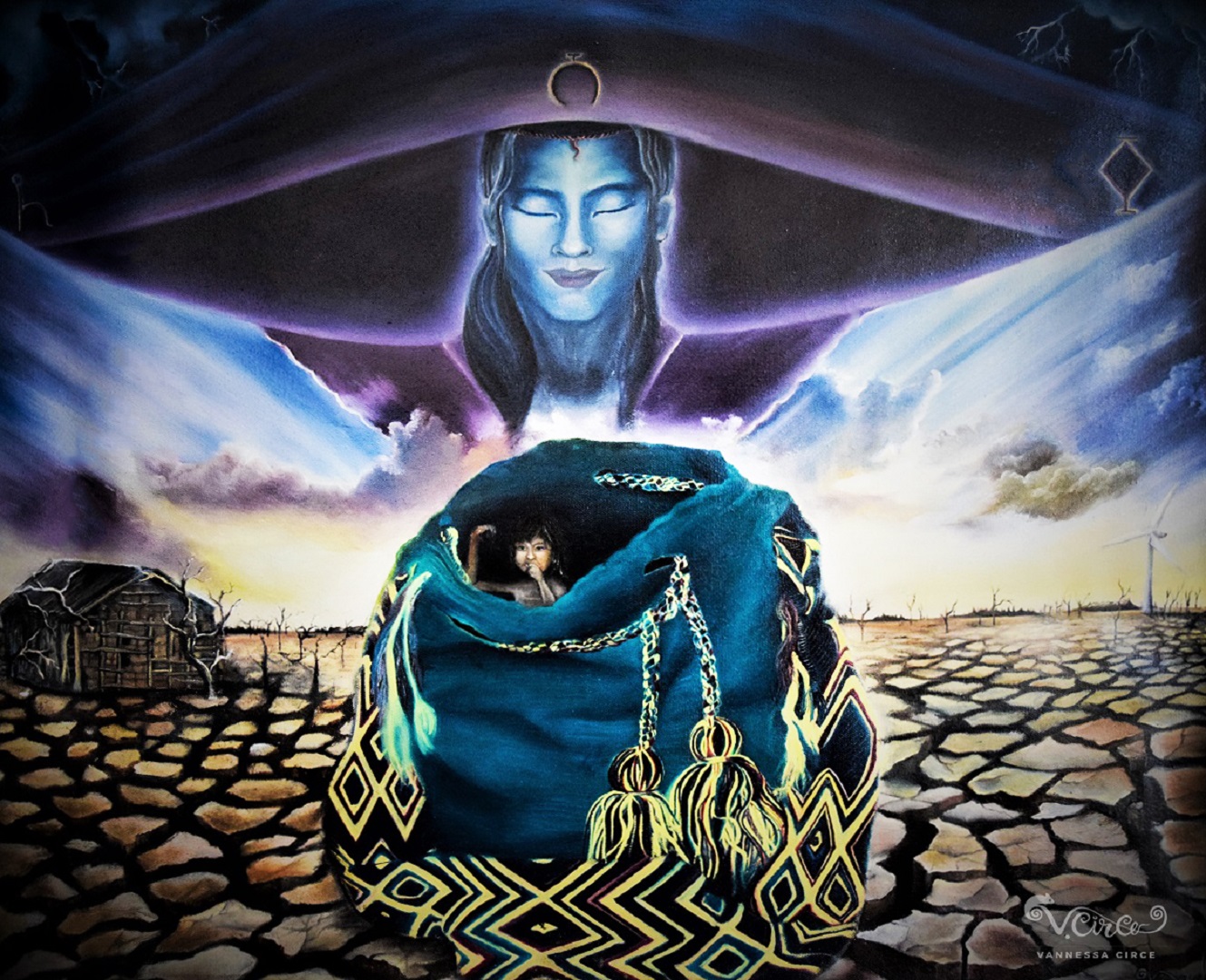
Before we dive into the full story, let's meet the main figures in the Wayuu cosmology. The Wayuu worldview is not centered on a single, all-powerful god, but on a cast of powerful beings who create and influence the world.
To get a quick overview of these key deities, please read the short description from the Wikipedia article on the Wayuu people.
This brief excerpt introduces the central figures of the Wayuu pantheon, providing a quick who's-who before we explore their story.
Read the first paragraph under the 'Religion and society' section. Focus on the descriptions of Maleiwa, the creator, and the divine couple, Pulowi and Juya.
As you read, the central creator figure is Maleiwa. Surrounding this creative force are other powerful beings you've already met in concept: Juya (rain) and Pulowi (a complex figure associated with drought, wind, and the underworld). Their interactions are central to the Wayuu understanding of life, death, and the natural cycles of their world.
2. The Great Story: The Origin of the Generations
Now that we know the key players, we can explore the creation story itself. One of the most powerful ways to learn a myth is to hear it as it's told. The following text is a beautiful account of the creation myth as narrated by José Luis, a Wayuu naturalist from the Tocoromana community. His telling connects the myth directly to the natural world he knows so intimately.
As you read, pay attention to the sequential creation of different "generations" of beings and how their interactions lead to the birth of the Wayuu people today.
Forgotten Guerillas of La Guajira, Colombia
This is a direct, first-hand telling of the Wayuu creation myth. It's a rich narrative that explains not only the origin of humanity but also the nature of animals, the reasons for certain rituals, and the symbolism of the world around them.
Read the section that begins with José Luis's email explanation, starting from 'My strengths are due to the fortune of being adopted by my maternal grandmother...'. Read all the way to the end of the story, concluding with '...women’s vaginas are thankfully toothless. With this story I wanted to share with you how important our older brothers are to us and the respect we have for them.'
3. Deconstructing the Narrative: A System of Origins
That was a dense and fascinating story. Let's break down its key elements, much like you would deconstruct a narrative or a user journey to understand its core components.
The Five Pre-Human Generations:
The myth lays out a clear, systematic creation process, moving from the abstract to the specific:
- The Maleiwa: The original creator beings.
- Unuuyuu (Plants): Born from the love of Juya (rain) and Maa (Earth). This immediately grounds the myth in the most fundamental elements of their environment.
- Uchiyuu (Birds): Created by Joutai (the breeze).
- Lemuttushii (Four-legged animals): Brought forth by Piyuushi (darkness), to be the "eyes in the night."
- The First Humans (Almost): Here, the story takes a dramatic turn.
The Birth of Humanity: A Story of Conflict and Transformation
The final act of creation isn't a simple event; it's a dramatic tale involving the key deities:
- The Conflict: Juya (rain) has an affair, angering his partner Pulowi (drought/underworld).
- The First Woman, Wolunka: She is born from Juya's affair. She is beautiful but dangerous, possessing a vagina dentata (toothed vagina), a powerful and recurring motif in world mythology that often symbolizes the fearsome or untamed aspect of female power.
- The First Man, Maayuui: Pulowi creates him out of her own being and gives him a mission: to marry Wolunka and populate the earth.
- The Transformation: Maayuui, through cleverness and the use of a tool (the bow and arrow), "tames" Wolunka by shooting out her vaginal teeth. Her subsequent bleeding gives color to the birds (like the Vermilion Cardinal) and is the origin of menstruation for all Wayuu women.
From this transformed union, the sixth generation—the Wayuu people of today—are born.
This myth is a masterclass in narrative efficiency. In one story, it explains the origin of:
- The entire natural world (plants, animals, birds).
- Humanity itself.
- A key biological function (menstruation).
- The distinctive color of a local bird species.
Test your understanding!
The myth explains the origin of several things at once (humans, menstruation, the color of the Vermilion Cardinal). From a storytelling and world-building perspective, what is the effect of weaving these different origin stories into the single narrative thread involving Wolunka and Maayuui?
Show answer
Weaving multiple origins into one narrative thread creates a deeply interconnected and coherent worldview.
- It Creates a System of Meaning: Instead of isolated facts ("the cardinal is red," "women menstruate"), everything is linked by a single, foundational story. The color of the bird isn't arbitrary; it's a direct consequence of the act that made human procreation possible. This makes the world feel logical and meaningful.
- It Reinforces Cultural Significance: By tying menstruation to the cosmic act of creation, the myth elevates it from a mere biological function to a sacred event, a direct inheritance from the first woman.
- It's Memorable and Efficient: As an oral tradition, bundling multiple explanations into one compelling, dramatic story makes it easier to remember and pass down through generations. The drama of Wolunka and Maayuui is far more memorable than a dry list of facts.
Conclusion
Today we have unpacked the intricate and powerful Wayuu creation myth. We've seen how a single narrative can establish a complex cosmology, explain the origins of the natural world, and encode the cultural significance of human biology.
Key Takeaways:
- The central creator figure in the Wayuu pantheon is Maleiwa.
- The world was created in successive generations: plants, birds, animals, and finally humans.
- The origin of the current Wayuu people is told through the myth of Wolunka (the first woman, with a toothed vagina) and Maayuui (the first man), whose union was made possible through an act that also explains the origin of menstruation and the color of the Vermilion Cardinal.
- This myth demonstrates how deities like Juya (rain) and Pulowi (drought) are not just abstract concepts but active characters whose relationships drive the creation of the world.
Preview of the Next Lesson:
We've now been introduced to Juya and Pulowi as key characters in the creation drama. In our next lesson, we will focus on them, exploring in more detail the roles of Juya (rain) and Pulowi (drought/underworld) in the Wayuu worldview. We'll see how their eternal opposition and interaction govern the cycles of life and death in the challenging environment of La Guajira.
Can't find a good explanation? Sign up and we'll make it for you
Sign up