Hello! Welcome back to our work on using game theory for your new business.
In our last lesson, we established that your initial production capacity is a powerful strategic signal to competitors. We used game theory models to see how choosing a "small" vs. "large" capacity could either invite a fight or secure a peaceful entry. Now, we'll add another layer to that decision. It's not just about how much you can make, but what kind of products you are set up to make.
Today's lesson is designed to help you assess the strategic value of flexibility versus specialization in your product offerings and machinery. This is a fundamental trade-off. Should you buy a highly specialized CNC machine that makes the best doors in the region but can't do much else? Or should you invest in a more flexible, all-around machine that can produce doors, cabinets, and other custom items, giving you the ability to adapt? This choice is a strategic commitment that will define your business's path.
The Two Paths: Specialization vs. Flexibility
At its core, your choice comes down to two strategic approaches for your product mix. These are often described as "product depth" (specialization) and "product width" (flexibility or diversification).
To get a clear understanding of these concepts and their advantages, let's start with a short reading.
Win with Product Mix Flexibility
This article, 'Win with Product Mix Flexibility,' clearly defines the difference between a deep (specialized) and a wide (flexible) product mix. It provides excellent examples that we can apply to your business.
Please read from the beginning down to the end of the section 'Going Wide: The Power of Diversification'. Pay close attention to the definitions of product width and depth, and the key advantages listed for each strategy. Think about how the Dyson (specialist) vs. Amazon (diversified) examples might apply to a small manufacturing business.
As the article explains, these two paths offer distinct strategic benefits:
-
Specialization (Product Depth): This is the Dyson approach. By focusing on a narrow category (e.g., premium hardwood doors), you aim to become the undisputed expert.
- Strategic Value: Establishes a premium brand and strong reputation quickly. Your focused expertise can act as a barrier to entry, discouraging generalist competitors. You can command higher prices due to superior quality and perceived authority in your niche.
-
Flexibility (Product Width): This is the (mini) Amazon approach. By offering a range of related products (e.g., doors, cabinet boxes, custom shelving), you spread your bets.
- Strategic Value: Reduces risk. If the market for high-end doors is slow, you can generate revenue from cabinets. It gives you the ability to "test" different market segments and pivot to where the demand is strongest. This preserves your options, which is valuable when facing uncertainty.
Connecting Product Strategy to Machinery Choice
Your product strategy is directly enabled—or constrained—by your machinery. Given your mechanical engineering background, you'll intuitively grasp the trade-off between a dedicated, high-performance machine and a flexible, multi-purpose one.
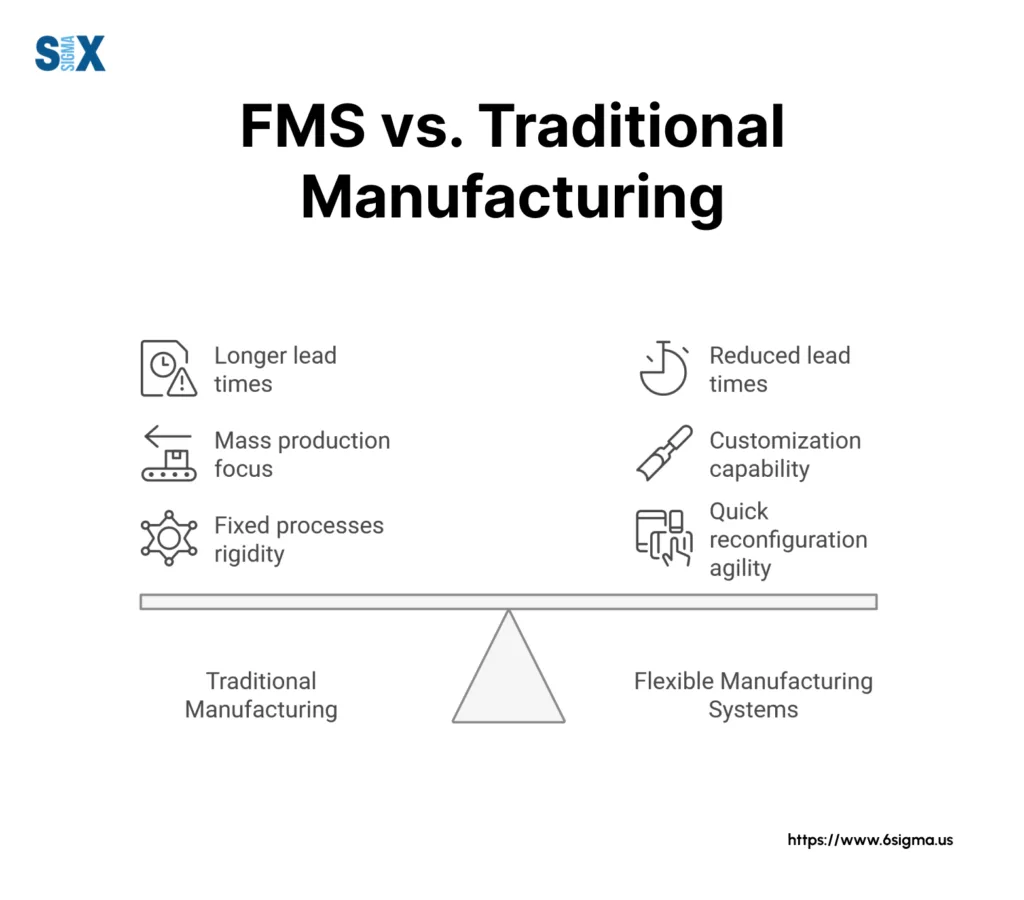
This choice is a classic manufacturing dilemma. A Flexible Manufacturing System (FMS) prioritizes adaptability, while a more traditional or dedicated system prioritizes efficiency for a single task.
So, what does this mean for your CNC machine investment?
-
A Specialized Machine (e.g., a 5-axis CNC optimized for complex door joinery) is a strong, credible commitment to the high-end door market. It's a costly, irreversible investment that signals to everyone—customers and competitors—that you are serious about being the best in that niche. It supports a specialization strategy.
-
A Flexible Machine (e.g., a standard 3-axis CNC router) is a commitment to adaptability. It keeps your options open. You can produce cabinet parts one day and door components the next. This investment supports a flexibility strategy, allowing you to explore the market.
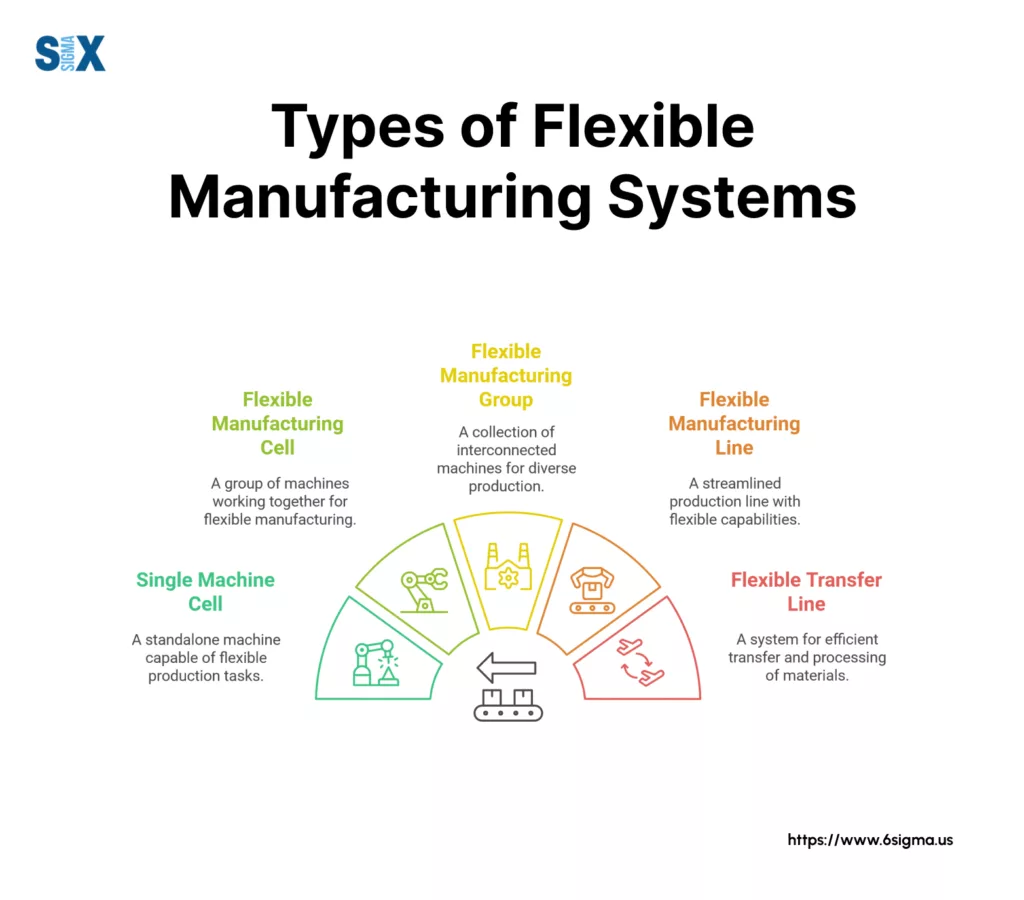
It's also important to know that flexibility isn't an all-or-nothing concept. There is a spectrum of flexible systems.
The Startup Dilemma: Which Path to Choose?
So, you're at a crossroads. Should your new woodworking business start out as a specialist or a generalist? This is where we combine the business lifecycle with game theory.
Let's look at how successful companies often navigate this choice in their early stages.
Win with Product Mix Flexibility
Let's return to the 'Win with Product Mix Flexibility' article. It has a section on how a company's product strategy evolves, which offers a powerful insight for startups.
Please read the section 'Business Lifecycle and Product Mix Evolution', focusing specifically on the first stage, '1. Startup Phase: Depth First, Then Expansion'.
The article highlights a very common and effective strategy: specialize first to build credibility, then expand from a position of strength.
By starting with a narrow focus (e.g., premium doors), you can:
- Build a Reputation: Become known for one thing and do it exceptionally well.
- Commit Credibly: Your investment in specialized tooling and marketing for doors signals to competitors that you are committed to leading this niche, potentially deterring them from competing directly with you there.
- Learn the Ropes: It's easier to master the production, marketing, and sales for one product line than for three.
- Fund Future Growth: Once your core business is profitable and your brand is established, you can use that stability and cash flow to fund a move into adjacent markets, like cabinets.
The alternative—starting wide—can sometimes lead to being perceived as a "jack of all trades, master of none," making it hard to justify a premium price point against established specialists.
Test your understanding!
Imagine you're deciding between two CNC machines. Machine A costs $80,000 and is exclusively designed for making ornate, high-end doors with extreme precision. Machine B costs $65,000 and is a general-purpose router that can make doors (less efficiently) and also cut sheet goods for cabinets.
You learn that a major local cabinet maker just announced they are exiting the custom door market to focus on volume cabinet production. From a game theory perspective, how does this news affect the strategic value of Machine A versus Machine B?
Show answer
This news significantly increases the strategic value of the specialized Machine A. The incumbent's move creates a vacuum in the custom door market, reducing the level of competition you would face. This lowers the risk associated with a specialization strategy. Investing in Machine A now becomes a more powerful move to capture and dominate this newly open niche. The signal it sends—"I am the new specialist for custom doors"—is now being sent into a less contested market, making it more likely to succeed. The need for the flexibility of Machine B (as a hedge against strong competition in the door market) is now lower.
Conclusion
Today we've dissected the crucial trade-off between flexibility and specialization. This isn't just a technical decision about machinery; it's a strategic choice about your identity in the market and how you position yourself relative to your competitors.
Key Takeaways:
- Specialization (Depth): Focusing on a narrow product line (e.g., premium doors) with dedicated machinery builds brand expertise and creates a credible commitment that can deter competitors from your niche. The risk is that you've put all your eggs in one basket.
- Flexibility (Width): Offering a wider range of products with general-purpose machinery preserves your options and reduces risk by allowing you to pivot. This is valuable under uncertainty. The risk is a dilution of your brand and trying to compete on too many fronts at once.
- The Strategic Path for a Startup: A very common and successful strategy is to specialize first. Use a narrow focus to establish a strong brand and profitable niche. Then, use that position of strength to expand your product line later.
- Your Investment as a Signal: Your choice of machinery is an irreversible investment that signals your long-term intentions to the market, influencing how competitors will react to you.
Preview of the Next Lesson:
We've established the strategic value of specialization versus flexibility. In the next lesson, we will build directly on this by creating a framework to analyze the trade-offs of starting with a narrow versus a broad product line, with a specific focus on how your available resources and capital should influence that decision.