
Hello! Welcome to your fifth lesson in the "SaaS Ideation & Market Validation" module.
In our last lesson, we focused on defining a precise Ideal Customer Profile (ICP) using the structured criteria of LinkedIn Sales Navigator. You now have a clear picture of who your target customer is—their company size, industry, role, and seniority.
Today, we take the logical next step: discovering where these ideal customers congregate online. This lesson is about how to identify and analyze 5-10 relevant online communities where your ICP is active. Finding these digital "watering holes" is one of the most powerful, low-cost research methods available to a SaaS founder. It’s where you'll hear your customers' unfiltered thoughts, discover their most urgent problems, and learn the exact language they use to describe them.
The Power of "Lurking"
Before you ever think about promoting your product, your first job is to listen. By silently observing conversations in the right online communities, you gain invaluable intelligence that shapes your product, marketing, and sales strategy. As serial SaaS founder Rob Walling emphasizes, this is a foundational step.
Let's hear his take on this.
How to Find Your FIRST 10 SaaS Customers (6 PROVEN Strategies)
In this clip from 'How to Find Your FIRST 10 SaaS Customers', Rob Walling explains the value of lurking in online communities to identify problems and complaints.
Please watch from 00:05:19 to 00:05:40. Notice his emphasis on observing discussions to find common problems—this is the core of our lesson today.
This act of "lurking" allows you to find authentic, high-intent conversations that are a goldmine for validating your SaaS idea.
A Framework for Finding Your ICP's Hangouts
To avoid aimless wandering, it's best to approach community discovery with a structured plan. A great way to start is by categorizing potential communities into three buckets.
7 Proven Reddit Research Tips [2026] for SaaS
The article '7 Proven Reddit Research Tips' provides an excellent framework for mapping out communities. We'll adopt its first principle to guide our search across all platforms, not just Reddit.
Read the section titled '1) Build a subreddit map (10–30 communities) before you read a single thread'. Focus on the three buckets it suggests for categorizing communities.
Based on this framework, you should search for communities that fall into these three categories:
- ICP / Identity Communities: Where people with a specific job title or role gather. Examples include
r/sysadminfor System Administrators,r/ProductManagementfor PMs, or a Slack group for "RevOps Leaders." - Problem / Pain Communities: Where people discuss the specific problem your SaaS aims to solve, even if they don't identify with a single job title. For example, a forum about "data backup strategies" or a subreddit like
r/churnfor discussing customer retention. - Alternative / Competitor Communities: Where people discuss the tools they currently use. This could be a subreddit for a competitor's product (e.g.,
r/salesforce) or threads across various platforms where people ask for "alternatives to [competitor name]."
Where to Look: Platforms and Tools for Discovery
Now that you have a framework, let's explore the most valuable platforms and the tools you can use to search them efficiently.
Social Listening: Identifying High-Intent Mentions to Grow ...
The article 'Social Listening: Identifying High-Intent Mentions' gives a fantastic overview of the key channels where B2B SaaS conversations happen. It will serve as our guide for this section.
Read the section 'Step 1: Identify key channels where to track conversations'. This will give you a comprehensive list of places to start your search, from Reddit and LinkedIn to niche forums and Slack communities.
Let's break down the most important channels mentioned in the article and the specific tools you can use to mine them.
1. Reddit
Reddit is often the best place to start because of its niche communities (subreddits) and the honest, unfiltered nature of its discussions. Manually searching can be slow, but there are powerful tools to speed this up.
Tool Spotlight: GummySearch
GummySearch is a tool built specifically for finding and analyzing Reddit conversations. It's perfect for what we're trying to achieve.
How I use Reddit and AI to find winning startup ideas
Entrepreneur Greg Isenberg created a detailed video walkthrough on how he uses Reddit and AI to find startup ideas. We'll watch the key parts where he demonstrates finding and analyzing communities.
Watch the following two segments: Finding Communities (00:01:31 - 00:04:49): Pay attention to his strategy of focusing on growing subreddits with 10k-100k members to find emerging opportunities. Analyzing Communities (00:04:49 - 00:12:33): This is crucial. See how he uses GummySearch's features to find 'Pain and Anger' and 'Advice Requests' to uncover problems and startup ideas.
As the video shows, the goal isn't just to find a subreddit, but to systematically extract the pain points and needs being discussed.
2. Slack & Discord Communities
These are closed, real-time chat communities. They are incredibly high-value but can't be searched by external tools. To find them:
- Use Google: Search for
"top slack communities for [ICP role]"or"best discord servers for [industry]". - Check industry blogs and influencers, who often curate lists of the best communities.
- Once you join, use the internal search function with keywords related to your problem space.
3. Niche Forums & Q&A Sites
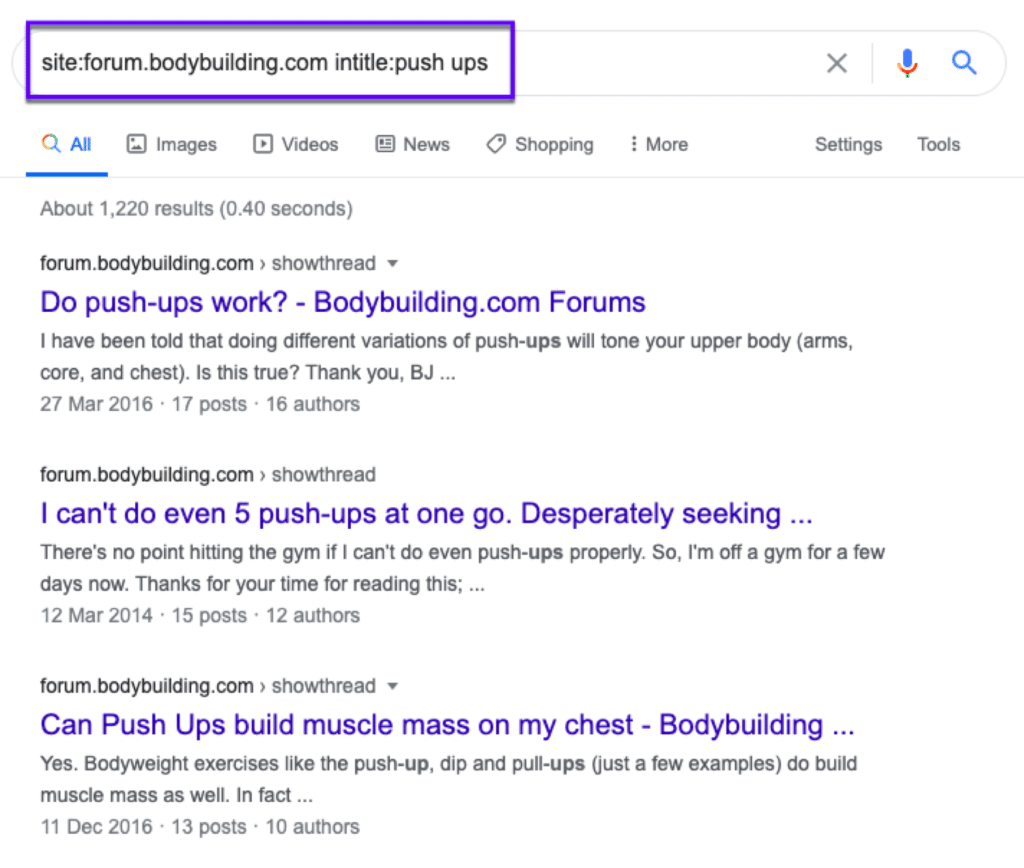
Don't overlook old-school forums or Q&A sites like Quora. These can be goldmines, especially for less tech-centric industries. You can use advanced Google search operators to find relevant discussions.
How to do it: Use the site: and intitle: operators in Google.
site:reddit.com intitle:"alternative to [competitor]"site:[nicheforum.com] "how do I"
4. Automated Discovery Tools
For a broader, data-driven view of where your audience lives online, you can use an audience research tool.
Tool Spotlight: SparkToro
SparkToro analyzes what a specific audience reads, follows, listens to, and watches. You can search by "My audience frequently talks about..." and enter keywords related to your ICP's role or problem. It will then show you the top subreddits, websites, podcasts, and YouTube channels they engage with.

How to Analyze the Communities You Find
Once you've identified 5-10 promising communities, your work shifts to analysis. Your goal is to become an anthropologist of your ICP. Create a simple spreadsheet or document for each community and look for the following signals.
7 Proven Reddit Research Tips [2026] for SaaS
The 'Reddit Research Tips' article also provides a brilliant framework for what to look for inside a community. These 'intent signals' are what separate noise from actionable insights.
Read sections '2) Define “intent signals” so you stop collecting fluff' and '3) Capture voice-of-customer (VoC) in a repeatable template'. This will teach you how to categorize posts by buying intent and how to document the exact language your customers use.
Your Analysis Checklist:
- Pain Points: What are users complaining about? Look for phrases like "I'm frustrated with...", "Does anyone else hate...", "This is taking too much time."
- Desired Outcomes: What are they trying to achieve? Look for "I wish I could...", "I'm looking for a way to...", "The ideal solution would..."
- Workarounds: What clunky solutions are they using now? Mentions of spreadsheets, Zapier automations, or manual processes are strong signals of an unsolved problem.
- Buying Intent Signals: Look for explicit requests like "Any recommendations for...", "Best tool for X?", "Alternative to [Competitor]?"
- Voice of Customer (VoC): Copy and paste the exact quotes people use to describe their pains and desired outcomes. This language is marketing gold for your future landing page.
Test your understanding!
Recall the hypothetical SaaS from our last lesson: a tool to help early-stage tech startups (less than 50 employees) streamline their engineering hiring process. The ICP is the CTO, Founder, or Head of Engineering.
Using the frameworks from this lesson, name three different types of online communities you would search for and provide a specific example for each.
Show answer
Here are some examples. Your answers might vary.
- ICP / Identity Community:
r/ExperiencedDevsorr/CTO. These are places where senior technical leaders and decision-makers gather to discuss challenges related to their roles, which often includes hiring. - Problem / Pain Community: A Slack community like "Engineering-Managers" or a subreddit like
r/recruitinghellwhere people complain about hiring processes. Searching for threads about "technical interviews" or "sourcing candidates" would be key. - Alternative / Competitor Community: A Quora thread titled "What are the best alternatives to Greenhouse for a small startup?" or a Reddit post in
r/startupsasking for reviews of Lever vs. Ashby.
Conclusion
You've now learned a systematic process for finding and analyzing the online spaces where your Ideal Customer Profile lives. This isn't a one-time task; it's a continuous habit that will keep you deeply connected to your market's needs.
Key Takeaways:
- Start with a framework: Search for communities based on your ICP's identity, their problem, and the tools they already use.
- Use the right tools for the job: Leverage GummySearch for deep Reddit analysis, Google operators for niche forums, and SparkToro for broad audience discovery.
- Analyze, don't just find: Once you're in a community, listen for pain points, desired outcomes, workarounds, and buying signals.
- Capture the Voice of the Customer: Document the exact language your ICP uses. This is invaluable for crafting compelling marketing copy that resonates.
Preview of the Next Lesson:
After listening to your ICP's problems in their own words, the next logical step is to formalize how your solution will uniquely solve those problems. In our next lesson, we will develop a unique value proposition and positioning statement using the Value Proposition Canvas. This will bridge the gap between your customer's pain and your product's promise.