
Hello! Welcome to the third lesson in our "SaaS Ideation & Market Validation" module.
In the last two lessons, we established a process for generating SaaS ideas. We started at a high level, identifying macro trends with Google Trends, and then zoomed in to find specific, validated product niches and initial competitors by analyzing platforms like Product Hunt, G2, and Capterra.
Today, we're taking the next crucial step. We'll learn how to assess market saturation and competitor strategies using SimilarWeb, Ahrefs, and BuiltWith. Once you've identified a promising idea and a few key players, you need to conduct a proper reconnaissance mission. This lesson will equip you with the tools to dissect your competitors' businesses to understand their scale, how they acquire customers, and what technology powers their operations. This intelligence is critical for deciding whether to enter a market and how to position your product for success.
A Framework for Actionable Competitor Analysis
To avoid getting lost in data, it's helpful to have a framework. For any competitor you analyze, you want to answer three core questions:
- How big are they and where does their traffic come from? (Traffic Analysis)
- What specific marketing strategies are driving that traffic? (SEO & Content Analysis)
- What technology powers their business? (Tech Stack Analysis)
We'll use a specific tool for each of these questions, giving you a powerful, multi-faceted view of the competitive landscape.
1. Traffic Analysis: The Big Picture with SimilarWeb
Your first step is to get a high-level overview of a competitor's digital footprint. SimilarWeb is excellent for this. It provides estimates on website traffic volume, geographic distribution, and the mix of marketing channels driving visitors.
I'd like you to watch this video from the "Grow with Will" channel, which provides a practical walkthrough of using SimilarWeb's free version to analyze two well-known companies, Notion and Luma.
How to Use SimilarWeb to Conduct Competitor Research
This video, 'How to Use SimilarWeb to Conduct Competitor Research,' demonstrates exactly how to extract valuable insights about a company's traffic sources, audience geography, and overall scale.
Please watch the main analysis from 00:00:16 to 00:04:27, where the presenter dissects Notion.so. Pay close attention to how he interprets the 'Traffic Sources' breakdown (Direct, Search, Social). Then, watch the summary from 00:09:35 to 00:11:01, which highlights the tool's key benefits and limitations.
As the video demonstrates, the Traffic Sources chart is often the most revealing part of a SimilarWeb report. It tells you how a competitor acquires customers:
- Direct: A high percentage here indicates strong brand awareness and recall. People are typing the URL directly into their browser. This is common for established leaders like Notion.
- Search: This points to a strong Search Engine Optimization (SEO) strategy. They are successfully capturing people who are actively searching for solutions on Google.
- Social: This shows which social media platforms are effective channels for them. The video notes that YouTube is huge for Notion, which makes sense for a visually-driven productivity tool.
- Referrals: This reveals other websites that send them traffic. These can be affiliates, integration partners, or press mentions.
Key takeaway: SimilarWeb gives you a quick, strategic overview. In minutes, you can gauge a competitor's size, primary markets, and the general shape of their marketing strategy. However, remember its main limitation: the data is less reliable for smaller, early-stage websites with low traffic.
2. SEO & Content Strategy: The Deep Dive with Ahrefs
While SimilarWeb shows you that a competitor gets traffic from "Search," Ahrefs tells you precisely how they do it. Ahrefs is a powerful SEO tool that lets you reverse-engineer a competitor's content and backlink strategy. For a startup founder, this is like being handed the enemy's battle plans.
This official video from Ahrefs covers several key use cases.
How to Use Ahrefs for SEO and Competitor Research
This video, 'How to Use Ahrefs for SEO and Competitor Research,' is a fantastic primer on the core features you'll use most often for competitive analysis.
Watch the section on the 'Top Pages' report (00:00:40 - 00:02:00) to see how to find a competitor's most valuable content. Then, watch the section on the 'Content Gap' tool (00:08:08 - 00:09:44) to learn how to find keywords they rank for that you don't.
Let's focus on the two most powerful features for you as a founder:
- Top Pages Report: This report shows you which of your competitor's pages get the most organic traffic from Google. This is a goldmine. It tells you exactly what topics resonate with the market and are worth creating content about. You don't have to guess; you can target topics with proven demand.
- Content Gap Tool: This is even more direct. You enter your domain (or leave it blank if you haven't started) and the domains of 2-3 competitors. The tool shows you all the keywords your competitors rank for, but you don't. This instantly generates a data-driven content plan designed to capture traffic from your rivals.
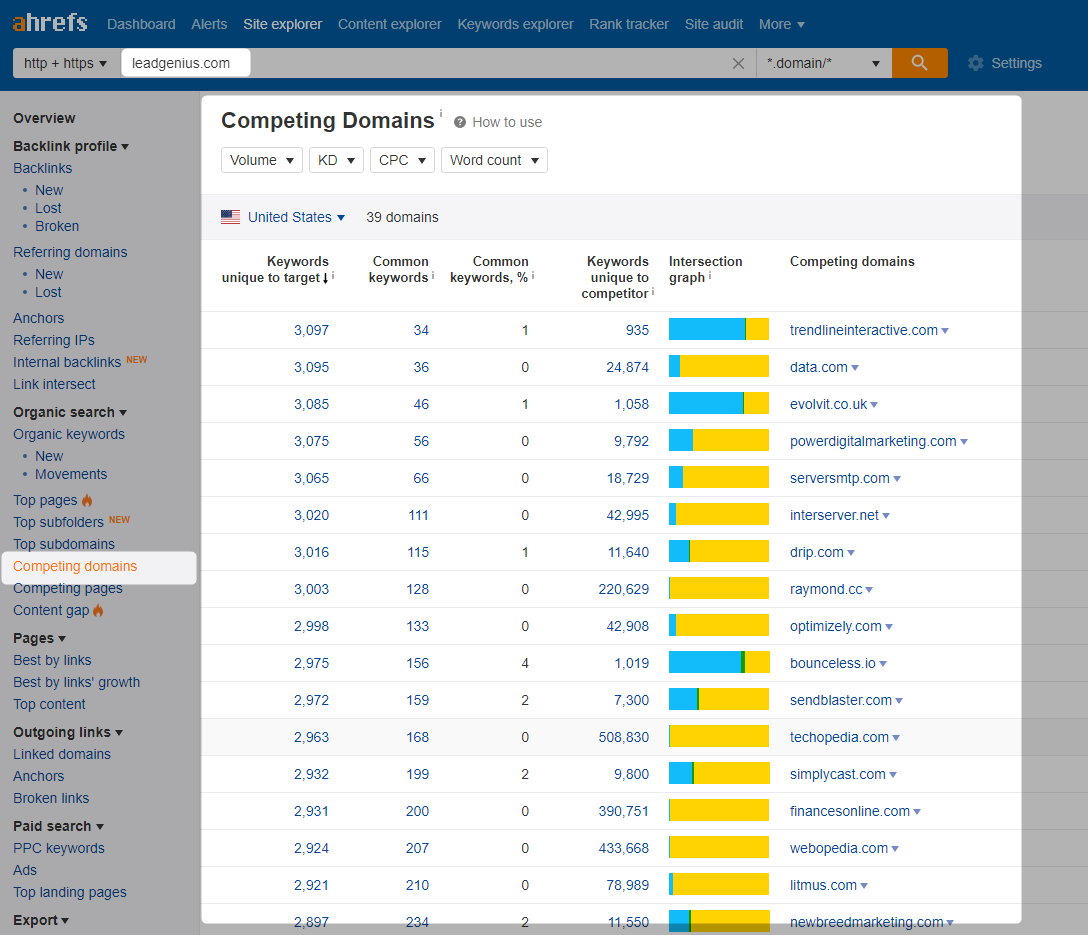
By analyzing a competitor's top pages and content gaps, you can understand their content strategy, identify underserved topics, and build a plan to compete for valuable search traffic from day one.
3. Tech Stack Analysis: Looking Under the Hood with BuiltWith
We've covered a competitor's traffic and SEO strategy. Now let's analyze their operational infrastructure. BuiltWith is a tool that tells you what technology a website is built with. It scans a site and identifies everything from their web framework and analytics tools to their CRM and payment processor.
12 Best Competitor Analysis Tools for B2B SaaS in 2025
The article '12 Best Competitor Analysis Tools for B2B SaaS in 2025' from PimpMySaaS provides an excellent summary of BuiltWith and its strategic value.
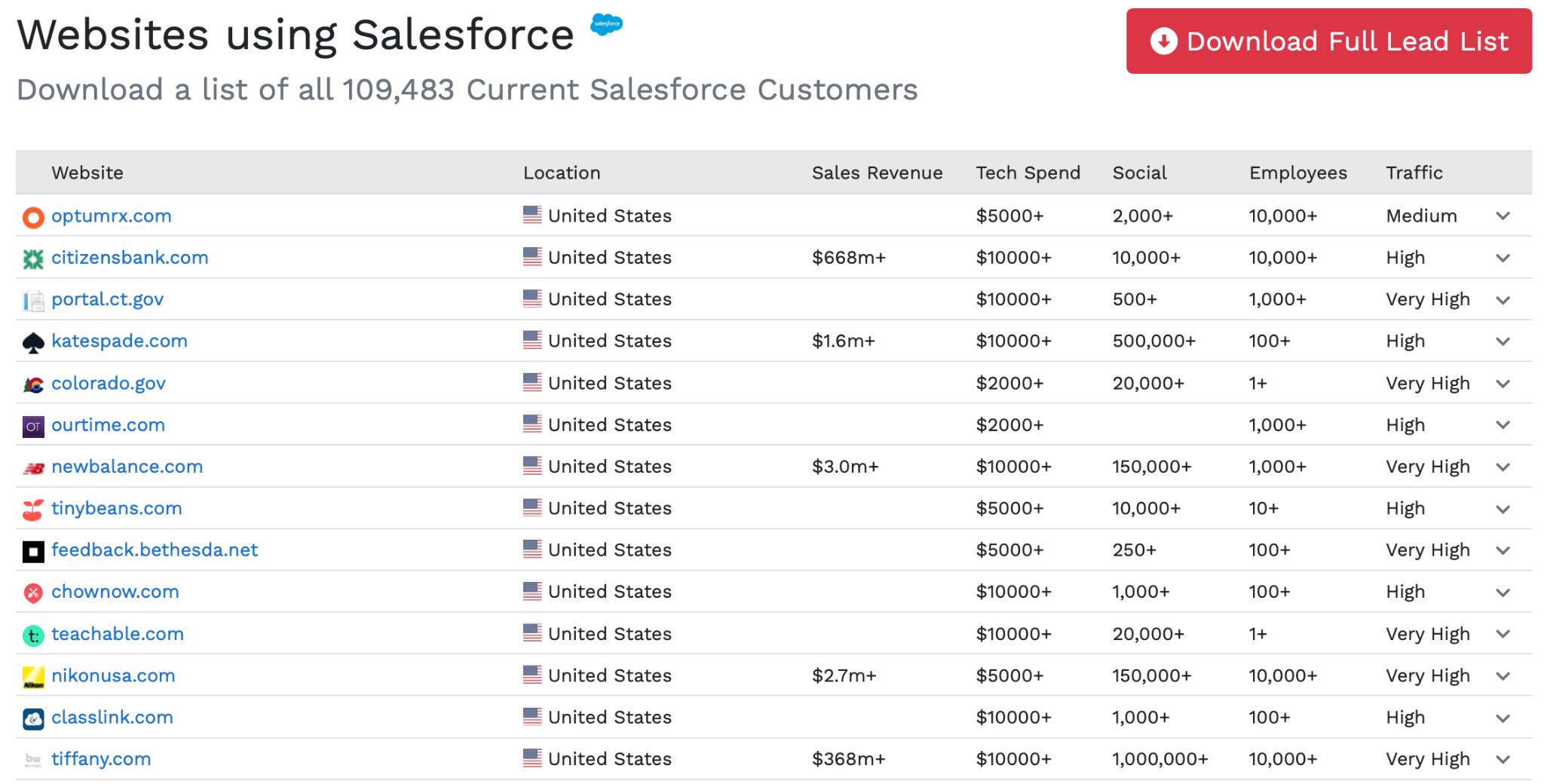
Please read section '9. BuiltWith'. Focus on the 'Key Features & Use Cases' to understand how you can use this tool for more than just satisfying curiosity. Note how it can be used for lead generation and tracking strategic shifts.
Why is a competitor's tech stack so important?
- Reveals Strategic Priorities: A company using HubSpot or Salesforce is heavily invested in inbound marketing and structured sales. A company using Intercom or Zendesk prioritizes customer support.
- Estimates Operational Costs: A stack filled with expensive enterprise tools (like Marketo, Salesforce) signals a much higher operating budget than a stack using lean tools (like a simple email provider and a free CRM).
- Identifies Integration Opportunities: If every major player in a niche uses a specific tool (e.g., Shopify), building an integration with that tool could be a powerful go-to-market strategy for your own product.
Test your understanding!
You're analyzing a competitor in the project management space, teamwork.com. Using the three-part framework, what specific question would you be trying to answer with each tool (SimilarWeb, Ahrefs, BuiltWith)?
Show answer
- SimilarWeb: What is Teamwork's overall traffic scale, and which marketing channels (direct, search, social) are most important for them? Where are most of their users located geographically?
- Ahrefs: What blog posts or landing pages drive the most organic search traffic for Teamwork (using the Top Pages report)? What valuable keywords related to project management do they rank for that a new startup could target (using the Content Gap tool)?
- BuiltWith: What CRM (e.g., Salesforce, HubSpot), customer support chat (e.g., Intercom, Zendesk), and analytics tools (e.g., Google Analytics, Mixpanel) does Teamwork use? This could give clues about their sales process and product development priorities.
Conclusion
You now have a tactical, three-tool stack for conducting deep competitive analysis. By systematically moving from the big picture to the granular details, you can develop a sophisticated understanding of any market you're considering.
Key Takeaways:
- A Layered Approach: Use SimilarWeb for a high-level overview of traffic, Ahrefs for a deep dive into SEO and content strategy, and BuiltWith to understand the underlying technology stack.
- Answer Specific Questions: Don't just browse. Use each tool with a purpose: to understand traffic scale (SimilarWeb), content that works (Ahrefs), and operational priorities (BuiltWith).
- Strategy Follows Insight: The goal of this analysis is not just to collect data, but to find actionable insights. A competitor's weakness in SEO could be your entry point. Their reliance on an expensive tool could be an opportunity for you to serve a more price-sensitive segment.
Preview of the Next Lesson:
We have now analyzed the market at a macro level (trends), product level (directories), and competitor level (strategy). The next logical step is to zoom in on the most important element: the customer. In our next lesson, we will learn how to define a specific Ideal Customer Profile (ICP) using LinkedIn Sales Navigator criteria. This will shift our focus from broad market dynamics to the specific person you are building for and selling to.