
Hello! Welcome to your second lesson.
In our last session, we explored how to use Google Trends and Exploding Topics to identify broad, emerging market trends—the large waves of demand you can ride. This is the crucial first step of looking at the market from 30,000 feet.
Today, we're descending to ground level. This lesson focuses on the learning outcome: Analyze high-demand SaaS niches by examining trends on Product Hunt, G2, and Capterra. We'll move from abstract trends to concrete, validated product ideas that people are already building, buying, and talking about. By the end of this session, you'll have a systematic way to dissect these platforms to find both brand-new opportunities and profitable gaps in established markets.
From Macro Trends to Validated Niches
The most direct path to a profitable SaaS is often not to invent a category from scratch, but to find what's already working and improve upon it, or serve an overlooked niche within it. Platforms like Product Hunt, G2, and Capterra are treasure troves of this information. They show us:
- What new products are generating excitement (Product Hunt).
- What established products dominate a market and, more importantly, where they fall short (G2 & Capterra).
Let's begin by understanding the role of each platform.
1. Understanding the SaaS Discovery Landscape
To effectively use these platforms, you need to know their distinct purposes. I'd like you to start by reading a brief overview of Product Hunt, G2, and Capterra. This will give you a solid foundation for the tactical workflows we'll discuss next.
The Ultimate 2025 List of SaaS Companies & Directories
The article 'The Ultimate 2025 List of SaaS Companies & Directories' offers excellent, concise summaries of the key platforms for software discovery. This will help you quickly grasp the unique value of each.
Please read the sections titled '1. G2', '2. Capterra', and '4. Product Hunt'. For each, focus on its core function, key features, and the pros and cons listed in the tables. This will clarify why you'd use one platform over another.
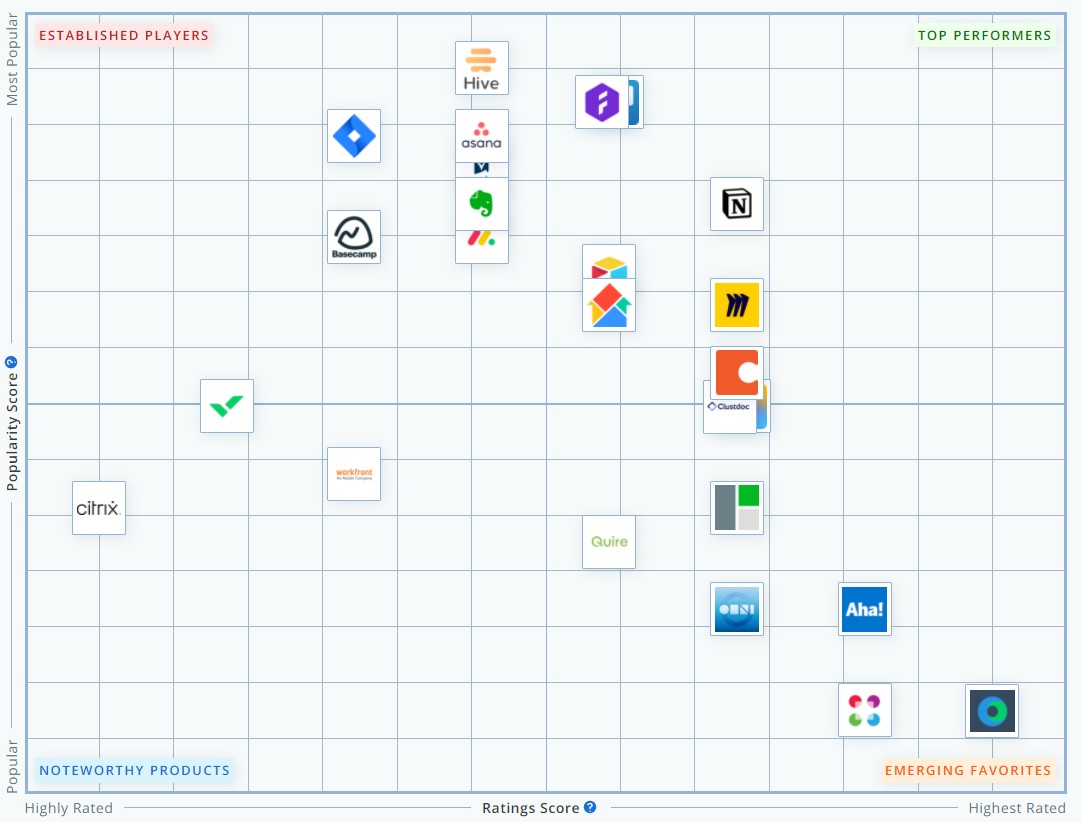
As the reading explains, G2 and Capterra use structured data like Grid® Reports and quadrant charts to help you visualize a market. These are invaluable for quickly assessing the competitive landscape.

2. The Tactical Workflow for Idea Generation
Now that you understand what these platforms are, let's dive into how to use them tactically.
Strategy 1: Discovering Emerging Products with Product Hunt
Product Hunt is your go-to for seeing what's new and what's capturing the attention of tech-savvy early adopters. Your goal here isn't just to find ideas to copy, but to analyze launch patterns and community feedback.
However, it's crucial to use it with a critical eye.
How to find PROFITABLE Saas ideas
This clip from Sebastian Stef's video 'How to find PROFITABLE Saas ideas' provides a balanced view of Product Hunt, highlighting both its strengths and its significant weakness—the 'tech/AI founder' bubble.
Watch from 00:19:17 to 00:20:53. Pay close attention to his critique that most products are built for other founders. This is a vital piece of context to remember when you're browsing.
A more advanced use of Product Hunt is not to look for a single idea, but to see how you can combine multiple ideas to create a novel solution.
How to Find 59 Micro SaaS Ideas in 1 week?
In this segment of 'How to Find 59 Micro SaaS Ideas in 1 week?', Dennis Babych demonstrates a powerful creative strategy using Product Hunt.
Watch from 00:23:16 to 00:24:56. Notice how he deconstructs three separate services (link generation, API, data visualization) and proposes combining them into a single, more valuable product. This 'idea synthesis' is a powerful skill for a serial entrepreneur.
Your Product Hunt Workflow:
- Browse Daily/Weekly Leaderboards: What's consistently getting upvoted?
- Search for Keywords: Use trends from the last lesson (e.g., "AI agent," "no-code") and search for them on Product Hunt.
- Analyze the Comments: For promising products, read the comments. What features are people requesting? What problems are they mentioning? This is direct feedback from your target market.
Strategy 2: Finding Gaps in Mature Markets with G2 and Capterra
While Product Hunt shows you what's new, G2 and Capterra show you where the money is. These platforms list established B2B SaaS companies, often in "boring" but highly profitable niches. Your goal here is to be a detective, looking for weaknesses in the market leaders.
How to Find 59 Micro SaaS Ideas in 1 week?
Here's a quick, direct tip from Dennis Babych on the most effective way to use review sites like G2.
Watch from 00:14:45 to 00:15:23. The core idea is simple but powerful: go straight for the negative comments. This is where you'll find your next product idea.
Mining negative reviews is a form of qualitative data analysis. Given your computer science background, you can think of this as running a query against thousands of unstructured user reports to find recurring bug patterns or feature requests. The patterns you find are your market opportunities.
This next reading details exactly how to perform this analysis.
How Top Founders Do SaaS Market Research (2025)
The article 'How Top Founders Do SaaS Market Research' explains how to go beyond surface-level review skimming and extract real, actionable insights. This is a highly tactical guide.
First, read the subsection '4. Analyze competitor reviews deeply' within the 'Secondary Research Done Right' section. Then, read the subsection '3. Mine forums for honest feedback' under 'How to Do It Well' in the Qualitative Research part. Focus on the specific phrases they suggest looking for, like 'I hate when...' or 'We ended up switching because...'. These are direct instructions from the market on what to build.
Test your understanding!
You are exploring the "Email Marketing" category on Capterra and looking at Mailchimp, which has thousands of reviews. Your goal is to find an idea for a Micro-SaaS. Based on the lesson, what is your first action, and what specific themes or keywords would you be looking for in the reviews?
Show answer
Your first action would be to filter the reviews to show only the 1, 2, and 3-star ratings.
You would then search for recurring themes and keywords within these negative reviews, such as:
- "Integration": "Doesn't integrate with my new CRM." (Opportunity: A tool that specializes in specific integrations).
- "Reporting/Analytics": "The reporting is too basic." (Opportunity: A powerful analytics dashboard that plugs into Mailchimp).
- "Too expensive": "The price jumped once my list grew." (Opportunity: A more affordably priced competitor for a specific user segment).
- "Confusing/Complex": "The new UI is bloated and hard to navigate." (Opportunity: A simplified, minimalist email marketing tool that does one thing well).
Putting It All Together: A Unified Workflow
The real power comes from combining these strategies.
- Identify a Macro Trend: Start with a growing trend from Lesson 1 (e.g., "AI video generation").
- Discover Emerging Players (Product Hunt): Search "AI video" on Product Hunt. You might find new tools that turn text into videos. Note what early adopters love and what they find lacking.
- Analyze Established Competitors (G2/Capterra): Search for the established category, like "Video Editing Software." Look at leaders like Adobe Premiere Pro or Final Cut Pro. Filter for negative reviews. You'll likely see complaints like "steep learning curve," "requires a powerful computer," "subscription is too expensive."
- Synthesize the Opportunity: The market shows excitement for AI-driven video creation (from Product Hunt) and frustration with the complexity and cost of professional tools (from G2/Capterra). This validates the need for a simple, browser-based, AI-powered video editor for marketers or small business owners who don't have a video editing background. You've just identified a high-demand niche.
Conclusion
You've now added another layer to your market analysis toolkit. You can effectively move from broad trends to specific, validated business opportunities.
Key Takeaways:
- Product Hunt is for Discovery: Use it to find new, innovative products and gauge early adopter sentiment, but be mindful of its tech-centric bias.
- G2 and Capterra are for Gap Analysis: Use them to research established markets. Your goal is to mine negative reviews for recurring complaints, which are your roadmap to a valuable product.
- "Bad Reviews" are Gold: The most profitable SaaS ideas often come from solving the stated frustrations users have with existing market leaders.
- Synthesize, Don't Just Copy: The strongest approach combines insights from all platforms to find a unique angle in a proven market.
Preview of the Next Lesson:
Now that you can identify promising niches and key players, the next step is to perform a deep competitive analysis. In our next lesson, we will assess market saturation and competitor strategies using tools like SimilarWeb, Ahrefs, and BuiltWith. This will help you understand how your potential competitors acquire customers, how big their businesses are, and where their strategic weaknesses lie.