Hello! Welcome back to our series on writing high-conversion B2B web pages.
In our last lesson, we focused on crafting layered messaging to speak to the different members of a buying committee—the CFO, the IT manager, and the end-user. We established what to say to each of them.
However, B2B buyers are inherently skeptical. They've heard big promises before. A powerful claim isn't enough; you need to prove it. This lesson tackles that challenge directly. Our goal is to integrate social proof elements like testimonials, logos, and data effectively within a B2B landing page. We'll learn how to use these elements to build trust, overcome skepticism, and validate the layered messages you worked on last time.
1. Why Social Proof is Non-Negotiable in B2B
In his influential book Influence, psychologist Robert Cialdini defined social proof as the tendency to see an action as more appropriate when others are doing it. When we're uncertain, we look to our peers for guidance. This is especially true in B2B, where a purchasing decision can involve high costs, significant risk, and even career implications.
Your B2B landing page must do more than just present a logical argument; it needs to make the buyer feel confident and secure in their choice. Social proof is the engine of that confidence.
To understand the different forms social proof can take, let's start with a foundational article.
18 [Proven] Smart Ways To Use Landing Page Social Proof
The article '18 [Proven] Smart Ways To Use Landing Page Social Proof' by Klientboost provides an excellent overview. It defines social proof and explains its psychological power.
Please read the first three sections: 'What is landing page social proof?' 'What’s an example of landing social proof?' 'Why is social proof important for landing pages?' Focus on the core idea that social proof helps people make choices in times of uncertainty, and note the statistics on how much buyers trust reviews over advertising.
As the article states, without social proof, you're forcing prospects to make a tough decision alone. With it, you're showing them they're joining a successful group of peers.
2. The B2B Social Proof Toolkit
While there are many types of social proof, a few are particularly powerful in a B2B context. This next video breaks down the most crucial ones with clear SaaS examples.
7 CRUCIAL Things Every SaaS Landing Page Should Have (with examples)
In '7 CRUCIAL Things Every SaaS Landing Page Should Have,' Rob Walling methodically walks through the essential forms of social proof for a B2B audience.
Please watch from 06:04 to 10:30. As you watch, pay attention to the different 'levels' of proof discussed: Customer Logos: For instant recognition. Social Media Embeds: For raw, authentic praise. Testimonials: The direct voice of a happy customer (and how to make them readable). Video Testimonials: For a highly compelling story. Case Studies: For in-depth, data-backed proof.
To summarize the key tools in your B2B social proof toolkit:
- Customer Logos: A row of recognizable company logos is the fastest way to signal credibility. It says, "Companies you know and trust already use us."
- Testimonials: These give a human voice to your product's success. A great B2B testimonial includes the person's name, title, and company to establish relevance and authority.
- Case Studies: This is your deep-dive proof. A case study tells a story of transformation, detailing the problem, the solution, and—most importantly—the quantifiable results.
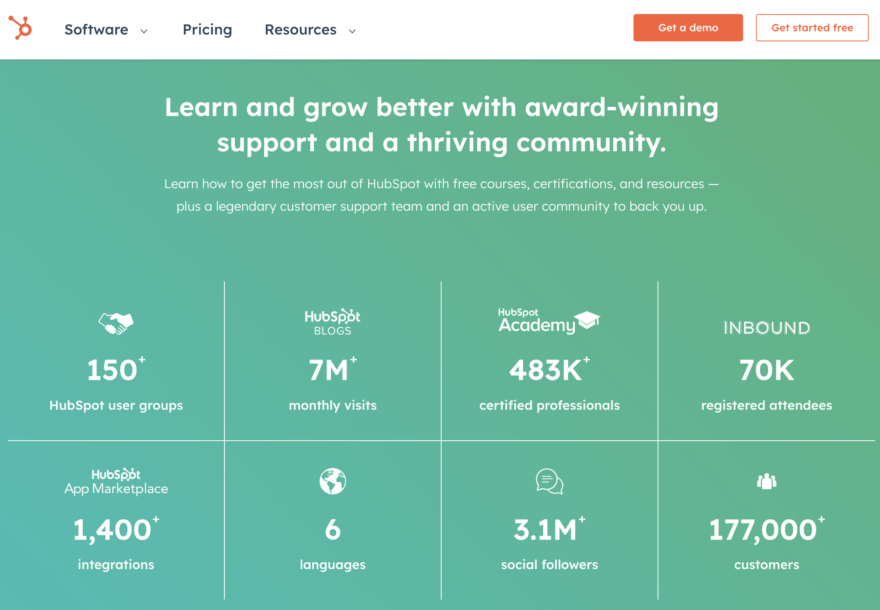
- Data and Numbers: Metrics that show scale and impact (e.g., "177,000+ customers," "Used by 80% of the Fortune 500"). This appeals to the logical, data-driven side of the B2B buyer.
- Third-Party Validation: This includes star ratings from review sites like G2 and Capterra, industry awards, or media mentions. It shows that an unbiased outside party vouches for you.
3. Strategic Placement: Where Proof Has the Most Impact
Having great social proof isn't enough; you have to integrate it where it will do the most good. Placing the right proof at the right moment can be the difference between a visitor converting or bouncing.
This article from Directive Consulting provides excellent analysis of where to place social proof and why.
B2B Landing Page Best Practices: Proven Examples & Strategies
The article 'B2B Landing Page Best Practices' provides a practical look at where social proof fits into a high-converting page structure.
Please read these three short snippets: Under 'Essential Elements...', find point #4, which suggests placing trust signals 'right next to the form.' In the 'SaaS Landing Page Breakdown' section, notice how they praise the use of 'Recognizable social proof' above the fold and 'Case study reinforcement' further down. Finally, under 'Common B2B Landing Page Mistakes...', read point #5 about the danger of 'Missing Social Proof or Credibility Signals.'
Based on best practices, here are key "hotspots" for social proof on your landing page:
- Above the Fold: Use your most impressive logos here for instant credibility.
- Next to the Call-to-Action (CTA): A short, powerful testimonial or a trust badge placed near a "Book a Demo" button can reduce last-second hesitation.
- Paired with a Feature/Benefit: When you make a claim (e.g., "Cut reporting time in half"), place a testimonial right below it from a customer who achieved that exact result.
- As a Dedicated Section: A "Wall of Love" or results section can consolidate your strongest proof for buyers who are actively looking for it.
Conversely, a common mistake is burying your best proof. As the video "How To Create High Converting B2B Landing Pages in 2025" points out, a testimonial from an intern hidden at the bottom of the page (07:26) has almost no impact.
4. Your Turn: Connecting Proof to Your Message
Let's apply this by building on last week's exercise.
Scenario: You're writing copy for the landing page of "SyncUp," a project management software. You've already crafted layered messages for the key stakeholders.
Task: For each of the three messages below, choose the best type of social proof to support it. Then, write a brief copy block that integrates that proof.
-
For the Project Manager (End-User):
- Your Message: "Finally, a project management tool your team will actually use."
- What proof would you use and how would you write it?
-
For the Head of IT (Expert):
- Your Message: "Enterprise-Grade Security, Seamless Integration."
- What proof would you use and how would you write it?
-
For the CFO (Budget Holder):
- Your Message: "Deliver projects 20% faster and reclaim your team's time."
- What proof would you use and how would you write it?
Take about 5-10 minutes to think through this and write your copy.
My Examples
Here's how I might approach it, matching the proof to the persona:
1. For the Project Manager (End-User): A specific, relatable testimonial.
"SyncUp ended our team's spreadsheet chaos. We went from 'I'll get back to you' to shipping projects on time. Adoption was instant—it's just that intuitive."
— Sarah J., Head of Operations, Innovate Inc.
Why it works: This testimonial directly validates the claim that teams will "actually use it" and speaks to the end-user's pain points (chaos, delays).
2. For the Head of IT (Expert): Third-party validation and logos.
Trusted by Demanding IT Teams
SyncUp is SOC 2 Type II certified and integrates with the tools you already trust.
[Logos: Slack, Google Workspace, Microsoft 365, Okta]
Why it works: IT leaders don't want marketing fluff; they want proof of security and compatibility. A compliance badge (SOC 2) and logos of integrated platforms provide hard evidence.
3. For the CFO (Budget Holder): A data-driven case study snippet.
How Northwood Corp. Achieved 180% ROI in Six Months
After implementing SyncUp, Northwood Corp. reduced project overhead by 22% and increased on-time delivery from 75% to 98%.
[Link: Read the full case study]
Why it works: The CFO speaks the language of numbers. This snippet provides a concrete ROI figure and links to a full case study for deeper financial justification.
Conclusion
Excellent work today. You've now learned to move beyond simply making claims to strategically proving them. This is the key to earning trust in a skeptical B2B market.
Key Takeaways:
- Social proof is evidence that de-risks a B2B decision. It turns buyer uncertainty into confidence.
- Your core toolkit includes logos, testimonials, case studies, data/numbers, and third-party ratings.
- Placement matters. Integrate proof strategically above the fold, next to CTAs, and alongside the specific claims it supports.
- Match the proof to the persona. Give the CFO ROI data, the IT manager security badges, and the end-user a relatable testimonial.
Preview of the Next Lesson:
We've structured the page, layered the messaging, and backed it up with proof. The final piece of the puzzle is motivating the visitor to take the next step. In our next lesson, we will focus on how to write a clear, low-friction call-to-action (CTA) tailored to the buyer's stage of readiness.