Hello! Welcome back to our module on Selling and Marketing on TikTok Shop.
In our last lesson, you successfully set up your TikTok Shop seller account and connected it to your US business entity. Your store is now live and ready for business. This is a huge step, bridging the gap from a legal entity to a functional e-commerce storefront.
Today, we move on to the next critical task: populating your shop with products that customers can actually find. Our learning outcome is to optimize product listings for discovery within the TikTok Shop. Simply listing a product isn't enough; you need to make it visible to TikTok's algorithm and to users searching for what you sell. This process is often called TikTok Shop SEO (Search Engine Optimization).
We'll cover the key elements of a perfectly optimized listing, from keywords and titles to images and videos, ensuring your products have the best possible chance of being discovered.
1. How the TikTok Shop Algorithm Ranks Products
Before we dive into the "how" of optimizing, it's crucial to understand the "why." Your product's visibility isn't random. The TikTok algorithm analyzes several factors to decide which products to show to users. Understanding these factors will guide all of our optimization efforts.
Think of it as a system with multiple inputs. Your goal is to provide the best possible signals in each category.
TikTok Shop SEO: How to Rank Higher in the TikTok Algorithm
This article from ESEOspace provides an excellent breakdown of the core pillars of the TikTok Shop ranking algorithm. Understanding this framework is the first step to effective optimization.
Please read the first major section, '1. How the TikTok Shop Ranking Algorithm Works.' Focus on understanding the five core pillars the article identifies.
As you just read, the algorithm primarily values five things:
- Relevance: How well your listing's text (title, description, etc.) matches a user's search query.
- Engagement: How users interact with videos featuring your product (views, likes, shares). High engagement signals a desirable product.
- Conversion: The rate at which views turn into sales. Products that sell well are shown more often.
- Fulfillment & Service: Your operational performance, like shipping speed and customer service response time. TikTok protects its user experience and demotes shops with poor operations.
- Trust & Compliance: The quantity and quality of your product reviews, along with your account's good standing.
Our focus today is primarily on Relevance, but as you can see, it's all connected. A great listing improves Conversion, which in turn boosts your ranking.
2. Foundational Keyword Research
Keywords are the language of search. To optimize for relevance, you must use the same words your potential customers are using.
Your IT background gives you an advantage here; think of it like defining the primary keys and attributes for a database record. You need to identify the core terms that define your product before you can build a comprehensive listing around them.
The HubSpot video below, while focused on general TikTok SEO, offers excellent, practical techniques for finding the keywords people are actually using on the platform.
TikTok SEO Tutorial - Optimize your Business Page (10 Simple Tricks!)
This HubSpot Marketing video demonstrates how to find high-ranking keywords and topics using tools within and outside of TikTok. The principles are directly applicable to product research.
Watch the section from 03:55 to 06:37. Pay close attention to the methods for using the TikTok search bar's auto-suggestions, the TikTok Creative Center, and Google's 'People Also Ask' feature to find what users are searching for.
To build on that, let's structure our keyword research process:
- Seed Keywords: The 1-2 word core terms for your product (e.g., "dog collar," "face serum").
- Long-Tail Keywords: More specific, multi-word phrases that indicate higher purchase intent (e.g., "adjustable reflective dog collar," "vitamin C brightening face serum").
- Problem/Solution Keywords: Phrases customers use when looking for a solution to a problem (e.g., "stop dog from pulling on leash," "how to reduce dark spots").
Use the TikTok search bar autocomplete as your primary tool. Start typing your seed keyword and see what suggestions appear—this is a direct look into what users are searching for.
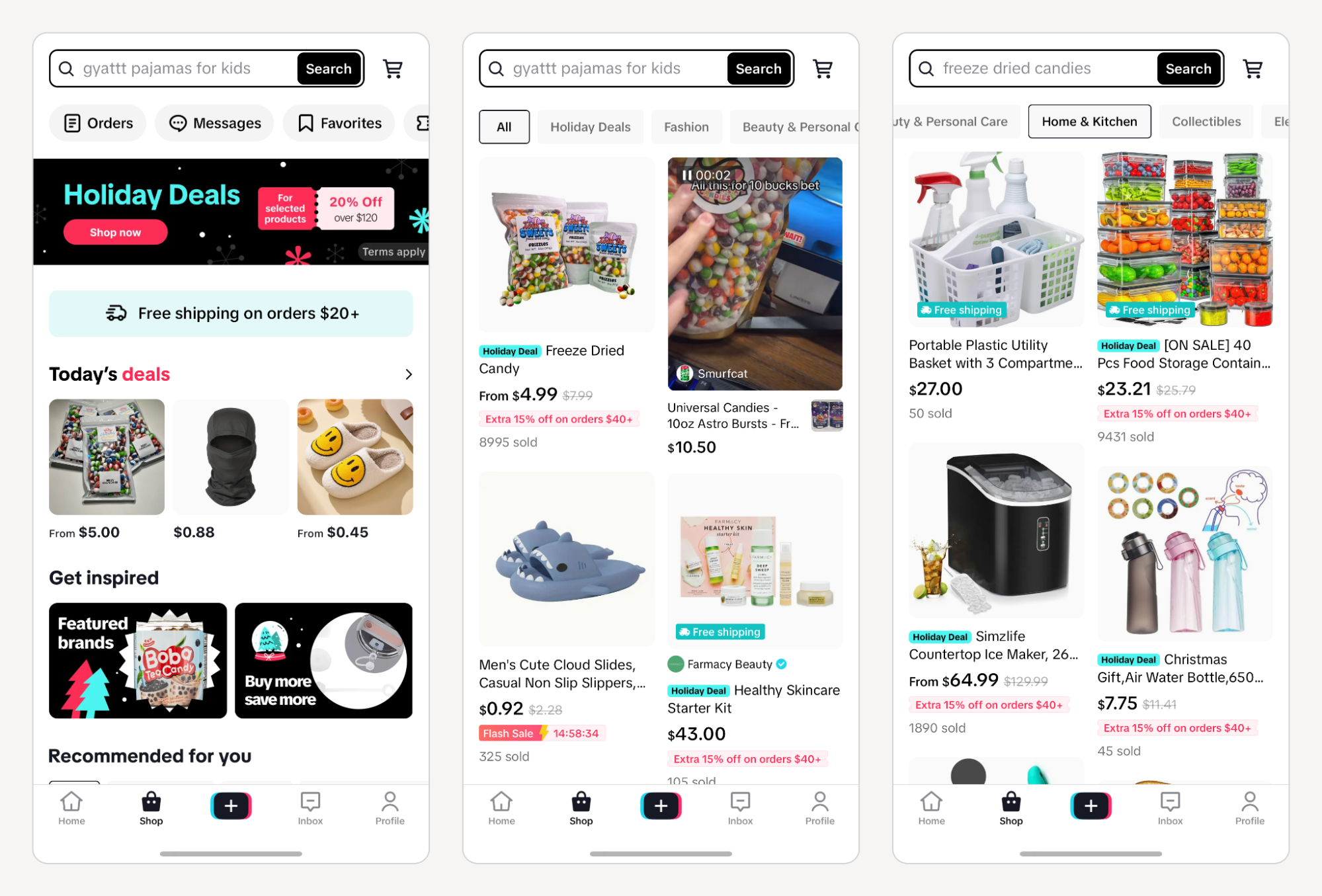
Test your understanding!
Imagine you are about to list a portable, USB-rechargeable blender for making smoothies. Based on the keyword types we just discussed, provide:
- One seed keyword.
- Two long-tail keywords.
- One problem/solution keyword.
Show answer
Here are some possible answers:
- Seed keyword: "portable blender"
- Long-tail keywords: "USB rechargeable smoothie blender," "small portable blender for travel"
- Problem/solution keyword: "how to make healthy smoothies on the go"
3. The Anatomy of a Perfectly Optimized Listing
Now, let's apply our keywords and best practices to each element of the product listing. We'll use a video that walks through the seller center interface step-by-step.
How to Create the Perfect TikTok Shop Product Listing (step by step)
This video by Trevin Peterson is a complete walkthrough of creating a product listing in the TikTok Shop Seller Center. We will break it down piece by piece.
We will reference this video throughout this section. You don't need to watch it all at once; we will point to specific parts as we discuss each element of the listing.
A. Product Title
The title is the most important on-page SEO factor. It needs to be descriptive, keyword-rich, and follow TikTok's rules.
- Formula: A great starting point is:
[Brand Name] + [Primary Keyword Phrase] + [Key Feature/Benefit] + [Audience/Use Case] - AI-Assisted Creation: Watch how ChatGPT is used to generate a title in the Trevin Peterson video from 01:24 to 02:40. This is a practical way to brainstorm an optimized, keyword-rich title that fits the character limit.
- Official Guidelines: TikTok has strict rules against using clickbait, all-caps, or promotional text like "Best Seller" in titles.
Product Detail Pages & Listing Quality Guidelines
To ensure we follow the rules, let's review TikTok's official guidelines for product titles.
Read the section 'Product title or name' and review the table comparing 'Poor', 'Fair', and 'Good' quality titles. This will clarify what to avoid.
B. Images and Video
High-quality visuals are non-negotiable. They impact conversion, which in turn affects your ranking.
- Image Requirements: Watch the Trevin Peterson video from 00:29 to 01:24. Note the three essential image types:
- Main Image: Product on a pure white background.
- Lifestyle Images: Product being used in a real-world context.
- Infographic Images: Images with text overlays that highlight features, dimensions, or benefits.
- Video: As mentioned from 08:38 to 09:08 in the video, including a short product video on your listing is extremely powerful for conversion. It doesn't need to be a cinematic masterpiece; user-generated style content often performs best.
- Official Guidelines: Review the image below and the official TikTok guidelines for detailed specs like resolution (>600x600px) and what's prohibited (e.g., watermarks, promotional stickers).

C. Product Description
The description is your chance to sell the benefits and reinforce your keywords.
- Structure: Use bullet points ("Product Highlights") to make it easy to read. Focus on benefits, not just features. For example, instead of "Contains hyaluronic acid," write "✅ Deep Hydration: Formulated with hyaluronic acid to plump skin..."
- AI-Assisted Creation: Watch the video from 06:20 to 08:00 to see another excellent example of using ChatGPT to generate an engaging, benefit-oriented description with five bullet points. The prompt "make it a little bit more entertaining" is a great tip for matching TikTok's tone.
D. Product Attributes & Category
These are structured data fields that are critical for filtering and search. Do not skip them.
- Category: As shown in the video around 03:13, TikTok will suggest a category, but you must verify it's the most specific sub-category possible. Choosing "Home Goods" is bad; choosing "Home > Kitchen > Coffee & Tea Tools" is good. This is a crucial step for discoverability.
- Attributes: From 04:24 to 06:20, the video shows the process of filling out attributes like material, features, and pet type. As he states, "the more information you can provide, [the more TikTok is] able to then target... the customers that are most likely to buy." Fill out every relevant field.
E. Variations, Pricing, and Shipping
Finally, you'll configure the sale-specific details.
- As seen from 09:08 to 10:25, you'll set up any product variations (e.g., different colors or sizes), enter your price and stock quantity, and input the accurate package weight and dimensions. Correct dimensions are vital for accurate shipping cost calculation.
4. On-Video SEO: Connecting Content to Commerce
Remember the "Engagement" pillar of the algorithm? The videos you create that link to your products are a major part of your Shop SEO. The optimization doesn't stop at the product page.
TikTok Shop SEO: How to Rank Higher in the TikTok Algorithm
Let's return to the ESEOspace article to understand how to optimize the videos that drive traffic to your products.
Read section '6. On-Video SEO: Connecting Content to Commerce'. Focus on how the video's content, caption, and hashtags should align with your product's keywords.
In short, when you post a video to promote a product:
- The content itself should be relevant. If you sell a stain remover, make a video about "how to get coffee stains out of a shirt."
- The video caption should include your keywords.
- The hashtags should be a mix of broad and specific terms.
- The product anchor link itself uses your optimized product title, making the anchor text a relevant keyword.
Conclusion
You now have a complete framework for optimizing a product listing for discovery on TikTok Shop. This goes far beyond just filling in fields; it's about strategically providing the right signals to both customers and the algorithm.
Key Takeaways:
- Optimization is a System: A high-ranking product listing is the result of optimizing for all five of the algorithm's pillars: Relevance, Engagement, Conversion, Fulfillment, and Trust.
- Keywords are the Foundation: Thorough keyword research using tools like the TikTok search bar is the first and most critical step.
- Every Element Matters: Your title, high-quality images, benefit-driven description, and detailed attributes all work together to improve relevance and conversion.
- Leverage AI: Tools like ChatGPT can significantly speed up the process of writing compelling, keyword-rich titles and descriptions.
- Content is King: The videos you link to your product are a powerful SEO tool. Align your video content, captions, and hashtags with your product's keywords.
Next Up:
Creating a perfectly optimized listing is half the battle. The other half is creating the video content that drives traffic to it. In our next lesson, we will analyze top-performing TikTok product videos to identify effective hooks, formats, and audio trends. You will learn to deconstruct what makes a product video go viral and apply those principles to your own content.