Hello! Welcome back to our module on Selling and Marketing on TikTok Shop.
In our last lesson, you learned how to create a perfectly optimized product listing. That listing is the destination, but now we need to build the roads that lead customers there. On TikTok, those roads are engaging videos.
Today's learning outcome is to analyze top-performing TikTok product videos to identify effective hooks, formats, and audio trends. Before you spend time and money creating your own content, it's essential to develop the skill of deconstructing what already works. This analytical process will give you a repeatable blueprint for success.
We will explore the characteristics that make a product video convert viewers into buyers and learn how to use TikTok's own tools to find and analyze these successful examples.
1. The Mindset for Success: Profitable vs. Viral
Your experience with local online marketing has shown you that views don't always equal sales. This is even more true on TikTok. The first and most crucial step in your analysis is to shift your mindset from chasing "viral" fame to creating "profitable" content.
A video with millions of views that doesn't sell anything is a waste of effort for your business. A video with 100,000 targeted views that generates consistent sales is a valuable asset. The video below provides a data-backed analysis that perfectly illustrates this point.
I Analyzed 1,000 Viral TikTok Shop Affiliate Videos, Here's What Actually Works
The creator of this video, C.J. Weber, analyzed thousands of successful TikTok Shop videos. He explains the crucial difference between videos that get views and videos that make money.
Watch from 00:53 to 02:05 and from 04:43 to 05:37. Pay close attention to the concepts of the 'sweet spot' for views and 'good viral vs. bad viral.'
As you just saw, the key is purchase intent. A "good viral" video entertains or informs in a way that makes the viewer genuinely want the product. This aligns with a core concept you'll appreciate from your IT background: incentive-based algorithms. TikTok's algorithm is financially incentivized to show users videos that lead to purchases, because TikTok earns a commission on every sale.
This means you don't need a Hollywood budget. If you create a video that effectively demonstrates your product's value and drives sales, the algorithm will reward you with more visibility.
2. The Anatomy of a High-Converting TikTok Video
Based on analysis of thousands of successful videos, a clear structure emerges. We can break down any top-performing product video into three key parts, as outlined in TikTok's official "Creative Codes."
Creative Best Practices for TikTok Ads
To understand the core structure of a great video, let's look at TikTok's own best practices. This official guide provides the fundamental framework.
Please read section '4. Structure your videos to hook viewers and inspire action.' Focus on the three-part structure: Hook, Body, and Close.
Let's dissect this structure with practical examples.
Part 1: The Hook (First 1-3 seconds)
As the guide mentions, the first few seconds are everything. Your goal is to stop the scroll. Here are the most common and effective hook types:
- Problem-Focused: Starts by showing a relatable, often frustrating, problem that your product solves. (e.g., A messy kitchen counter before showing an organizer).
- Surprising or Satisfying Visual: An unexpected action or a visually pleasing clip that grabs attention. (e.g., A knife cleanly slicing through a watermelon, a cleaning product instantly removing a stain).
- Bold Value Proposition: A direct statement, often as a text overlay, that makes a strong claim about the product's benefit. (e.g., "This gadget will save you 30 minutes every morning").
- Direct Question: Engages the viewer by asking a question they are likely to answer "yes" to. (e.g., "Are you tired of your phone dying by 3 PM?").
Part 2: The Format (The Body/Story)
This is where you demonstrate the product's value. The most effective formats directly address the viewer's needs.
The most powerful format, as highlighted in the first video we watched, is the Contrast Principle.
I Analyzed 1,000 Viral TikTok Shop Affiliate Videos, Here's What Actually Works
Let's revisit the video from C.J. Weber to see a detailed explanation of the single most effective format for selling products on TikTok.
Watch from 02:05 to 03:21. Focus on how the 'before and after' or 'problem vs. solution' approach creates an emotional response and drives conversions.
Other effective formats you will see include:
- Unboxing/First Impression: The creator opens the product for the first time. This feels authentic and builds trust.
- "Day in the Life": Shows how the product integrates into a person's daily routine.
- UGC-Style Testimonial: A user-generated content style where a person talks directly to the camera about their positive experience with the product.
Part 3: The Audio (Sound and Music)
Sound is critical on TikTok. 88% of users say sound is vital to their experience. Your audio choice can be:
- A Voiceover: Explaining the problem, the product's features, and the benefits. This is very common in high-converting videos.
- A Trending Song: Using a popular sound can help your video get picked up by the algorithm. However, you must ensure it's cleared for commercial use.
- Original Sound: A satisfying click, a clean wipe, or any sound the product makes can be a powerful audio hook.
Test your understanding!
Below are three descriptions of the first 3 seconds of a product video. Match each one to the most likely hook type: A) Problem-Focused, B) Surprising Visual, or C) Value Proposition.
- The video opens on a shot of a completely disorganized and tangled drawer full of charging cables.
- The video opens with a close-up on a product with the text overlay: "The only travel adapter you'll ever need."
- The video opens with someone dropping a raw egg onto a floor mat, and it doesn't break.
Show answer
- A) Problem-Focused: It immediately shows a common and relatable problem.
- C) Value Proposition: It makes a bold claim about the product's ultimate benefit.
- B) Surprising Visual: This is unexpected and makes you want to see what happens next and what the product is.
3. Practical Analysis: Using the TikTok Creative Center
Now, let's move from theory to practice. Your primary tool for this analysis is the TikTok Creative Center, a free dashboard from TikTok that provides data on top ads, trends, and more.
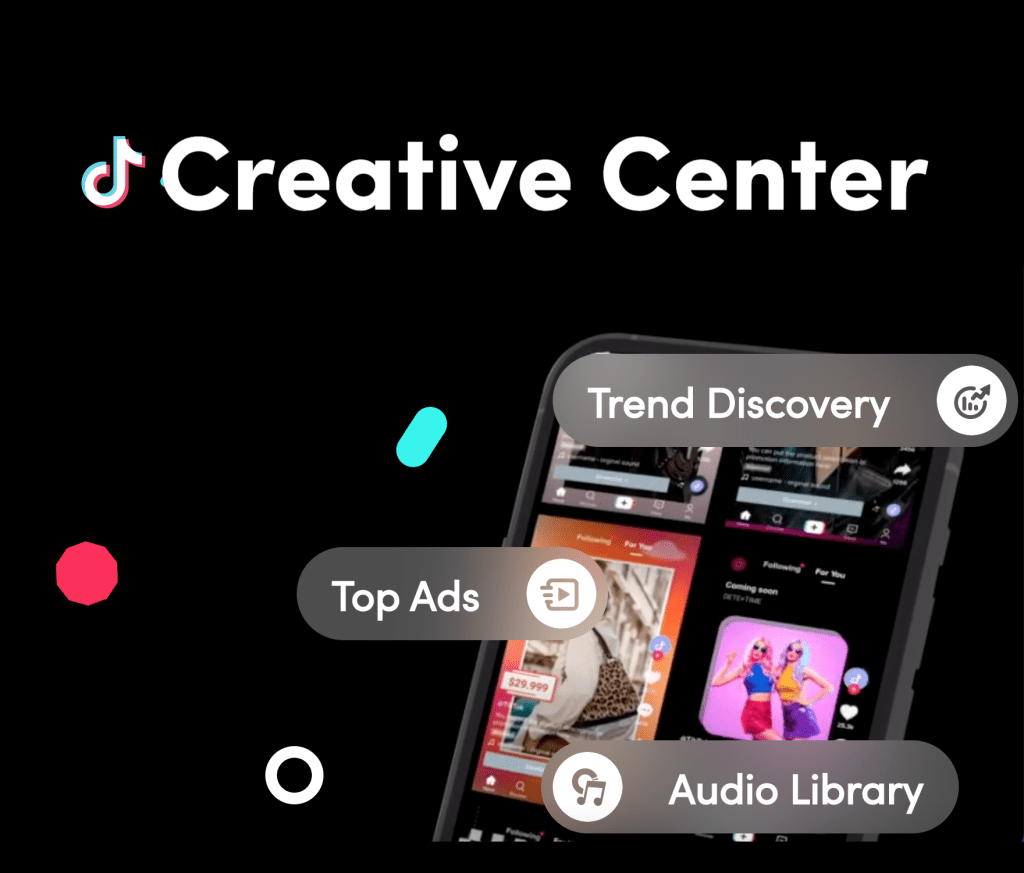
The following video is a comprehensive walkthrough of this powerful tool. We will use it as a reference as we break down the analysis process.
TikTok Creative Center Tutorial (Beginners Guide)
This tutorial by Blake Bauer provides a great walkthrough of the TikTok Creative Center. We will focus on the sections most relevant to analyzing product videos.
You don't need to watch the entire video at once. Use it as a guide as we go through the steps below. The key sections are 'Top Ads' (03:07), searching for competitors (09:11), 'Top Products' (15:17), and 'Trends' (16:24).
Here is a step-by-step process for analyzing top-performing videos.
Step 1: Find Top-Performing Videos in Your Niche
- Navigate to the TikTok Creative Center.
- Go to Inspiration > Top Ads Dashboard.
- Set your filters:
- Region: United States
- Industry: Choose the one closest to your product (e.g.,
Homegoods,Beauty & Personal Care). - Objective: Select
ConversionsorProduct Sales. This filters for videos designed to sell. - Time Frame:
Last 30 Daysis a good starting point.
- Sort the results by metrics like
CTR (Click-Through Rate)orConversion Rateto see the most effective ads. - Look for patterns. As the "Complete Guide" resource suggests, don't just look at the #1 ad. Analyze the top 5-10 to find common hooks, formats, and audio choices.
Step 2: Deconstruct the Videos
For each of the top videos you find, use this checklist to deconstruct it:
- Hook: What happens in the first 3 seconds? What hook type is it?
- Format: What is the core structure? Is it a problem-solution demo, before/after, unboxing?
- Audio: Is it a voiceover, a trending song, or original sound? What is the tone?
- Visuals: Is it polished or does it look like user-generated content (UGC)? Are there text overlays highlighting benefits?
- Call to Action (CTA): How do they tell you to buy? Is it a voiceover, a text overlay, or just relying on the TikTok Shop button?
Step 3: Identify Audio and Other Trends
- In the Creative Center, navigate to Trends.
- Here you can explore
Hashtags,Songs,Creators, andTikTok Videos. - Go to the Songs tab. Here you can find what's currently popular.
- Crucial Tip: Use the filter for "Approved for business use." This shows you sounds from the Commercial Music Library that you can legally use in your ads and organic posts without copyright issues.
TikTok Creative Center - Complete Guide and Hacks for 2025
For a quick text-based reference on finding audio trends and analyzing ad patterns, this article from Creatify is very helpful.
Read the sections 'How to Find Video Ad Trends Using the TikTok Creative Center' and 'How to Use the TikTok Creative Center to Discover Audio Trends.' These sections provide a concise summary of the process.
By following this analytical framework, you transform from a passive viewer into a strategic marketer, ready to create content that is engineered to perform.
Conclusion
Today you've learned how to dissect the anatomy of a successful TikTok product video. This analytical skill is fundamental to your success on the platform, allowing you to base your creative strategy on proven data rather than guesswork.
Key Takeaways:
- Focus on Profit, Not Just Views: The goal is to create content with high purchase intent. The TikTok algorithm will reward you for it.
- Structure is Key: High-converting videos follow a simple but powerful structure: a strong Hook, a clear Format (like the contrast principle), and effective Audio.
- The Creative Center is Your Lab: Use the Top Ads Dashboard to find and analyze what's working in your niche. Filter by
Conversionsand look for patterns across the top performers. - Use Audio Legally: Leverage the Trends > Songs section and always filter for "Approved for business use" to find trending audio you can safely use.
Next Up:
Now that you know how to analyze successful videos, it's time to create one. In our next lesson, we will get hands-on and produce a short-form product video using a mobile editor, incorporating the hooks, formats, and text overlays we've identified today. You'll take your analysis and turn it into action.