
Hello! Welcome to the next lesson in our module on "Leveraging Predictive Analytics for Performance."
In our last session, we focused on evaluating a predictive model's quality. You learned how to interpret key metrics like precision, recall, and AUC to determine if a model is trustworthy, and how to use the Expected Value framework to translate its performance into a tangible business case.
Now that we have a reliable churn model that gives us risk scores for each customer, the crucial next step is to act on that information. A score by itself doesn't save a customer; a well-designed strategy does. Today's lesson is all about bridging that gap. We will focus on how to translate churn risk scores into a targeted retention strategy and a concrete campaign brief that your team can execute. This is a core skill for moving from tactical execution to strategic leadership.
Let's look at where this fits into the big picture.
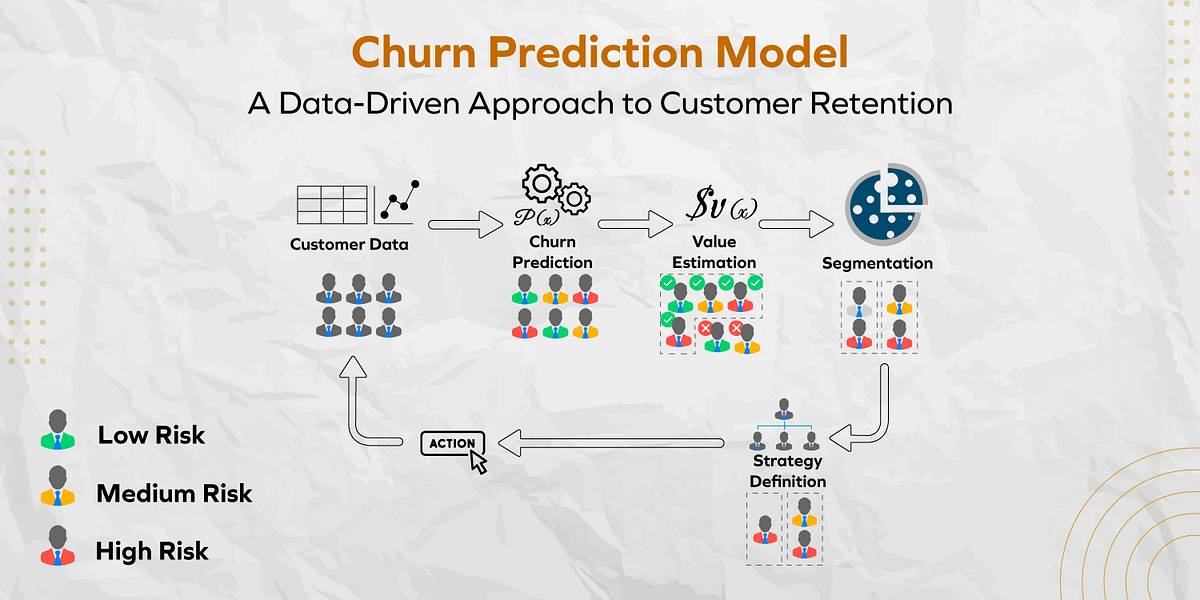
By the end of this lesson, you'll be able to move beyond just receiving a list of high-risk customers and instead design a sophisticated, ROI-driven plan to retain them.
1. Beyond a Simple Threshold: Why "Score > 0.7" Is Not a Strategy
Your data science team hands you a list of customers, each with a churn probability score. The most intuitive first step might be to set a simple threshold: "Let's target everyone with a churn score above 70%."
However, this approach is often inefficient and can lead to wasted budget. As a strategic leader, you need to ask more nuanced questions:
- What is the value of each customer? Is it worth spending $20 to save a customer whose lifetime value (LTV) is only $25?
- What is our team's capacity? Can your customer support or marketing team realistically contact 50,000 at-risk users this month?
- What is our budget? If each retention offer costs $10, and our budget is $100,000, we can only target 10,000 users. Who should they be?
A churn score is a starting point, but true strategy lies in how you use it within your business constraints. The following resource provides an excellent framework for thinking about this.
Churn Prediction Isn’t Enough: Turning ML Into Retention ...
This article, 'Churn Prediction Isn’t Enough,' is a superb guide to moving from raw model outputs to practical, effective targeting plans. It argues that churn is a resource allocation problem, not just a classification task.
Please read from the beginning to the end of the section titled '4. Multi-Stage Targeting Funnels.' Focus on understanding the four distinct targeting strategies presented and the limitations of using a fixed threshold.
2. Four Strategic Ways to Target At-Risk Customers
As you just read, there are several sophisticated ways to select which customers to target. Let's consolidate these ideas and see how they apply in practice.
A. Segment-Specific Targeting
Instead of a single threshold for everyone, you can create different rules for different customer segments. A powerful way to segment is to combine the churn score with another critical business metric, like customer value or purchase likelihood.
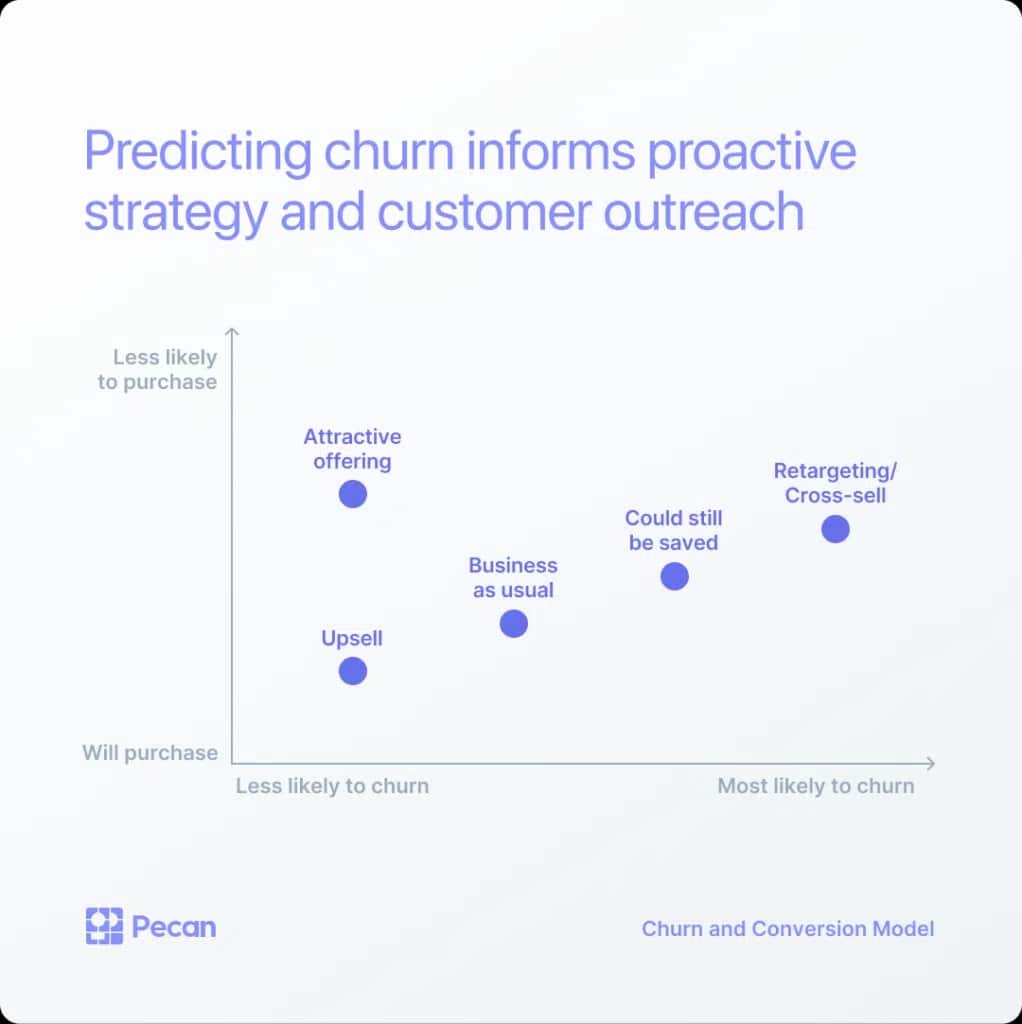
This approach ensures you focus your most expensive retention efforts on your most valuable customers who are at risk.
B. Top-K Targeting (Capacity-Constrained)
This is the most straightforward, practical approach when your operational capacity is the main constraint.
- The Logic: "Our team can make 1,000 outreach calls this week. Give me the 1,000 customers with the highest churn scores."
- Best For: Situations where the intervention has a fixed operational cost and capacity (e.g., a personal call from a customer success manager). It directly aligns the targeting plan with real-world execution limits.
C. Budget-Constrained Targeting (ROI-Driven)
This method connects directly to the Expected Value (EV) framework we discussed in the last lesson. You prioritize customers not just by risk, but by the potential return on investment from saving them.
- The Logic: For each customer, calculate an expected value:
- You then rank all customers by this EV and target those at the top until your budget runs out.
- Best For: Situations where you have a flexible budget and want to maximize the financial return of your retention program. This is the language that resonates with finance and executive leadership.
D. Multi-Stage Targeting Funnels
This is the most robust method, as it combines the principles above into a layered filtering system. It mirrors how a sales team qualifies leads.
A typical funnel looks like this:
- Risk Filter: Start with a broad pool of at-risk customers (e.g., churn score > 0.6 or Top 20% of scores).
- Value Filter: From that pool, keep only those who are valuable enough to save (e.g., LTV > $100 or on a premium plan).
- Feasibility Filter: Finally, filter for customers you can actually influence (e.g., they are opted-in to emails, haven't been contacted this month, and their account is active).
This approach creates a highly qualified, defensible list of customers to target, reducing wasted spend and improving alignment between data science, marketing, and finance teams.
Test your understanding!
You are the Head of Performance Marketing for an e-commerce company. Your data team has provided churn scores for all 1 million customers. Your retention budget for the quarter is $50,000, and each retention offer (a 20% discount) costs an average of $10 to fulfill. Which targeting strategy would be most appropriate to decide who gets the offer?
Show answer
Budget-Constrained Targeting (ROI-Driven) is the most appropriate strategy here. Your primary constraint is a fixed budget ($50,000), and you want to maximize the return from that spend. By calculating the expected value for each customer (Churn Probability * LTV) - $10, you can rank them and target the top 5,000 customers (since $50,000 / $10 = 5,000) who offer the highest potential ROI, rather than just those with the highest churn score.
3. Designing the Intervention: What Do You Say and Offer?
Once you have your target list, the next question is: what action do you take? The message and offer should be tailored to the customer segment. A high-value customer might receive a personal call or a significant credit, while a lower-value customer might get an automated email with a small discount.
This is where you translate the analytical segment into a marketing campaign. Let's look at a practical example of a "win-back" campaign, which is precisely what you'd run for customers with a high churn risk.
5 Tried & True Customer Retention Campaigns + Templates
This guide from Segment, '5 Tried & True Customer Retention Campaigns,' provides concrete templates for retention campaigns. We'll focus on the 'Win-Back' campaign, as it's directly applicable to our churn use case.
Please read the section '3. Win-Back' and the 'Template' that follows it (pages 7-8). Pay attention to the steps involved: identifying lapsed users, personalizing the message, offering an incentive, and setting up conversion goals.
As the template shows, an effective retention campaign has several key components:
- Trigger: The condition that enrolls a user (e.g., churn score crosses a threshold, or they are part of your "Top-K" list).
- Personalization: The message should feel relevant. Using merge tags to reference past purchase categories (
...view new products related to their most common purchase category.) is a great example. - Offer/Incentive: A compelling reason to return (e.g., discount, free shipping).
- Channel: The medium for your message (email, SMS, in-app notification).
- Conversion Tracking: A clear goal to measure success (e.g.,
Product Purchasedevent within 7 days). This is critical for measuring the campaign's ROI and for creating a feedback loop to improve the model and strategy over time.
4. From Strategy to Action: The Campaign Brief
As a leader, your role is not necessarily to write the email copy or configure the marketing automation tool. Your role is to provide your team with a clear, comprehensive brief that outlines the strategy and objectives. This document ensures everyone is aligned and understands the "why" behind the campaign.
Drawing on the concepts we've discussed, a good campaign brief should include:
Churn Retention Campaign Brief: Q3 2024
-
Objective:
- Primary Goal: Reduce monthly churn rate by 15% within the targeted segment.
- Secondary Goal: Achieve a 3:1 incremental return on ad spend (iROAS) for the retention offers.
-
Target Audience:
- Description: "High-Value, High-Risk" customers.
- Inclusion Criteria (Multi-Stage Funnel):
- Risk: Churn Score > 0.80
- Value: Historical LTV > $250
- Feasibility: Opted-in for email communication AND has not received a promotional offer in the last 45 days.
- Exclusion Criteria: Customers who have already contacted support with a complaint in the last 14 days.
- Estimated Size: Approx. 8,000 customers.
-
The Intervention (A/B Test):
- Group A (80% of audience): Personalized email with a 25% discount on their next purchase. Subject line: "We Miss You, [FirstName]! Here's 25% Off."
- Group B (10% of audience): Same as Group A, but with a "Free Shipping" offer instead of a discount.
- Control Group (10% of audience): Will receive no offer. This group is essential to measure the incremental lift of our campaign.
-
Channels & Timing:
- Channel: Klaviyo Email Marketing.
- Send Date: October 15th, 2024.
-
KPIs & Measurement:
- Primary KPI: Offer redemption rate (tracked via promo code usage).
- Secondary KPIs:
- Repurchase rate of the target audience within 30 days.
- Email open rate and click-through rate.
- Success Metric: The incremental repurchase rate of Group A vs. the Control Group must be statistically significant.
-
Budget:
- Estimated Cost: 8,000 customers * 80% * Avg. Order Value * 25% Discount Rate = $X
- This will be tracked against the revenue generated from the redeemed offers.
This brief provides your team with everything they need to execute a smart, data-driven campaign while also setting clear expectations for how success will be measured.
Conclusion
Today, we've moved from the abstract world of model scores to the practical reality of marketing execution. You've learned that a churn score is just the first step, and the real value comes from a thoughtful strategy that considers business constraints and customer value.
Key Takeaways:
- Targeting is a Resource Allocation Problem: Don't use a single, fixed threshold. Instead, use strategic targeting methods like segment-specific rules, Top-K lists, ROI-based ranking, or multi-stage funnels to decide who to act on.
- Match the Action to the Segment: The intervention—be it a discount, a feature announcement, or a support call—should be tailored to the value and characteristics of the targeted customer segment.
- From Strategy to Brief: As a leader, your key output is a clear campaign brief that defines the objective, audience, intervention, KPIs, and budget. This is how you translate analytics into action for your team.
- Always Measure: Incorporate control groups into your retention campaigns to measure incrementality. This proves the true causal impact of your efforts, a topic we will explore in-depth in a future module.
Preview of the Next Lesson:
So far, we know who is likely to churn and how to build a campaign to retain them. But we haven't yet explored why they are churning. In our next lesson, we will "Use feature importance outputs from a model to understand the key drivers of customer behavior." This will unlock deeper, more proactive retention strategies that can address the root causes of churn, sometimes even leading to product or service improvements.