
Hello! Welcome to your next lesson in "Leveraging Predictive Analytics for Performance."
In our last lesson, we delved into feature importance and SHAP values, learning how to look "under the hood" of a predictive model to understand the key drivers of customer behavior. You learned to interpret these outputs to form strategic hypotheses about why customers convert or churn.
However, understanding what a model is doing is only half the battle. As a leader, your most crucial role is exercising judgment. A model is a powerful but imperfect tool, trained on the past and blind to the future. This brings us to today's critical topic.
This lesson is designed to help you assess when a predictive model is reliable versus when human judgment and business context are needed. We will build a framework to help you decide when to trust the machine, when to trust your team's expertise, and how to best combine the two for superior results. This is a skill that separates good managers from great strategic leaders.
1. The Fundamental Trade-off: Model Confidence vs. Human Context
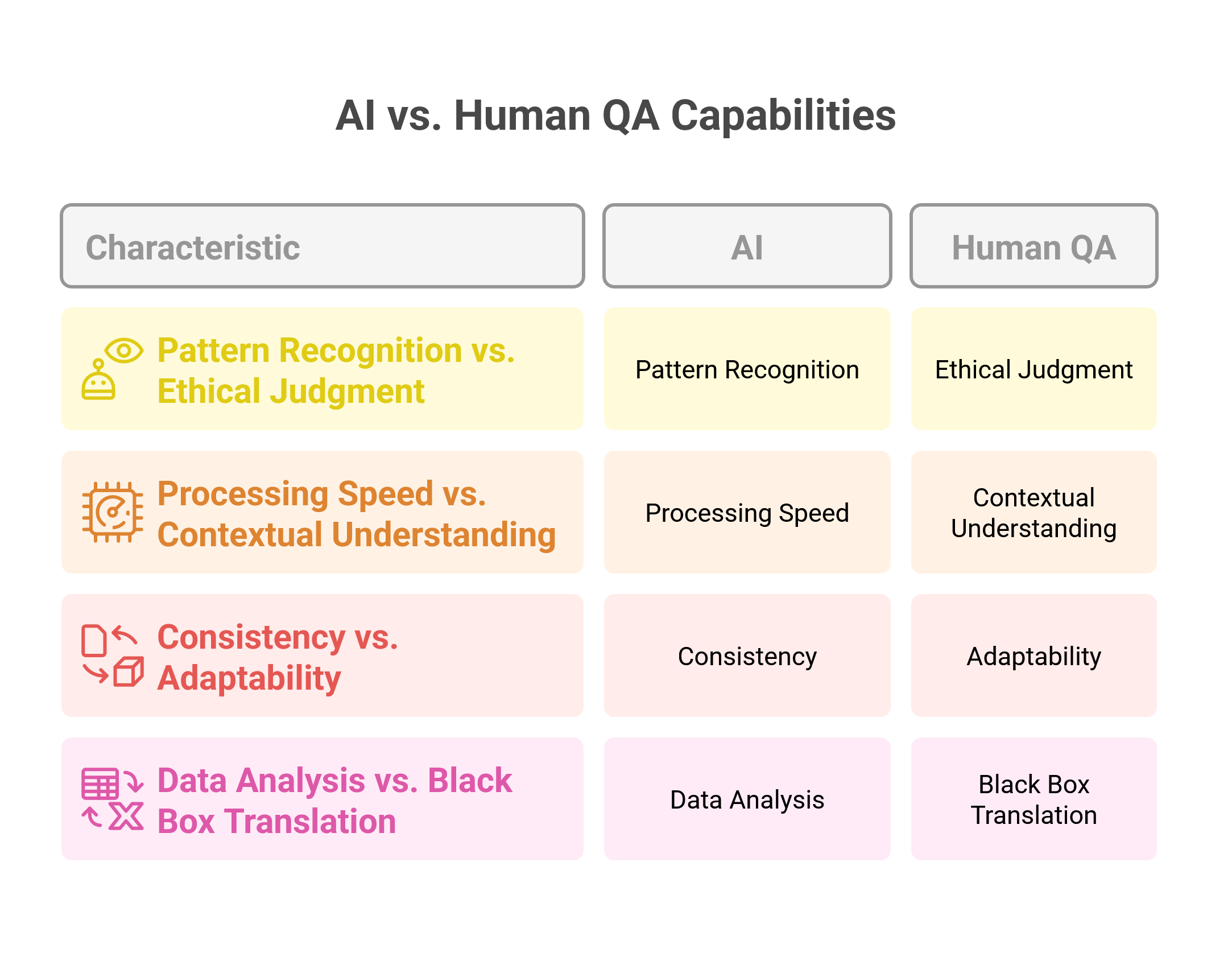
The core of this topic lies in understanding the different strengths of AI models and human experts.
- AI Models: Excel at processing vast datasets, identifying complex patterns, and making consistent, data-driven predictions at scale. They are tireless and unbiased by emotion.
- Human Experts: Excel at understanding nuance, context, and unquantifiable factors. They can draw on experience from analogous situations, interpret cultural subtext, and adapt to completely new scenarios.
A model often knows its own limits. Most predictive models can generate a confidence score alongside a prediction. This score represents how certain the model is about its output. This is where the partnership between human and machine begins.
To visualize this, let's watch a short video that explains the relationship between model confidence and performance.
Humans vs. AI: Who should make the decision?
This video from IBM Technology, 'Humans vs. AI: Who should make the decision?', uses a clear fraud detection example to illustrate where AI excels and where humans have an edge.
Please watch from 0:40 to 4:24. Pay close attention to the graph comparing the performance curves of AI and humans based on the model's confidence score.
As the video explains, the dynamic is often as follows:
- High Confidence (e.g., >90% or <10%): The AI is on solid ground. It's working with data that looks very similar to what it was trained on. In these cases, the model is often more accurate and consistent than a human. Automating decisions here can free up your team for more complex tasks.
- Low Confidence (The "Mushy Middle"): This is the grey area where the model is uncertain. The data might be unusual, rare, or have conflicting signals. Here, human experts often outperform the model because they can bring in outside context, ask clarifying questions, or use intuition built from years of experience.
This leads to a powerful operational model called Human-in-the-Loop (HITL). Instead of blindly accepting all predictions, low-confidence outputs are automatically flagged and routed to a human for review.

For you as a marketing leader, this means you can work with your analytics team to build systems that automatically handle the "easy" predictions (e.g., flagging obviously fraudulent sign-ups) while escalating the ambiguous cases (e.g., a high-value customer showing unusual but not definitively negative behavior) to your expert team members for a personal review.
2. When to Be Skeptical: Red Flags for Model Reliability
Beyond a model's self-reported confidence, there are specific situations where you, as a business leader, should be inherently skeptical of a model's output. These are scenarios where the context outside the model's data is more important than the patterns within it.
A fascinating article based on research from several universities studied this exact problem in the context of inventory planning. Its findings are directly applicable to marketing.
AI or human decisions: Which is best in predictive analytics?
This article from AICPA & CIMA, 'AI or human decisions: Which is best in predictive analytics?', summarizes research on when human analysts provide better decisions than a predictive model. It provides concrete examples of where models fall short.
Please read the sections titled 'Conditions that require human decision-making,' 'The link between analyst characteristics and decision-making quality,' and 'Engagement with stakeholders is needed for high-quality decision-making.' Focus on why the human analysts were able to make better decisions.
Drawing from this article and common marketing scenarios, here are the key red flags to watch for:
- Sudden Market Shifts: Predictive models are trained on historical data. They are inherently backward-looking. A model trained before a major economic downturn, the launch of a revolutionary competitor (like ChatGPT for content marketers), or a global pandemic will not be reliable. Its fundamental assumptions about customer behavior are likely broken.
- New Campaigns or Products: When you launch a completely new marketing campaign, product, or enter a new market, there is no historical data. A model might try to make predictions based on similar-looking past initiatives, but this is a high-risk situation. Human oversight and rapid, small-scale testing are paramount here.
- "Unspoken" Knowledge: This is a crucial point from the article. Your model only knows what's in the database. Your sales team knows which client is undergoing a merger. Your social media team feels a shift in public sentiment before it shows up in the numbers. This "local" or contextual knowledge is a key source of human advantage. The study found that "generalist" managers with broad networks often made better decisions because they had access to this unspoken information.
Test your understanding!
Your churn prediction model, which has been very accurate for a year, suddenly flags a dozen of your highest-value enterprise clients as "high risk." Your customer success team insists these clients are happy and have just renewed their contracts. The model's key driver for this prediction appears to be a drop in their daily_logins.
Based on the red flags above, what's a likely explanation, and what should be your next step?
Show answer
This is a classic case where "unspoken" knowledge trumps the model. A likely explanation is a change in the product or how data is logged. For instance, the engineering team might have rolled out a "single sign-on" feature or a new integration that reduces the need for daily logins, but this change wasn't incorporated into the model's features. The model correctly sees a pattern (fewer logins = churn) but is wrong because the context has changed.
Your next step should be to trust your customer success team's judgment and initiate a conversation between marketing analytics and engineering to understand what changed. You should then pause reliance on the model for these clients until it can be retrained with the new, relevant data.
3. The Irreplaceable Human Advantage in Marketing
Some human capabilities aren't just for filling in the gaps when a model is uncertain; they are fundamentally irreplaceable. As AI becomes more common, your value as a leader—and your team's value—will increasingly be defined by these human-centric skills.
The Canadian Marketing Association has published an excellent playbook on this topic. It provides a great structure for thinking about where human value lies.
CMA AI Playbook - Articulating your human advantage
The 'CMA AI Playbook' provides a framework for marketers to articulate their human value. It outlines several 'irreplaceable human capabilities' that are critical for strategic success.
Please read pages 3-5 of the PDF. Start at 'The foundation: Understanding people and culture' and read through to the end of 'The partnership: Judgment and relationship leadership.' Focus on the distinction between what AI can process and what humans can truly understand.
Let's summarize the key areas where human judgment is not just helpful, but essential:
- Emotional and Cultural Intelligence: An AI can analyze sentiment, but it can't detect the hesitation in a client's voice that signals budget concerns or understand that a joke that works in one culture is an insult in another. This is crucial for brand safety and effective global marketing.
- Strategic & Creative Thinking: As the playbook notes, AI is "pattern-dependent." It optimizes based on what has worked before. True creative breakthroughs, like Dove's "Real Beauty" campaign, often come from defying established patterns. Humans can connect invisible dots—like seeing how rising inflation creates an opportunity for value-based messaging before it becomes an obvious trend in the data.
- Crisis Wisdom & Relationship Management: In a PR crisis, you need nuanced judgment, not a statistical analysis. You need to read the emotional temperature of the public and make a call. Likewise, AI cannot navigate the complex political dynamics within a client's organization or build the trust required for a long-term strategic partnership.
This next video reinforces this from a business school perspective, arguing that while machines are powerful, they are ultimately confined to the tasks they are given.
Myths and Realities of Data and Machine Learning in Marketing
In this excerpt from 'Myths and Realities of Data and Machine Learning in Marketing,' a Columbia Business School professor discusses the ultimate limits of AI in marketing.
Please watch from 15:56 to 18:20. The core message is about empathy and what makes human creativity different from machine optimization.
4. A Framework for Leadership: Fostering Augmented Intelligence
Your goal is not to choose between AI and humans, but to create a system of augmented intelligence where each plays to its strengths. However, this comes with a significant leadership challenge: automation bias.
Automation bias is the tendency for people to over-trust and favor suggestions from automated systems, even when they have contradictory information. If your team starts to blindly follow the model's recommendations, you lose the very human judgment that is your key advantage in uncertain situations.
As a leader, your job is to foster a culture of critical thinking. When your team is presented with a model's output, encourage them to ask these questions—a synthesis of today's key ideas:
- Question the Model's Confidence: "What is the model's confidence score for this prediction? Is it in the high-confidence zone or the 'mushy middle' where we need to be more skeptical?"
- Scan for Contextual Changes: "Has anything changed in our market, product, or tracking that the model wouldn't know about? Does this prediction still make sense given the current environment?"
- Apply Strategic & Cultural Filters: "Does this recommendation pass the 'common sense' test? Does it align with our brand values and cultural understanding of our audience? Could it cause unintended harm?"
- Assess the Risk: "What is the cost of being wrong if we follow the model? What is the cost of being wrong if we override it? Is this a reversible decision (like changing an ad's headline) or an irreversible one (like discontinuing a product line)?"
By embedding these questions into your team's workflow, you empower them to be smart partners with AI, not just passive operators.
Conclusion
Today we've moved beyond interpreting models to critically assessing them. You've learned that a predictive model is a formidable tool for handling scale and consistency, but it is not a strategic oracle. Your leadership is crucial in knowing its limits and guiding your team to blend its analytical power with their invaluable human experience.
Key Takeaways:
- Trust models most at the extremes of confidence. Be prepared to intervene in the uncertain middle.
- Human judgment is paramount when data is sparse, markets are volatile, or "unspoken" context is critical.
- Your team's strategic value lies in irreplaceable skills like cultural intelligence, creative innovation, and crisis wisdom.
- The goal is augmented intelligence. Foster a culture that questions model outputs and actively guards against automation bias.
Preview of the Next Lesson:
Now that we understand a model's strengths, weaknesses, and drivers, you might be thinking about commissioning a new project. In our next lesson, we will cover how to "Formulate a business case and project brief for commissioning a predictive analytics project." You'll learn how to translate a business problem into a clear brief that sets your data science team or vendor up for success.