
Hello! Welcome to your next lesson in "Leveraging Predictive Analytics for Performance."
In our last lesson, you learned how to formulate a business case and project brief to commission a predictive analytics project. You now have the tools to translate a business need into a clear, actionable plan for a technical team.
Now, let's fast forward. The data science team has completed their work and is presenting their results. They might show you a predictive model, a slide deck full of charts, and a conclusion about the model's accuracy. This is the moment of truth. Your ability to critically evaluate these deliverables determines whether the project succeeds in creating business value or becomes another "interesting analysis" that goes nowhere.
This lesson will equip you for that moment. You will learn to critique the deliverables of a data science project, focusing on the business implications of the findings. Your role is not to second-guess the technical implementation, but to act as a strategic partner, ensuring the solution is robust, insightful, and directly tied to the business outcomes you care about.
1. Understanding the Deliverables
A data science project can produce several outputs, but for you as a leader, the most important deliverable is the summary report or presentation. This is where the team translates their technical work into a business narrative. Your critique will primarily focus on this narrative.
However, the analysis itself must be sound for the narrative to be trustworthy. As a leader, your most significant risk is not being able to understand the work, as it can lead to poor decision-making.
Roasting My First Data Science Project (Common Project Mistakes)
To see a real-world example of why clear communication is non-negotiable, let's watch a short clip from data scientist Ken Jee's video, 'Roasting My First Data Science Project'. He reflects on how poor presentation undermined his technical work.
Please watch from 7:29 to 8:05. Notice how the failure wasn't in the analysis itself, but in the inability to convey its value and make it understandable.
As Ken's experience shows, even the most brilliant analysis is useless if it's not communicated effectively. Your job is to demand clarity and ensure the story makes business sense.
2. A Framework for Critical Review: Five Key Questions
When the data science team presents their findings, you can guide the conversation and assess the project's value by asking a series of structured questions. Think of this as your leadership checklist for evaluating any analytics project.
These questions are designed to bridge the gap between the technical world of models and the business world of strategy and P&L. Many AI projects fail not because the tech is bad, but because this bridge is never built.
What Managers Should Ask About AI Models and Data Sets
The MIT Sloan Review article, 'What Managers Should Ask About AI Models and Data Sets', highlights why managers have a responsibility to ask these tough questions. Data scientists are often focused on the mechanics, not the business limitations.
Please read the introduction and the first section of the article, which ends just before the 'A framework that delivers needed context' heading. Focus on the core argument: why business leaders are the ones who must prevent AI failures.
With that context in mind, here is your five-question framework.
Question 1: Does It Solve the Original Business Problem?
The first and most important test is alignment. Does the solution directly address the challenge you outlined in your project brief?
- Look back at your brief: Did you ask for a way to reduce churn? The deliverable should be a tool or insight that directly enables that.
- Watch for drift: Sometimes, projects evolve. A new, more interesting question might have emerged. This isn't always bad, but it needs to be a conscious choice. Ken Jee's story of pivoting his MMA project from predicting winners to analyzing judge consistency is a perfect example of a productive pivot that led to a more valuable insight.
- Ask: "How does this model or these findings help us achieve the specific goal of [state the original business goal]?"
Question 2: How "Good" Is the Model, and What Does That Mean for Our Business?
Data scientists will use metrics like accuracy, precision, and recall. You don't need to calculate these, but you absolutely must understand their business implications.
Let's use a churn prediction model as an example:
- Precision: Of all the customers the model predicts will churn, what percentage actually churns?
- Business Implication: High precision is critical if the cost of your retention effort is high (e.g., a large discount). It ensures you aren't wasting money on customers who were never going to leave.
- Recall: Of all the customers who actually churned, what percentage did the model correctly identify?
- Business Implication: High recall is vital if the cost of losing a customer is high. It ensures you don't miss the opportunity to save a valuable relationship.
There is almost always a trade-off between precision and recall. Your job is to lead a discussion about where the right business balance lies.
Furthermore, a model's performance isn't just a number; it's an insight. A "bad" model can sometimes be more valuable than a "good" one.
Roasting My First Data Science Project (Common Project Mistakes)
Let's return to Ken Jee's 'Roasting My First Data Science Project'. This section is a masterclass in extracting business value from a model that technically 'failed'.
Please watch from 4:08 to 7:13. Pay close attention to the moment he realizes the model's poor performance isn't a failure, but an insight into the inconsistency of the data source (the judges).
- Ask: "Why does the model perform this way? What does its failure to predict accurately tell us about our customers or our data? Is the 'error' in the model, or is it revealing unexpected chaos in our business?"
Question 3: Beyond Prediction, What Did We Learn?
A good predictive model doesn't just make predictions; it provides insights. One of the most valuable outputs is feature importance, which tells you which factors are the strongest predictors.
- Example: A churn model might reveal that "number of support tickets in the last 30 days" is the #1 predictor of churn. That's not just a model input; it's a huge strategic insight! It tells you that your customer support experience is a critical retention lever.
Another key area for learning is by looking for heterogeneity.
In this clip from 'Data Science in Marketing', Professor Shawndra Hill explains that her role often involves digging into the details to find where results differ across groups.
Please watch the short segment from 22:36 to 23:28. This highlights the importance of asking if a model works for everyone, or if there are different patterns for different user types.
- Ask: "What are the top 3-5 drivers of this outcome? Does the model perform equally well for all our customer segments (e.g., new vs. loyal, different geographic regions)? Where does it succeed and where does it fail?"
Question 4: What Are the Risks and Limitations?
A responsible leader always asks about the downside. Even the most skilled analyst can make mistakes, and it's crucial to stress-test the results.
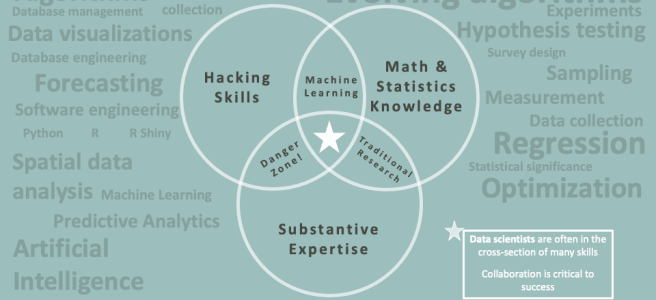
Key risks to probe:
- Data Quality & Representativeness: Is the data used for training the model a true reflection of the business environment where it will be used? If you trained a model on pre-COVID data, will it work today?
- Generalizability: How confident are we that this model will continue to perform well in the future as market conditions, competitors, and customer behaviors change?
- Ethical and Regulatory Risks: Could the model be unintentionally biased against certain groups? Does it use data in a way that could violate user privacy or regulations like GDPR? This is not just a legal check; it's a brand reputation check.
Ten red flags signaling your analytics program will fail
The McKinsey article 'Ten red flags signaling your analytics program will fail' provides a high-level strategic view of these risks. Let's look at the red flag specifically related to ethics.
Please read Red Flag #10: 'No one is hyperfocused on identifying potential ethical, social, and regulatory implications of analytics initiatives.' This section provides a concrete example of how an algorithm can introduce bias, even with good intentions.
- Ask: "What are the biggest assumptions we've made in this analysis? What could make this model fail in the real world? Have we checked for potential bias in the data or the predictions?"
Question 5: What Is the Plan for Implementation and Measuring Value?
A model sitting in a PowerPoint deck generates zero revenue. The final, and most critical, part of your critique is to focus on action.
-
Path to Production: How do we get this model out of the lab and into our marketing workflows (e.g., integrated with our CRM, ad platforms, or email service provider)?
-
Measurement Plan: How will we A/B test the impact of this model? What is the specific business KPI we expect to move? According to McKinsey, a common failure is not being able to attribute bottom-line impact to analytics investments.
-
Learning Loop: How will we monitor the model's performance over time and decide when it needs to be retrained or retired?
-
Ask: "What is the simplest version of this we can ship to start learning? What is the one metric that will tell us if this is working? Who on the team is responsible for monitoring its impact?"
Test your understanding!
Your team presents a model that predicts which new users will become high-value customers with 95% accuracy. It's an incredible result. Based on the framework, what are two critical follow-up questions you should ask immediately?
Show answer
Here are two excellent questions based on our framework:
- Question related to Risk/Limitations: "This accuracy seems almost too good to be true. Is there any chance of data leakage? For example, did the model have access to information during training that it wouldn't have in a real-world prediction scenario (like a user's purchase history)?" High accuracy can be a red flag for a flawed setup.
- Question related to Insights/Learning: "What are the top drivers that the model is using to identify these high-value users? Understanding the 'why' behind the prediction is just as important as the prediction itself, as it could inform our creative strategy, landing page optimization, or targeting."
Conclusion
You've just walked through a comprehensive framework for moving a data science project from a technical presentation to a strategic asset. By asking these five key questions, you fulfill your most important function as a data-driven leader: ensuring that analytical work is relevant, robust, and directly connected to business value.
Key Takeaways:
- Your primary role in a project review is to be a strategic partner, not a technical auditor.
- Use the five-question framework to guide your critique:
- Does it solve the original business problem?
- What are the business implications of the model's performance?
- What did we learn beyond the prediction?
- What are the risks and limitations?
- What's the plan for implementation and measurement?
- A "bad" model can yield great insights, and a "good" model can hide serious risks. Your critical review is what tells the difference.
Preview of the Next Lesson:
Now that you have a framework for critiquing custom-built models, you're well-equipped to apply the same critical thinking to the powerful but often opaque models that drive the ad platforms you use every day. In the next lesson, we will begin a new module, "Strategic Channel and Bidding Management," starting with a lesson to explain how platform algorithms (e.g., Google Smart Bidding, Meta Advantage+) work at a strategic level. You'll learn to look "under the hood" of these automated systems and make smarter strategic decisions.