
Hello! Welcome back to our module on "Customer Value and Segmentation Strategy."
In our last lesson, we focused on formulating distinct marketing objectives for our customer segments. We learned to move from analysis to action by setting goals like activation for new customers, retention for champions, and re-activation for at-risk, high-value users.
Now that we know what we want to achieve with each segment, we need to determine how we'll do it. A great objective is only as good as the plan to execute it. This brings us to today's learning outcome: to evaluate a proposed channel and messaging strategy tailored to a specific high-value customer segment.
As a marketing leader, your team will bring you proposals for campaigns. Your role isn't just to approve them but to critically assess whether the chosen channels and messages are the right tools for the job. This lesson will provide you with a framework to do just that, ensuring your team's efforts are strategically sound and aligned with your business goals.
The Strategic Marketing Process
Before we dive into the details, let's place today's topic in the broader context of marketing strategy. The process generally flows from understanding the market to detailed planning.
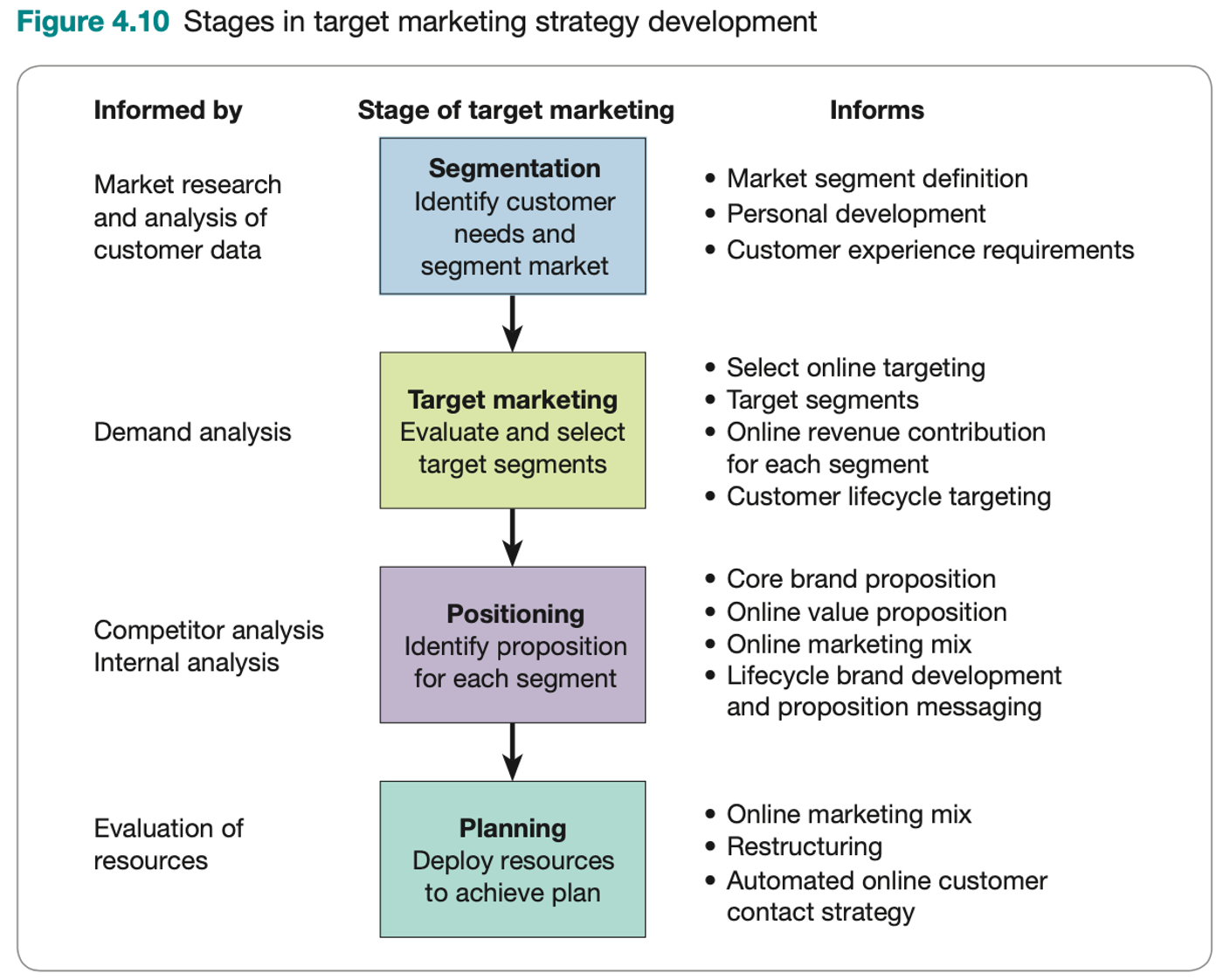
As the diagram shows, after segmenting the market and selecting a target segment (our "high-value customers"), we must develop a positioning strategy and a marketing plan. This involves two critical components:
- Channel Strategy: Where will we deliver our message?
- Messaging Strategy: What will we say?
Let's break down how to evaluate each of these for a proposed plan targeting a high-value segment.
1. Evaluating the Channel Strategy
Choosing the right channel is about more than just knowing where your customers are. It's about finding the most effective and efficient place to achieve a specific objective. When your team proposes a channel (e.g., "Let's run a retention campaign for our 'Champions' segment on Instagram"), here are the key criteria for your evaluation.
A. Channel-Segment Fit
The most basic question is: does this channel effectively reach our target segment?
- Demographics and Behavior: Are our 'Champions' (who might be 45-55 year old professionals) actually active and receptive on a platform like TikTok? Or would LinkedIn or a targeted email be more appropriate?
- Preferences: Even if they are on a platform, do they prefer to engage with brands there? Some channels are for discovery, others for community, and some for direct communication. Your team's proposal should be based on data or strong qualitative insights about the segment's channel preferences.
B. Channel-Objective Fit
Different channels serve different purposes. The channel must align with the objective you set for the segment.
- Retention/Loyalty: Channels that facilitate direct communication with existing customers are ideal. Think email marketing, push notifications, SMS, or a private community forum. Using a broad acquisition channel like television ads for retention is usually inefficient.
- Monetization (Upsell/Cross-sell): Personalized emails and on-site recommendations are powerful. Retargeting ads on social media or display networks can also work well, reminding customers of complementary products based on their purchase history.
- Acquisition (of Lookalikes): If your goal is to acquire more customers who resemble your high-value segment, then channels with strong lookalike audience capabilities, like Meta Ads (Facebook/Instagram) or Google Ads, are excellent choices.
C. Channel-Cost Fit (ROI)
A channel might fit the segment and objective, but is it financially viable? This is where you apply a strategic business lens.
- Go Beyond ROAS: As a leader, you need to push your team to think beyond platform-reported Return on Ad Spend (ROAS). The article "How To Evaluate Marketing Channels" highlights the importance of calculating true ROI. This means factoring in all costs: ad spend, agency fees, software costs, and even the cost of creative development.
- Connect to LTV: For a high-value segment, the acceptable Customer Acquisition Cost (CAC) or retention cost is much higher. Your evaluation should be in the context of that segment's Lifetime Value (LTV). A campaign that costs $50 per retained customer might seem expensive, but if that customer's LTV is $5,000, it's a fantastic investment.
- Channel's Role: Is this channel an "introducer" or a "closer"? Some channels (like organic search or content marketing) are great at creating initial awareness but may not get the final click. Others (like branded search or retargeting) are great at closing deals. When evaluating a proposal, consider the channel's role in the entire customer journey, not just last-click attribution. Cutting a channel that "assists" many conversions because its last-click ROI is low is a common strategic error.
2. Evaluating the Messaging Strategy
Once the channel is validated, the message itself must be scrutinized. A generic message sent to a high-value segment is a wasted opportunity. The message must be tailored to their relationship with your brand.
A. Message-Segment Fit
The message should reflect what you know about the segment and why they are valuable.
- For 'Champions' (High R, F, M): The message should be one of recognition and exclusivity. They've earned a special status.
- Weak Message: "10% off your next purchase!" (Generic, could devalue the brand).
- Strong Message: "As a VIP member, you get early access to our new collection. Shop now before anyone else."
- For 'At-Risk Champions' (High F & M, but low R): The message should be about value reinforcement and creating a reason to return.
- Weak Message: "We miss you!" (Vague, lacks a compelling hook).
- Strong Message: "We've missed you. Based on your love for [Product X], we thought you'd want to know about our new [Related Product Y]. Here's a special offer to welcome you back."
The following reading explains this concept clearly, providing examples of how to tailor strategies to different value-based clusters.
Optimising marketing strategies by customer segments and lifetime values
The paper 'Optimising marketing strategies by customer segments...' by Guha, Echagarruga, and Tian provides excellent, concrete examples of how to tailor marketing efforts to different customer segments.
Please read the short section titled 'OPTIMISING MARKETING STRATEGY BY CUSTOMER SEGMENTS'. Pay close attention to the different approaches recommended for high-value, mid-value, and low-value customers. This demonstrates the core principle of message-segment fit.
B. Message-Objective Fit
The call-to-action (CTA) and the overall tone must align with your primary objective.
- Objective: Increase Loyalty. The message should not be transactional. It could ask for feedback, invite them to an exclusive group, or offer a surprise-and-delight gift. The CTA might be "Share Your Feedback" or "Join the Community."
- Objective: Drive a Repeat Purchase. The message needs to be more direct, creating desire or urgency. The CTA should be product-focused, like "Shop Now" or "Claim Your Offer."
C. Message Consistency
Finally, does the proposed message align with your overall brand? A disjointed customer experience can erode trust, especially with your best customers.
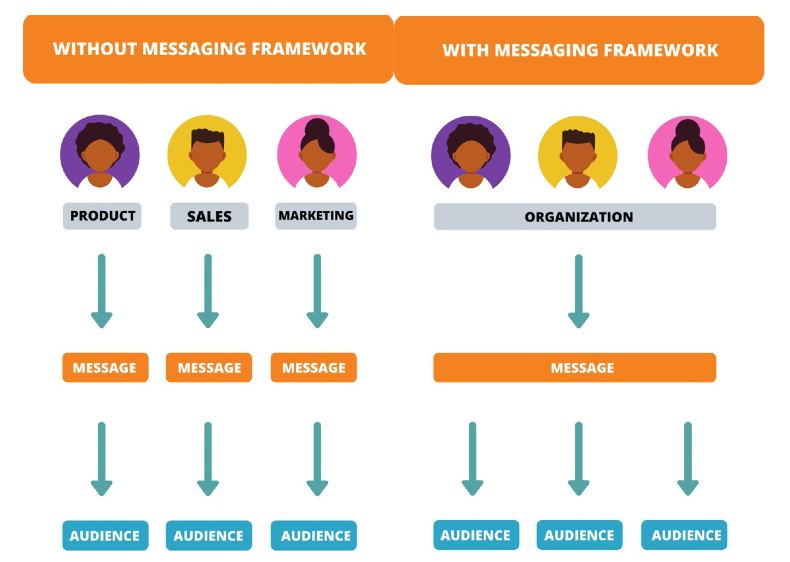
When you evaluate a proposal, ask:
- Does the tone of voice match our brand guidelines?
- Is the visual identity (if any) consistent?
- If a customer from this segment also receives a message intended for a different segment, would the experience feel contradictory?
A Framework for Evaluation
To bring this all together, here is a practical checklist of questions to ask your team when they propose a channel and messaging strategy for a high-value segment:
-
Objective & Segment:
- "Remind me, what is the single most important objective for this 'Champion' segment?" (e.g., Increase retention from 90% to 92%)
- "What data tells us this is the right channel and message for this specific group?"
-
Channel Evaluation:
- "Why is [Proposed Channel] the most effective place to reach these customers for this specific purpose?"
- "Have we modeled the full cost of this campaign, not just ad spend? What is the expected return, given this segment's LTV?"
- "How does this campaign interact with our other marketing efforts? Are we considering its role in the full customer journey?"
-
Messaging Evaluation:
- "How does this message specifically acknowledge their status as high-value customers?"
- "Is the offer/CTA directly aligned with our objective of increasing loyalty (not just driving a one-off sale)?"
- "Does this feel consistent with our core brand promise?"
-
Measurement:
- "How will we measure success? What is the primary KPI?"
- "What are the guardrail metrics we need to watch? (e.g., making sure we don't hurt profit margins by over-discounting)."
Test your understanding!
Your team lead for paid social presents a plan to re-engage your "At-Risk Champions" segment—customers who were previously very high-value but haven't purchased in 6 months.
The Proposal:
- Objective: Win them back.
- Channel: A Facebook/Instagram retargeting campaign.
- Audience: A list of the "At-Risk Champions" customer IDs.
- Message: An ad creative showing your best-selling products with the headline: "Huge Storewide Sale! Get 40% Off Everything, This Week Only!"
Using the evaluation framework, identify at least two potential weaknesses in this proposal and explain what questions you would ask your team lead to challenge or refine the plan.
Show answer
Here are two significant potential weaknesses in the proposal:
-
Weakness in Message-Segment Fit: The message is a generic, deep-discount offer. It doesn't acknowledge the customer's past loyalty or high value. Treating a "Champion" the same as a new prospect who has never purchased can feel impersonal and may attract them back for the wrong reason (the discount), potentially eroding profit margins without restoring loyalty.
- Question to Ask: "This is a generic discount. How can we tailor the message to recognize their past loyalty? Could we offer them a more exclusive 'welcome back' gift or a personalized offer based on their purchase history instead of a storewide sale?"
-
Potential Weakness in Channel-Objective Fit: While Facebook/Instagram can work, it's a very public-facing channel. A more personal channel might be more effective for winning back a high-value relationship. Furthermore, if they've stopped engaging, they might be ignoring your ads.
- Question to Ask: "Have we considered a more personal channel first, like a highly personalized email from our Head of Customer Experience? We could test email as a primary channel and use paid social as a support channel if the email isn't opened. This might be more effective and cost-efficient for restoring a valuable relationship."
Conclusion
Evaluating a proposed strategy is a critical leadership function that bridges the gap between analytics and execution. By systematically assessing the fit between the segment, objective, channel, and message, you can guide your team to create campaigns that are not only creative but also strategically sound and profitable.
Key Takeaways:
- A strong strategy requires alignment between the segment, the objective, the channel, and the message.
- When evaluating the channel, consider its fit with the segment, its suitability for the objective, and its true, LTV-adjusted ROI.
- When evaluating the message, ensure it resonates with the segment's specific history, directly supports the objective, and is consistent with your brand.
- Your role is to ask probing questions that challenge assumptions and ensure every campaign is a smart investment in your most valuable customer relationships.
Preview of the Next Lesson:
Today, we focused on evaluating a strategy for a specific, existing customer segment. This often involves calculating ROI based on retention and monetization. But how do we evaluate the channels we use to acquire new customers?
In our next lesson, we will tackle this by learning how to use the LTV-to-CAC ratio to evaluate the long-term profitability of customer acquisition channels. This will equip you to make broader, top-level decisions about where to invest your budget to grow your base of future high-value customers.