
Hello again.
In the previous lesson, you worked at the sentence level: identifying grammatical structure, agreement, modifiers, and context-sensitive word choices. Reading comprehension asks a different question: not “Is this sentence correct?” but “What is this passage doing, and what does it actually justify?”
For GATE, a short passage may support a two-mark question, so accuracy matters more than reading every word slowly. This lesson develops a disciplined way to identify a passage’s main claim, its assumptions, its defensible implications, and the author’s intent—without adding ideas from your own experience.
Text, knowledge, and justified inference
An inference is not a creative guess. It is a conclusion that follows from the passage when you combine its statements with ordinary logical connections.
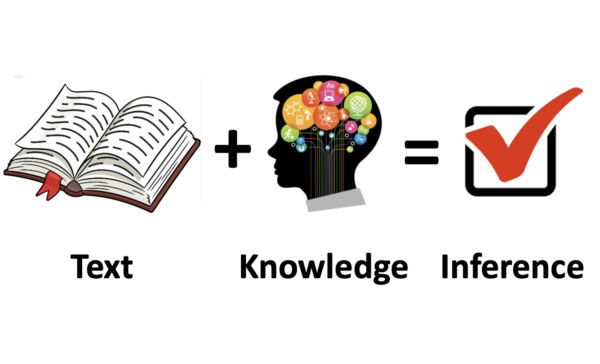
A useful rule is:
Use the passage as evidence; use your knowledge only to understand the evidence.
For example:
The college extended library hours during examination week. Visitor entries increased during the same period.
A justified inference is:
- Visitor entries were higher during the period of extended hours.
But this is not justified:
- Extended hours caused the increase in entries.
Why not? Examination week itself could have increased library use. The passage establishes a coincidence, not necessarily a cause.
This distinction is central to GATE comprehension. Distractors often turn:
- may into will,
- some into all,
- is associated with into causes,
- an observation about a sample into a conclusion about everyone.
Four things a passage can ask you to identify
A compact passage can contain facts, examples, criticism, recommendations, and qualifications. The following distinctions prevent them from getting mixed together.
| Target | Core question | What to look for |
|---|---|---|
| Main claim | What central idea does the author want accepted? | The conclusion that best accommodates the whole passage |
| Assumption | What unstated idea must be reasonable for the argument to work? | A logical bridge between evidence and conclusion |
| Implication / inference | What follows from the passage, even if not stated word for word? | The least strong conclusion fully supported by the text |
| Authorial intent | Why did the author write this passage? | The author’s rhetorical action: explain, criticize, recommend, compare, warn, defend |
Main claim is not merely the topic
A topic is a label:
Remote work
A main claim is a complete, arguable idea about that topic:
Remote work can improve productivity, but organisations should evaluate its effects on collaboration before making it permanent.
The second statement is a claim because someone could disagree with it and the author would need reasons to support it.
A passage may also contain several smaller claims. The main claim is the one that gives the remaining details their purpose.
For a main-claim question, the best answer should be broad enough to cover the entire passage, but cautious enough not to add certainty that the author did not express.
Reading for structure instead of reading as a list of facts
When you read a GATE passage, do not try to memorize every sentence. Instead, identify the job performed by each part.
A short annotation system is enough:
- B for background or context
- E for evidence, data, or example
- C for counterpoint, limitation, or qualification
- R for recommendation or conclusion
Also notice signal words:
| Signal type | Examples | What it often indicates |
|---|---|---|
| Contrast | but, however, although, yet | A limitation or change in direction |
| Conclusion | therefore, thus, hence, consequently | A claim drawn from earlier statements |
| Recommendation | should, ought to, need to | The author’s position or proposal |
| Caution | may, might, suggests, cannot alone | Limits on certainty |
| Evaluation | flawed, valuable, superficial, promising | Authorial attitude or tone |
A contrast word is especially valuable. In many passages, the author presents a familiar view first and then uses however or but to reveal the actual point.
Consider:
Recorded lectures make course material easier to access. However, treating them as replacements for live classes mistakes access for learning. Recordings are useful for revision, but students also need timely feedback and opportunities to ask questions. Colleges should therefore use recordings to supplement, rather than replace, classroom teaching.
A quick map is:
- Sentence 1: background benefit
- Sentence 2: criticism of an extreme use
- Sentence 3: qualification and reasoning
- Sentence 4: recommendation
The main claim is not “recordings help revision.” That is true but too narrow. The main claim is:
Colleges should use recorded lectures as supplements, not substitutes, for classroom teaching.
The author’s intent is:
To argue against replacing live instruction with recordings and to recommend a balanced use of recordings.
Notice the difference:
- Claim: what the author believes should happen.
- Intent: what the author is trying to do by presenting that belief.
Lecture #15 | Verbal Ability - Comprehension | GATE General Aptitude Course by Christy Varghese
Watch the GATE-focused excerpts from Lecture #15 | Verbal Ability - Comprehension by Christy's Classes. They demonstrate how exact wording, especially qualifications, prevents overconfident inferences and reveals an author's critical stance.
Begin with the inference example. Focus on why “as far as we know” supports a limited conclusion but rules out an absolute one. Then watch the intent example, where the phrase “bypasses tackling” identifies the author’s criticism of superficial anti-obesity measures.
Assumptions: find the missing bridge
An assumption is not a detail directly stated in the passage. It is an unstated idea that the author relies on when moving from evidence to a conclusion.
Consider this argument:
A survey found that 78 of 120 visitors used the library’s early-morning slot. Therefore, the library should permanently open earlier.
The survey result is evidence. Permanent adoption is the recommendation. Between them lie assumptions such as:
- The surveyed visitors reasonably represent the relevant library users.
- The benefit of early access justifies the added staffing and operating costs.
- Early use is not solely caused by a temporary circumstance.
The passage does not have to assume every imaginable condition. Look only for assumptions that matter to the specific conclusion.
The negation check
A useful way to test a possible assumption is to temporarily reverse it.
Candidate assumption:
The survey group is reasonably representative of regular users.
Negation:
The survey group is not representative of regular users.
If this were true, the survey would provide weak support for a permanent policy. The recommendation loses much of its basis. Therefore, representativeness is a plausible assumption.
By contrast, this is usually not a necessary assumption:
Every visitor prefers the early-morning slot.
The library could reasonably open earlier even if many visitors still preferred later hours. The author does not need everyone to prefer it.
Common assumption traps
Be alert to options that are related to the topic but not required by the reasoning.
| Argument feature | Likely assumption | Common trap |
|---|---|---|
| Sample data supports a broad policy | The sample is relevant to the larger group | “Every individual agrees with the policy” |
| Correlation supports a proposal | The relationship is meaningful enough to matter | “The relationship is the only possible cause” |
| One method is criticized | The proposed alternative addresses the criticism better | “The criticized method has no value at all” |
| A policy is recommended | Expected benefits justify relevant costs or risks | An unrelated personal opinion about the policy |
Assumption questions reward precision. Do not choose an answer merely because it sounds sensible in real life.
Implications: choose what must be true, not what could be true
An implication is a conclusion supported by the passage. The right option is often the one that makes the smallest justified claim.
Consider this passage:
A city introduced peak-hour parking fees in one commercial district. Vehicle entries fell by 12 percent over three months. However, several large offices also began remote-work days during that period, so the reduction cannot be credited to the fees alone. The city should continue the policy for another year while comparing similar districts without the fees.
Now separate the four targets.
Main claim
The city should continue evaluating the parking-fee policy before reaching a final judgment.
This covers the observed reduction, the confounding factor, and the recommendation for further comparison.
Assumption
Comparing similar districts with and without the fees can help determine whether the fees contribute to lower vehicle entries.
This is not stated directly, but it supports the proposed method of evaluation.
Valid implication
The available evidence does not establish that parking fees alone caused the reduction in vehicle entries.
The passage states this almost directly through “cannot be credited to the fees alone.”
Authorial intent
To recommend cautious further evaluation rather than to declare the parking fees a proven success.
The author’s tone is not hostile toward the policy. It is cautiously favourable: the policy is worth continuing, but the evidence is not conclusive.
Unsupported distractors
These statements may sound plausible, but they go beyond the text:
-
“Parking fees are ineffective.”
The passage does not say that. -
“Remote work caused the entire 12 percent reduction.”
Remote work is one possible contributing factor, not a proven sole cause. -
“The city should permanently expand parking fees to all districts.”
The author recommends further comparison before a final decision. -
“Vehicle entries will continue to decrease next year.”
The passage gives no prediction.
The core discipline is this:
A defensible inference preserves the passage’s scope, certainty, and relationships.
UGC NET Paper 1 Reading Comprehension - Knowledge Gate AI
Read this Knowledge Gate AI guide for a practical method of mapping paragraph roles, locating evidence, and rejecting options that become too broad or too certain. Although it is written for another exam, its evidence-first method transfers directly to GATE comprehension.
In the subsection “Map paragraph roles before choosing the main idea,” read the full three-paragraph example. Notice how the correct main idea includes both the encouraging result and the author’s caution. Then continue to the subsection “Solve inference questions with a minimum-evidence test.” Read the inference comparison. Focus on how a correct option retains the original population and avoids turning association into causation.
Main claim and authorial intent: two related but different answers
Questions about the main claim and questions about primary purpose can look similar. Separate them using their grammar.
Main-claim question
Typical wording:
- “Which statement best expresses the main idea?”
- “The passage argues that…”
- “The central claim of the passage is…”
Answer with a complete proposition:
The passage argues that public transport projects should be evaluated using long-term access data, not only initial ridership figures.
Purpose or intent question
Typical wording:
- “The primary purpose of the passage is to…”
- “The author writes primarily in order to…”
- “The author’s main objective is to…”
Answer with a verb:
The passage seeks to argue for a broader evaluation of public transport projects.
Common purpose verbs include:
- to explain
- to describe
- to compare
- to criticize
- to challenge
- to defend
- to recommend
- to warn
- to clarify
A purpose answer should explain why the author included the details. If an option only describes one example or one sentence, it is too narrow for a primary-purpose question.
Tone helps identify intent
Tone is the author’s attitude toward the subject. It is normally revealed through multiple textual signals, not one adjective.
For example:
The pilot produced promising results, but the committee recommended another trial before permanent adoption.
The word promising is positive. But but, another trial, and before permanent adoption indicate caution. The tone is cautiously favourable, not celebratory or conclusive.
A GATE reading routine for short passages
Use this routine until it becomes automatic.
-
Read once for the overall message.
Ask: “What is the author mainly saying, and why?” -
Map the role of each sentence or paragraph.
Mark background, evidence, limitation, example, and conclusion. -
Locate the pivot.
Pay attention to contrast and conclusion words such as however, but, therefore, and yet. -
State the main claim in your own words.
Make it broad enough for the whole passage, but do not strengthen it. -
For inference options, demand evidence.
Check the option’s number, group, qualifier, and claimed relationship. -
For assumption options, identify the gap.
Ask what must be reasonably true for the evidence to support the conclusion. -
For intent questions, begin with “to.”
For example: “The author writes to criticize a superficial solution.” -
Compare answer choices against the passage, not against your opinions.
A real-world statement can be true and still be the wrong answer if the passage does not establish it.
When reviewing mistakes, classify them just as you began doing in the first lesson:
- Choosing an overly strong answer after reading may as will is an interpretation error.
- Missing a contrast word such as however is a reading-attention error.
- Not understanding a word like superficial or ubiquitous is a vocabulary gap.
- Running out of time because you reread every line repeatedly is a time-management issue.
That classification will tell you whether to build vocabulary, slow down briefly for qualifiers, or practise faster passage mapping.
Key takeaways
A strong comprehension answer is based on evidence, not plausibility.
- The main claim is the central idea the author wants the reader to accept.
- An assumption is an unstated bridge required for an argument’s reasoning.
- An implication is the least strong conclusion that the text genuinely supports.
- Authorial intent describes what the author is doing: explaining, criticizing, recommending, comparing, or warning.
- Preserve the passage’s qualifiers: may is not will, association is not causation, and a sample is not automatically an entire population.
- For main-purpose questions, choose an answer broad enough to cover the whole passage; for inference questions, choose the most conservative answer fully supported by evidence.
In the next lesson, you will move from verbal reasoning to the numerical side of General Aptitude: solving word problems involving ratios, percentages, averages, profit and loss, rates, time, and work.
Can't find a good explanation? Sign up and we'll make it for you
Sign up