
Hello. In the previous lesson, you created a small research packet: a verified central mechanism, a tradeoff, and the conditions that keep your explanation accurate. Now you will turn those facts into something a viewer can follow in one sitting: a short narration with a reason to start, a clear path through the mechanism, and a final line that makes the idea stick.
For a 30–60 second engineering explainer, the goal is not to sound comprehensive. It is to make one accurate idea feel inevitable by the end. Plan on about 40 minutes: study a short storytelling example, draft from a compact structure, then read and tighten your script aloud.
Start with the one idea you want to leave behind
Before drafting a hook, write the takeaway sentence. This is the idea a beginner should still be able to repeat later.
A useful form is:
Because [cause], [component or process] produces [effect], with [tradeoff or condition].
For the block-and-tackle example used in earlier lessons:
Several taut rope sections share a load, so less pulling force is needed—but a longer length of rope must be pulled.
That sentence is not necessarily your final narration. It is your editorial filter. If a line does not help a beginner understand that statement, remove it and save the idea for a later video.
For a roughly 45-second explainer, use this structure:
| Beat | Approx. time | Job |
|---|---|---|
| Hook | 0–5 seconds | Make the viewer want the answer. |
| Orientation | 5–10 seconds | Name the object or situation and correct the first likely misconception. |
| Mechanism | 10–30 seconds | Explain the two or three causal links that produce the effect. |
| Tradeoff or limit | 30–40 seconds | Prevent a misleading conclusion. |
| Closing | 40–50 seconds | Resolve the opening question in a compact, memorable form. |
A short explainer usually does not need a greeting, channel introduction, biography, or a preview of three separate topics. Those may be appropriate in longer videos, but they spend seconds that your mechanism needs.
Write a hook that genuinely earns an answer
A hook is not an exaggerated claim pasted onto the start of a video. It is an opening that creates a specific question your explanation will answer.
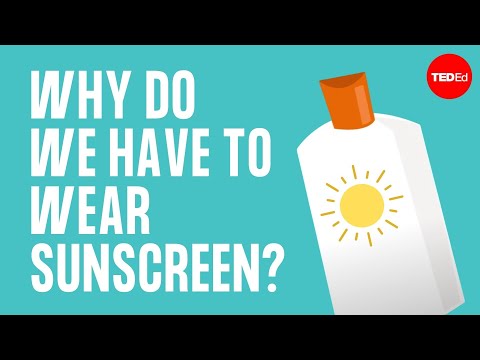
This sunscreen thumbnail illustrates a clean question-led opening: the question is visible immediately, and the promised answer is narrow enough for a short video.
For engineering explainers, three hook forms are especially useful:
| Hook form | Example for a pulley explainer | Why it works |
|---|---|---|
| Concrete question | “How can one person lift a load that seems far too heavy?” | Establishes a visible puzzle. |
| Misconception correction | “Pulleys do not make a load lighter. So why do they make it easier to lift?” | Creates tension without making an unsupported claim. |
| Specific challenge | “Can four rope sections really cut the required lifting force to about a quarter?” | Makes the mechanism and condition of the answer clear. |
Avoid generic openings such as “Today we are learning about pulleys.” They identify the subject but give no reason to stay. Also avoid claims such as “This simple trick beats physics” or “Pulleys create free energy.” They may attract attention, but they promise a false explanation.
The best engineering hooks use tension already present in the real mechanism:
- A heavy load rises even though the pull seems manageable.
- A machine reduces force but demands more distance.
- A familiar object behaves differently than intuition suggests.
- An internal component performs a hidden but decisive role.
TED speaker Jenny Hoyos demonstrates the storytelling principle behind this: begin with a question, make the audience feel progress toward an answer, then provide a satisfying resolution. For an engineering video, the “conflict” does not need to be artificial drama. The apparent contradiction in the mechanism is enough.
The Secret to Telling a Great Story — in Less Than 60 Seconds | Jenny Hoyos | TED
Watch “The Secret to Telling a Great Story — in Less Than 60 Seconds” by Jenny Hoyos on TED. It shows how a short opening question, visible progress, and a final resolution can give even a very brief video a satisfying shape.
Watch the opening question to see why a question can keep an audience waiting for a resolution. Then watch building progress and notice how each moment makes the viewer feel nearer to an answer. Finish with the resolution; apply its lesson to your explainer by making sure your closing explicitly answers the question raised at the start.
A practical rule: write a provisional hook early, but choose the final wording after the body works. Once you know exactly what the explanation delivers, you can make a promise that is both compelling and accurate.
Put the mechanism in the order a beginner needs
Research notes are often organized by source or by the order in which you discovered facts. A script cannot be. Its order must match the viewer’s mental journey.
For most mechanism explainers, that journey is:
- Show the surprising outcome. What appears puzzling?
- Name the relevant parts. Only the parts necessary to understand the outcome.
- Explain the causal action. What does each part do?
- State the consequence. How does that action create the result?
- Reveal the tradeoff or boundary. What does the system require or fail to include?
For a pulley system, a poor order would begin with a full definition of fixed pulleys, movable pulleys, rope routing, ideal mechanical advantage, and tension. The viewer gets terminology before they have a reason to care.
A stronger order is:
- A heavy crate rises.
- The pulleys do not reduce the crate’s weight.
- Several rope sections support the moving block.
- Each taut section carries part of the load.
- Less force is needed, but more rope must be pulled.
- Friction reduces the real-world advantage.
Notice that the script does not need to say every true thing you found during research. It needs only enough information for the main causal chain to make sense.
Use one idea per sentence
A beginner should not have to unpack several relationships at once. Compare these versions:
Overloaded
“A block and tackle uses fixed and movable pulleys to create mechanical advantage by distributing tension across multiple supporting strands, although practical efficiency is reduced by friction and component weight.”
Explainer-ready
“A block and tackle does not make the load lighter. It gives the load several rope sections to hang from. Each taut section pulls upward on the moving block.”
The second version uses more sentences, but it is shorter in thought. It also gives the future animation room to show one change at a time.
Keep technical terms only when they do useful work. If you use one, define it immediately in plain language:
“A supporting rope section is simply a section holding up the moving block.”
Do not introduce terminology merely to sound technical. Your research packet is where the formal language belongs; the narration is where the viewer needs the mechanism.
Draft the body first, then give it a memorable ending
The final line should do more than stop the narration. It should resolve the hook and compress the mechanism into a phrase worth remembering.
A memorable closing often has three qualities:
- It answers the original question.
- It preserves the important tradeoff or condition.
- It has a compact rhythm or contrast.
For the pulley example:
“Less force, more rope. That is the trade.”
This works because it does not add a new topic. It restates the real point of the explanation in five words, then lands it.
A closing is different from a call to action. A hard “Subscribe for more” immediately after the mechanism may be useful for channel growth, but it should not replace the intellectual payoff. For a short educational video, let the spoken ending complete the idea. A subtle subscribe prompt can live in an end card or a brief post-roll later.
Here is a complete 45-second draft for the block-and-tackle topic. It is about 104 words, which is a workable starting length for a clear voice-over at a natural pace.
How can one person lift a load that seems far too heavy?
A block and tackle does not make the load lighter. It gives the load more rope sections to hang from.
When you pull the free end, each taut section pulls upward on the moving block. With four supporting sections in this arrangement, the load is shared four ways, so ideally you need about a quarter of the load’s weight in pulling force.
But there is no free energy. To lift the load one meter, you pull about four meters of rope. Real pulleys lose some advantage to friction.
Less force, more rope. That is the trade.
This script makes a few deliberate choices:
- The hook presents a visible puzzle rather than an empty introduction.
- The second sentence corrects the dangerous misconception that pulleys remove weight.
- The explanation moves from rope sections, to upward pulls, to force reduction.
- The distance tradeoff follows immediately, so the viewer does not infer that energy was created.
- The final line repeats the central truth in a short contrast.
If your chosen topic is different, keep the structure but replace the mechanism. For example, a heat sink, bicycle gears, hydraulic brakes, or a four-stroke engine can all be explained through the same pattern: apparent result, hidden cause, causal sequence, tradeoff, concise resolution.
Write for the ear, not for a textbook page
A narration script is spoken language. It should sound like a clear person explaining something, not like a paragraph copied from a report.
Video Script Writing: The Complete Guide
Read the relevant parts of “Video Script Writing: The Complete Guide” from Swarmify for a practical structure for hooks and bodies, plus a useful revision process for spoken narration. Apply the structural advice, but keep the technical accuracy standards from your previous lesson.
In “What are the parts of a video script?”, read from the hook guidance through the discussion of the body’s clear point, support, and transition. Then read the full subsection “How do you write for the ear, not the eye?”, focusing on spoken language. Finally, in “How do you write a video script step by step?”, read Step 1, Step 5, and Step 6. In particular, note the instruction from the core-message filter through reading aloud and timing the result.
Use these revision rules on your own draft:
- Use short spoken sentences. Aim for one causal idea at a time. If a sentence needs several commas, see whether it should become two sentences.
- Choose concrete verbs. “The rope pulls upward” is easier to hear and animate than “the system distributes force.”
- Prefer familiar words. Say “rope section holding up the load” before “supporting segment” or “mechanical advantage.”
- Use contractions when they sound natural. “Doesn’t” and “there’s” usually sound more conversational than their formal equivalents.
- Read it aloud twice. On the first read, mark tongue-twisters and breathless lines. On the second, time it honestly.
- Cut before speeding up. If the script is too long, remove repetition, side facts, and decorative wording. Do not rush the core explanation.
For a 45-second technical explainer, roughly 90–105 words is often a comfortable range. The right number depends on your voice, technical vocabulary, and intentional pauses. The stopwatch is more trustworthy than the word count.
Build your first script in three passes
Use the research packet from the previous lesson and write your own short script in a notes app or document.
Pass 1: Build a five-line outline
Write only one sentence for each beat:
Hook:
The engineering question or contradiction.

Orientation:
The object and the misconception to correct.

Mechanism:
Two or three causal links, in order.

Tradeoff or condition:
The fact that prevents a false conclusion.

Closing:
A compact answer to the opening question.
Do not worry about elegant wording yet. Make sure every factual line can be traced to one of your claim–evidence–reasoning notes.
Pass 2: Draft the narration without editing
Turn each outline line into spoken sentences. Keep your target audience in mind: a curious beginner should understand the meaning without prior engineering vocabulary.
If you reach an interesting side topic, mark it in a separate “future videos” note rather than adding it. A second question can become a second upload, which is more useful for a growing channel than one overloaded first video.
Pass 3: Audit, compress, and read aloud
Before you accept the script, check four things:
| Check | Test |
|---|---|
| Promise | Does the opening create a question the final line clearly answers? |
| Logic | Could a beginner explain what causes what after hearing the middle once? |
| Accuracy | Did you preserve the conditions, units, and tradeoffs from your research notes? |
| Speech | Can you read it naturally within the target duration without rushing? |
If one line fails the logic check, do not merely make it shorter. Ask whether the preceding sentence gives the viewer the prerequisite idea. Often the best fix is to move a sentence earlier, not add more explanation.
Key takeaways
A strong 30–60 second engineering script is built around one central takeaway, not a list of facts. Open with an honest question or contradiction, then explain the mechanism in the order a beginner needs: visible result, relevant components, causal action, consequence, and tradeoff.
Write the body before finalizing the hook, and end by resolving the opening question in a compact line. Keep the spoken script conversational, fact-checked, and short enough to deliver at a natural pace.
Your finished draft should now contain:
- one accurate hook;
- two or three logically ordered mechanism statements;
- one essential tradeoff, condition, or limitation; and
- a memorable closing that answers the hook.
Next, you will convert that narration into timed beats and matching visual actions, so every sentence has enough screen time to be understood.
Can't find a good explanation? Sign up and we'll make it for you
Sign up