Hello! Welcome back to the course.
In our last lesson, we explored how to identify external market signals—from competitors, customers, and the broader economy—that might trigger the need for a strategic pivot. We established that recognizing when to change is a critical entrepreneurial skill.
This lesson addresses the other side of that coin: being able to change. A timely signal is useless if your business is too rigid to respond. Today, we'll focus on the learning outcome: Assess the strategic value of maintaining flexibility to pivot or expand later. We'll introduce a powerful mental model called "Real Options Theory" that treats flexibility not as a vague nice-to-have, but as a tangible strategic asset. This will directly inform your immediate decisions about which CNC machines to buy and what products to focus on for your new woodworking business.
1. The Downside of Rigidity: The Flexibility Problem
In business, some decisions are easily reversed, while others lock you into a path. A large, upfront, irreversible investment is a strategic commitment. As we've touched on before, such commitments can be powerful—they can signal seriousness to the market and deter competitors. However, they also carry significant risk, especially in an uncertain market.
18 Strategic Commitment - Profit Analytics for Entrepreneurs
The article 'Strategic Commitment' from the Profit Analytics for Entrepreneurs textbook explains the trade-off between commitment and flexibility. It highlights how a strong commitment can become a liability.
Please read the sections titled 'When Strategic Commitment Backfires' and 'Actionable Takeaways for Entrepreneurs'. Pay close attention to 'The Flexibility Problem' and the advice to 'prioritize flexibility' when markets are uncertain.
As the reading highlights, committing too early or too heavily can trap you. For your woodworking business, imagine buying a $150,000 CNC machine that is purpose-built only for creating highly intricate, traditional-style cabinet doors. If, as we saw in the last lesson's signals, market tastes shift to minimalist, flat-panel designs, your expensive machine becomes an anchor, not an asset. This is the flexibility problem: your commitment has destroyed your ability to adapt.
This raises the crucial question: How do we value the ability to not be locked in?
2. Valuing Flexibility: An Introduction to Real Options
Traditional business cases often present a simple "go/no-go" decision based on a Net Present Value (NPV) calculation. This approach, however, struggles in highly uncertain environments because it assumes a fixed, linear path. A more dynamic approach is Real Options Theory.
This theory applies the logic of financial options (like stock options) to "real" business decisions. A financial option gives you the right, but not the obligation, to buy or sell a stock at a future date for a set price. A real option gives you the right, but not the obligation, to make a business decision in the future, after you've gained more information.
Real Options Theory: Why Flexibility Adds Value to Startups
The article 'Real options theory and entrepreneurship' provides a superb, non-technical introduction to this concept and why it's so valuable for startups.
Please read the sections from the beginning down to and including 'Example: The Food Truck Pivot'. Focus on the core idea that an opportunity with a 'way out' or a choice is more valuable, and pay close attention to the food truck example as a perfect illustration of a real option in practice.
The key takeaway is that an investment that creates future choices has an inherent value beyond its immediate cash flow projection. The small investment in the food truck wasn't just about selling food; it was about buying an option on a full-scale restaurant. You pay a small price now to learn, which gives you the choice to make a much larger, more informed investment later.
What are Real Options? - Real Options Valuation Method For Capital Budgeting Decisions
To reinforce this, Patrick Boyle's video 'What are Real Options?' provides more concrete examples of what these option-like business decisions look like.
Please watch the segment from 4:16 to 6:05. The video discusses examples like delaying an investment, adjusting production, and abandoning an unfavorable project. Notice how each of these is about having a choice after events begin to unfold.
3. Building Real Options into Your Woodworking Business
So, how does this apply to your decisions about CNC machines and product lines? You should view your initial investments as ways to buy options for the future. Let's look at the types of options you can create.
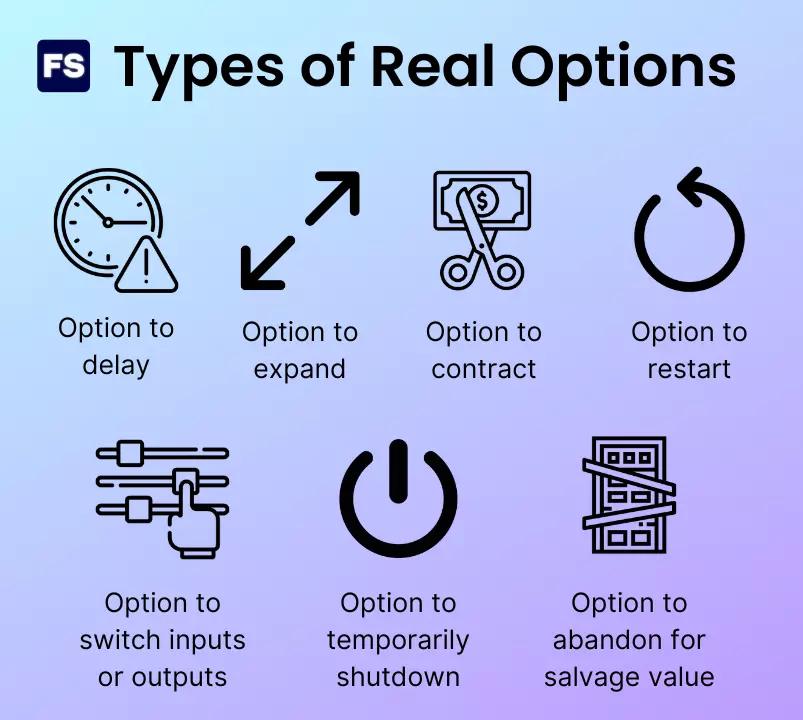
Let's break down a few key options:
-
Option to Switch (or Pivot): This is the ability to change your product mix.
- Bad Choice (No Option): Buying a specialized CNC machine that only makes doors.
- Good Choice (Buys an Option): Investing in a versatile 5-axis CNC machine that can produce both high-quality doors and the complex joinery for bespoke kitchen cabinets. The extra cost of the versatile machine is the "option premium" you pay for the flexibility to pivot from doors to cabinets if that's where the market demand is.
-
Option to Abandon: This is your "way out," which limits your downside risk. It's like a financial "put option."
- Bad Choice (No Option): Buying the $150,000 machine outright with a business loan.
- Good Choice (Buys an Option): Leasing a machine for the first year, with an option to buy it at the end of the lease. If the business fails, you can walk away, having lost only the lease payments. Those payments were the price you paid for the abandonment option.
-
Option to Expand (or Scale): This is the ability to grow if things go well. It's like a financial "call option."
- Bad Choice (Limited Option): Buying a large, monolithic machine that is at 90% capacity from day one.
- Good Choice (Buys an Option): Starting with a smaller, modular CNC machine and reserving floor space and electrical capacity to add a second identical machine later. This allows you to match your capacity to proven demand, avoiding excessive upfront investment.
Given your mechanical engineering background, you can think of this in terms of manufacturing systems.
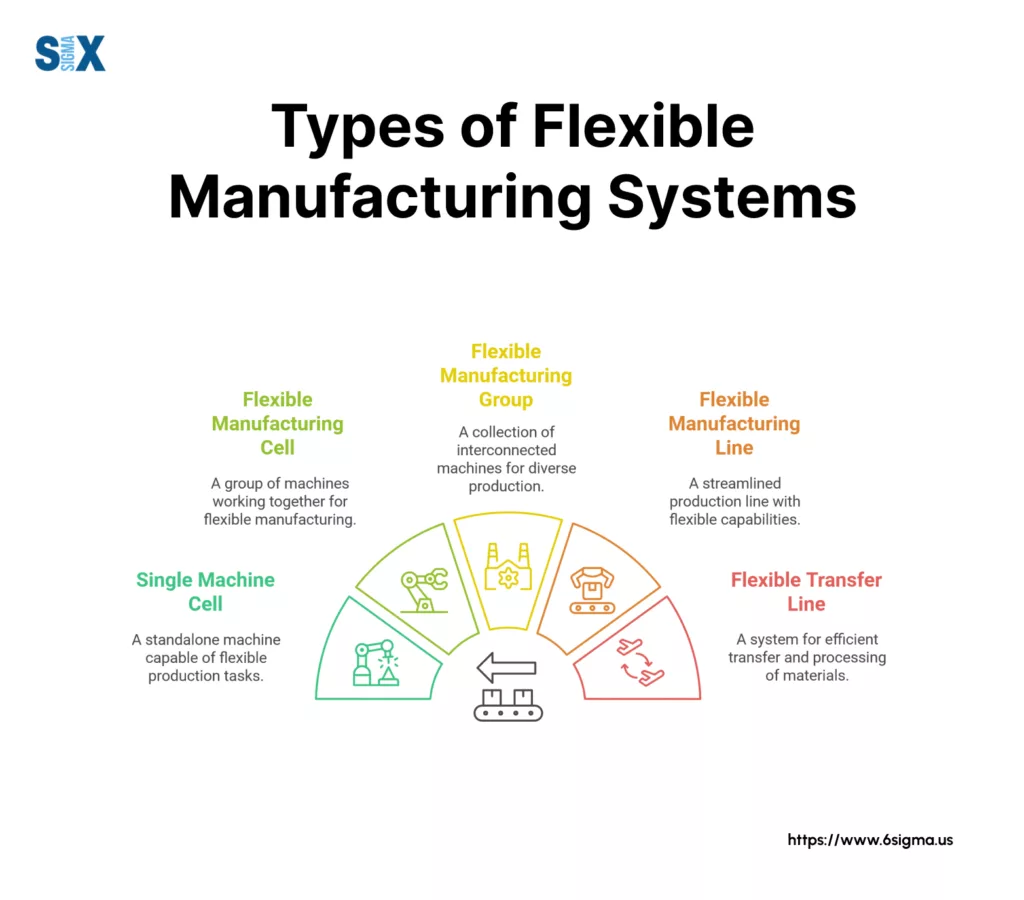
A new venture like yours benefits most from a Flexible Manufacturing Cell—a small group of versatile machines that can handle high variety and frequent changeovers. This is the physical embodiment of strategic flexibility. In contrast, a large, established company like IKEA might use a Flexible Transfer Line, which is optimized for high-volume, low-variety efficiency. Your initial machine choice should position you as the former, not the latter.
Test your understanding!
Imagine you have two choices for setting up your workshop:
Scenario A: Spend $80,000 on a highly efficient, specialized 3-axis CNC machine that excels at making one type of cabinet door very quickly.
Scenario B: Spend $100,000 on a more versatile, but slightly slower, 5-axis CNC machine that can make many types of doors, intricate carvings, and cabinet components.
From a real options perspective, what is the extra $20,000 in Scenario B buying you? Name at least one specific "real option" it creates.
Show answer
The extra $20,000 is the option premium. It is buying you, most importantly, the Option to Switch (or Pivot). If the market for the specific cabinet door in Scenario A dries up, that machine has limited use. With the machine in Scenario B, you have the flexibility to pivot your production to whatever the market demands—be it different doors, custom furniture parts, or full kitchen cabinet systems. The $20,000 buys you insurance against market uncertainty.
4. Real Options as an Antidote to the Sunk Cost Fallacy
Remember our previous discussions about the sunk cost fallacy? Real options thinking provides a powerful psychological framework to combat it.
3 game theory tactics, explained
This clip from Big Think provides a great refresher on the sunk cost fallacy and the pain associated with abandoning a project.
Please re-watch this segment on the sunk cost fallacy (3:44 - 5:54). Think about how framing an initial investment as the 'cost of an option' might change the emotional difficulty of walking away.
When you view your initial, smaller investments not as the first step on a fixed path, but as the price of an option, it reframes the entire decision.
If you lease a workshop for six months to test your business idea and then decide it's not viable, the lease payments are not a "loss." They are the cost of the "option to abandon." You paid that money for valuable information that prevented you from making a much larger, catastrophic error (like buying a building). By defining the potential for exit as a valid, planned outcome from the start, you make it psychologically easier to make the rational choice if and when the time comes.
Conclusion
Today we've moved from identifying the need to pivot to understanding how to build a business that is capable of pivoting. The strategic value of flexibility is immense for a startup, as it provides resilience in the face of uncertainty.
Key Takeaways:
- Irreversible commitments can be dangerous in uncertain markets, creating a "flexibility problem."
- Real Options Theory provides a powerful mental model for valuing flexibility. It frames investments as buying the right, but not the obligation, to make future business decisions.
- For your woodworking business, this means choosing versatile machinery (Option to Switch), considering leasing over buying (Option to Abandon), and planning for growth (Option to Expand).
- Viewing initial costs as the "price of an option" is a powerful psychological tool to overcome the sunk cost fallacy and make rational decisions about pivoting or exiting.
Preview of the Next Lesson:
Thinking in terms of options is the first step. The next is to actively gather the information needed to decide whether to exercise those options. In our next lesson, we will focus on how to apply an experimentation framework (e.g., pilot programs) to test a new product or market before committing. This is how you turn the theoretical value of your real options into tangible business intelligence.