
Welcome back. In the previous lesson, you learned that an incorrect answer can come mainly from a knowledge, reasoning, reading, accuracy, or time-management error. That classification is the diagnosis. This lesson turns the diagnosis into a practical tool: an error log.
An error log is not a list of answers you got wrong. It is a record of what happened in your thinking, how you can prove the correct answer, and what you will do differently next time. Used consistently, it turns a disappointing mistake into a specific improvement target—especially useful as you prepare for demanding selective-school questions over the next few years.
From “wrong answer” to useful evidence
A correction sheet often asks you to write a new answer and show the correct working. That is a good start, but it does not always explain why the first answer happened.
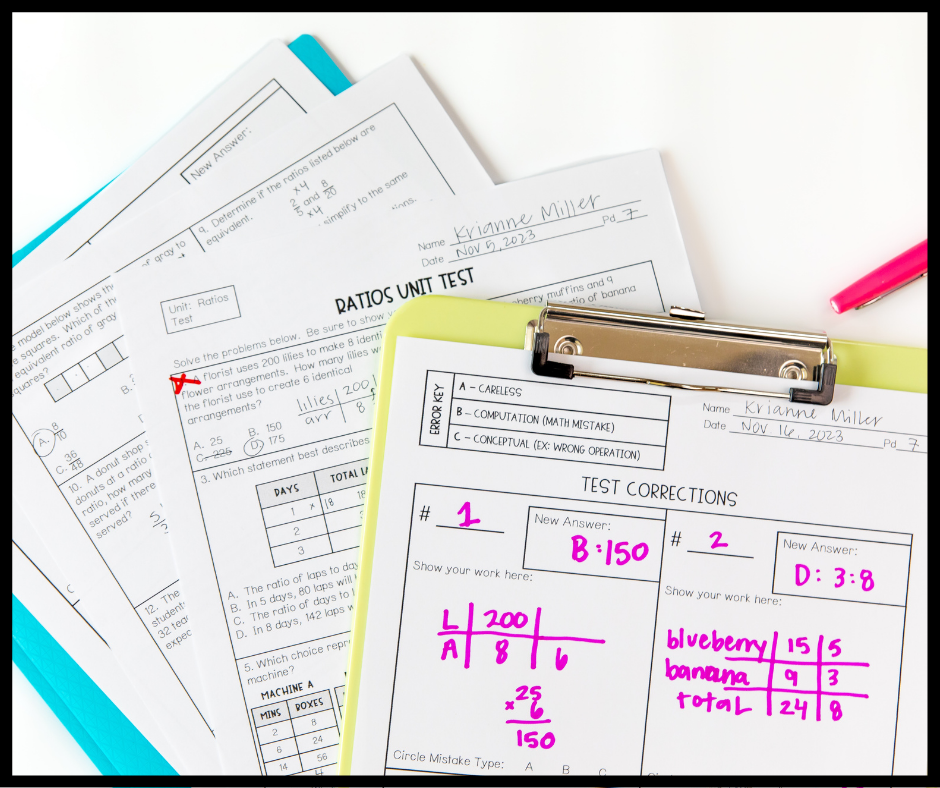
For example, imagine you get a reading question wrong. Writing “Correct answer: B” does not teach you much. A useful correction might say:
I chose A because it repeated a word from the passage. B is correct because it answers the question’s why and is supported by the sentence beginning “after families said…”. Next time, I will circle the question word and find the sentence that directly answers it before choosing.
That entry gives you four important pieces of information:
- Which question caused trouble, so you can find it again.
- What you chose or did, including the first wrong turn.
- Why it happened, using the error categories from the previous lesson.
- How you will respond next time, with a small, observable action.
The correction is not complete until you can explain the correct answer in your own words or show a correct method. Simply copying an answer key creates the feeling of understanding; rebuilding the answer creates actual understanding.
How to Study for the GMAT: Your Most Important Tool, the Error Log
Watch “How to Study for the GMAT: Your Most Important Tool, the Error Log” from PrepScholar GMAT. Although it is made for an older test, its “which, what, why, how” structure is an excellent model for your selective-school preparation.
Watch the four fields. Pay close attention to the difference between what went wrong and why it happened; the second is the root cause. Then watch using patterns to see how repeated entries can guide future study.
The structure of your error log
Use a notebook, a document, or a spreadsheet. The format matters less than being able to find past errors and review them. A spreadsheet is useful once you have many entries, but a lined notebook is perfectly suitable to begin with.
Use one entry for:
- every incorrect answer;
- every answer that was correct by a guess;
- every answer you got right but could not properly explain.
Do not write an entry for every straightforward correct question. Your log should be a tool for learning, not a record of everything you have completed.
Here is a practical format for each entry.
| Log field | What to record | Why it matters |
|---|---|---|
| Date and source | The worksheet, test, book page, online set, or question number. | Lets you return to the exact question later. |
| Skill tag | For example: reading inference, punctuation, vocabulary, fractions, ratios, verbal logic. | Helps you spot patterns over time. |
| Original response | Your chosen answer, working, and confidence level if you recorded one. | Shows what you genuinely thought at the time. |
| Correct answer or solution | A complete answer, evidence, or working in your own words. | Builds the correct method, not merely the final answer. |
| Primary error type | Knowledge, reasoning, reading, accuracy, or time management. | Connects the mistake to the right repair. |
| What went wrong? | The first specific step where your approach failed. | Makes the error visible and precise. |
| Why did it happen? | The underlying cause of that step. | Identifies the habit, gap, or misunderstanding to fix. |
| Next-time action | One short behaviour or strategy you will use on similar questions. | Turns reflection into better performance. |
| Review result | Whether you can now solve a similar question independently. | Checks whether the repair has worked. |
The most important distinction is this:
- What went wrong describes the error you can see.
- Why it happened explains the deeper cause.
- Next-time action gives you a practical response.
Here is how those three parts differ in a single situation:
| Part | Weak version | Strong version |
|---|---|---|
| What | “I got it wrong.” | “I selected the result of an event instead of its cause.” |
| Why | “I was careless.” | “I read the final sentence first and did not return to the sentence explaining why the museum changed its hours.” |
| Next-time action | “Focus more.” | “For every why question, I will locate a because, since, due to, or after statement before choosing.” |
“Careless” is usually too vague to be useful. It may be true that you were careless, but your log needs to identify what kind of care was missing.
Formatting and organizing your error log (with template)
Read Magoosh’s guide to error logs for a clear explanation of why recording and reviewing specific mistakes is more useful than simply doing more questions.
Begin with the “What is an Error Log?” section. Read the opening explanation, focusing on why the log must help you find and revisit a question. Then move to the “How to use your Error Log” section. Read the review method. Notice the emphasis on recording the exact flaw in your approach, not just the answer that was wrong.
What a corrected answer really looks like
A corrected answer should let another person see why it is correct. Its form depends on the subject.
For an English reading question, include:
- the correct option or short answer;
- the key words from the question;
- the evidence from the passage;
- a brief explanation connecting the evidence to your answer.
For a grammar question, include:
- the corrected sentence;
- the rule being applied;
- an explanation of how the rule fits that sentence.
For a numerical reasoning question, include:
- the calculation or method;
- clearly labelled quantities;
- a quick check that the result fits the question.
For verbal reasoning, include:
- the relationship you identified;
- why the correct option fits that relationship;
- why your original choice does not fit as well.
A reliable corrected solution has three qualities:
- It is complete. It contains more than the answer letter or number.
- It is independent. You can produce it after hiding the answer key.
- It identifies the contrast. It explains why your original answer was tempting but wrong.
That last quality is particularly valuable in English. Wrong options in selective-school tests are often designed to sound reasonable. An error log trains you to notice the precise detail that makes one choice stronger than another.
Worked example: a reading-comprehension entry
Consider this short passage:
The museum began opening on Sundays after families said that weekday visits clashed with work and school schedules. Attendance rose during the following month.
Question: Why did the museum begin opening on Sundays?
- A. Attendance had already risen.
- B. Families found weekday visits difficult.
- C. Schools requested more excursions.
- D. The museum wanted fewer visitors.
Suppose your original answer was A. You noticed the word attendance in the final sentence and selected it quickly.
A useful error-log entry would look like this:
| Field | Entry |
|---|---|
| Source and skill | Practice set 1, Question 6; reading for explicit meaning |
| Original response | A; unsure |
| Correct answer | B |
| Corrected explanation | The museum opened on Sundays after families said weekday visits clashed with work and school schedules. That sentence gives the reason for the change. The attendance increase happened later, so it is a result, not a cause. |
| Primary error type | Reading |
| What went wrong? | I chose an event that happened after the change instead of the reason for the change. |
| Why did it happen? | I read the last sentence first and did not match the question word why to evidence in the passage. |
| Next-time action | For a why question, I will underline the question word and find the sentence that gives a reason before looking closely at the options. |
| Review result | I can explain that causes occur before results, and I can point to the supporting sentence. |
Notice that this is not just “A was wrong; B was right.” The entry teaches two transferable ideas:
- distinguish a cause from a later result;
- return to the passage for evidence rather than choosing the option that merely contains a familiar word.
Worked example: a numerical-reasoning entry
Now consider a ratio problem:
Red and blue counters are in the ratio . There are counters altogether. How many are blue?
Suppose you correctly calculated that one part equals , but then wrote as the number of blue counters. Your plan was sound, but the final multiplication was not.
A complete corrected solution is:
There are blue counters.
A useful log entry could say:
| Field | Entry |
|---|---|
| Source and skill | Diagnostic, Mathematical Reasoning Question 7; ratios |
| Original response | |
| Correct answer | blue counters |
| Corrected solution | There are total ratio parts. Each part represents counters. Blue represents parts, so . Check: red is , and . |
| Primary error type | Accuracy |
| What went wrong? | I used parts instead of when I did the final multiplication. |
| Why did it happen? | I did not label the as the blue part of the ratio, and I did not check that red plus blue equalled the total. |
| Next-time action | I will label each ratio part before calculating and finish every ratio question with a total check. |
| Review result | I can solve a new ratio question and check that the separate amounts add to the original total. |
This is an accuracy error, not a knowledge error, because the correct method was already present. The repair is not “revise all ratios.” It is a specific checking habit: label the relevant ratio part and confirm the totals.
A routine for making each entry
Complete your error log soon after a practice set—ideally after a short break, while you can still remember what you were thinking. Do not rush directly from one test into another. The review is where much of the improvement occurs.
Use this routine:
-
Return to the original question. Record its source, question number, skill, your original answer, and your confidence level.
-
Hide the answer key and retry it. Use the read–underline–plan–solve–check approach as far as you can. You will learn this routine in more detail next lesson.
-
Compare your retry with the correct answer. Identify the first place where your thinking went off course. This is more useful than only noticing the final wrong answer.
-
Write the corrected answer or solution. For English, include evidence or a rule. For mathematics, show each necessary step and check the result.
-
Name the primary cause. Use one of the five categories from the previous lesson. If another factor mattered, put it in a short secondary note rather than giving the entry many competing labels.
-
Write one next-time action. Make it short and testable. “Read more carefully” is weak; “underline except and restate the task before reading options” is strong.
-
Revisit the entry. After a day or two, cover your correction and solve the question—or a very similar one—again. Mark whether the repair has held.
A short error log is often better than a huge, rushed one. Spend enough time to understand the root cause, but avoid writing long paragraphs that repeat the whole question. Usually, a few clear sentences and a complete correction are enough.
Build your first error-log page
Set up a page in your notebook or digital document with the following headings:
Date / Source / Question
Skill
Original answer and confidence
Correct answer or solution
Primary error type
What went wrong?
Why did it happen?
Next-time action
Review date and result
Now choose two questions from your diagnostic:
- one that you answered incorrectly;
- one that you answered correctly but guessed or felt unsure about.
For each, complete a full entry. Give the corrected answer enough detail that you could understand it next week without looking at the answer key. Keep your actions concrete: a reader should be able to tell whether you actually did the action during your next practice set.
At the top of the page, write this reminder:
A correction proves what is right. An error log explains how I will get it right next time.
Key takeaways
An error log is a learning record, not a punishment for making mistakes. Each useful entry identifies the question, records your original approach, explains the root cause, rebuilds the correct answer or solution, and creates a specific next-time action.
Remember:
- Your corrected answer needs evidence, a rule, or working—not just an answer letter.
- Your primary error type explains the main cause: knowledge, reasoning, reading, accuracy, or time management.
- Your next-time action should be observable and specific.
- Incorrect answers, guessed correct answers, and uncertain correct answers can all provide valuable evidence.
- Reviewing the log later checks whether your repair strategy is working.
Next, you will learn a repeatable approach for unfamiliar questions: read, underline, plan, solve, and check. That routine will give you a stronger process to use before an error occurs—and a clearer way to diagnose your work if one still does.
Can't find a good explanation? Sign up and we'll make it for you
Sign up