Hello! Welcome to your third lesson.
In our previous session, we explored the various revenue streams that sustain an accelerator, distinguishing between long-term equity returns (carried interest) and short-term operational funding like management fees and sponsorships. In that context, we briefly introduced the two central figures in any venture fund: the General Partner (GP) and the Limited Partner (LP).
Today, we'll move from that brief introduction to a detailed examination of these roles. This is a foundational lesson for your goal of launching an accelerator and fund. As a future solo-founder of a fund, you will be the General Partner. Understanding your role, responsibilities, and legal obligations to your investors—the Limited Partners—is non-negotiable.
This lesson will explain exactly who GPs and LPs are, what they do, how their responsibilities and liabilities differ, and how they interact to form the backbone of a venture capital fund.
1. The Core Structure: The Limited Partnership
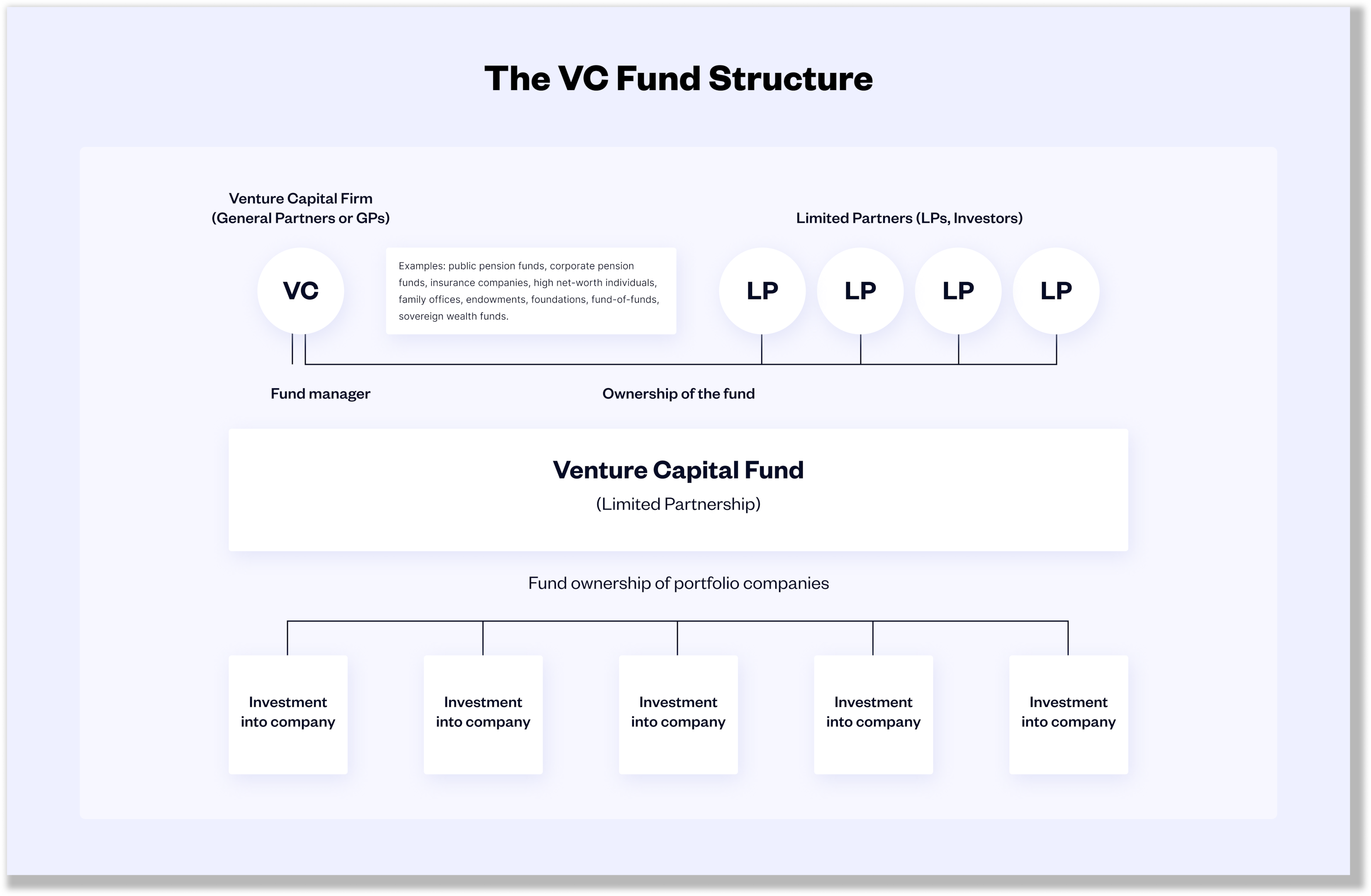
At the heart of nearly every venture capital fund is a legal structure called a Limited Partnership (LP). This structure is deliberately chosen because it creates a clear separation between the fund's managers and its investors.
To get a clear visual of how these entities relate, take a look at the diagram below.
To understand why this specific structure is so prevalent, let's start with a video that breaks it down.
How VC works | How VC funds are structured | VC 101
This video from Carta, a leading platform for managing equity, provides an excellent explanation of the limited partnership structure used by VC funds.
Watch from 00:37 to 01:33. Focus on understanding what a limited partnership is and why it's the standard for venture funds.
The key takeaway is that a limited partnership has two distinct classes of partners: at least one General Partner and one or more Limited Partners. This division of labor, responsibility, and risk is what makes the model work.
2. The General Partner (GP): The Manager and Decision-Maker
If you are raising and managing a fund, you are the General Partner. The GP is the active, operational head of the fund.
To understand the full scope of this role, please read the following section from the Venture Capital Guide by AngelSchool.vc.
General Partner vs Limited Partner | Venture Capital Guide
This article clearly outlines the core responsibilities of a General Partner. As you read, think of this as the job description for the role you plan to take on.
Read the section titled 'Who Is a General Partner (GP) in Venture Capital?'. Pay close attention to the list of core responsibilities.
As you can see, the GP's job extends far beyond just writing checks. It includes fundraising, deal sourcing, due diligence, portfolio management, and reporting to investors.
GP Liability and Entity Structure
This is a critical point for anyone setting up their own firm. While you, the individual, will be making decisions, the legal "General Partner" of the fund is typically a separate legal entity, most often a Limited Liability Company (LLC).
This is done for one primary reason: liability protection.
The GP of a fund bears unlimited liability for the fund's debts and legal obligations. By creating an LLC to serve as the GP, the personal assets of the fund managers (your personal assets) are shielded from the fund's liabilities. The LLC entity absorbs the risk.
This video from Carta explains this crucial structural detail very clearly.
How VC works | How VC funds are structured | VC 101
This clip expands on our previous video, explaining the difference in liability between GPs and LPs and why the GP is usually an LLC.
Watch from 02:15 to 04:12. Focus on the concepts of 'limited liability' versus 'unlimited liability' and how creating a GP LLC protects the individual managers.
GP Compensation
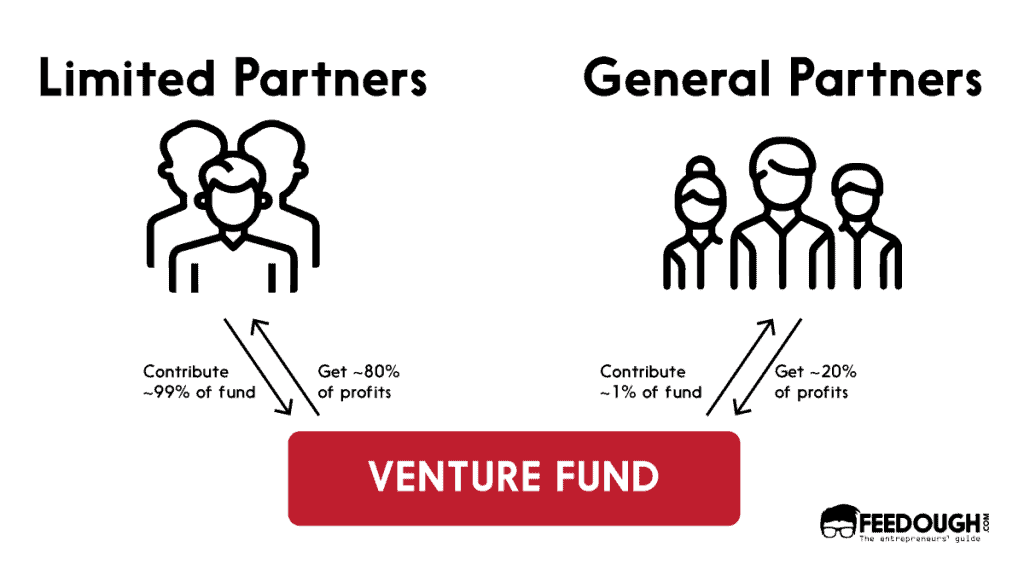
As we covered in the last lesson, GPs are compensated in two ways:
- Management Fee: A percentage of the fund's assets (typically 2%) paid annually to the GP's management company to cover operational costs like salaries, rent, and software.
- Carried Interest ("Carry"): A share of the fund's profits (typically 20%) after all capital has been returned to the LPs.
This compensation model is designed to align the GP's incentives with the LPs'. The GP only gets a significant financial reward if the fund is successful for its investors.
3. The Limited Partners (LPs): The Investors
Limited Partners are the individuals and institutions that provide the capital for the fund. They are the investors in your fund.
Common types of LPs include:
- High-Net-Worth Individuals (HNWIs)
- Family Offices
- University Endowments
- Pension Funds
- Funds of Funds (funds that invest in other funds)
The key characteristic of an LP is that their role is passive. They entrust their capital to the GP based on the GP's strategy, expertise, and track record.
General Partner vs Limited Partner | Venture Capital Guide
This article from AngelSchool.vc provides a clear definition of the LP role and, just as importantly, what they do and do not do.
Read the sections 'Who is a Limited Partner (LP) in Venture Capital?' and 'What Limited Partners Do and Do Not Do'.
The most important concept to grasp about LPs is their limited liability. Their financial risk is capped at the amount of money they have committed to the fund. Their personal assets are not at risk. This is the fundamental trade-off: in exchange for giving up control over the investment decisions, they receive protection from downside risk beyond their investment.
4. Comparing Roles and Governing the Relationship
Now that we've defined both roles, let's put them side-by-side to make the distinctions clear.
This table from the AngelSchool.vc article provides an excellent summary.
General Partner vs Limited Partner | Venture Capital Guide
Review this table to solidify your understanding of the key differences between a GP and an LP.
Study the 'Comparison Table: General Partner vs Limited Partner in Venture Capital'.
The "Bible": The Limited Partnership Agreement (LPA)
The entire relationship—all the rules, responsibilities, fees, timelines, and rights of both the GP and the LPs—is codified in a master legal document called the Limited Partnership Agreement (LPA). As the GP, you will work with lawyers to draft this document. It is the constitution of your fund.
This next video provides a practical perspective on the importance of the LPA.
Private Equity Fund Structure Explained
In this clip, fund manager Bridger Pennington talks about the core legal documents that govern a fund. He calls them 'The Bible' to emphasize their importance.
Watch from 08:09 to 09:59. Notice how he explains that while the rules are fixed once written, the GP gets to write the rules in the beginning. This is a key part of your power as a fund manager.
Test your understanding!
An LP in your new fund is a successful entrepreneur who recently sold her company. She emails you about a startup she met, stating, "This team is incredible, you have to invest in them. I am authorizing you to use my committed capital for this deal immediately."
Based on the roles we've discussed, analyze this situation.
- Does the LP have the authority to direct an investment?
- What is your obligation as the GP in this scenario?
- How does this situation illustrate the core difference between the GP and LP roles?
Show answer
- No, the LP does not have the authority. The LP's role is passive. They cannot direct individual investment decisions. This power is exclusively granted to the GP under the terms of the Limited Partnership Agreement (LPA).
- Your obligation as the GP is to thank the LP for the referral and evaluate the opportunity based on your own due diligence process and the fund's investment thesis. You have no obligation to make the investment, regardless of the LP's enthusiasm. Your fiduciary duty is to all LPs to make prudent investment decisions, not to follow the direction of a single LP.
- This illustrates the core difference: The LP provides the capital, but the GP has full control over its deployment. The LP's influence is primarily exercised before investing, by choosing whether to trust the GP and commit capital. The GP's role is to actively manage that capital with full discretion, as defined in the LPA.
Conclusion
Understanding the distinct but complementary roles of the General Partner and Limited Partner is the first step in mastering the world of venture capital.
Key Takeaways:
- VC funds are structured as Limited Partnerships to separate active management from passive investment.
- The General Partner (GP) is the manager. They have full operational control, make all investment decisions, and bear the primary legal and fiduciary responsibilities. Their liability is managed by using an LLC as the GP entity.
- The Limited Partner (LP) is the investor. They provide the capital, have a passive role in the fund's operations, and their liability is limited to their investment amount.
- The relationship, rules, and economics are all formally defined in the Limited Partnership Agreement (LPA).
Preview of the next lesson:
Now that we know who the players are, our next lesson will focus on what they do over the typical 10-year life of a fund. We will describe the venture capital fund lifecycle, breaking it down into its three main phases: fundraising, deployment, and harvesting.