Hello! Welcome to your second lesson.
In our first session, we mapped the landscape of startup support organizations, distinguishing between incubators, accelerators, and venture studios. We established that accelerators are intense, cohort-based programs that invest in early-stage companies to accelerate their growth.
Now, we turn to a crucial question for your own venture: how do these accelerator businesses sustain themselves? A brilliant program without a viable business model is not a business. This lesson is designed to give you a comprehensive understanding of the financial engines that power accelerators. We will identify and analyze the primary revenue streams, from the long-term potential of equity to the short-term operational cash flow generated by fees, sponsorships, and innovative new models. This knowledge is fundamental for building the financial plan for your own accelerator.
1. The Core Engine: Equity Investments
The most well-known revenue model for accelerators is taking an equity stake in the startups they support. At its core, an accelerator's investment arm functions like a very early-stage venture capital fund.
The basic premise is:
- The accelerator provides seed capital and the value of its program (mentorship, network, curriculum).
- In return, it receives a percentage of ownership in the company, typically between 5% and 10%.
- The financial return is realized only when the startup has a liquidity event, such as being acquired or going public (IPO).
This is a high-risk, long-term strategy. To get a feel for the typical terms, please watch these short video clips.
Startup Accelerators vs Incubators
First, this clip from Greg Raiz's video "Startup Accelerators vs Incubators" provides a concise overview of the standard investment-for-equity deal.
Watch from 00:38 to 01:37. Pay attention to the typical investment amounts and equity percentages mentioned for well-known accelerators.
Are Startup Accelerators Worth It?
Next, this clip from Slidebean's video "Are Startup Accelerators Worth It?" gives concrete examples from 500 Startups and DreamIt, and introduces the concept of a program fee being deducted from the investment.
Watch from 03:52 to 06:25. Note the different structures: DreamIt's evolution and 500 Startups' model of a $150k investment for ~7% equity, with a portion of it considered a program fee.
As you can see, the "standard deal" often involves an investment of around $100k-$150k for a 6-7% equity stake. However, relying solely on equity is a precarious strategy.
To understand the challenges of this model, please read the following text.
New approaches to funding and monetizing an accelerator
This article, "New approaches to funding and monetizing an accelerator," explains the risks of an equity-only model.
Read the section titled 'The traditional funding models and why they might not work anymore,' specifically focusing on the part about 'The equity-only model – Too slow, too Risky.' This should take about 5 minutes.
The key takeaway is that with high startup failure rates and long timelines for returns (often 7-10 years), an accelerator needs other sources of revenue to cover its day-to-day operational costs.
2. Funding Operations: Short-Term and Diversified Revenue
To ensure financial stability, successful accelerators build a portfolio of revenue streams that generate more immediate cash flow. Let's explore the most common ones.
Management Fees
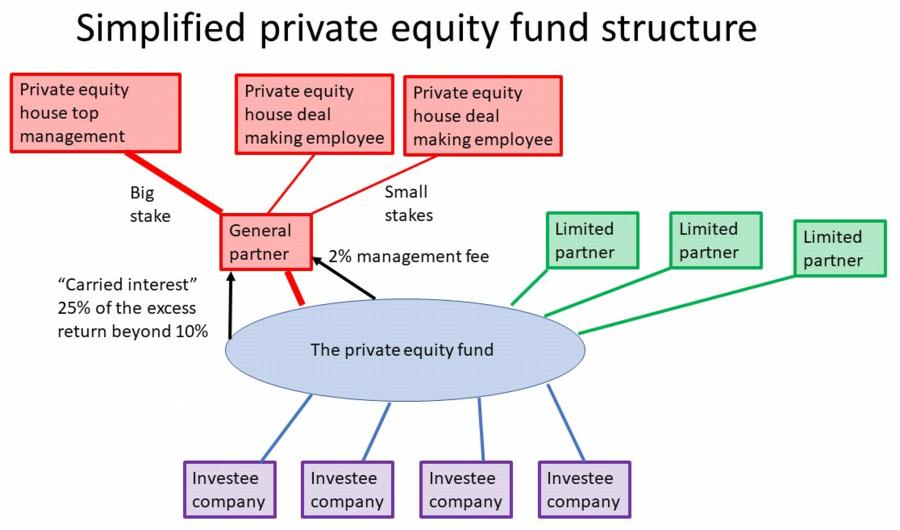
This is a critical concept you'll need to master when you raise your own fund. The investment capital an accelerator deploys doesn't come from the accelerator's bank account; it comes from a dedicated venture fund. This fund has two key players:
- General Partners (GPs): The fund managers (in your case, this would be you) who make the investment decisions and run the accelerator.
- Limited Partners (LPs): The investors (e.g., high-net-worth individuals, family offices) who provide the capital for the fund.
To cover the costs of running the fund and the accelerator program—salaries, office space, marketing, etc.—GPs charge the fund an annual management fee. This is typically 1.5% to 2.5% of the total fund size. For a $10 million fund, a 2% management fee provides $200,000 in operational revenue per year.
The equity returns we discussed earlier are known as carried interest or "carry," which is the GP's share of the fund's profits after returning the initial capital to the LPs.
Corporate Sponsorships & Government Grants
Many accelerators supplement their income with external funding from corporations and governments.
How do Business Accelerators Make Money?
The article "How do Business Accelerators Make Money?" by Geekdom provides a straightforward summary of these revenue streams.
Read the sections 'Sponsorships and Partnerships' and 'Government Grants and Public Funding.' This should take about 5 minutes.
- Corporate Sponsorships: Corporations pay for access to innovation and talent. This is not a donation; it's a transaction. You must provide clear value, such as deal flow access, technology scouting, or pilot programs with startups.
- Government Grants: Often tied to economic development goals, these grants provide non-dilutive funding. However, they can be unreliable and come with significant administrative overhead, as highlighted in the Acterio article we looked at earlier. A real-world example is Start-Up Chile, which is funded by the Chilean government to boost its tech ecosystem.
3. Innovative Models: Monetizing the Ecosystem
As an experienced consultant building a modern firm, you can gain a competitive edge by thinking beyond these traditional models. The most resilient accelerators treat themselves not as a one-way program, but as a central hub in an ecosystem—and they monetize the value they create for all participants.
The Acterio article, "New approaches to funding and monetizing an accelerator," offers an excellent playbook for this.
New approaches to funding and monetizing an accelerator
This article presents a modern approach to accelerator monetization, focusing on building a sustainable business by serving multiple stakeholders.
Read from the heading 'New approaches to funding and monetizing an accelerator' through to the end of the 'Data monetization' section. This will introduce you to several powerful concepts. This should take about 10 minutes.
Let's break down the key strategies from the article:
- Venture Clienting: Instead of just connecting startups to investors, you facilitate deals where corporations become a startup's first paying customer. The corporation pays you a fee for sourcing and vetting the startup that solves their business problem. This is a powerful model that generates revenue for you and the startup.
- Investor Network Memberships: Charge investors (VCs, angels) a subscription fee for premium access to your vetted deal flow, exclusive reports, and private Demo Day access.
- Revenue from Services: This is a natural extension of your consulting background. You can monetize your expertise by offering paid services, such as:
- One-off workshops or training bootcamps for startups outside your core program.
- Specialized consulting services (e.g., GTM strategy, fundraising prep).
- A "freemium" model where you offer basic services for free but charge for premium, in-depth support.
- Data Monetization: With your focus on AI, this is particularly relevant. The data you collect on hundreds of startups, market trends, and performance benchmarks is valuable. You can package this data into paid market intelligence reports for corporate clients or investors.
Test your understanding!
Imagine you are launching a new AI-focused accelerator in a mid-sized city. Your fund is small ($5M), so the 2% management fee ($100k/year) won't cover all your operational costs. You need to generate an additional $150k in annual revenue to be sustainable.
Based on the models we've discussed, propose a diversified revenue strategy to bridge this gap. Outline at least three distinct revenue streams (other than management fees and equity carry) and briefly explain why they are a good fit for an AI-focused accelerator.
Show answer
Here is a possible strategy for generating an additional $150k in annual revenue:
-
Corporate Venture Clienting ($75k): You could establish partnerships with 2-3 large local companies (e.g., in manufacturing, healthcare, or finance) that are struggling to implement AI. You would charge them an annual retainer to act as their external innovation arm, sourcing and vetting AI startups from your program to run paid pilot projects. This leverages your AI focus and provides immediate value to both the corporations and your startups.
- Rationale: Corporations pay for solutions, not just access. An AI-focus makes your deal flow highly relevant and valuable to non-tech companies looking to modernize.
-
Paid AI Strategy Bootcamps ($50k): Leveraging your own expertise and that of your mentor network, you could run four intensive, weekend-long bootcamps per year for founders and corporate managers who are not in your accelerator. By charging 25 attendees $500 each per bootcamp, you generate $50,000.
- Rationale: This monetizes your core competency (AI strategy) and brand without requiring long-term commitment. It also serves as a marketing channel, attracting future applicants and partners.
-
Investor Network Membership ($25k): Create a premium tier for your investor network. For a $5,000 annual fee, you could offer five local family offices or angel groups early access to your top 3 startups each cohort, detailed due diligence memos, and a private pre-demo-day pitch session.
- Rationale: Serious investors are willing to pay for curated, high-quality deal flow that is filtered through your AI-specific expertise, saving them significant time and effort.
This combination creates a resilient model that isn't solely dependent on the long-term success of your portfolio companies.
Conclusion
You now have a clear picture of how accelerators are monetized. The key takeaway is that relying on a single revenue stream is a recipe for failure.
- Equity (Carried Interest) is the primary engine for long-term, outsized returns, but it's slow and risky.
- Management Fees from an associated fund provide a stable baseline for operational costs.
- A diverse mix of short-term revenue streams—like corporate sponsorships, venture clienting, paid services, and ecosystem fees—is essential for financial stability, sustainability, and growth.
The most successful modern accelerators build a business model where each part of their ecosystem generates value and, in turn, revenue.
Preview of the next lesson:
We've touched upon the critical relationship between General Partners (GPs) and Limited Partners (LPs). This structure is the legal and financial backbone of your investment fund. In the next lesson, we will do a deep dive to explain the roles of General Partners (GPs) and Limited Partners (LPs) in a venture fund, clarifying their responsibilities, motivations, and the dynamics of their partnership.