
Hello again. In the previous lesson, you created a provisional target-player profile: a focused description of who the game is for, what they seek from a match, and what makes them leave. Keep that profile nearby for this lesson. It prevents a common mistake in genre research: copying the features of successful games without understanding which players those features serve.
Now you will deconstruct battle royale games as a designer rather than simply list what they contain. By the end, you will be able to separate genre conventions from each game’s particular strengths, identify the trade-offs behind those strengths, and write opportunities for a game that better serves your intended player.
Deconstruction: looking for design causes, not just visible features
A game deconstruction asks more than “What is in this game?” It asks:
- What player problem or desire does this system address?
- How does the game implement it?
- What experience does it create?
- What does the system cost or make harder?
- Who is likely to enjoy that trade-off?
For example, “Fortnite has building” is an observation. A more useful analysis is:
Fortnite lets players rapidly construct cover and vertical structures during combat. This gives players ways to respond when caught in exposed positions, makes downtime productive through material gathering, and supports spectacle and self-expression. However, it creates a demanding mechanical skill gap: an inexperienced player can face an opponent who builds far more quickly and effectively.
The first sentence identifies a mechanic. The rest explains its function, strength, and cost. That is deconstruction.
The three labels to use
As you examine a game, label each finding as one of these:
| Label | Meaning | Example |
|---|---|---|
| Convention | A recurring genre solution that helps deliver the battle royale experience. | Players enter with limited gear, loot during the match, and a shrinking zone concentrates survivors. |
| Strength | A particularly effective implementation or a distinctive choice that supports the game’s intended experience. | Apex Legends makes squad communication quick through a contextual ping system. |
| Trade-off | A cost, limitation, or audience preference created by a design choice. | High randomness can produce surprising matches, but may make losses feel less controllable. |
An opportunity for differentiation emerges where a convention or trade-off does not fully serve your target player. It is not simply “add something no one has added.” It is a defensible answer to:
“What experience does my target player want that current games deliver poorly, inconsistently, or at too high a cost?”
Establish the genre baseline
Battle royales vary widely in tone, pace, and mechanics, but several conventions form a useful baseline. The resource Battle Royale Game Design identifies competitive PvP, initially limited equipment, looting, asymmetric resources, a large playable space, and a shrinking safe zone as recurring genre principles. In most versions, one individual or squad ultimately remains.
These conventions work together to create a particular emotional rhythm:
- An even starting position gives the match legitimacy. Players begin with comparable opportunities, even though their later equipment and position will differ.
- Deployment choice creates an opening gamble: land near valuable loot and likely rivals, or land safely and accept a slower start.
- Looting and resource scarcity create adaptation. Players cannot always use their ideal loadout, so they must make plans using what they find.
- Permanent or high-stakes elimination makes decisions matter. A poor fight can end a meaningful match.
- The shrinking zone prevents survival from becoming pure hiding. It periodically forces movement, uncertainty, and eventual confrontation.
- A large map with recognizable locations supports different opening plans, ambushes, escapes, and memorable stories.
None of these is automatically good in every form. Random loot, for instance, can create exciting underdog victories, but it can also create frustrating early deaths when one player finds a weapon immediately and another does not. A strong designer records both sides.
The map is not just scenery behind these systems. It regulates the distance between loot, cover, opponents, and the zone. The following reading shows how location spacing, landmarks, chokepoints, and simple interiors shape player behavior without the game needing to issue explicit instructions.
Battle royale: the design secrets behind gaming's biggest genre | Games | The Guardian
Read this Guardian article to see battle royale map design discussed as a way of shaping movement, combat, information, and player choice rather than merely decorating a large space.
In the opening passage beginning “Even though the visual styles and narrative settings” read the discussion of settlement placement. Focus on the tension between destinations being too close, too far apart, and technically expensive. Continue with the next passage beginning “Battle royale maps provide a lot of liminal spaces” and read the sections on movement and landmarks. Notice that bridges, terrain, and tall structures have gameplay functions: they create predictable conflict spaces and give players a shared vocabulary for navigation. Finally, find the later passage beginning “All the successful battle royale titles know the importance” and read the section on simple interiors. Identify the relationship between visual clarity, readable loot, and the ability to locate opponents through sound.
A useful insight from this analysis is that a battle royale map must balance freedom with designed pressure. Players can choose where to land and how to rotate, but the game still needs to create enough nearby purpose, cover, risk, and information for those choices to be interesting.
Compare three different answers to the same genre problem
The battle royale format is broad. PUBG, Fortnite, and Apex Legends all ask players to survive a match against many opponents, but they make that survival feel very different.
Watch this focused comparison of PUBG and Fortnite. It is an older commentary, so treat it as an analysis of their design approaches at the time rather than a description of every current feature or balance value.
Examining the Battle Royale Landscape, One Year Post-PUBG
In “Examining the Battle Royale Landscape, One Year Post-PUBG,” Writing on Games compares PUBG’s high-stakes survival atmosphere with Fortnite’s faster, more accessible response to many of PUBG’s friction points.
Begin at PUBG tradeoffs. Focus on how vast space, high stakes, long travel, fast eliminations, and technical reliability affect both tension and downtime. Then watch Fortnite response. Track the specific choices the commentator identifies: a denser environment, faster movement, buildable cover, a distinct visual style, and activities that occupy downtime. For each, ask what player frustration it attempts to reduce.
PUBG: survival tension and the cost of commitment
PUBG is a useful baseline because its core appeal is relatively direct: scavenge, move carefully, avoid exposure, and survive against dangerous opponents. Its realistic presentation, large spaces, and relatively lethal combat make open terrain intimidating. Being observed from a distant hill or entering a building with uncertain occupants can create genuine suspense.
Its major strength is the feeling that survival is earned. Positioning, patience, equipment, and reading the terrain all matter. A quiet moment is not necessarily empty; it can be tense because an opponent may be nearby.
The trade-off is that tension can become inactivity. Long movement between meaningful decisions, sudden death without a chance to respond, and extended time spent outside interesting encounters may be especially frustrating for players with limited session time. The lesson is not that slow pacing is bad. It is that slow pacing must provide enough anticipation, information, or meaningful planning to justify itself.
Fortnite: counterplay, spectacle, and expression
Fortnite retains the familiar battle royale structure but turns its moment-to-moment character in a different direction. Its stylized visual presentation makes players, loot, and combat feedback easier to read than a realistic military presentation. A denser map and faster-feeling movement reduce long empty journeys.
Its decisive difference is building. Instead of treating an exposed position as only a problem of terrain, players can create temporary cover and vertical routes. This changes a fight’s question from only “Who has the better position?” to “Who can make, take, or deny position most effectively?”
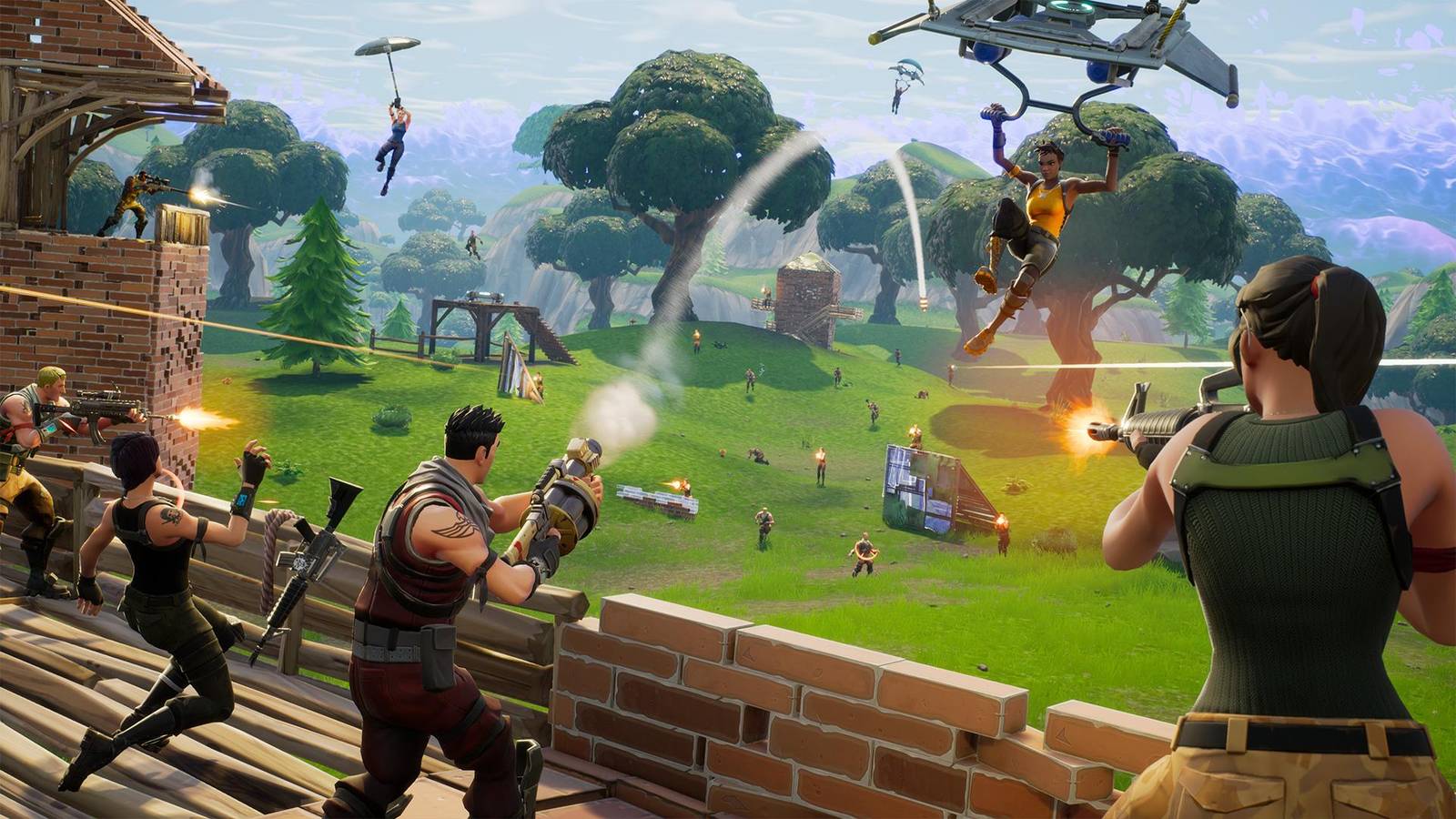
That strength has a cost. Building is both a survival tool and a mastery system. It offers counterplay for players under pressure, but exceptional building skill can become the dominant answer to many encounters. A designer studying Fortnite should not conclude, “Our game needs building.” The more useful conclusion is:
Players value having a response to exposure and disadvantage. Fortnite solves that need through rapid construction, but another game could provide counterplay through movement, deployable tools, terrain interaction, squad abilities, or a different system entirely.
Apex Legends: squad flow, mobility, and recoverable mistakes
Apex Legends takes another direction. It centers squads, character abilities, quick movement, and extended engagements. Its contextual ping system lets a player identify loot, enemies, locations, or intentions without requiring constant voice chat. That is a social feature, but it also improves competitive clarity: teammates can form a plan while moving.
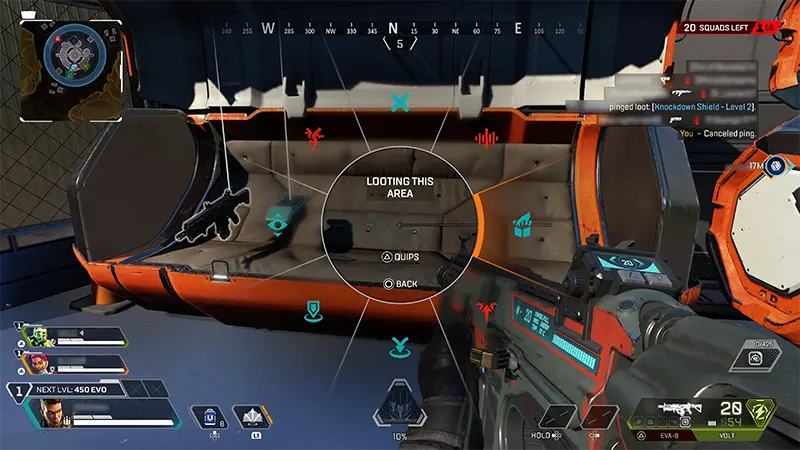
Battle Royale Tourism: A Genre Analysis
DavidOZ’s “Battle Royale Tourism: A Genre Analysis” examines Apex Legends as a battle royale built around extended skirmishes, resource decisions, mobility, and a strongly competitive squad identity.
In the Apex Legends portion, watch engagement economy. Focus on the idea that a fight consumes resources such as ammunition, healing, abilities, time, and positional safety; winning a fight is not necessarily worthwhile if it leaves a squad unable to survive the next one. Then skip ahead to mobility and identity. Notice how vertical spaces, movement tools, and character abilities give players ways to disengage or reposition, and how the game’s tournament-like framing reinforces a serious competitive mood.
Apex’s longer engagements create room for players to react, reposition, heal, share information, and exploit a mistake. This supports tactical decision-making beyond the first moment of aim. Its mobility tools can also reduce the hopelessness of being caught in a poor position.
But longer fights have their own price. They consume time and supplies, draw third parties, and may make a decisive elimination feel harder to secure. Character abilities add personality and team composition, but they also increase the amount a new player must learn. Again, that is not a flaw by default. It identifies the audience and the experience being prioritized.
Turn observations into a comparison matrix
Here is a concise designer’s comparison. It is not a rating of which game is “best.” It shows how the same genre foundation can support different player fantasies.
| Design question | PUBG emphasis | Fortnite emphasis | Apex Legends emphasis |
|---|---|---|---|
| What is the match fantasy? | Survive a dangerous, uncertain combat zone. | Improvise, create, and make spectacular plays. | Win a high-energy squad competition. |
| How is exposure handled? | Careful movement, terrain use, stealth, and planning. | Rapidly construct cover and height. | Reposition through movement, terrain, and abilities. |
| How does the game use downtime? | Suspense, scouting, looting, and cautious travel. | Material gathering, exploration, and expression. | Looting, rotations, squad coordination, and managing resources. |
| What does map design emphasize? | Large-scale sightlines and dangerous traversal. | Dense activity, readable cover, and flexible combat spaces. | Vertical routes, frequent repositioning, and squad encounter spaces. |
| What is a key strength? | High-stakes survival tension. | Constant counterplay and spectacle. | Fluid squad communication and recoverable tactical play. |
| What is a key trade-off? | Downtime and sudden, unrecoverable deaths. | A large mastery gap around construction. | Greater system complexity and potentially prolonged fights. |
Notice that all three still use familiar battle royale conventions: deployment, scavenging, positional risk, a closing play space, elimination pressure, and one surviving player or squad. Their identity comes from the relationship among systems, not from deleting every convention.
Find an opportunity without designing a clone
Return now to your target-player profile. If you used the example tactical squad player from the last lesson, the highest priorities were Strategy, Community, Competition, and Excitement within limited evening playtime.
That profile might lead to observations such as these:
| Observation from existing games | Design implication for this target player |
|---|---|
| PUBG creates strong tension, but can demand long stretches of travel and patience. | Preserve meaningful rotation choices, but avoid making travel feel empty or excessively slow. |
| Fortnite gives players tools to recover from exposure, but high-speed building can dominate encounters. | Give squads readable defensive and repositioning options without requiring complex construction mastery. |
| Apex supports quick coordination with pings and rewards tactical repositioning. | Make non-verbal communication and shared tactical information central, not an afterthought. |
| Battle royales often make a fight costly even when you win. | Ensure squad decisions account for ammunition, healing, noise, time, and the danger of another team arriving. |
These are opportunities, not final features. “Make tactical information clear” could eventually lead to a better ping system, scan tools, shared map markings, visible enemy traces, or map landmarks designed for precise callouts. Do not select the solution until you understand the desired experience.
A practical deconstruction canvas
Create one page containing three columns, one for each game you examine. PUBG, Fortnite, and Apex Legends are a useful starting set because they demonstrate sharply different priorities.
For each game, complete the following:
| Prompt | What to write |
|---|---|
| Match promise | In one sentence, state the main feeling or fantasy the game offers. |
| Genre conventions used | List three to five shared battle royale structures you can observe. |
| Signature choices | Identify two systems, presentation choices, or social features that give this version its identity. |
| Strength produced | Describe the player experience each signature choice supports. |
| Trade-off created | State who may be frustrated, excluded, slowed down, overwhelmed, or disadvantaged. |
| Evidence | Record a specific observed situation, not just an opinion. |
| Lesson for my game | Write an implication connected to your target player’s motivations and play context. |
Keep your claims precise. Compare these two notes:
- Weak: “Apex is fun because it has good movement.”
- Useful: “Apex’s mobility options let a squad disengage from a losing fight and seek a stronger position. This supports tactical adaptation, but the game must teach enough movement and ability knowledge for players to recognize those escape options.”
The second note can guide later decisions about movement, combat, communication, and map design.
Three rules for strong differentiation
When you identify a potential opportunity, test it against these rules:
-
It must preserve the core promise.
If your game is still a battle royale, players need meaningful survival pressure, opposition, uncertainty, and a route toward a final winner. Removing every source of risk may create a different genre altogether. -
It must improve a specific experience for your target player.
“Our game has pets” is not differentiation. “Our game reduces frustrating squad downtime after early elimination while preserving the tension of defeat” identifies a player problem worth solving. -
It must introduce a coherent trade-off.
Every powerful solution changes the game. Faster revives may reduce waiting but can weaken the emotional stakes of elimination. More abundant loot may reduce bad starts but make looting less meaningful. A strong concept chooses which trade-offs it accepts.
Key takeaways
You have now treated battle royale games as a set of design decisions rather than a checklist of guns, maps, and storms.
- Conventions such as looting, high-stakes elimination, large maps, and shrinking zones create the genre’s survival-pressure structure.
- A game’s identity comes from how it handles the resulting tensions: exposure, downtime, communication, loot inequality, positioning, and recovery from mistakes.
- Strengths always have trade-offs. PUBG’s tension can become downtime; Fortnite’s counterplay can become a steep building skill gap; Apex’s tactical mobility and squad flow add system complexity.
- A real opportunity for differentiation connects directly to the needs of your chosen target player rather than copying another game’s most visible feature.
In the next lesson, you will use this research to define your own game’s player fantasy: the consistent role, feeling, and kind of story a player should experience every time they enter a match.
Can't find a good explanation? Sign up and we'll make it for you
Sign up