Hello! Welcome to the third lesson in our module on "Sourcing, Compliance, and Supplier Vetting."
In our last session, we did a deep dive into the world of private label manufacturing, focusing on how to find and thoroughly vet suppliers on Alibaba. That process is fundamental for creating a unique, branded product from scratch.
Today, we shift our focus to another powerful sourcing model that offers different advantages. Your learning outcome is to use directories like SaleHoo to find and evaluate US-based wholesalers and dropshippers. This directly addresses your interest in comparing sourcing from China with domestic US options. While the private label model offers maximum brand control, using US-based suppliers can give you a significant competitive edge in shipping speed and perceived quality, especially when selling to American customers on platforms like Walmart and Amazon.
We will cover why a curated directory is a valuable tool, how to navigate it effectively, and what key criteria to use for your initial evaluation of potential partners.
1. From Global Manufacturing to Domestic Sourcing
Sourcing from China via Alibaba is about finding a factory to make your product. Sourcing from US-based wholesalers and dropshippers is about finding a partner who already has products in stock, ready to ship. This is a faster way to get started and is the core of the traditional dropshipping and wholesale models.
Why US-Based Suppliers?
Your customers on Amazon and Walmart have high expectations for shipping speed. Sourcing domestically allows you to meet and exceed those expectations.
10 Best US Dropshipping Suppliers [Verified by SaleHoo]
To understand the key advantages of this model, let's start with a short reading from SaleHoo that outlines why using US suppliers can be a strategic choice.
Please read the section titled 'Why Dropship From the US?'. Focus on the three main benefits discussed: Shipping Benefits, Product Benefits, and Other Benefits. This will set the stage for why we're exploring this sourcing method.
As you can see, the trade-off for potentially higher product costs is faster delivery, higher perceived product quality ("American-Made"), and often better customer satisfaction.
Why Use a Directory like SaleHoo?
Just as Alibaba is the go-to directory for Chinese manufacturers, platforms like SaleHoo are specialized directories for pre-vetted wholesalers and dropshippers. In our last lesson, you learned that finding good suppliers requires a systematic vetting process. A directory does some of that initial heavy lifting for you.
To see how this works in practice, let's get a comprehensive overview of the SaleHoo platform.
SaleHoo Review 2026: A Detailed Overview
This video from Ecommerce Coach provides an excellent tour of SaleHoo, explaining its purpose and demonstrating its core features. It will show you why using a directory is far more efficient than searching on Google.
Watch the segment from 00:58 to 04:24. Pay close attention to how the directory is structured, how to use the search and filter functions, and what kind of information is available on a supplier's page.
2. Finding Suppliers: A Practical Walkthrough
Now that you understand the "what" and "why," let's get into the "how." The process of finding a US-based supplier in a directory is straightforward and filter-driven.
Your goal is to quickly narrow down thousands of potential suppliers to a manageable shortlist of relevant, trustworthy candidates.
Step-by-Step Search Process:
- Define Your Search: Start with a product keyword (e.g., "yoga mat," "kitchen knife," "wireless charger").
- Apply Key Filters: This is the most important step. You will immediately filter by:
- Supplier Type: Select "Dropshippers" or "Wholesalers."
- Location: Select "United States."
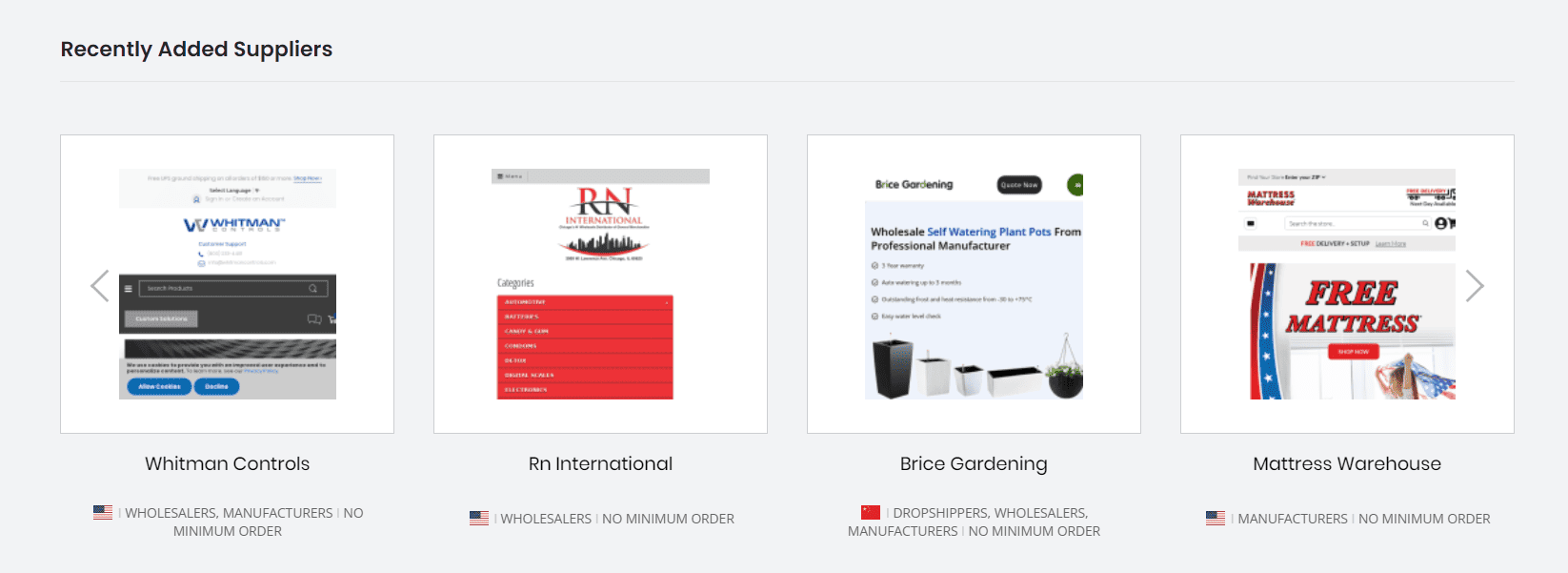
- Review the Results: Scan the initial list of suppliers that match your criteria.

Once you have your filtered list, you can begin your initial evaluation based on the information presented.
3. The Initial Evaluation: Vetting Within the Directory
Finding a supplier is easy. Finding a good supplier requires a critical eye. Your experience vetting on Alibaba will be useful here, but the specific criteria are slightly different.
Here is a multi-step process for your first-pass evaluation, performed entirely within the directory and the supplier's own website.
Step 1: Check Reviews, Ratings, and History
SaleHoo is a community, and you can leverage the experience of other sellers.
How to Find the Best Wholesale Suppliers on SaleHoo
This short video from Dropship Dreams quickly highlights the first things you should check when you click on a supplier's profile.
Watch from 01:01 to 01:58. The key actions here are: 1) read reviews and check ratings from other SaleHoo members, and 2) visit the supplier's website to get a feel for their professionalism and product range.
Step 2: Look for Red Flags and Scams
This is a critical part of evaluation. A professional-looking website can still hide a problematic operation. You must actively look for warning signs.
How to Find Great Suppliers for Dropshipping
This article from SaleHoo provides an excellent, actionable guide on how to spot and avoid fraudulent suppliers. This is a must-read for anyone sourcing products online.
Read the section titled 'How to avoid dropshipping scams'. Pay close attention to the 'Look out for warning signs' (e.g., monthly fees, payment methods) and the 'Action steps to avoid fraud' (e.g., checking domain age, Googling the supplier's name with 'scam').
These checks are your primary defense against losing time and money. A few minutes of due diligence here can save you months of headaches.
Step 3: Create a Vetting Checklist
As you review suppliers, use a consistent checklist to compare them. This ensures you're making data-driven decisions.
Here is a checklist adapted from the resources for your initial evaluation:
| Evaluation Point | What to Check | Why It Matters |
|---|---|---|
| SaleHoo Vetted | Is the supplier listed in the verified directory? | Provides a baseline of trust that the business is legitimate. |
| Years in Business | How long has the company existed? (Check domain age tool from the article). | Stability is key. A business that has operated for 2+ years is less likely to disappear overnight. |
| Contact Information | Is a physical address and phone number clearly listed? | Lack of a physical address is a major red flag. Call the number to see if a professional answers. |
| Dropship Fees | Does the supplier charge a per-order dropship fee or a monthly fee? | These fees directly impact your profit margin. Legitimate suppliers may charge a small per-order fee; be wary of large, ongoing membership fees. |
| Reviews & Reputation | What are other sellers saying? What comes up when you Google "[Supplier Name] + reviews" or "scam"? | Social proof and public reputation are powerful indicators of reliability. |
| Return Policy | Is the return policy clear and fair? | You need to know how returns will be handled before you start selling their products. |
If a supplier passes these initial checks, you can add them to your shortlist for direct contact.
Test your understanding!
You're looking for a US-based dropshipper for high-end headphones. You find a supplier on SaleHoo called "ElectroDeals." Their website is slick and they have the exact products you want.
During your evaluation, you discover:
- They have been in business for 8 months according to a domain age checker.
- They charge a $49/month "membership fee" to access their dropship pricing.
- Their only listed payment method is direct bank transfer.
- Their address on Google Maps points to a residential house.
Should you add ElectroDeals to your shortlist? Why or why not?
Show answer
You should not add ElectroDeals to your shortlist. This supplier exhibits several major red flags discussed in the lesson:
- Young Business: Less than a year old is risky for a supplier.
- Ongoing Membership Fees: While some are legitimate, a monthly fee combined with other red flags is suspicious.
- Unsafe Payment Method: Refusing to accept credit cards and insisting on bank transfers removes your ability to issue a chargeback if something goes wrong. This is a classic scam tactic.
- No Business Address: A residential address indicates they are not a real warehouse or distribution center.
This supplier is likely fraudulent or, at best, a highly unreliable middleman.
Conclusion
You now have a complete picture of the two primary sourcing models for your e-commerce business. While Alibaba is your gateway to creating a custom private label product, directories like SaleHoo are your path to quickly finding vetted US-based partners for dropshipping and wholesale.
Key Takeaways:
- US-based suppliers offer key advantages in shipping speed and product quality, which can justify higher costs and boost customer satisfaction.
- Supplier directories like SaleHoo save time and reduce risk by providing a pre-vetted list of legitimate companies, allowing you to bypass the noise and scams often found on Google.
- A systematic evaluation is crucial. Your process should include filtering by location and supplier type, reading reviews, checking the supplier's history, and actively looking for red flags like unsafe payment methods or a lack of a physical address.
- Always perform your own due diligence. Even with a vetted directory, you are ultimately responsible for verifying a supplier before committing to a partnership.
Next Up:
In this lesson, we focused on the initial discovery and evaluation phase within a directory. In our next lesson, we will consolidate everything you've learned about vetting from both this lesson and the previous one. You will develop a universal checklist for vetting any supplier, covering deeper topics like communication, negotiating terms, and assessing production capacity, so you're prepared to build strong, reliable partnerships.