
Hello! Welcome to your eleventh lesson.
In our last lesson, we outlined the fundamental architecture of a biotelemetry system, showing how physiological signals are captured, processed, and transmitted wirelessly. We saw the "what" and "how" of the structure. Today, we'll dive into the "why" behind the design choices.
This lesson addresses the learning outcome: Analyze design trade-offs in wearable sensors, including power consumption, form factor, and data transmission.
This topic is at the very heart of creating a successful product like the one you're developing at Neuraease. A functional prototype is one thing, but a device that people can comfortably and reliably wear every day requires navigating a complex set of engineering compromises. We will explore the constant balancing act between making a device small, powerful, and long-lasting.
1. The Core Trilemma of Wearable Design
When designing a wearable sensor, engineers face a fundamental challenge often called a "trilemma." You must balance three competing priorities:
- Power Consumption: How long can the device operate before needing a recharge?
- Form Factor: How small, light, comfortable, and unobtrusive is the device?
- Performance & Features: How much data can it process? How many sensors does it have? How fast can it transmit data?
Improving one of these aspects often comes at the expense of another. For example, adding a more powerful processor (increasing performance) will likely increase power consumption, which might require a larger battery, thus negatively impacting the form factor.
This balancing act is the essence of wearable device engineering.
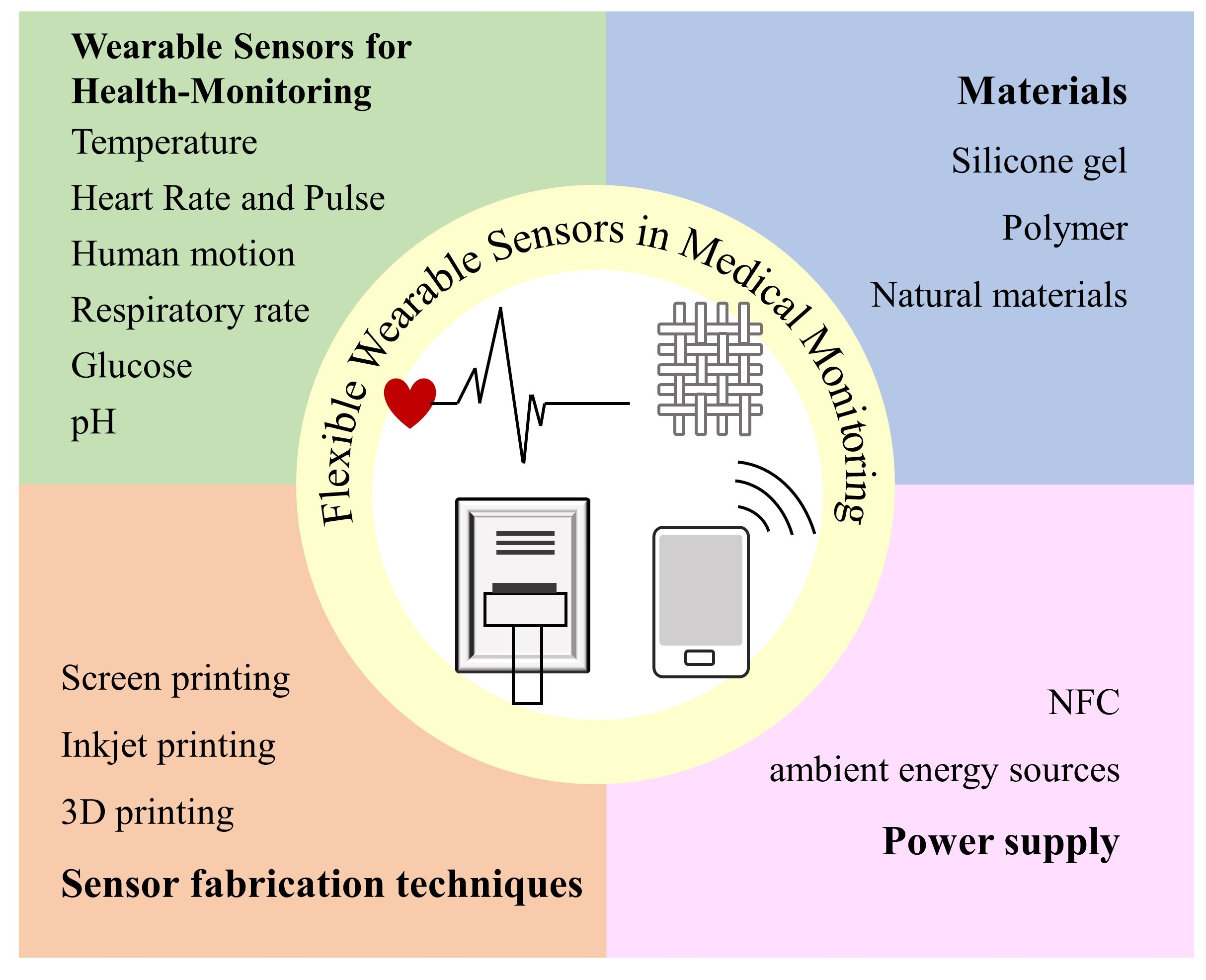
To start, let's formalize what makes a wearable sensor unique by looking at its core constraints.
Wearable Sensors and Devices: Enhancing Human Life
The article 'Wearable Sensors and Devices' begins by introducing the defining characteristics of wearable sensors and the constraints that shape their design. This will frame our discussion on trade-offs.
Please read the section titled '2.1 Introduction: The compact and constrained'. Focus on how the authors describe the limitations of performance, energy efficiency, and physical size as the primary drivers of wearable hardware design.
The key takeaway is that wearable sensors are purposely constrained systems. Unlike a smartphone or laptop, they are not designed for general-purpose computing. Every component is chosen to serve a specific monitoring task while adhering to strict limits on size and power.
2. Trade-off 1: Power Consumption - The Longest Pole in the Tent
For most consumer wearables, battery life is the single biggest factor determining user adoption and satisfaction. A device that needs constant charging is a device that often ends up in a drawer.
Let's watch a short, inspiring video that frames this problem and introduces the fundamental principle of creating "always-on" devices.
Wearable devices: Powering your own wellness | Veena Misra | TEDxRaleigh
This TEDx talk, 'Wearable devices: Powering your own wellness,' perfectly captures the challenge of battery life in wearables and presents the core equation that engineers must solve.
Watch from the beginning to 10:25. Pay close attention to the core principle introduced at 06:21: Power Generated must be greater than Power Consumed.
As the video highlights, the goal is to make Power Generated ≥ Power Consumed. This can be tackled from two sides: increasing generation or decreasing consumption. While energy harvesting (increasing generation) is a fascinating and growing field, the primary focus for most engineers today is on radically minimizing power consumption.
Let's explore how this is achieved.
Wearable Sensors and Devices: Enhancing Human Life
The 'Wearable Sensors and Devices' article provides an excellent technical overview of the strategies used to create low-power hardware architectures. This is the practical 'how-to' for minimizing consumption.
Please read section '2.3 Low-power architectures' and skim section '2.4 The Core components of wearable technology,' paying special attention to Table 2, which compares different microcontrollers.
From the reading, we can identify several key strategies for managing the power budget:
- Processor Selection: This is a critical first choice. As
Table 2in the resource shows, there's a direct trade-off between processing power and power consumption.- An ARM Cortex-M0+ is extremely power-efficient but has limited processing capabilities. It's ideal for a simple device that collects data and sends it off with minimal processing.
- An ARM Cortex-M4 or M7 offers much higher performance (e.g., for on-device signal processing or machine learning) but at the cost of significantly higher power draw.
- Duty Cycling: This is one of the most effective strategies. Instead of being on all the time, the system wakes up, takes a measurement, transmits it, and goes back to a deep-sleep state. The ratio of 'on' time to 'off' time is the duty cycle. For a signal that changes slowly, you can use a very low duty cycle and save enormous amounts of power.
- Hardware/Software Co-design: This involves choosing algorithms that are computationally "cheap" and offloading repetitive tasks to specialized, low-power hardware blocks instead of running them on the main processor.
- Power Gating: Electronically "unplugging" entire sections of the chip that are not currently in use to eliminate static power leakage.
Test your understanding!
Imagine you are designing a wearable for Neuraease. You have two options for processing EEG data to detect a precursor to a meltdown:
- Option A: Stream raw EEG data via BLE to a phone and have the phone's app run the complex detection algorithm.
- Option B: Use a more powerful microcontroller on the wearable itself to run the detection algorithm locally and only send an alert to the phone when a precursor is detected.
What is the primary trade-off between these two architectural choices in terms of power consumption for the wearable device?
Show answer
The primary trade-off is between computation power and communication power.
- Option A minimizes computation power on the wearable (using a simpler, lower-power MCU) but maximizes communication power, as it must constantly transmit a high-volume stream of raw data.
- Option B maximizes computation power on the wearable (requiring a more power-hungry MCU) but minimizes communication power, as it only needs to transmit infrequent, small alert packets.
The best choice depends on which is more power-hungry for your specific use case: running the algorithm or running the radio.
3. Trade-off 2: Form Factor - The Art of Wearability
Form factor encompasses everything about the physical nature of the device: its size, weight, shape, flexibility, and materials. For a medical device to be truly wearable, it must be comfortable, unobtrusive, and durable enough for daily life.
This is especially critical for your work at Neuraease, where the target users may have heightened sensory sensitivities. A bulky, itchy, or heavy device is a non-starter.
The choice of components, especially the battery and antennas, directly dictates the minimum size of a device. The materials used affect comfort and flexibility. There are also trade-offs related to cost and manufacturing.
Let's look at a concrete example of a design that balances these factors.
Wearable Biosensors for Continuous Health Monitoring - Wei Gao - 10/25/2019
In this talk, Dr. Wei Gao from Caltech describes the design of a flexible sweat sensor. He makes a very practical trade-off to balance cost and reusability.
Watch the segments from 03:20 to 05:16 and 24:19 to 25:13. Notice how the system is split into a low-cost, disposable sensor patch and a reusable electronics board. Also, note the discussion on using large-scale printing to lower costs.
Dr. Gao's design is a clever solution to a form factor and cost problem.
- The Trade-off: The complex, expensive electronics are housed in a reusable module. The sensor part, which is in direct contact with the skin and may degrade over time, is a cheap, disposable patch. This makes the system economically viable and hygienic for long-term use without having to throw away the expensive parts.
- Manufacturing: His point about roll-to-roll printing highlights another trade-off. Investing in this technology has a high upfront cost, but it dramatically lowers the per-unit cost of the sensor patches, enabling a disposable form factor.
4. Trade-off 3: Data Transmission - The Unseen Link
As we discussed in the previous lesson, your device needs a wireless link to transmit its data. The choice of wireless technology is a major trade-off between range, data rate (bandwidth), and power consumption.
The table below gives an excellent summary of the most common options for wearables.
Wearable Sensors and Devices: Enhancing Human Life
This resource provides a clear comparison of the wireless technologies used in wearables. This is essential for deciding how to get data off your device.
Please review Table 4, which compares BLE, Wi-Fi, NFC, and Cellular technologies. Focus on the relationship between Data Rate, Range, and Power Use.
Let's analyze the common choices for a device like yours:
- Bluetooth Low Energy (BLE): This is the undisputed champion for most health and fitness wearables. It is designed for sending small packets of data periodically with very low power. The trade-off is its limited range and lower data rate compared to Wi-Fi. It's perfect for a device that is almost always within a few meters of a companion smartphone.
- Wi-Fi: Offers a much higher data rate, which is great for streaming large amounts of data (like multi-channel, high-resolution EEG). However, its power consumption is substantially higher, making it unsuitable for small, battery-powered devices that need to run for days.
- Cellular (LTE/5G): Provides the ultimate freedom from a smartphone, offering wide-area connectivity. The trade-off is very high power consumption, a larger physical module size, and the recurring cost of a data plan. This is reserved for devices where standalone connectivity is a critical safety feature (e.g., medical alert systems for the elderly).
- Near-Field Communication (NFC): This technology is interesting because it can be used for battery-free devices. The reader (e.g., a smartphone) provides power to the sensor via an inductive field. The trade-off is an extremely short range (a few centimeters) and the fact that it only works on-demand, not continuously.
For a product like Neuraease, a BLE-based architecture that communicates with a smartphone app is the most logical starting point, balancing power, cost, and functionality.
Conclusion
In this lesson, we moved from the 'what' of biotelemetry architecture to the 'why' of wearable design. Making a successful wearable device is an exercise in navigating constraints and making intelligent compromises.
Key Takeaways:
- Wearable design is a trilemma balancing power consumption, form factor, and performance.
- Power Consumption is managed by choosing low-power components (like ARM Cortex-M0+ MCUs), implementing aggressive duty cycling, and using power-aware software.
- Form Factor is about more than size; it includes comfort, materials, and cost. Design choices like modularity (disposable vs. reusable parts) can help manage these trade-offs.
- Data Transmission technology must be chosen carefully. BLE is the standard for most phone-tethered wearables due to its excellent power efficiency, while other technologies like Wi-Fi and Cellular serve more niche, high-power applications.
- These trade-offs are interconnected: a high-data-rate radio requires more power, which needs a bigger battery, which worsens the form factor.
Preview of the Next Lesson:
We've now established the principles of acquiring wireless physiological data and the practical engineering trade-offs involved in building the device. The next step is to consider what we can do with that real-time data. In our next lesson, we will explore the concept of a biofeedback loop, moving from passive monitoring to active intervention. This will bridge the gap between measurement and therapy, a concept central to your work at Neuraease.
Can't find a good explanation? Sign up and we'll make it for you
Sign up