Hello! Welcome back to your course on using game theory for business decisions.
In our last lesson, we created a "map" of your business world using the Value Net, identifying the key players: your customers, suppliers, competitors, and complementors. Now that we know who the players are, it's time to understand the nature of the game you'll be playing with them.
Today, we'll focus on distinguishing between situations where you are in direct competition with others and situations where you can cooperate for mutual benefit. By the end of this lesson, you'll be able to recognize these different scenarios in your own woodworking business. This is a crucial skill because it determines your fundamental strategic posture: should you be preparing for a fight, or looking for a partner?
The Two Faces of Strategic Interaction
Game theory is broadly divided into two main branches that reflect the two fundamental types of interactions you'll encounter in business. A great way to get a feel for this is to watch the introduction to the following video.
How Decision Making is Actually Science: Game Theory Explained
This video from SciShow provides a clear and accessible overview of game theory's two main branches: competitive and cooperative. Watch the first part to understand the core distinction.
Watch from the beginning until timestamp 01:18. Focus on how the video defines a 'game' and the difference between noncooperative (competitive) and cooperative game theory.
As the video explains, every interaction where your outcome is affected by the decisions of others is a "game." These games fall into two categories:
- Competitive (or Non-cooperative) Games: In these situations, players make their decisions independently, aiming to maximize their own payoff. There are winners and losers, or at least a sense that one player's gain comes at another's expense. Think of bidding against another shop for a lucrative kitchen cabinet contract.
- Cooperative Games: In these situations, players can form alliances and make binding agreements to work toward a common goal. The focus shifts from beating the other players to working with them to achieve a better outcome for the group. Think of partnering with an interior designer (a complementor from our last lesson) to jointly pitch a complete kitchen renovation to a client.
Zero-Sum vs. Positive-Sum: Is the Pie Fixed or Growing?
A highly practical way for an entrepreneur to frame this distinction is by asking: "Are we fighting over a fixed pie, or can we work together to make the pie bigger?" This is the essence of zero-sum versus positive-sum thinking.
To get a solid grasp of this powerful mental model, watch the following short explanation from Y Combinator.
What Basic Game Theory Teaches Us About Startups
This clip offers a clear, entrepreneur-focused definition of zero-sum and positive-sum games. The examples used are very intuitive.
Watch from 00:37 to 02:00. Pay close attention to the examples of betting (zero-sum) versus building a house (positive-sum).
Let's connect this to your woodworking business:
- Zero-Sum (Competitive): Imagine you and one other local shop are the only two bidders for a specific, well-defined cabinet job worth $20,000. If you win, you get $20,000 and they get $0. Your gain is their loss. The total value is fixed. This is a purely competitive, zero-sum game.
- Positive-Sum (Cooperative): Now imagine you partner with a high-end appliance supplier. You offer clients a seamless package of custom cabinets and premium appliances. This package is so attractive that you win clients who might otherwise have gone to a big-box store. By cooperating, you and the appliance supplier have created new business that neither of you might have captured alone. You've grown the pie. This is a positive-sum game.
Most business isn't strictly one or the other, but this framework helps you identify the nature of the interaction and choose your strategy accordingly.
The Competitive Mindset: The Prisoner's Dilemma
In competitive situations, a key challenge is that even when cooperation would be mutually beneficial, it can be hard to achieve. The most famous model for this is the Prisoner's Dilemma.
The next segment of the SciShow video explains this concept perfectly.
How Decision Making is Actually Science: Game Theory Explained
The Prisoner's Dilemma is a cornerstone of game theory that shows why rational, self-interested players might fail to cooperate, even when it seems like the best option.
Watch from 01:18 to 04:27. Focus on the logic: why is confessing the best individual strategy for each prisoner, even though it leads to a worse collective outcome?
The key takeaway is that each player chooses what's best for them given what the other player might do, which leads them both to a worse outcome than if they had trusted each other.
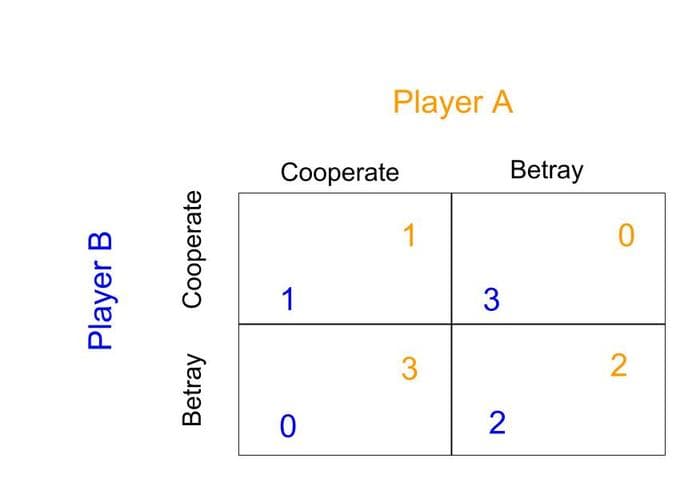
Application to Your Business: The Pricing Dilemma
This isn't just a theoretical puzzle; it's a direct model for one of the biggest challenges in business: pricing.
Imagine you and your main competitor are deciding whether to price your premium cabinets high (maintaining good margins) or low (to grab market share).
.png)
This is a Prisoner's Dilemma.
- The best collective outcome: You both keep prices high. The market is stable, and you both make a healthy profit.
- The temptation: Each of you has an incentive to cut your price just a little. If your competitor holds their price high and you cut yours, you'll win the next several jobs and make a windfall profit.
- The bad outcome: If you both reason the same way and cut prices, you end up in a price war. You're both working just as hard but making far less profit. You've both "betrayed" the unspoken agreement to keep prices high, and you're both worse off.
Recognizing a situation as a Prisoner's Dilemma is the first step to avoiding a mutually destructive outcome. We'll discuss strategies for this in later lessons.
Test your understanding!
You learn that a major contractor is looking for a supplier for 50 high-end interior doors. You and your direct competitor are the only two shops being considered. From a game theory perspective, is this situation initially structured as competitive or cooperative? Why?
Show answer
This is initially structured as a competitive, zero-sum situation. The "pie" is the contract for 50 doors. Only one of you can win it. Your gain (winning the contract) is your competitor's loss (not winning the contract). This sets up a dynamic where you are both incentivized to act in your own self-interest to win the bid, potentially by offering a lower price.
The Cooperative Mindset: Creating and Dividing Value
Now let's turn to cooperative situations. Here, the goal isn't to beat your opponent, but to work with a partner to create value. The main challenge becomes how to fairly divide the new value you've created together.
This is where the second branch of game theory comes in, using concepts like the Shapley Value. You don't need to know the math, but the concept is incredibly useful.
How Decision Making is Actually Science: Game Theory Explained
This final clip from the SciShow video explains the goal of cooperative game theory and introduces the Shapley Value, a method for fairly distributing gains among collaborators. The cookie-baking example makes the concept easy to understand.
Watch from 04:27 to 08:37. Don't worry about the formula on screen. Focus on the cookie example and the core idea: how do you measure each person's marginal contribution to the team's success?
The core idea of the Shapley Value is to assess each player's marginal contribution—what value is lost if that player leaves the coalition?
Application to Your Business: Partnering with a Complementor
Let's go back to the scenario of you partnering with the high-end countertop installer (a complementor).
- Working alone, you might make a $5,000 profit on a cabinet job.
- The installer might make a $3,000 profit on a countertop job.
- By offering a seamless, integrated package, you win a larger project and your combined profit is $10,000.
- You created $2,000 of extra value ($10,000 - $5,000 - $3,000) by cooperating.
The strategic question is no longer "how do I win?" but "how do we split the extra $2,000?" Should it be 50/50? Or did one partner bring more to the table? Maybe your brand is more established and brought more credibility to the deal. The Shapley Value provides a formal way to think through this, ensuring that the division feels fair and encourages future cooperation.
Conclusion
Today we've explored the two fundamental stances in business strategy: competition and cooperation. Your success as an entrepreneur will depend on your ability to recognize which game you are in and act accordingly.
Key Takeaways:
- Competitive (Zero-Sum) situations are about dividing a fixed pie. Your goal is to maximize your slice, often at the expense of others. The Prisoner's Dilemma shows why this can lead to mutually destructive outcomes like price wars.
- Cooperative (Positive-Sum) situations are about working with others to grow the pie. The strategic challenge shifts to creating value together and agreeing on a fair way to divide the rewards. This is common when working with complementors.
- Many business relationships are a mix of both. You might compete with another shop for one job but cooperate with them on a joint marketing campaign to promote local craftsmanship. This is sometimes called "co-opetition."
Preview of the Next Lesson:
Now that we can identify the players and the nature of the game (competitive vs. cooperative), the next crucial element to consider is timing. In our next lesson, we will distinguish between simultaneous-move games, where players act without knowing their rivals' current moves (like in our pricing dilemma), and sequential-move games, where players act one after another (like deciding whether to enter a market after seeing what an incumbent has done). This will introduce us to two of the most powerful tools in game theory: the payoff matrix and the game tree.