Hello! Welcome back to our module on crafting your core message.
In the last lesson, we focused on translating the features of our product, "SecureFlow," into tangible benefits for our buyer persona, "Alex, the IT Manager." We now have the raw material for our message—we know how to talk about our product in a way that connects to Alex's goals and challenges.
But compelling value isn't enough; your message also has to be distinct. B2B buyers are constantly evaluating alternatives. Your copy must not only show them value but also answer the crucial question: "Why should I choose you over the other options?"
Today, you'll learn how to analyze competitor messaging to find gaps and opportunities that make your copy stand out. We're moving from what to say to how to say it uniquely.
1. Positioning: The Foundation of a Unique Message
Before we analyze competitors, we need to understand our goal: positioning. Positioning isn't about creating a tagline; it's about establishing the context in your buyer's mind so they understand what your product is and why it's the best choice for them.
A brilliant expert on this topic is April Dunford. Her insights will help us frame this task strategically.
The Marketing Expert: Sell Anything with this Trick | April Dunford
In this clip from The Knowledge Project Podcast, positioning expert April Dunford explains what positioning truly is. Pay close attention to her 'cake vs. muffin' analogy; it's a simple but powerful way to understand how context changes everything.
Please watch the segment from 02:23 to 04:36. Notice how the exact same product can have different competitors, pricing, and customer expectations just by changing its position (context).
As you can see, positioning determines who you're compared against. Now, let's look at how successful companies use this to their advantage, especially when facing bigger, more established competitors.
The Marketing Expert: Sell Anything with this Trick | April Dunford
Let's continue with April Dunford. Here, she shares a powerful real-world example of how her company successfully competed with a market giant by repositioning their product for a specific niche.
Watch from 10:18 to 14:53. This story is the core of what we're trying to achieve. Listen for how they shifted from being a generic 'Enterprise CRM' to a highly specific 'CRM for investment banks' and how that changed their sales conversations.
The key takeaway here is powerful: instead of trying to be better for everyone, you win by being the best for someone. Your job as a copywriter is to find that "someone" and that unique angle, then articulate it clearly. Competitor analysis is how you find that opening.
2. A Framework for Meaningful Analysis
A common mistake in competitor analysis is creating a simple feature-comparison checklist. This often leads to "feature wars" and misses the point. As we learned last lesson, buyers don't buy features; they buy the outcomes those features enable.
A better approach is to analyze competitors through the lens of your customer's needs.
Webinar: How to Do Competitive Analysis by SiriusDecisions PM
In this webinar from Product School, Jeff Lash explains a more effective way to conduct competitive analysis. He starts by critiquing the typical, often misleading, comparison grid.
First, watch the section from 09:58 to 12:51. This hilariously accurate take on competitive comparison grids highlights why just listing features is a flawed approach.
So, if feature checklists are out, what's in? The key is to elevate your thinking from features to capabilities—what the product allows the user to do.
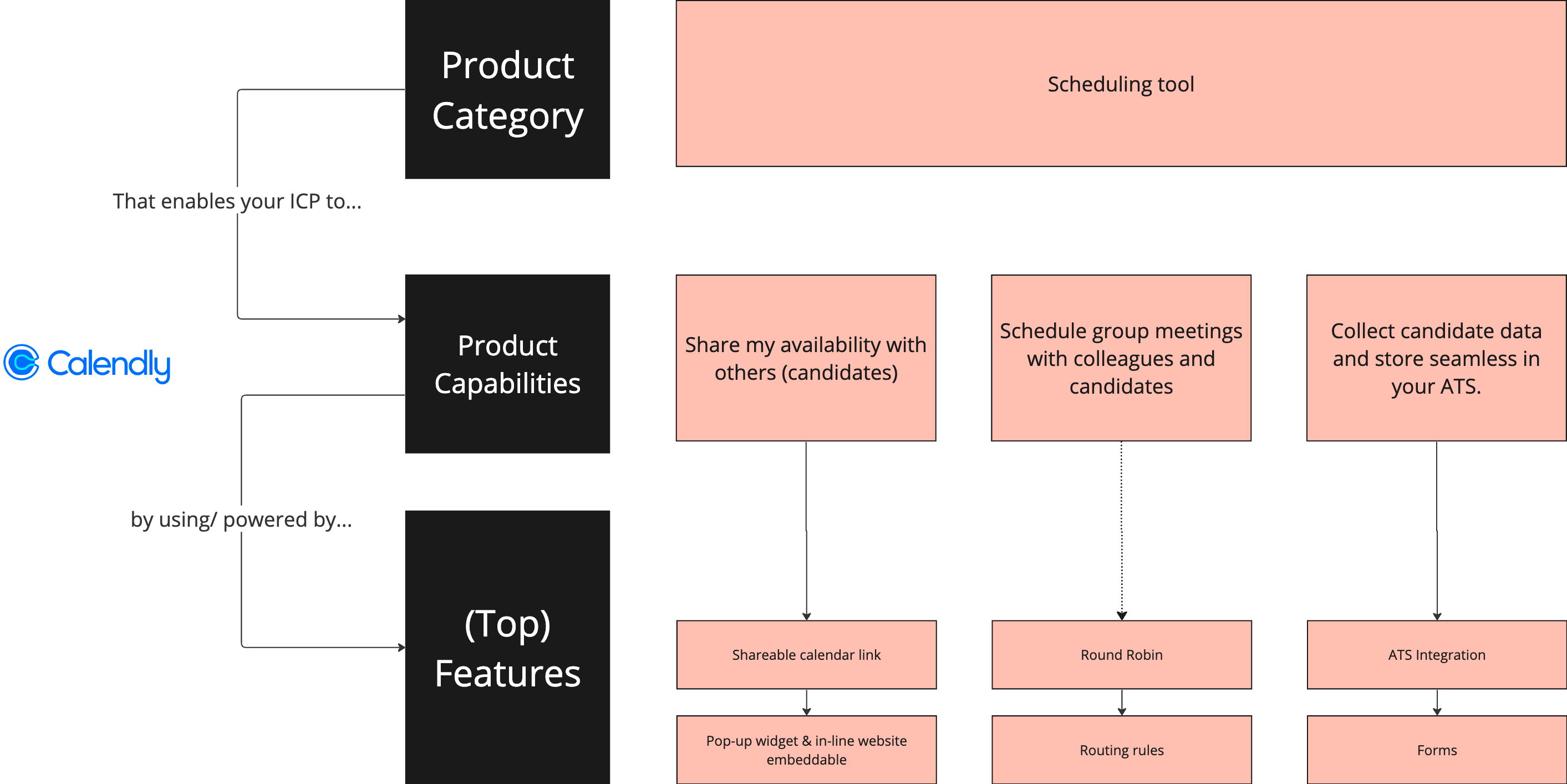
Now let's see how this fits into a structured analysis.
Webinar: How to Do Competitive Analysis by SiriusDecisions PM
Continuing with Jeff Lash's webinar, let's look at his proposed framework. It starts with the customer need and connects it to the capabilities you and your competitors offer.
Watch from 12:51 to 18:56. Focus on the four elements he introduces: Need, Capabilities, Evaluation, and Commentary. This gives us a structured, customer-centric way to perform our analysis.
This Need -> Capability framework is our tool for an objective, internal analysis. It helps us avoid the trap of comparing feature-for-feature and instead focuses on how well each solution solves the customer's real problem.
3. Finding the Messaging Gaps
With our strategic goal (positioning) and analytical framework (Need -> Capability) in place, we can now look at what competitors are actually saying. Your goal is to find messaging gaps:
- Pain points they ignore.
- Vague claims you can counter with specifics.
- Topics or use cases they don't address.
- Customer needs they fail to meet.
This is where you find your opportunity to create a distinct narrative.
How to Do a Powerful B2B Competitor Analysis
This article from Social Insider, 'How to Do a Powerful B2B Competitor Analysis', provides an excellent, practical guide on what to look for when analyzing competitor marketing.
Please read the sections 'Analyze your competitors’ marketing and content strategy' and 'Content audit and topic gap analysis'. Pay close attention to the bulleted lists under 'Content audit,' as they provide a concrete checklist of assets to review (blogs, case studies, etc.) and what to look for.
As the article highlights, these gaps become your opportunities. If a competitor talks vaguely about "improving security," your copy can speak directly to "passing your next compliance audit without stress."
4. Your Turn: Analyzing the Competition
It's time to put this into practice. Let's return to our company, SecureFlow, and our buyer persona, Alex, the IT Manager.
Imagine SecureFlow has two main competitors:
- Titan Corp: The big, established market leader. They are well-known and considered the "safe" choice.
- Cypher Systems: A newer, tech-focused startup that boasts about its advanced technology.
Your Task (15-20 minutes):
Below are messaging snippets from each competitor's homepage. Your task is to analyze them using the provided template. Identify their key message and where their focus lies.
Then, in the "[SecureFlow] Counter" column, write a brief note on how SecureFlow could position its message differently to appeal to Alex. Think about the gaps each competitor leaves open.
Competitor Messaging:
-
Titan Corp (The Incumbent):
Headline: The Enterprise Standard in Data Protection.
Body Copy: For over 20 years, Fortune 500 companies have trusted Titan Corp to secure their most critical data assets. Our comprehensive platform provides industry-leading security solutions, backed by world-class support. Don't leave your security to chance. Choose the proven leader. -
Cypher Systems (The Tech Startup):
Headline: Next-Generation Security Powered by a Quantum-Resistant AI Engine.
Body Copy: Leverage our proprietary machine learning algorithms and blockchain-secured audit logs for unparalleled threat detection. Our platform integrates with over 50 data sources via REST API and utilizes polymorphic encryption to stay ahead of attackers.
Now, analyze this messaging using the template below.
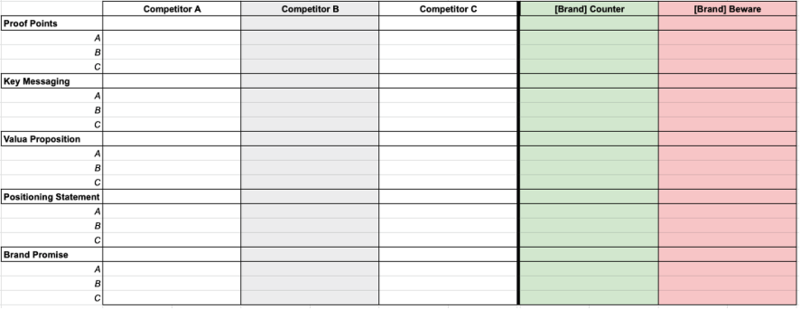
Instructions:
For each competitor, identify:
- Key Messaging: What is the main idea they are communicating?
- Value Proposition (as they present it): What do they claim is their primary value?
- [SecureFlow] Counter: Based on what you know about Alex (wants to prevent breaches, needs control, values reliability), what messaging gap does this competitor leave open? How can SecureFlow's copy specifically counter their message and be more relevant to Alex?
Take your time to think through how Alex would perceive these messages.
Conclusion
Great work today. You've moved from simply creating a value message to strategically crafting a differentiated one. This is a critical step toward writing copy that doesn't just get noticed but actively persuades buyers to choose you.
Key Takeaways:
- The Goal is Differentiation: The purpose of competitor analysis isn't to copy rivals but to find a unique, defensible position in the market. As April Dunford showed, this might mean narrowing your focus to win a specific niche.
- Analyze Needs, Not Just Features: Avoid simple feature checklists. A robust analysis compares how well you and your competitors address specific customer needs and capabilities.
- Hunt for Messaging Gaps: Audit your competitors' content (websites, blogs, case studies) to find what they aren't saying. Unaddressed pain points, vague language, and overlooked use cases are your opportunities.
You've now identified your product's value and found a unique angle to communicate it. In our next lesson, we will synthesize these insights to write a clear, jargon-free value proposition statement—the core pillar of all your B2B copy.