Hello! Welcome back to our module on crafting your core message.
In our previous lessons, you've done the essential groundwork. First, you translated product features into tangible business outcomes. Then, you analyzed the competitive landscape to find a unique, defensible angle for our message.
Today, we'll synthesize that work into the cornerstone of your B2B copy: a clear, jargon-free value proposition statement. This single statement must answer the buyer's most fundamental question: "Why should I choose you?" Mastering this is the key to all high-converting copy that follows.
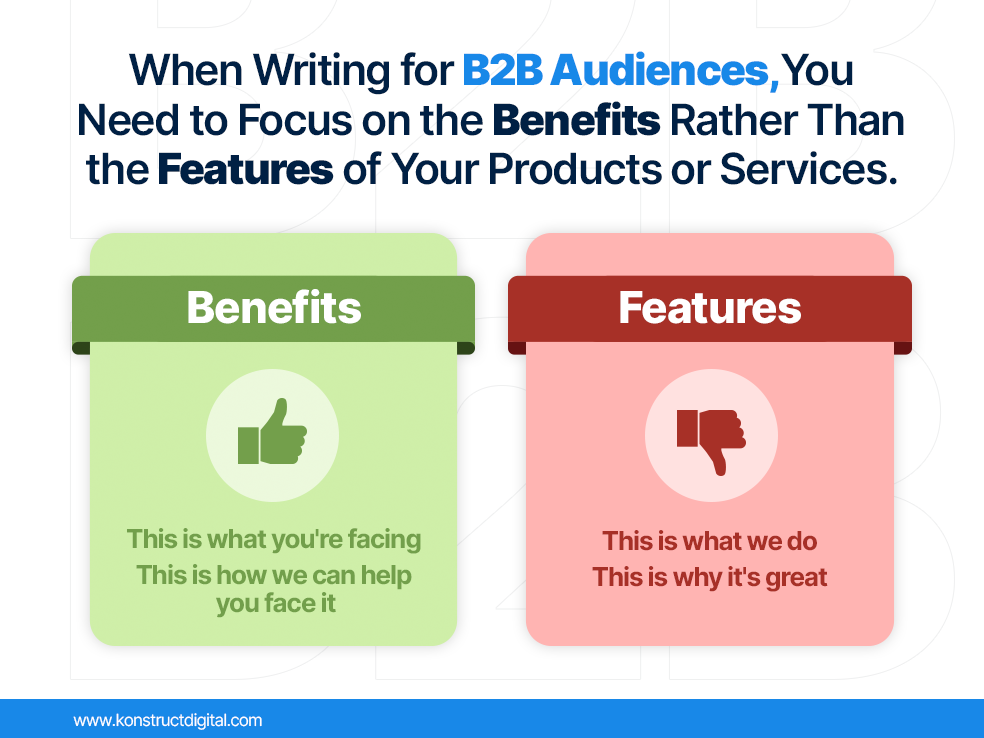
As a quick reminder of our core principle, always focus on the buyer's outcome.
1. What Exactly Is a Value Proposition?
Before we start writing, let's be precise about what a value proposition is and, just as importantly, what it isn't. Many copywriters confuse it with a slogan or tagline, but a value proposition has a much more specific job.
How to Write a Great Value Proposition
This article from HubSpot provides an excellent, clear definition. Pay close attention to how it distinguishes a value proposition from a mission statement, slogan, and tagline.
Read the first part of the article, from the start down to the heading 'Elements of a Powerful Value Proposition'. This will give you a solid definition and clear up common misconceptions.
In short, while a tagline like Nike's "Just Do It" is about brand ethos, a value proposition is a concrete promise of value. For a B2B buyer, it’s the business case for your product in a single sentence.
2. A Simple, Powerful Formula
A great value proposition doesn't need to be complicated. In fact, the simpler, the better. It should clearly state:
- Who you help (your target customer, X).
- What you help them achieve (the outcome, Y).
- How you do it (your unique approach, Z).
This leads to a classic and effective formula: "We help X do Y by doing Z."
The following video breaks this down perfectly.
How To Write A Value Proposition Statement | Template + Example
This video from Brand Master Academy offers a wonderfully simple three-step process and template for creating a value proposition. It's concise and gets straight to the point.
Watch from 01:52 to 04:43. Notice how the focus is always on the 'outcome' your business helps the audience achieve, not the service itself. The template at the end is what we'll be using.
This structure forces clarity and ensures you're focused on the customer's world, not just your own product features.
3. Real-World B2B Value Propositions
That formula is our starting point. Let's see how leading B2B companies apply these principles on their websites. A modern value proposition often consists of a main headline (the core promise) and a sub-headline (the clarification).
11 Best SaaS Value Proposition Examples 2025 (AI Era Edition)
This article from Invespcro showcases excellent, up-to-date examples from the SaaS world. It will help you see how the formula we just learned translates into real-world copy.
First, read the introductory section 'What Is a SaaS Value Proposition' to understand the Headline/Sub-headline structure. Then, review the examples for Notion, Clueso, and Partner Fleet. For each one, try to identify the 'X' (who they help), 'Y' (the outcome), and 'Z' (their method).
Notice how the best examples are specific, avoid jargon, and focus on the transformation they offer the customer—saving time, saving money, reducing complexity, or driving revenue.
4. Your Turn: Write the Value Proposition for SecureFlow
Now it's time to put this all into practice. Let's return to our fictional company, SecureFlow, and our buyer persona, Alex, the IT Manager.
Here’s a summary of what we’ve established in previous lessons:
- Product: SecureFlow, a data security platform.
- Buyer Persona (X): Alex, an IT Manager at a mid-sized company in a regulated industry (like finance or healthcare). Alex is overwhelmed, fears a data breach, and needs to prove compliance during audits.
- Key Benefit (Y): SecureFlow provides granular control over data access, making it easy to prevent unauthorized activity and generate reports that satisfy auditors.
- Unique Differentiator (Z): Unlike the old, clunky "market leader" (Titan Corp), SecureFlow is intuitive and gives Alex direct control. Unlike the tech-obsessed startup (Cypher Systems), it's focused on practical, real-world security management, not just abstract algorithms.
Your Task (10-15 minutes):
Using what you've learned, write a value proposition for SecureFlow that is targeted directly at Alex.
Part 1: The Core Statement
Use the "We help X do Y by doing Z" formula to write a single, clear value proposition statement.
Part 2: The Website Copy
Translate your core statement into a Headline and Sub-headline combination, as seen in the Invespcro article.
- Headline: The big, bold promise. What's the main outcome?
- Sub-headline: The clarification. What is it, who is it for, and how does it work?
Take your time to draft a few versions. Aim for language that is clear, confident, and free of corporate jargon. Think about what would make Alex stop and say, "Finally, a tool that gets my job."
Conclusion
Excellent work. You've taken the essential building blocks of your message and forged them into the most critical piece of copy you'll write. The value proposition is the anchor for your headlines, your landing pages, your ads, and your emails.
Key Takeaways:
- A Value Proposition is a Promise of an Outcome: It's not a slogan or a mission statement. It’s a clear, concise explanation of the tangible value a customer will get.
- Clarity Trumps Cleverness: The best value propositions are simple and easy to understand. The "We help X do Y by doing Z" framework is an effective tool to enforce clarity.
- Specificity Sells: Vague claims like "improve security" are weak. Specific claims like "pass compliance audits without the stress" resonate with B2B buyers.
In our next lesson, we'll address a common B2B challenge: selling to a group. You'll learn how to differentiate a value proposition for different stakeholders in the same buying committee, such as the CFO who cares about ROI versus the technical user who cares about integration.