
Hello! Welcome back to our module on Multi-Touch Attribution.
In our last lesson, we compared the high-level strategic implications of different attribution models. We established that rule-based (heuristic) models are simple but arbitrary, while data-driven (algorithmic) models are more accurate but also more complex and resource-intensive. Your choice of model shapes your entire marketing strategy.
Today, we move from the strategic "what" to the tactical "when." Your goal for this lesson is to evaluate when to use heuristic vs. algorithmic attribution models for tactical optimization. This is about giving clear guidance to your teams, ensuring they're using the right tool for the right job, whether that's tweaking a campaign's bids or deciding where to invest the next million dollars.
1. From Strategic Choice to Tactical Decision
"Tactical optimization" refers to the day-to-day and week-to-week adjustments your teams make to improve campaign performance. This includes actions like:
- Adjusting keyword bids within a Google Ads campaign.
- Shifting budget between different ad sets in a Meta campaign.
- Optimizing ad creative based on performance.
- Deciding which blog posts to promote more heavily.
The critical insight is that no single attribution model is best for all of these tasks. A model that is perfect for one decision can be dangerously misleading for another.
Let's begin by establishing a clear framework for making this choice.
Data-Driven Attribution vs. Rule-Based Models Compared
The article 'Data-Driven Attribution vs. Rule-Based Models Compared' by Pathmetrics provides an excellent, business-focused guide on this topic. It cuts straight to the core of the decision-making process you'll need to master.
Please read the section titled 'How to Pick the Right Attribution Model'. Focus on the specific scenarios and business contexts outlined for when each type of model works best.
The article you just read lays out the fundamental trade-offs. Let's structure this into a decision framework you can use. When your team proposes an analysis or a decision based on attribution data, you should guide them by asking:
- What is the specific goal? Are we optimizing within a single channel or allocating budget between channels?
- What is our data situation? Do we have enough conversion volume and journey complexity to power an algorithmic model?
- What are our resources? Do we have the tools, budget, and expertise for a complex model, or is a simpler approach more pragmatic?
Let's use this framework to explore the scenarios in more detail.
2. When to Use Heuristic Models: Speed, Simplicity, and Scarcity
Heuristic (rule-based) models are not just "less good" versions of algorithmic ones. They are often the right choice when speed is critical, data is scarce, or the scope of the decision is narrow.
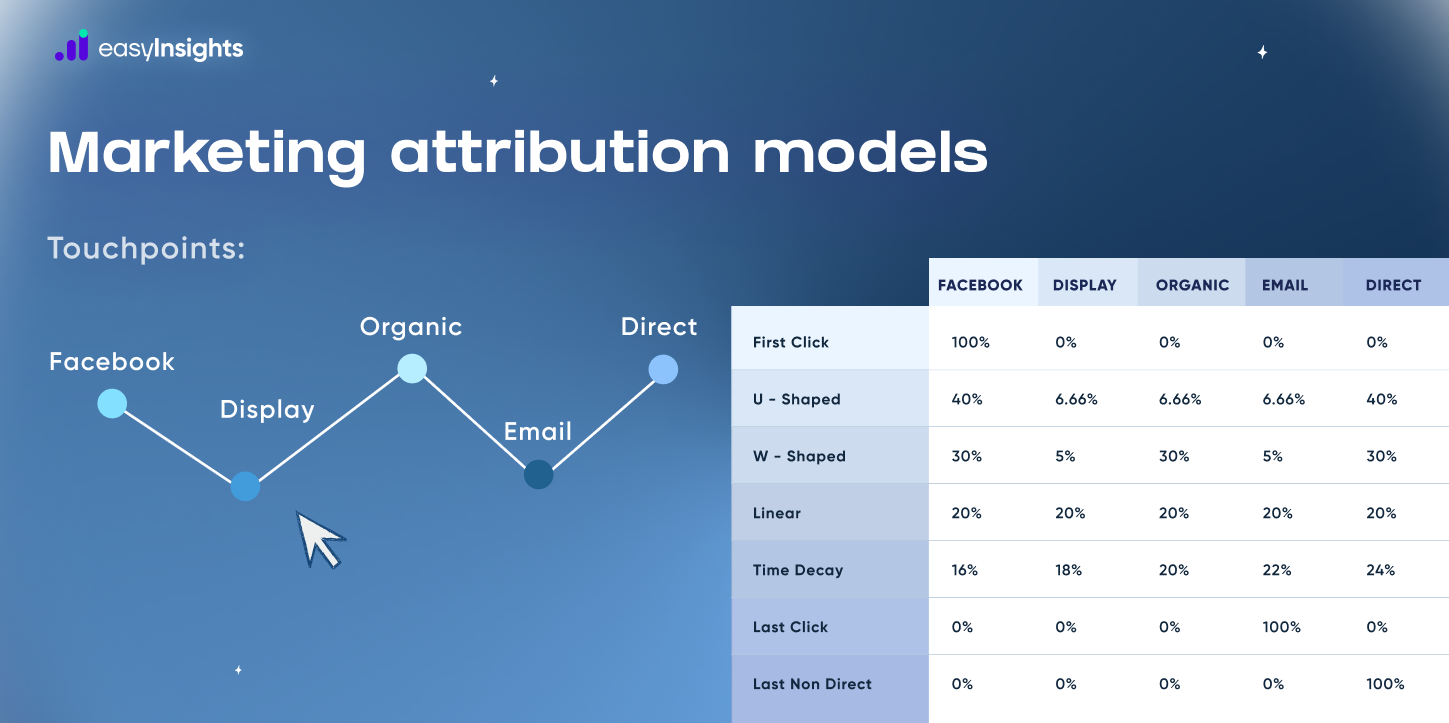
Here are the key tactical situations where you should guide your team to use a heuristic model:
-
For In-Platform Optimization: Your teams working in Google Ads or Meta Ads are operating within those platforms' ecosystems. The platform's own reporting and bidding algorithms are often based on a last-click or similar model. For the tactical goal of optimizing bids and creatives within that channel, aligning with the platform's native attribution view can be effective and efficient. Trying to apply a complex external model to every keyword bid is often impractical.
-
When Data is Limited: Algorithmic models need a lot of data to find reliable patterns. In situations like a new product launch, a campaign for a niche B2B service, or marketing in a new geography, you won't have enough conversion data. A heuristic model (like Position-Based/U-Shaped) provides a reasonable, assumption-led starting point until you build up enough data history.
-
For Quick Diagnostics: Comparing different heuristic models is a powerful diagnostic tool. If you see that your First-Touch conversions are high but Last-Touch conversions are low, it suggests you're good at generating initial awareness but weak at closing. Conversely, high Last-Touch but low First-Touch suggests you're "harvesting" existing demand well but failing to create new demand. This can guide your team's focus without a complex analysis.
-
When Resources are Tight: Implementing and maintaining a true data-driven attribution solution requires budget, specialized tools, and analytical expertise. For smaller businesses or teams, a well-chosen heuristic model from a platform like Google Analytics is the most pragmatic and cost-effective choice.
3. When to Use Algorithmic Models: Accuracy for Complex, High-Stakes Decisions
Algorithmic (data-driven) models justify their complexity when the decisions are strategic, cross-functional, and high-value. They are designed to answer the questions that heuristic models simply can't.
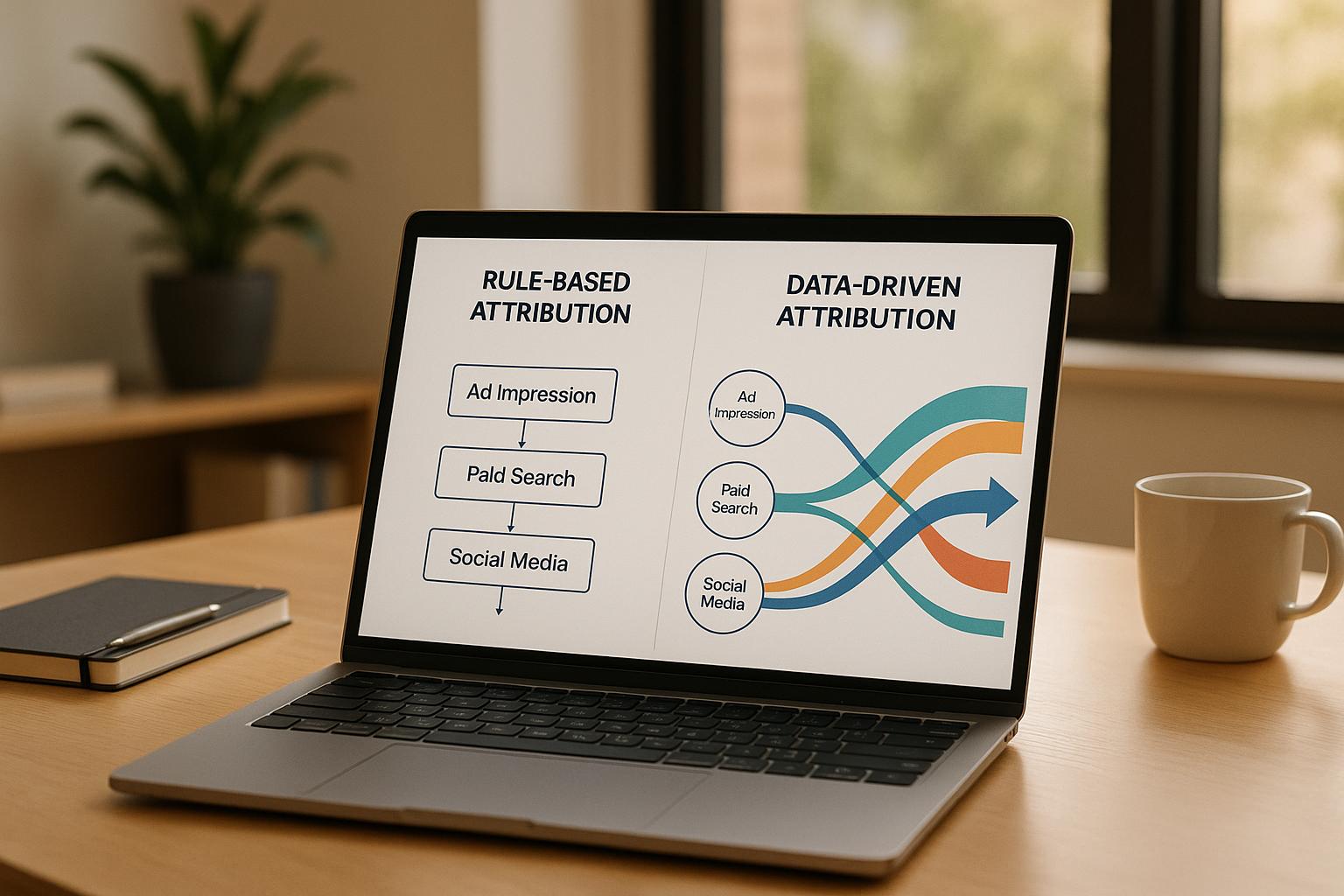
Here are the prime tactical situations that demand an algorithmic model:
-
For Cross-Channel Budget Allocation: This is the most critical use case. If you need to decide whether to move $100,000 from your Meta Ads budget to your SEO content team, a last-click model will almost always favor the bottom-funnel Meta ads. An algorithmic model, however, can quantify the "assist" value of the SEO content that influenced users early in their journey, providing a much more accurate basis for that high-stakes decision.
-
To Understand Complex Customer Journeys: When your sales cycle is long and involves dozens of touchpoints across online and offline channels, heuristic models break down completely. An algorithmic model is the only way to make sense of the chaos, identify which combinations of touchpoints are most effective, and find the true drivers of conversion.
-
To Justify Upper-Funnel Investments: Channels like content marketing, organic social media, and display advertising often have low last-click conversions but play a vital role in introducing and nurturing customers. A data-driven model can assign a credible value to these "assists," helping you protect and justify the budget for these long-term brand-building activities.
To bring these ideas together, let's explore the underlying methodologies that give data-driven models their power.
Digital marketing attribution models: A tech survey
The 'Digital marketing attribution models: A tech survey' article from Statsig provides a deeper look into the mechanics of these models. You don't need to master the math, but understanding the concepts will help you trust their outputs.
Please skim the section 'Data-driven attribution models'. Focus on the description and the use cases/benefits for Markov chain attribution and Shapley value attribution. These are two common foundations for DDA. Notice how their logic (removal effect, game theory fairness) is inherently designed for the cross-channel questions we've been discussing.
As you can see, the very logic of models like Shapley Value (which treats channels like players in a cooperative game) is built to solve the problem of fairly distributing credit across a team—something a simple last-click rule can never do.
Test your understanding!
Your Head of Paid Social and your Head of SEO are in a budget meeting.
- The Head of Paid Social shows a report from the Meta Ads platform indicating a 4x ROAS on their retargeting campaigns, based on a last-click model. They are asking for a 20% budget increase.
- The Head of SEO shows that organic traffic is up 30% year-over-year, and users who read the blog are more engaged, but they struggle to tie their efforts directly to last-click revenue.
As the strategic leader, what type of attribution model would you need to consult to make a fair budget decision? What specific question would you be trying to answer with it?
Show answer
To make a fair decision, you would need to consult an algorithmic (data-driven) attribution model.
A last-click model is inadequate here because it will inherently favor the channel that is closest to the conversion (the retargeting ad) and ignore the contribution of the channel that may have created the initial interest (SEO/blog).
The specific question you would be trying to answer with the DDA model is: "What is the true fractional credit, or incremental value, of both the Meta retargeting campaigns and the SEO/blog content when we consider the entire customer journey?" The model's output would help you see if the SEO content is "assisting" the paid social conversions, justifying a more balanced investment across both teams.
Conclusion
Your role as a leader isn't to be an expert in Markov chains, but to be an expert in choosing the right analytical lens for the business question at hand.
Key Takeaways:
- Use Heuristic Models for Tactical Speed and Simplicity: They are best for in-channel optimization, quick diagnostics, and when you lack sufficient data or resources for more advanced methods. Their main drawback is their inherent bias.
- Use Algorithmic Models for Strategic Accuracy: They are essential for high-stakes, cross-channel budget allocation, understanding complex customer journeys, and valuing upper-funnel marketing activities. Their main drawback is their need for data and resources.
- The Guiding Question: Always start by asking, "What decision are we trying to make?" The answer dictates the appropriate tool. Choosing a model is a means to an end: making a better, more profitable marketing decision.
Preview of the Next Lesson:
Now that we've established how to choose the right model, our next lesson will focus on using the output. We will learn how to interpret a customer journey analysis to identify critical touchpoints and friction points, allowing you to turn attribution data into actionable insights for improving the customer experience.