
Hello! Welcome to the first lesson in our new module, "SEO & Organic Search Foundations."
In our last module, we built a complete video marketing engine. A key insight from analyzing your YouTube analytics was discovering the exact search terms people use to find solutions. This is the perfect foundation for what's next. Now, we'll take those insights and apply them to the biggest search engine of all: Google. Our goal is to make your SaaS website appear prominently when potential customers are actively searching for what you offer.
This lesson focuses on the first and most critical step in that process. Your learning outcome is to implement core on-page SEO elements (title tags, meta descriptions) for a SaaS landing page. These two elements are your digital storefront on a Google search results page. Mastering them is essential for attracting clicks and winning high-intent customers before they even visit your site.
1. Your Digital First Impression: Title Tags & Meta Descriptions
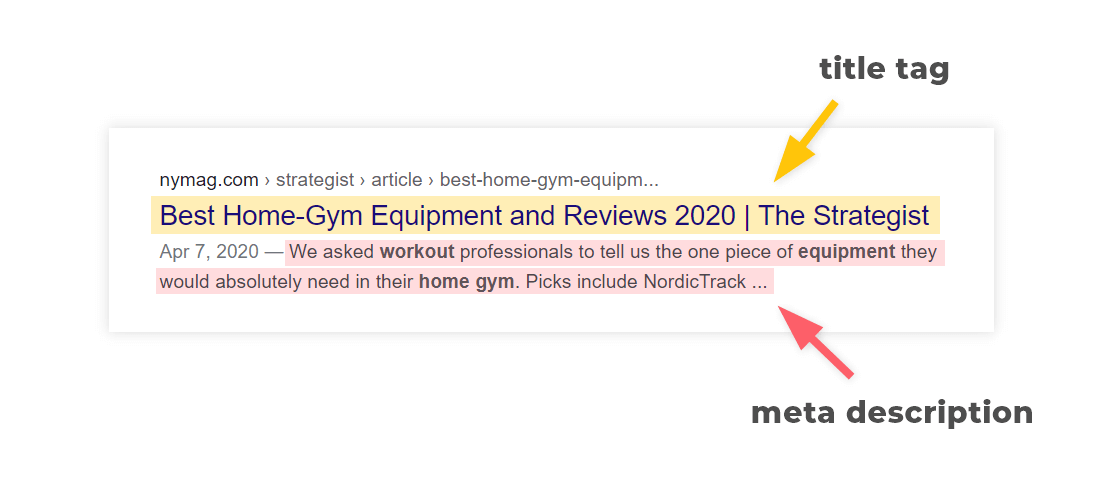
Before we dive into the "how," let's clarify the "what." When a user searches on Google, the title tag and meta description are often the only things they see representing your page.
- Title Tag: The blue, clickable headline in a search result. It's the single most important on-page factor for telling both users and search engines what your page is about.
- Meta Description: The short block of text (usually 1-2 sentences) under the title. It doesn't directly impact rankings, but it's your sales pitch to convince the user to click your link over a competitor's.
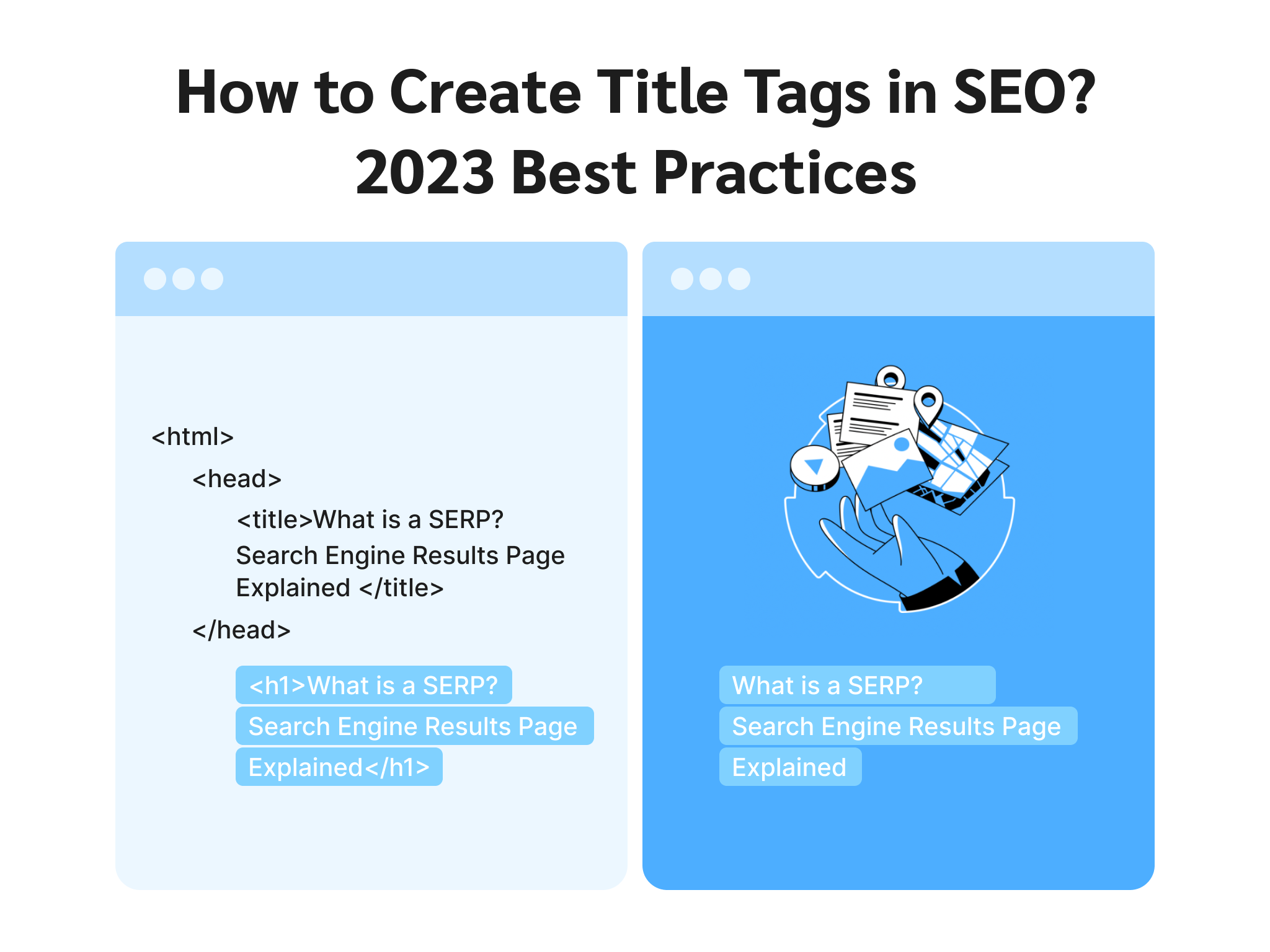
Given your computer science background, you know that what appears on a webpage is generated from code. These elements are no different. They are simple HTML tags that you place within the <head> section of your page's HTML document.
For a quick, practical demonstration of how to add these two tags to an HTML file, the following video provides a clear walkthrough.
This short clip from the 'SEO & HTML Guide for 2024' by A Designer Who Codes will show you the exact HTML needed for title and meta description tags.
Watch these two brief segments to see the implementation in action: 04:20 - 05:11: Focus on how the <title> tag is added and why it's crucial for describing the page's content. 05:11 - 07:23: Pay attention to the structure of the <meta name="description"> tag and the recommendation for its length (around 160 characters).
Now that you know what these tags are and where they go, let's focus on the most important part: how to write them effectively to attract customers.
2. Crafting High-Impact Title Tags and Meta Descriptions
Writing these tags is both a science (following rules) and an art (writing compelling copy). Here are the fundamental principles for your SaaS landing pages.
The Ultimate SEO Guide for Early-Stage SaaS
The article 'The Ultimate SEO Guide for Early-Stage SaaS' provides an excellent, concise checklist of on-page SEO fundamentals. We'll focus on the sections directly related to titles and descriptions.
Read the subsections under 'Pillar 2: On-Page SEO'. Keyword Optimization: Note the list of places where your target keyword should appear. We're focusing on the first two: title tag and meta description. Title Tags & Meta Descriptions: Internalize the character limits and core purpose of each. Title Tag: Under 60 characters, including the main keyword. Meta Description: Under 160 characters, including a call-to-action (CTA).
A Publishing Checklist for Perfection
Details matter in SEO. Messing up small things can hurt your visibility. Think of this as a pre-flight checklist before you publish any landing page.
B2B SaaS SEO: My simple (but complete) guide for 2026
This guide from Marketer Milk, 'B2B SaaS SEO', contains a fantastic, no-nonsense checklist for publishing content. It highlights common mistakes that are easy to avoid.
Read the section under the heading '4. Publish: CMS publishing and link building'. Focus on points 1, 2, and 3. Pay special attention to point 3 about the URL slug; it's a common oversight. While your page title might be long and descriptive, your URL should be short and keyword-focused (e.g., your-saas.com/blog/remote-work-trends not your-saas.com/blog/the-top-10-remote-work-trends-of-2024).
Key Principles Summarized:
- Title Tag:
~50-60 characters. Must include your primary target keyword. It should be compelling and accurately reflect the page content. A common formula for a SaaS homepage isPrimary Keyword - What You Do | Brand Name. - Meta Description:
~150-160 characters. Should also include your primary keyword, but more importantly, it must function as an ad. Address a pain point, present your solution, and include a clear call-to-action (e.g., "Start your free trial," "Sign up free," "Learn more").
3. A Practical Workflow for Your SaaS Landing Page
Let's apply these principles. Imagine your SaaS is a tool that automates meeting notes using AI. Your primary target keyword is "AI meeting assistant."
-
Start with the On-Page H1 Heading: This is the main headline a user sees on the page itself. It should be user-benefit-oriented.
- Example H1: "Stop Taking Meeting Notes. Let AI Do It For You."
-
Craft the Title Tag: This is for Google. It needs to be more direct and keyword-focused.
- Example Title Tag:
AI Meeting Assistant & Notetaker | YourBrandName(46 characters)
- Example Title Tag:
-
Write the Meta Description: This is your 160-character ad for Google searchers.
- Example Meta Description: "Our AI meeting assistant records, transcribes, and summarizes your calls automatically. Focus on the conversation, not the notes. Get started for free." (158 characters)
Using AI to Accelerate Content Creation
Since you're keen on using AI to scale, you can build a prompt to help you generate these elements quickly. The following video discusses this for service pages, but the logic is perfectly adaptable for SaaS.
Service Page SEO: Transform Any Service Page Into A Lead Magnet
The 'Service Page SEO' video from Rank Math includes an advanced section on using a detailed ChatGPT prompt to generate page content, including the meta title and description. We will adapt this concept for SaaS.
Watch the segment from 17:22 to 19:31. You don't need to copy the prompt verbatim, as it's for local services. Instead, absorb the structure of the prompt: it first defines the business and target audience, asks the AI to identify entities, and then requests specific outputs like the meta title and description based on that context. This is a powerful workflow.
Here is a SaaS-focused version of that prompt you can adapt in ChatGPT, Claude, or your preferred AI tool:
Act as a B2B SaaS marketing expert specializing in SEO.
1. Business Context (You fill this in):
- Product Name: [Your SaaS Name]
- Product Description: [1-2 sentence description of what your SaaS does]
- Target Audience (ICP): [e.g., Product Managers at tech startups, freelance graphic designers, etc.]
- Primary Pain Point Solved: [e.g., Wasting time on manual data entry, struggling to create professional invoices, etc.]
- Primary Keyword for this page: [e.g., "AI podcast show notes generator"]
2. Your Task:
Based on the context above, please generate the following SEO assets for a landing page:
- Optimized Title Tag: Must be under 60 characters and include the primary keyword.
- Compelling Meta Description: Must be under 160 characters, include the primary keyword, address the pain point, and end with a call-to-action like "Start for free" or "Learn more."
- SEO-friendly URL Slug: Short, lowercase, and based on the primary keyword.
Test your understanding!
You are building a SaaS product that uses AI to create social media carousels from a blog post URL. Your primary target keyword is "AI carousel generator."
Using the principles and the prompt structure we discussed, write an optimized Title Tag and Meta Description for the landing page.
Show answer
Here is one strong example. Your answer may vary, but it should follow the same principles.
-
Title Tag:
AI Carousel Generator from URL | YourBrandName(44 characters)- Why it works: Includes the keyword, is well under the character limit, and is clear.
-
Meta Description: "Tired of designing carousels? Paste a blog link and our AI carousel generator creates stunning, ready-to-post slides in seconds. Try it for free today!" (157 characters)
- Why it works: Addresses a pain point, includes the keyword, explains the value, and has a clear CTA.
Conclusion
Congratulations on completing your first step into the world of SEO! While seemingly small, the title tag and meta description are the gateway to all your organic traffic. Getting them right is a high-leverage activity that pays continuous dividends.
Key Takeaways:
- Title tags and meta descriptions are your storefront on Google's search results page. They are critical for earning the click.
- These elements are implemented in the
<head>section of your page's HTML. - Follow the rules: keep titles under 60 characters and meta descriptions under 160 characters.
- For titles: Lead with your primary keyword and keep it clear and descriptive.
- For meta descriptions: Treat it like an advertisement. Address a pain point, offer your solution, and include a compelling call-to-action.
Preview of the Next Lesson:
We've just told Google what our page is about from a human perspective. But we can give search engines an even clearer, more structured signal. In the next lesson, you will learn how to add basic 'SoftwareApplication' Schema.org markup to a product page. This special code helps Google understand that your page isn't just a webpage, but a page about a piece of software, which can unlock special search result features like star ratings and pricing information.