
Hello! Welcome to this crucial lesson on self-assessment.
In our previous session, you designed a personal protocol to induce lucidity for the purpose of Jain contemplative practice. You now have a "map" for your journey into conscious rest. However, any good explorer knows that a map is only useful if you also have a compass and a logbook to track your journey.
Today, we will build that logbook. Our learning outcome is to develop a framework for journaling and self-assessment, tracking both spiritual insights and physiological well-being. A systematic practice requires a feedback loop. This framework will provide you with the data needed to understand what’s working, what isn’t, and how to adjust your protocol to ensure it is both spiritually fruitful and physically sustainable.
1. The Two Streams of Self-Assessment
Your integrative practice has two equally important dimensions, and your assessment must reflect that. We will create a journaling system that tracks two parallel streams of information:
-
Physiological and Psychological Well-being: This is your "health dashboard." It involves tracking key metrics like sleep quality, daily energy levels, and emotional state. The goal is to ensure your practice supports your overall health and to catch any negative effects of sleep disruption early on. This directly relates to the principle we covered earlier about respecting the non-negotiable functions of sleep.
-
Spiritual and Contemplative Progress: This is your "spiritual logbook." It involves qualitatively recording your dream experiences, the quality of your awareness, and any insights gained during your practice. This tracks your progress toward the goal of becoming a Gyata-Drashta (knower-seer) and using sleep for nirjara.
These two streams are deeply interconnected. Poor sleep will cloud your awareness and hinder contemplative practice. Conversely, profound spiritual insights can lead to greater peace and improved psychological well-being during the day. A comprehensive journal captures both.
2. Logging Your Well-being: The Quantitative Dashboard
To track your well-being objectively, we can borrow tools used in scientific research. This gives you a consistent, quantitative way to see trends over time.
The PANAS Scale for Daily Mood
One of the most widely used tools for measuring mood is the Positive and Negative Affect Schedule (PANAS). It's a simple questionnaire that helps you quantify your emotional state.
A study on the effects of Preksha meditation used this very tool to measure changes in mood. Let's look at the details.
EEG Spectral Changes Before and After an Eight-week Intervention Period of Preksha Meditation
The thesis 'EEG Spectral Changes Before and After an Eight-week Intervention Period of Preksha Meditation' by Chintan Joshi used the PANAS test to assess participants' emotional state. We will look at how it's constructed.
Please read the section 'Positive Affect and Negative Affect Schedule (PANAS) test' (section 3.4.2). It describes the 20 emotional states and the 5-point rating scale used. This will be the basis for your daily mood log.
Based on the resource, your daily mood log can be a simple morning practice. On a scale of 1 ('very slightly or not at all') to 5 ('very much or extremely'), rate how you feel right now for each of the 20 items:
- Positive Affect: Interested, Excited, Strong, Enthusiastic, Proud, Alert, Inspired, Determined, Attentive, Active.
- Negative Affect: Distressed, Upset, Guilty, Scared, Hostile, Irritable, Ashamed, Nervous, Jittery, Afraid.
Each day, you can calculate a total score for Positive Affect and a total score for Negative Affect. Over weeks, you'll see clear data on how your practice is influencing your daily emotional baseline.
Weekly Well-being Assessment
In addition to a daily mood check-in, a weekly summary helps you see the bigger picture. We can draw inspiration from another study on Preksha meditation that used a multi-dimensional "Happiness Scale."
EXPLORING THE INFLUENCE OF PREKSHA ...
The paper 'EXPLORING THE INFLUENCE OF PREKSHA MEDITATION...' demonstrates how well-being can be broken down into different domains. We will adapt their model for our weekly assessment.
Please read the 'TOOL DESCRIPTION' section. Notice the five dimensions used in the study: Career Well-being, Subjective Well-being, Social Well-being, Spiritual Well-being, and Emotional Well-being. We will create a simplified version for your personal use.
Let's create a simplified weekly checklist based on these ideas. At the end of each week, rate the following dimensions on a scale of 1 (very low) to 10 (very high) based on your general feeling over the past 7 days:
- Physiological Well-being: Your average energy level and sense of physical restfulness.
- Emotional Well-being: Your ability to manage emotions with balance and equanimity.
- Subjective Well-being: Your general sense of life satisfaction and contentment.
- Spiritual Well-being: Your feeling of connection to your spiritual practice and sense of purpose.
This weekly review, combined with your daily PANAS scores and sleep data (e.g., hours slept, perceived quality), forms a powerful quantitative dashboard.
3. Logging Your Practice: The Spiritual & Contemplative Journal
This is the qualitative heart of your journal. It's where you record your experiences in the subtle realm of sleep and dreams. A structured template can help ensure you capture the most important details.
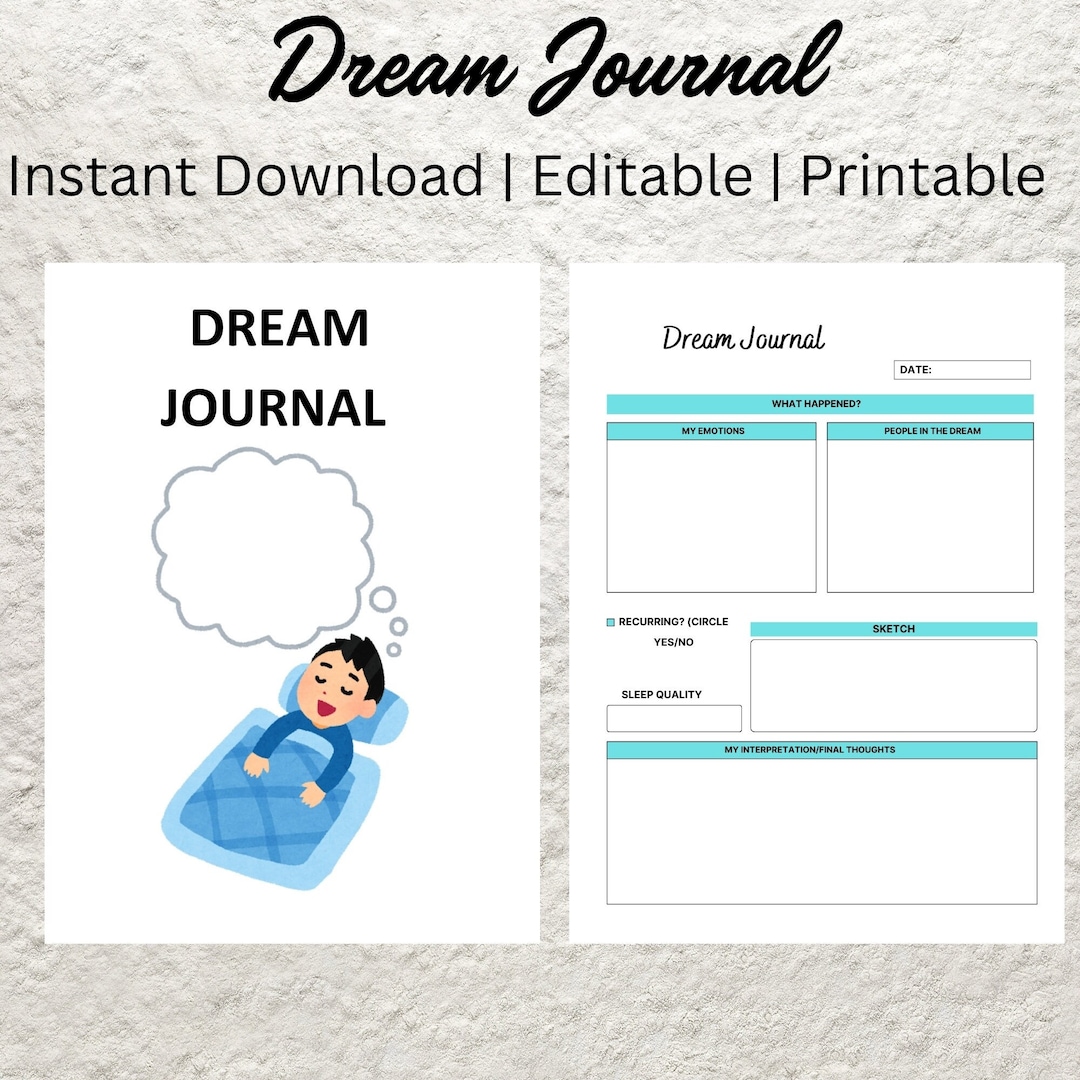
For each morning after a practice attempt, your journal entry should include:
A. Basic Dream Recall (if any dream is recalled):
- Date & Time:
- Dream Narrative: What happened? (Write in the present tense as if it's happening now).
- Key Emotions: What were the dominant feelings in the dream?
- Dream Elements: Any significant people, places, or symbols?
- Recurring?: Was this a recurring dream or theme?
B. Contemplative Practice Assessment:
- Lucidity:
- Did you become lucid? (Yes/No)
- If yes, what triggered it? (e.g., a reality test, a dream sign, spontaneous realization).
- How long did the lucidity last?
- Quality of Awareness (Rate 1-10):
- Describe your state of mind. Were you a calm, detached Gyata-Drashta? Or were you excited and easily drawn into the dream's story?
- Anupreksha (Contemplation):
- Did you remember to begin your contemplative practice?
- What was your theme?
- What thoughts, feelings, or insights arose during the contemplation?
- Observation of the Mind:
- What mental dispositions (adhyavasaya) or emotional colorings (leshyas) did you notice within your own mindstream (e.g., attachment, aversion, fear, peace)?
C. Final Insights & Reflections:
- What is your overall interpretation?
- Are there any connections between the dream content and your waking life or spiritual goals?
- What did you learn from this experience, whether you became lucid or not?
Test your understanding!
Imagine that last night, you woke up for your WBTB, went back to sleep, and had a dream where you were in your childhood home. You suddenly realized you were dreaming. You remembered your goal was to contemplate impermanence (anityata), but you got distracted by a conversation with a dream character and soon lost lucidity. How would you log this in your new journal framework? What key points would you note in both the "Well-being" and "Spiritual" sections?
Show answer
A good log would capture the following:
-
Well-being Log (Morning):
- Sleep Quality: Maybe rate it 6/10, noting the planned interruption for WBTB felt a bit disruptive.
- PANAS: You might note slightly higher scores on "Excited" and "Attentive" due to the lucid experience, but also perhaps a little on "Jittery" or "Upset" from the frustration of losing lucidity.
-
Spiritual Journal:
- Dream Narrative: Describe the dream about the childhood home.
- Lucidity: Yes. Trigger was the dream sign of the "childhood home." Lucidity lasted maybe 1-2 minutes.
- Quality of Awareness: Start high (e.g., 8/10) upon realization, but then drop to 3/10 as you got distracted. Note that you were more of a "participant" than a "knower-seer" after the initial moment.
- Anupreksha: Noted the intention to practice, but did not successfully engage with the theme of impermanence due to distraction.
- Observation of the Mind: Observed the adhyavasaya of "attachment" or "curiosity" that pulled you into the conversation, overriding your primary intention.
- Final Reflection: The main takeaway is that maintaining focus after becoming lucid is the next challenge. The distraction was a key learning experience. The protocol for inducing lucidity worked, but the protocol for maintaining it needs strengthening.
Conclusion
You now have a comprehensive framework for self-assessment. This is your personal feedback system, turning every night into a learning opportunity. By consistently tracking both your physiological well-being and your spiritual progress, you can practice with intelligence and care. This process of recording, reviewing, and refining is fundamental to building a practice that is both safe and transformative.
Key Takeaways:
- A robust self-assessment framework tracks two streams: physiological/psychological well-being and spiritual/contemplative progress.
- Quantitative tools like the PANAS scale and a weekly well-being rating provide objective data on your health and mood.
- A structured spiritual journal captures not just dream content, but the quality of your awareness and the specifics of your contemplative practice.
- This combined journal creates a feedback loop, allowing you to make informed adjustments to the protocol you designed in the last lesson.
Preview of the Next Lesson:
In our final lesson, we will put it all together. You will learn how to use the data from your new journaling framework to synthesize all the learned techniques into a sustainable, multi-stage personal practice plan that can be adjusted based on your self-assessment. This will be your master plan for the long-term pursuit of conscious rest.