
Hello! Welcome to the final lesson of our course.
Over the past eleven modules, we have embarked on a comprehensive journey. We started with the building blocks of sleep science—neurons, brain regions, and regulatory processes. We then delved into the architecture of sleep itself, its vital functions for mind and body, and the mysterious world of dreams. We bridged this scientific understanding with the profound spiritual technology of Jain philosophy, exploring karma, consciousness, and the transformative potential of Preksha Dhyaan.
In our last lesson, you created a powerful self-assessment framework—a dual-stream journal to track both your physiological well-being and your contemplative progress. You now have the tools to gather the essential data from your practice.
Today, we will put everything together. Our final learning outcome is to synthesize all learned techniques into a sustainable, multi-stage personal practice plan that can be adjusted based on self-assessment. This lesson is the culmination of our entire course. It’s where knowledge transforms into a living, evolving spiritual discipline, or sadhana.
1. The Philosophy of a Sustainable Practice
Before we build the plan, it's crucial to establish the right mindset. Your goal—to infuse the unconsciousness of sleep with the light of awareness for spiritual purification (nirjara)—is profound. This is not a short-term project but a lifelong exploration.
In Jainism, the path to liberation (moksha) is gradual, requiring patience, persistence, and self-compassion. Your practice should reflect this. The objective is not to violently "conquer" sleep, but to gently and skillfully integrate consciousness into it, always respecting the body's non-negotiable needs for physiological rest that we covered in Module 3 and revisited in Lesson 12.1.
Your journal is your most trusted companion on this path. It is the feedback mechanism that allows you to maintain the delicate balance between spiritual ambition and physical well-being.
2. A Multi-Stage Plan for Conscious Rest
To make this journey manageable and sustainable, we can structure it into three distinct stages. Think of these as evolving levels of your practice. You progress from one to the next not on a fixed timeline, but based on the feedback from your self-assessment journal.
Stage 1: The Foundation – Mastering the Basics
The goal of this initial stage is to build a solid and consistent foundation. You are conditioning your mind and body, making awareness a more constant presence, especially at the threshold of sleep.
Core Practices:
- Consistent Sleep Hygiene: Rigorously apply the principles from Module 7. A stable sleep schedule and an optimized environment are the bedrock of this practice.
- Daytime Awareness Practice: Integrate short sessions of Shwas Preksha (breath awareness) and Sharira Preksha (body perception) into your daily routine. This builds the "muscle" of sustained, non-judgmental awareness.
- Conscious Sleep Transition: Make Kayotsarga (relaxation with self-awareness) your non-negotiable bedtime ritual. The aim is to let the body fall asleep while the mind remains a calm, detached observer for as long as possible.

Self-Assessment Focus in Stage 1:
- Physiological: Track sleep duration, perceived quality, and daily energy levels using your journal's "well-being" section (PANAS, weekly scores). Is your sleep stable and restorative?
- Spiritual: Note the quality of your Kayotsarga. How long can you maintain awareness? Is the process becoming more natural? Are you observing thoughts without getting carried away?
- Progression Criterion: Move to Stage 2 when your sleep hygiene is excellent, your sleep quality is consistently high, and Kayotsarga feels like a familiar and calming practice.
Stage 2: Exploration – Inducing Conscious States
With a strong foundation, you can now begin to actively explore conscious states within sleep. The goal here is to intentionally trigger lucidity or to work within the rich, semi-conscious states that precede sleep (hypnagogia).
Core Practices:
- Maintain All Stage 1 Practices: These are your fundamentals.
- Introduce Lucidity Induction Techniques: Systematically apply the techniques from Module 6. You might practice Mnemonic Induction (MILD) every night and add Wake-Back-to-Bed (WBTB) on weekends to minimize disruption to your weekly schedule.
- Practice Reality Testing: Make this a consistent daytime habit to increase your chances of questioning reality while dreaming.
- Introduce Waking Anupreksha: During the "wake" portion of a WBTB attempt, or in a separate meditation, practice Anupreksha (contemplation) on your chosen theme. This primes the mind to remember its purpose.
Self-Assessment Focus in Stage 2:
- Physiological: Pay very close attention to your well-being data. Is WBTB or the excitement of lucidity affecting your sleep quality or next-day energy? Be radically honest.
- Spiritual: Your journal now focuses on lucid dream triggers, duration of lucidity, and what happens during those moments. Did you remember your intention? What distracted you?
- Progression Criterion: Move to Stage 3 when you can reliably induce lucid states (even if brief) without compromising your physiological well-being. You have found a sustainable rhythm.
Stage 3: Integration – Deepening Spiritual Practice
This is the stage where the practice fully matures. The primary goal is no longer just to become lucid, but to use that lucidity for focused contemplative practice, transforming the dream state into a laboratory for spiritual insight.
Core Practices:
- All previous practices are now ingrained habits.
- Focused Anupreksha in Lucid Dreams: Once lucid, your first priority is to stabilize the dream (e.g., by focusing on your hands or rubbing them together). Your second priority is to begin your Anupreksha on a pre-decided theme (e.g., impermanence, non-doership, the nature of consciousness).
- Observing Adhyavasaya and Leshya: Use the detached perspective of the Gyata-Drashta (knower-seer) to observe the mental dispositions and psychic colorings that arise in the dream—both in yourself and the dream environment.
Self-Assessment Focus in Stage 3:
- Physiological: Continue monitoring your health dashboard to ensure this deep practice is not causing burnout.
- Spiritual: Your journal entries become profound case studies. What insights arose during contemplation? How did the dream respond to your practice? Did you observe specific karmic patterns or mental habits? Are these insights translating into changes in your waking consciousness and behavior?
- Progression Criterion: This stage is not about "completion" but "deepening." Progress is measured by the clarity of your insights, your ability to remain a detached observer, and the integration of these experiences into your waking life.
3. The Adjustment Loop: Your Journal as Your Guide
A plan is static; a practice is alive. Your self-assessment journal is what allows the plan to live and breathe, adapting to your unique needs. Here’s how to create the "adjustment loop":
- Record: Be diligent in your daily and weekly journaling.
- Review: Once a week, sit down and review your journal entries. Look for patterns.
- Adjust: Based on those patterns, make conscious decisions about your practice for the upcoming week.
Example Scenarios:
- Observation: "My journal shows my PANAS negative affect scores are up, and my weekly energy rating has dropped since starting WBTB."
- Decision: Scale back to Stage 1 for the next week. Focus entirely on restorative sleep and Kayotsarga. Re-introduce WBTB later, perhaps less frequently.
- Observation: "I'm achieving lucidity, but my journal shows I'm always getting distracted by the dream's story before I can start Anupreksha."
- Decision: The lucidity is there, but the focus isn't. Increase daytime Shwas Preksha sessions to strengthen sustained attention. Simplify the lucid dream goal to just "stabilization and one moment of contemplation" before trying for longer periods.
- Observation: "My practice feels stale and my motivation is low. I haven't had a significant experience in weeks."
- Decision: It's time to refresh your practice. Read back through old journal entries to remind yourself of your progress. Dedicate a waking meditation to reconnecting with your core purpose. Try a new journaling technique to spark fresh insights.
To help you make the most of this process, a rich journaling practice is essential.
A Guide To Journaling For Spiritual Growth And Self-Development
The article 'A Guide To Journaling For Spiritual Growth And Self-Development' from Mind That Ego offers a wonderful array of techniques that can deepen your self-assessment process. It goes beyond simple recording and shows how a journal can become a tool for profound self-discovery.
Please read the following sections: 'Creating A Journaling Ritual': To make your weekly review a sacred and focused time. 'An Overview Of Journal Techniques': To get a sense of the different methods available. 'Looking Back: Contemplation And Reflection': This is perfect for processing your spiritual experiences. 'Looking Ahead: Visioning And Setting Intentions': To help clarify your goals for the next phase of your practice. 'Joining The Dots And Shifting Perspective': This directly relates to our 'adjustment loop' and shows the power of reviewing past entries. Focus on how these techniques can enrich the self-assessment framework we developed.
4. Supporting Your Practice
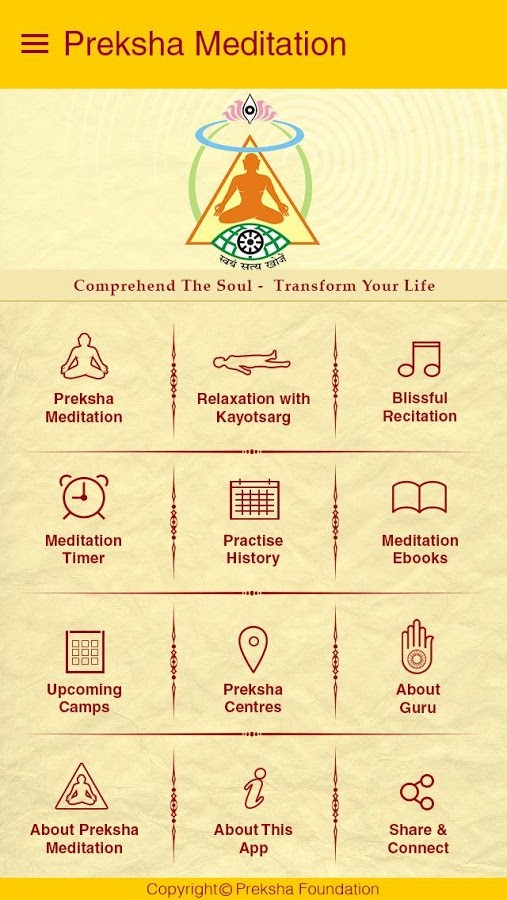
As you walk this path, remember you can leverage modern tools to support this ancient practice. Apps and timers can help structure your meditation sessions, allowing you to focus on the practice itself.
Test your understanding!
A practitioner has been in Stage 2 for a month. Their journal shows they have successfully become lucid three times, but each time was very brief and left them feeling slightly agitated and tired the next day. They feel frustrated and are thinking of abandoning the WBTB technique entirely. Based on the multi-stage plan and the principle of the adjustment loop, what would be a more skillful course of action?
Show answer
Instead of abandoning the technique, a more skillful approach would be to adjust it.
- Analyze the Data: The journal shows lucidity is possible but comes at a physiological cost ("agitated and tired"). This is a key insight.
- Formulate a Hypothesis: The WBTB protocol might be too intense (e.g., wakeful period is too long, or it's being done on work nights).
- Adjust the Protocol:
- Reduce the frequency of WBTB to only one night on the weekend to allow for recovery.
- Shorten the wakeful period to the bare minimum needed to set the MILD intention before returning to sleep.
- Double down on Stage 1 practices during the week, focusing on pure, restorative sleep and gentle Kayotsarga to build a deeper base of rest.
- Re-evaluate: After two weeks of this adjusted protocol, they should review their journal again. Is the balance between lucidity and rest improving? This iterative, data-driven approach is the essence of a sustainable practice.
Conclusion: Your Journey Begins
This lesson marks the end of our course, but it is the true beginning of your personal sadhana. You have built a remarkable foundation, integrating the rigor of modern sleep science with the profound wisdom of Jain philosophy. You have a map, a compass, and a logbook.
You have synthesized these diverse threads into a concrete, multi-stage plan that is uniquely your own because it is designed to adapt to you. The three stages—Foundation, Exploration, and Integration—provide a clear path forward. The adjustment loop, fueled by your honest self-assessment, ensures that your practice remains both sustainable and spiritually potent.
This journey of exploring consciousness is one of the most meaningful endeavors one can undertake. It is a path of patience, courage, and immense discovery. The tools and knowledge you have gathered are here to support you as you walk that path, transforming every night of rest into an opportunity for wisdom and purification.
I wish you the very best on your journey of discovery.