
Hello! Welcome back to your tactical guide for launching and scaling your SaaS ventures.
In our last lesson, you assembled a complete set of high-impact launch assets for Product Hunt—your marketing copy and visuals are ready. We've moved from preparation to the main event: execution. A fantastic product can get lost without a solid launch plan, while a good product with a brilliant execution strategy can win the day.
Today, we will focus on this critical execution phase. This lesson directly addresses the learning outcome: Develop a launch-day and post-launch engagement strategy for Product Hunt, including timing and community interaction. We'll build a detailed, hour-by-hour playbook to maximize your visibility, engagement, and conversion on launch day and beyond.
1. Strategic Timing: When to Launch
Your first strategic decision is choosing the right day and time. This single choice can significantly impact your launch's outcome by defining the competitive landscape and the amount of available traffic.
Choosing the Right Day
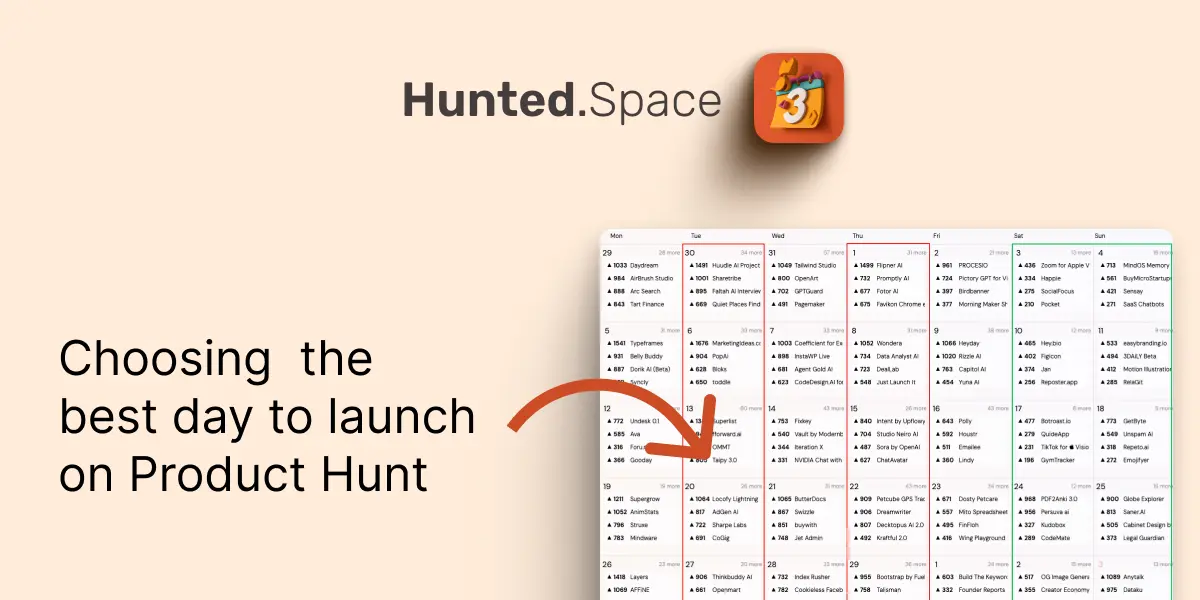
There's a fundamental trade-off when selecting a launch day. The middle of the week offers the most traffic but also the fiercest competition. Weekends are quieter, making a top spot more attainable, but with fewer overall visitors.
How I get customers for $0 with Product Hunt
Let's hear from Marc Lou, a seasoned Product Hunt veteran. He provides a clear, concise breakdown of the pros and cons of launching on weekdays versus weekends.
Watch the segment from 07:21 to 08:00. Pay attention to the core trade-off he describes between launching for traffic and launching for social proof (the Product Hunt badge).
To summarize and add more detail:
- Tuesday, Wednesday, Thursday: These are the busiest days on Product Hunt. Launching here means you're competing for the biggest audience, including VCs, tech journalists, and potential power users. Choose these days if you are confident in your product and have a strong support network ready to go.
- Saturday, Sunday: These days have significantly less competition. It's easier to rank highly and win a "Product of the Day" badge. This is a great strategy if your primary goal is to gain social proof and a valuable backlink for SEO. Sunday is often the quietest day.
- Avoid Mondays and Fridays: Mondays are often crowded with launches that were prepared over the weekend. Traffic on Fridays tends to drop off as people head into their weekends.
The Golden Rule of Launch Time
Regardless of the day you choose, the launch time is non-negotiable:
Launch exactly at 12:01 AM PST (Pacific Standard Time).
Product Hunt's "day" resets at midnight PST. Launching at 12:01 AM gives you the full 24-hour cycle to gather upvotes and comments, maximizing your exposure. Use a timezone converter to find the equivalent time in your location—it might mean a late night or an early morning, but it's essential for success.
2. The 24-Hour Launch Playbook
Think of your launch day as a 24-hour operational sprint. A structured, hour-by-hour plan is crucial. We'll break down the day into key phases.
This detailed playbook is your tactical guide to executing the perfect launch.
Ultimate Product Hunt Launch Checklist: 2025 Success Guide
The team at Waitlister.me has created an excellent, tactical 'hour-by-hour playbook' for launch day. We will use this as our core framework. It's exactly the kind of hands-on guide you're looking for.
Read the entire section 'Launch day execution: hour-by-hour playbook.' Focus on the specific actions prescribed for each time block, from the critical first 15 minutes to the final push.
Let's synthesize this playbook and add insights from our other experts.
Phase 1: The Critical First 4 Hours (12:01 AM – 4:00 AM PST)
This is the most important phase. For the first four hours, Product Hunt's homepage is randomized, not ranked by upvotes. Your goal is to build velocity—a steady stream of engagement that signals to the algorithm that your product is worth featuring when the rankings go live.
- 12:01 AM: Publish your product.
- 12:02 AM: Post your pre-written Maker Comment. This is your personal story and your pitch to the community.
- 12:05 AM: Activate your core support network. Send direct, personal messages to your 10-20 closest supporters (friends, family, beta testers) asking for their feedback on the listing.
- 12:15 AM: Post your launch announcement on your personal and company Twitter/X accounts.
- 12:30 AM - 4:00 AM:
- Respond to every comment immediately. Aim for a response time under 10 minutes. This is a huge engagement signal.
- Slowly activate your wider network. Don't send all your messages at once, as a sudden spike in votes can trigger spam filters. Spread it out.
- Post in relevant, friendly communities where you are already an active member (e.g., Indie Hackers, specific Slack/Discord groups).
Phase 2: The Business Hours Surge (4:00 AM – 12:00 PM PST)
At 4:00 AM PST, the rankings become visible. If you've built good momentum, you should appear high on the homepage. Now the goal is to maintain and build on that position as the US and European markets come online.
- 6:00 AM PST: Send your launch email to your entire mailing list. Email open rates are often highest in the morning.
- 8:00 AM PST: Post your launch announcement on LinkedIn. This is the prime time to reach a B2B audience.
- Throughout: Continue to respond to every comment. Engage with other products launching today by leaving genuine comments and upvotes. This shows you're a community member, not just a promoter.
Phase 3: Sustaining Momentum (12:00 PM – Midnight PST)
This is the marathon phase. Your energy might be dipping, but it's crucial to stay engaged to hold your rank.
- Continue sharing on social media. You can post updates like "Wow, we've just hit 500 upvotes! Thanks for the amazing feedback!" with a screenshot.
- Deploy any influencer collaborations you may have planned.
- Send a "last chance" email to your list a few hours before the day ends, perhaps highlighting a special offer that's about to expire.
- Engage your international audience again as they enter their evening hours.
3. The Art of Community Interaction
How you communicate is just as important as what you do. Product Hunt is a community, and they value authenticity and genuine engagement over aggressive marketing.
The DOs:
- DO respond to every single comment. Be thoughtful, thank people for their feedback (even if it's critical), and ask follow-up questions.
- DO ask for "feedback" and "support." Frame your outreach around seeking opinions. For example: "I'd love to hear your thoughts on what we've built."
- DO show your personality. People connect with founders. Share your journey, be humble, and be human.
- DO add a Product Hunt banner to your website. This directs organic traffic to your site back to Product Hunt to support you and creates a helpful loop.
The DON'Ts:
- DON'T explicitly ask for "upvotes." This is against the rules and can get your product penalized or delisted. The community frowns upon it heavily.
- DON'T use bots, buy votes, or create fake accounts. Product Hunt's algorithm is sophisticated and will detect this, leading to a ban.
- DON'T spam communities. Only post in groups where you've previously provided value. A sudden, promotional-only post in a new community is a recipe for being ignored or banned.
- DON'T "set it and forget it." Disappearing after you post is the fastest way to signal to the algorithm and the community that you're not invested. Your active presence in the comments is a major ranking factor.
Test your understanding!
It's 9:00 AM PST on your launch day. You're ranked #3, which is great, but you're starting to slip. You have 20 un-replied comments. Your pre-scheduled LinkedIn post just went live. What are your top 3 priorities for the next hour?
Show answer
- Reply to all comments: This is your #1 priority. Fast, thoughtful replies are a critical engagement signal to the algorithm and show the community you're present and invested. This can help stop your rank from slipping.
- Engage with your LinkedIn post: Don't just post and run. Reply to comments on your LinkedIn announcement to boost its visibility in the LinkedIn algorithm, driving more traffic to your Product Hunt page.
- Personal outreach: Send another small, controlled batch of personal DMs to supporters in your network who are likely active at this time (e.g., in US timezones) but haven't engaged yet. Ask for their feedback to create another gentle stream of engagement.
4. Post-Launch: Maximizing Your Momentum
The 24-hour launch is just the beginning. The real value comes from leveraging the momentum you've built.
How to Launch on Product Hunt in 2025: Step-by-Step Guide to #1 ...
This guide from Autosaaslaunch.com provides an excellent breakdown of what to do in the days, weeks, and even months after your launch to turn that one-day spike into long-term value.
Read the section 'Post-Launch: Maximizing Long-Term Value.' Focus on the three distinct timeframes: 'Day 1-2: Immediate Follow-Up,' 'Week 1: Leverage Your Success,' and 'Month 1+: Sustained Engagement.'
Here is a summary of your post-launch action plan:
Immediately (Days 1-7):
- Publicly Thank Everyone: Post a summary of your launch results and key learnings as a Twitter thread and a LinkedIn post. Thank the community for their support.
- Add the Badge: Add your "Featured on Product Hunt" or "Product of the Day" badge to your website's homepage. This is powerful social proof that can lift conversions.
- Analyze the Data: Dive into your analytics. How much traffic did you get? What was the conversion rate from visitor to sign-up? Where did the best users come from?
- Write a "Launch Story" Blog Post: Document your experience, sharing metrics and insights. This type of content is highly valuable to other founders and can attract further attention.
Long-Term (Week 2 and beyond):
- Nurture Your New Leads: You will have a fresh list of sign-ups and email subscribers. Ensure your automated onboarding and nurture sequences are running to convert them into active users.
- Leverage for PR: Your Product Hunt success is a newsworthy event. Use it in your outreach to tech journalists and bloggers.
- Update Your Product Hunt Page: Don't let your page go stale. You can post comments with major product updates to re-engage followers. People will continue to discover your page via search for months or even years.
Conclusion
You now have a complete, tactical strategy for executing a powerful Product Hunt launch. Success isn't about luck; it's about a well-timed, meticulously executed plan that prioritizes genuine community engagement.
Key Takeaways:
- Timing is everything: Launch at 12:01 AM PST on a day that aligns with your goal (traffic vs. badge).
- A launch is a 24-hour marathon: Follow an hour-by-hour playbook, focusing on building steady momentum, especially in the first four hours.
- Engage, don't just broadcast: Your primary job on launch day is to be present, responsive, and authentic in the comments. Ask for feedback, not upvotes.
- The launch ends, but the value continues: Have a post-launch plan to analyze results, nurture leads, and leverage your success for long-term growth.
Preview of the Next Lesson:
A Product Hunt launch is a powerful anchor for your GTM strategy, but it shouldn't be your only channel. In the next lesson, we will broaden our reach by learning how to submit your SaaS to key directories like BetaList and startup subreddits to build initial exposure, turning your launch-day spike into a sustained wave of discovery.