Hello! Welcome to the first lesson of our sixth module, "Deal Sourcing and Screening."
In the last module, we concluded by outlining the legal and administrative steps for closing your fund. With the structure in place and capital commitments secured, your focus now shifts from fundraising to the core activity of a venture investor: deploying that capital into promising companies.
This brings us to the first and most critical question of the investment process. Before you can find great deals, you must define what a "great deal" looks like for you. Therefore, the learning outcome for this lesson is to define the ideal startup profile and investment criteria for your fund.
This isn't just an academic exercise. This definition, formally known as your investment thesis, will become the strategic foundation for your entire accelerator. It will dictate your marketing, guide your screening process, and build your reputation with founders and other investors. Given your goal to launch an AI-focused accelerator, a sharp, well-articulated thesis will be your primary tool for cutting through the noise and attracting the right kind of startups.
Let's begin by building this foundational framework.
1. Understanding the Investment Thesis
An investment thesis is a clear, concise strategy that answers four fundamental questions:
- Who are you as an investor?
- What do you invest in?
- Why are you uniquely positioned to win?
- How will you generate returns?
It acts as a filter for every opportunity you see and a beacon for the opportunities you want to attract. A strong thesis helps you make disciplined decisions, say "no" quickly to deals that don't fit, and communicate your value proposition to founders and your own investors (LPs).
To get a foundational understanding of this concept, let's hear from Bedy Yang, a Managing Partner at 500 Global.
[VC Unlocked] Bedy Yang, Investment Thesis Fundamentals Webinar
This video, 'Investment Thesis Fundamentals,' provides a fantastic overview of the purpose and core components of an investment thesis. Pay close attention to how a good thesis helps attract deal flow and guide investment decisions.
Please watch the segment from 01:10 to 03:44.
As the video explains, your thesis is a declaration of your strategy. For you, as a solo GP launching a new accelerator, your thesis must also answer the question: "Why should this firm exist?" You need a differentiated viewpoint that gives you an edge.
2. Building the Components of Your Thesis
Crafting a thesis involves making deliberate choices across several key dimensions. We will use a step-by-step approach to define the "What" and "Who" of your investment focus.
A. Sector and Industry Focus
This is the most important filter. Your deep interest in AI provides a strong starting point, but "AI" itself is too broad. You need to choose your specific playground within the AI ecosystem. Your Computer Science background will be a significant asset here.
The article "An angel's guide to investing in AI" provides an excellent framework for categorizing AI companies.
An angel's guide to investing in AI
This guide from Zest Equity breaks down the AI landscape into digestible layers. Understanding these categories is the first step toward creating a specific, defensible AI investment thesis.
Read the sections 'Key areas for early-stage AI investing' and 'Defining your AI investment focus.' As you read, consider which of the three layers—foundation models, infrastructure, or applications—aligns best with your expertise and the kind of support your accelerator will provide.
Do you want to invest in:
- Foundation Models: Highly capital-intensive and technical, often a long path to market.
- AI Infrastructure: The "picks and shovels" that power AI. This can be a strong area for those with deep technical knowledge.
- Application Layer: Where AI meets a specific customer problem (e.g., Enterprise SaaS, Vertical Software). Your experience in business model validation would be highly relevant here.
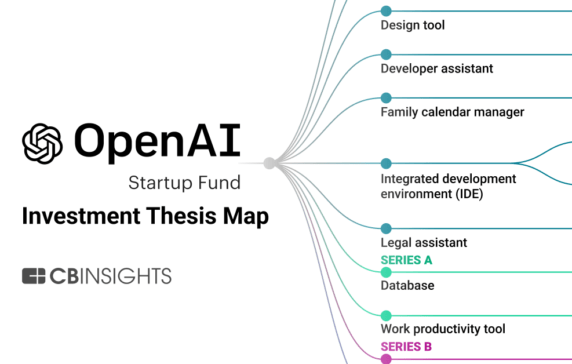
Choosing a layer, and perhaps a specific vertical within it (e.g., "AI applications for the legal industry" or "AI developer tools"), creates a sharp focus.
B. Stage, Traction, and Valuation
Your experience is with pre-seed startups, which is a natural fit. Now, you need to define what "pre-seed" means to you as an investor.
The guide "Crafting an Angel Investment Thesis" provides a practical way to think about these criteria.
Crafting an Angel Investment Thesis
This article from Allied Venture Partners offers a clear, step-by-step process for building a thesis. We'll use its structure to add more layers to your own thesis.
Read 'Step 3: Establish Your Desired Return Profile' and 'Step 4: Determine Stage, Product Readiness and Traction.' Note how the author connects valuation limits to return expectations and sets clear criteria for product maturity (e.g., 'post-product and post-revenue').
You must define your criteria for:
- Stage: Are you investing at the idea stage, or do you require a launched MVP?
- Traction: What level of early validation do you need to see? This could be a specific number of users, letters of intent (LOIs), or early revenue (e.g., >$1k MRR).
- Valuation: What is your maximum entry valuation? This is a critical discipline. Setting a cap (e.g., a post-money valuation under $10M) ensures that you can achieve venture-scale returns if the company succeeds.
C. Founder Profile
You are investing in people first. What does your ideal founding team look like? Your consulting experience gives you a unique dataset on what works.
Consider criteria such as:
- Technical Expertise: For an AI-focused fund, do you require at least one founder to have a deep technical background in machine learning?
- Domain Knowledge: Is the team solving a problem in an industry they understand intimately?
- Founder-Market Fit: Why is this specific team uniquely suited to solve this specific problem?
- Coachability & Vision: Do they have a compelling vision but also a willingness to listen and adapt?
D. Geographic Focus
While technology enables global businesses, a geographic focus can provide a significant advantage, especially for a new fund. Limiting your focus (e.g., to North America or even a specific region) leverages your existing network and simplifies legal and regulatory complexity.
3. From Thesis to Actionable Screening Criteria
With the components defined, the final step is to synthesize them into a concise thesis statement and a set of non-negotiable screening criteria. This is what you'll use to filter the hundreds of applications your accelerator will receive.
Thesis Statement Example:
"We invest in pre-seed, AI-native B2B SaaS companies in North America with early revenue and a post-money valuation under $10M. We back technical founders who are using proprietary data to solve critical problems in regulated industries."
This statement is specific and immediately tells founders and investors who you are.
Screening Criteria:
Your thesis translates directly into a checklist. This is your first line of defense in managing deal flow efficiently.
Using the example thesis above, the screening criteria would be:
- Company is outside North America: Pass
- Business model is B2C: Pass
- No AI-native component (just a wrapper): Pass
- Pre-product or pre-revenue: Pass
- Valuation is >$10M post-money: Pass
- Founding team is non-technical: Pass
This disciplined process allows you to focus your time and energy on startups that truly fit your strategy.

Test your understanding!
Based on the materials, draft a one-sentence investment thesis statement for your planned accelerator. Then, list three "pass/fail" screening criteria that directly derive from that thesis. Don't worry about perfection; the goal is to practice translating your strategic goals into an operational framework.
Show answer
There are many possible answers, but here is a strong example based on your goals:
-
Thesis Statement: "My accelerator invests in pre-seed AI startups in North America that are building application-layer tools to automate workflows for non-technical enterprise users."
-
Screening Criteria:
- Is the company building foundational models or core infrastructure? If yes, Pass. (Focus is on the application layer).
- Is the target end-user a developer or highly technical person? If yes, Pass. (Focus is on tools for non-technical users).
- Is the company based outside of North America? If yes, Pass. (Geographic focus).
Conclusion
In this lesson, you've learned how to construct the strategic foundation of your investment activities. Defining your ideal startup profile and investment criteria is not a one-time task; as you learn more about the market and see more deals, you will and should refine your thesis.
Key Takeaways:
- An investment thesis is a strategic filter that defines what you invest in, why you're the right investor, and how you'll win.
- Your thesis must be specific and differentiated, especially as a new fund manager. Key components include sector, stage, founder profile, and geography.
- For an AI-focused fund, it's crucial to specify which layer of the AI stack you are targeting (foundation, infrastructure, or application) and which vertical you're focusing on.
- The thesis must be translated into actionable screening criteria to manage deal flow efficiently and maintain investment discipline.
Preview of the next lesson:
Now that you have a clear definition of the startups you're looking for, our next lesson will address the logical next step: How do you find them? We will focus on how to develop a marketing and outreach plan to generate high-quality deal flow that aligns perfectly with the thesis you've just started to build.