Hello! Welcome back to the course.
In our last lesson, we focused on planning a high-impact Demo Day, the capstone event of your accelerator program. While Demo Day creates a powerful moment of visibility and investor interest, its true value is realized in the weeks and months that follow. The connections made are just the beginning; the real work lies in nurturing those leads and creating new ones.
This brings us to today's learning outcome: Develop a strategy for facilitating ongoing investor introductions for portfolio companies. Your role as an accelerator manager extends far beyond the program's formal end date. One of the most significant ways you'll provide continuous value is by acting as a trusted connector between your founders and the investment community.
This lesson will equip you with a systematic approach to "matchmaking"—moving from ad-hoc emails to a structured, repeatable process that generates high-quality investment opportunities for your portfolio.
1. The Matchmaking Mindset: From Introductions to a Strategic Process
First, we need to shift our perspective. Facilitating investor introductions isn't just about sending emails; it's a deliberate, multi-step process that builds trust and aligns interests over time. The goal is not just to connect people, but to facilitate a successful partnership.
To understand this concept more deeply, let's explore the definition and theory behind effective matchmaking.
Matchmaking between businesses and investors
The GIZ guide 'Matchmaking between businesses and investors' provides an excellent foundation for this topic. It defines matchmaking as a strategic activity and explains why it's so effective.
Please read Section 3, 'Defining Effective Matchmaking,' to understand what separates strategic matchmaking from simple 'matching.' Then, review Section 6, 'Matchmaking Theory of Change,' particularly the 'MATCHMAKING HYPOTHESIS.' This will frame why an ongoing process is more valuable than a single event.
As the guide highlights, effective matchmaking is:
- Intentional: It's a planned activity, not a chance encounter.
- Structured: It's organized by a third party (you) who facilitates the connection.
- Collaborative: Its purpose is to foster a relationship for exchanging both financing and knowledge.
The core hypothesis is that early and frequent interactions increase trust and knowledge flow, leading to a higher likelihood of a deal closing. Your Demo Day is one major interaction, but your ongoing strategy will create many more touchpoints, building the rapport necessary for an investment decision. In this capacity, you are acting as what the guide calls a "non-commercial broker," a trusted intermediary with no direct financial incentive on the transaction itself, beyond the success of your portfolio.
2. Building Your Investor Pipeline
A successful matchmaking strategy begins with knowing who to connect your startups with. You can't make relevant introductions without a well-researched and organized list of potential investors. This is your investor pipeline.
Given your background in computer science, you can think of this as building a structured database with specific attributes that you can query to find the best match for a given startup.
Best Tools to Build and Track Your Investor Pipeline
The article 'Best Tools to Build and Track Your Investor Pipeline' breaks down the components of an investor pipeline. It provides a clear, three-stage framework.
Please read the sections 'Components of an Investor Pipeline' and '5 Steps to Build an Investor Pipeline.' Focus on the 'Targeting' phase and the initial steps of defining your investor profile and building a database.
Building your pipeline involves two key activities:
A. Identifying Potential Investors
Where do you find these investors? Beyond those who attend your Demo Day, you need to proactively source them.
How To Find Angel Investors (5 ways to reach them)
This video, 'How To Find Angel Investors,' offers five practical methods for identifying potential investors. While created for founders, the tactics are directly applicable to you as you build your accelerator's network.
Watch the section detailing the five methods for finding investors (from 02:06 to 07:01). Think about how you can use each of these channels to build a comprehensive list for your AI-focused accelerator.
Here are the key channels to build your investor list:
- Databases: Use platforms like Crunchbase, PitchBook, or specialized lists to find investors active in the AI space.
- Angel Groups: Identify local and national angel groups with a focus on deep tech or AI.
- University & Alumni Networks: Tap into your own and your founders' alumni networks, which often have affiliated investment groups.
- Community & Events: Attend industry conferences and meetups focused on AI to meet investors where they are.
- LinkedIn: Use LinkedIn to research investors, understand their thesis from their posts and profiles, and see who is connected to whom.
B. Researching and Segmenting Your List
Once you have a list, the next step is to research and segment it. An undifferentiated list is not useful. You need to capture key data points for each investor, such as:
- Investment Thesis: What industries and business models do they focus on? (e.g., AI-native SaaS, generative AI applications, etc.)
- Stage: Do they invest at pre-seed, seed, or Series A?
- Geography: Are they geographically focused?
- Check Size: What is their typical investment amount?
- Portfolio: What companies have they invested in? Do they have competitive investments?
- Connections: Who in your network can provide a warm introduction?
This structured data will allow you to quickly identify the 5-10 best-fit investors for any company in your portfolio.
3. Designing Your Introduction Strategy: A Multi-Format Approach
With a robust investor pipeline, you can now design the strategy for making introductions. Relying on a single method is limiting. A sophisticated strategy uses a combination of formats, tailored to the situation and the relationship.
The GIZ guide on matchmaking provides an excellent overview of different formats and instruments.
Matchmaking between businesses and investors
Let's return to the GIZ guide, which details a variety of matchmaking instruments. We'll focus on those most relevant to an accelerator manager.
First, review Table 4.1.A and Table 4.2.A in Section 4 to see the four main formats and ten instruments. Then, read the detailed descriptions in Section 5 for 'Curated events' (5.3), 'Bespoke introductions' (5.9), and 'Structured learning programmes' (5.8). Finally, review the six-step framework in Section 7 to see how these instruments fit into a larger process.
Your strategy can be built around a few core instruments:
-
Bespoke Introductions (High-Touch): This is the gold standard. A personal, one-to-one email introduction to a specific investor who you have reason to believe is a strong fit. This is most effective when it's a "double opt-in," where you've gotten permission from both the founder and the investor before making the connection. This format requires significant trust and network cultivation on your part.
-
Curated Events (Medium-Touch): Instead of large-scale Demo Days, you can host smaller, more intimate events for your portfolio companies post-program. Examples include:
- An "AI Investor Dinner" for 5 of your portfolio companies and 15 highly relevant VCs.
- A "Vertical-Specific Showcase" for your B2B AI companies, targeting corporate VCs and strategics.
These events, as noted in the AHK case study in the GIZ guide, are powerful because their smaller scale allows for more meaningful conversations.
-
Leveraging Technology (Low-Touch at Scale): You can use platforms or newsletters to share deal flow with a broader group of investors. You might create a monthly "Portfolio Update" email that goes out to a list of opted-in investors, highlighting recent wins and key metrics from your companies that are currently fundraising.
The key is to use a combination of these. Bespoke intros for your highest-priority targets, curated events to build broader momentum, and technology to maintain visibility at scale.
4. Executing with Excellence: Preparation and Process
A strategy is only as good as its execution. A poorly prepared founder or a badly written intro email can do more harm than good.
A. Preparing Your Founders for Introduction
Before you introduce a founder to an investor, you must ensure they are "investor-ready." This means they can crisply articulate their vision and answer tough questions.
5 Things VC Investors Wish Startup Founders Knew Before Their Pitch | Dose 025
The video '5 Things VC Investors Wish Startup Founders Knew' is an excellent resource for this. It provides a VC's perspective on what makes a pitch compelling and credible.
Watch the core of the video (00:36 to 05:18). Use these five points as a mental checklist before you make an introduction for one of your founders. Is their problem big and urgent? Is their GTM strategy thoughtful? Are their projections defensible?
Your pre-introduction checklist for each founder should confirm they have a strong answer to:
- The Problem: Is it big and urgent?
- The "Cleverness": What is their unique insight or unfair advantage?
- The Competition: Do they have a deep understanding of the landscape and their differentiation?
- The Go-To-Market: Is their plan for acquiring customers focused and scalable?
- The Projections: Are the financial forecasts built from the bottom up with defensible assumptions?
B. The Art of the Introduction Email
The introduction itself requires a specific etiquette. The goal is to make it as easy as possible for the investor to say "yes" to a meeting.
The video on finding angel investors provided excellent advice on this. The best practice is the double opt-in introduction:
- Email the Investor: Send a short, private email to the investor. "I have a portfolio company, [Startup Name], that is solving [Problem] using [Unique AI approach]. Given your interest in [Investor's Thesis], I thought it might be a great fit. They have [Traction]. Would you be open to an introduction?"
- Wait for "Yes": Only proceed if the investor agrees. This respects their time and ensures they are genuinely interested.
- Make the Introduction: Forward the original email thread to the founder and add the investor. "Great news, [Founder Name]! [Investor Name] is open to connecting. [Investor Name], meet [Founder Name], the CEO of [Startup Name]. I'll let you two take it from here. Founder, please send over your deck and some available times."
This process ensures every introduction is warm, relevant, and welcome.
Test your understanding!
A founder from your AI accelerator wants an introduction to a top-tier VC. You check your CRM and see the VC's thesis is "B2C social media apps." Your founder's company builds a complex AI-driven logistics platform for enterprise shipping. What should you do?
Show answer
You should politely decline to make the introduction and explain why. A core part of your value is making relevant introductions. Connecting this founder to that VC would be a waste of everyone's time and could damage your credibility with the investor. Instead, you should explain the mismatch and use your pipeline to identify VCs who do focus on enterprise SaaS, logistics, or applied AI, and offer to make an introduction to them instead.
5. The Operational Backbone: Tools for Investor Relationship Management
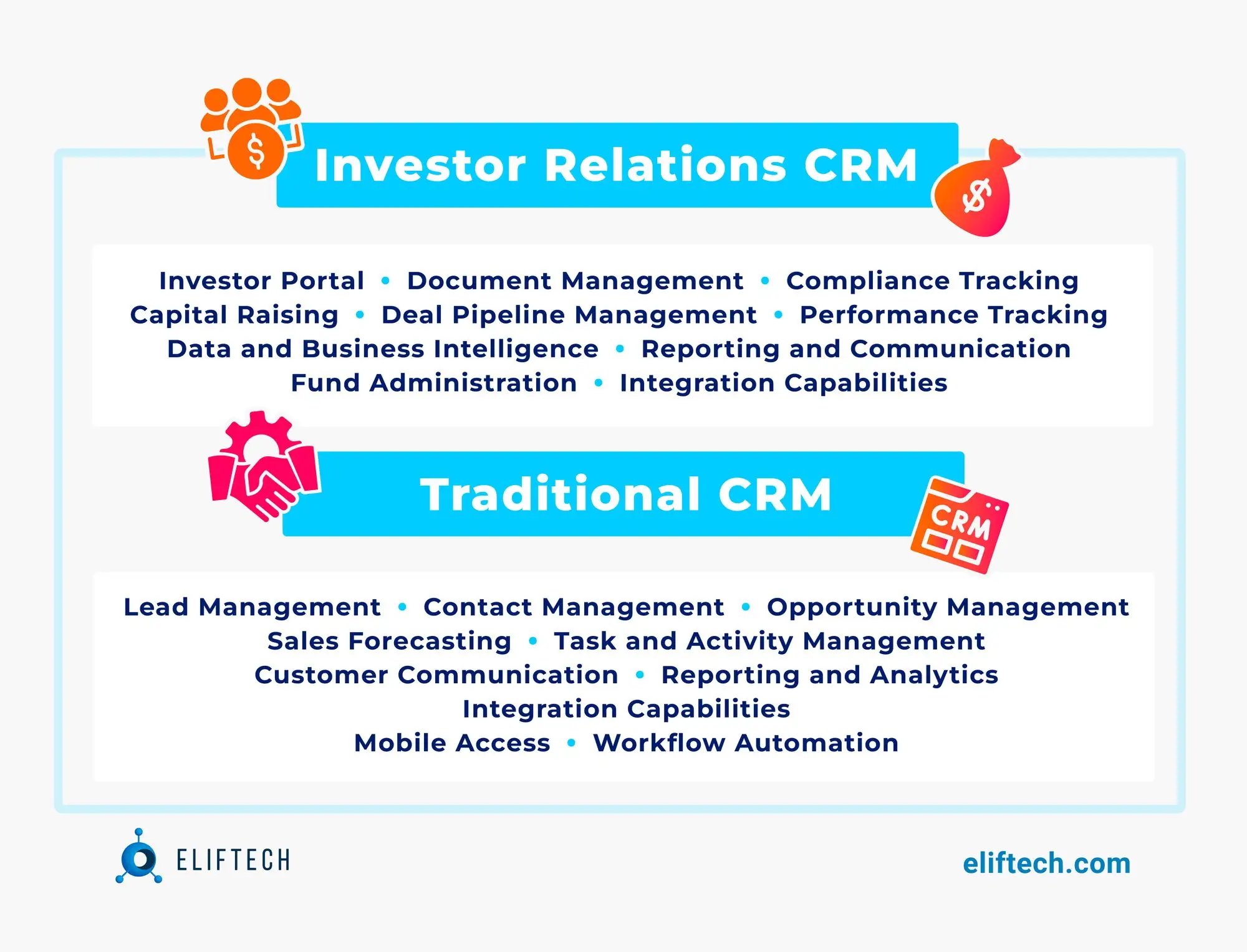
Managing dozens of portfolio companies and hundreds of investor relationships is impossible to do from a spreadsheet, especially as a solo-led firm. You need a system. This is where your computer science background and interest in AI can provide a significant advantage. An Investor Relations CRM is the essential tool here.
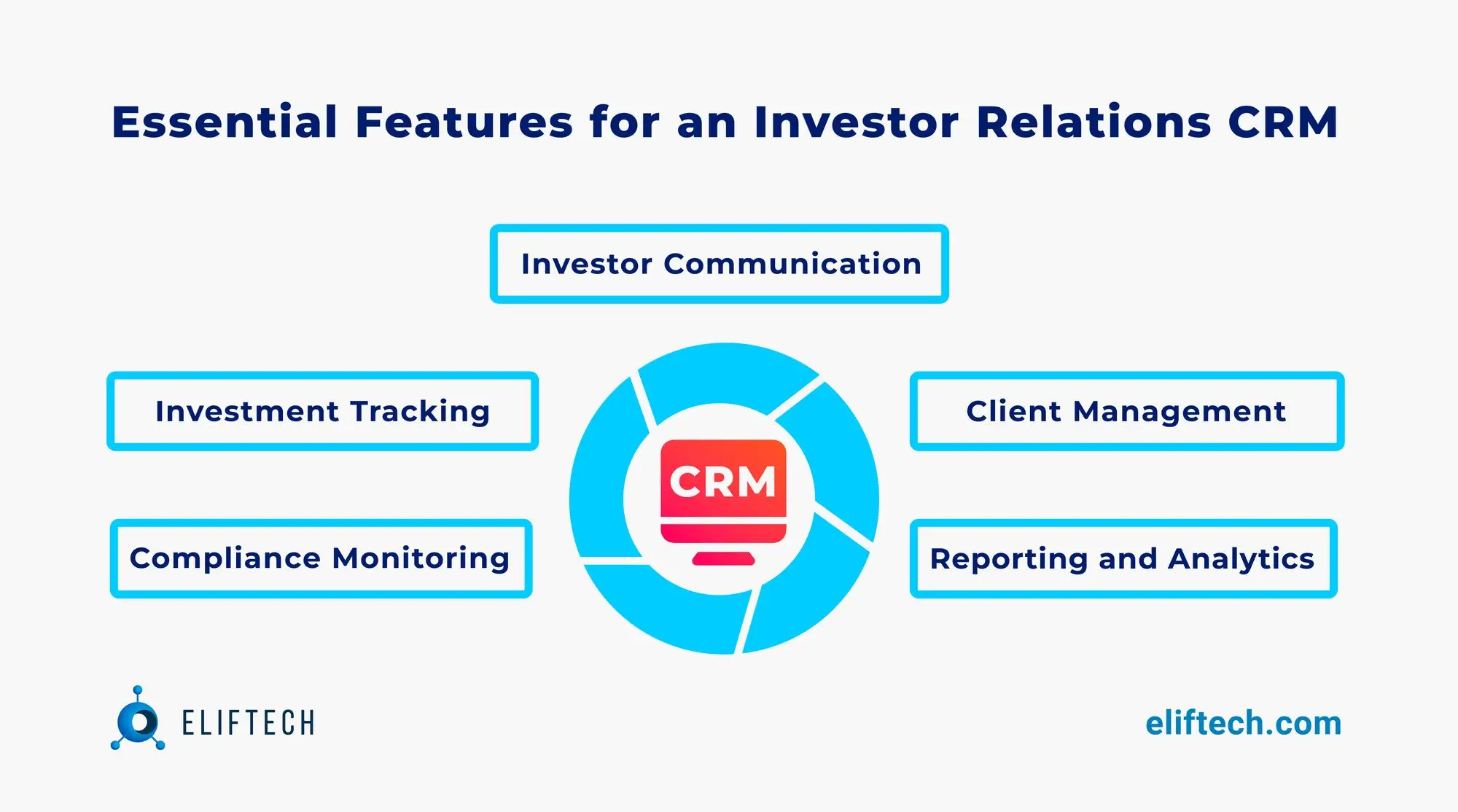
Unlike a traditional sales CRM, a system for this purpose is tailored for managing deal flow, communications, and relationships across your entire portfolio.
Best Tools to Build and Track Your Investor Pipeline
Let's return to the 'Best Tools to Build and Track Your Investor Pipeline' article. It lists several modern tools that can serve as your operational backbone.
Please read the section 'Investment Pipeline Tools and Resource Pool' and '4 Crucial Investor Pipeline Tips'. Pay attention to how tools like Metal, Foundersuite, and Visible.vc are designed specifically for the fundraising workflow.
Your system should allow you to:
- Track all interactions: Every email, meeting, and piece of feedback should be logged for each investor and startup.
- Manage the pipeline: For each startup, you can track which investors are at what stage (e.g., Introduced, Meeting Scheduled, Due Diligence, Passed).
- Automate Follow-ups: Set reminders to follow up with investors or check in with founders.
- Generate Reports: Quickly see which startups are getting the most traction and which investors are most engaged with your portfolio.
Tools like Metal, Foundersuite, and Visible.vc are built for this. Many, like Signal by NFX, even help you find warm intro paths automatically by integrating with your network. As you build your accelerator, selecting and implementing one of these platforms will be a critical step for operational efficiency.
Conclusion
You now have a complete strategy for facilitating ongoing investor introductions. This is a powerful value-add service that will significantly impact your founders' success and, by extension, the success of your fund.
Key Takeaways:
- Adopt a Matchmaking Strategy: Move beyond ad-hoc introductions to a deliberate, ongoing process of building relationships between founders and relevant investors.
- Build and Manage an Investor Pipeline: Systematically identify, research, and segment investors, and use a dedicated CRM to manage these relationships at scale.
- Use a Multi-Format Approach: Combine high-touch bespoke introductions with curated events and technology-driven outreach to maximize your impact.
- Prioritize Preparation and Process: Ensure every founder is "investor-ready" before an introduction and always use a professional, double opt-in process to protect your credibility.
Preview of the Next Lesson
Facilitating introductions is about creating opportunities. The next step is to understand and manage the outcomes. In our next lesson, we will begin the "Portfolio Management and Value Creation" module by tackling the learning outcome: Define KPIs and reporting standards for monitoring portfolio health. This will provide you with the framework to track your companies' progress after they raise money and continue to support them effectively.