Hello! Welcome to Module 9 of your course.
In the previous module, you mastered the fundamentals of driving and analyzing your own traffic through paid ads on Google and TikTok. You now know how to run campaigns, tag your traffic with UTMs, and measure your return on investment in Google Analytics. This is a crucial skill set for any e-commerce entrepreneur.
Now, we'll shift gears from doing all the marketing yourself to building a system where others market for you. This module is all about scaling your business through partnerships.
This first lesson directly addresses the learning outcome: Design a competitive affiliate program structure, including commission rates and cookie duration. An affiliate program is essentially a performance-based "remote sales team" that you only pay when they generate a sale. We will break down the strategic decisions you need to make to create a program that is both profitable for you and attractive to high-quality partners.
1. What is an Affiliate Program?
Before we design a program, let's establish a clear, practical definition. An affiliate program is a performance-based marketing strategy where you reward external partners (affiliates) for driving sales or leads to your business. It is not a customer loyalty program; it's a way to incentivize content creators, bloggers, and other marketers to promote your products.
To get a quick overview of this concept, let's watch a short segment from a webinar on affiliate programs.
How to Create an Affiliate Program for your Small Business | Google and Beyond Webinar Archive
This video, 'How to Create an Affiliate Program for your Small Business' from W3 Consulting, provides a great introduction to what an affiliate program is and its performance-based nature.
Please watch from 02:52 to 06:27. The speaker clearly defines what an affiliate program is and what it is not, framing it as a 'performance-based sales team'.
The key takeaway is that you only pay for results. This makes it a very low-risk way to expand your marketing reach, which is ideal when you're managing a location-independent business.
2. The Foundation: Can Your Margins Support a Commission?
This is the most critical question to answer before you even think about setting a commission rate. If your profit margins are too thin, you could end up losing money on every affiliate sale. Your experience managing inventory for your physical shop has likely given you a good sense of product margins, and that knowledge is directly applicable here.
A common rule of thumb in e-commerce for ensuring healthy margins is the "double keystone" pricing model.
How to Create a Successful Affiliate Program for Your Business
The video 'How to Create a Successful Affiliate Program for Your Business' from Learn With Shopify explains a practical pricing concept called 'double keystone' to ensure your margins are sufficient.
Watch from 02:00 to 03:56. This segment explains how to price your products to build in enough margin for costs like marketing commissions.
After watching, let's apply this concept. Let's say a product costs you $10 from a supplier.
- Your Price: You might sell it on your website for $40.
- Your Gross Margin: $40 (sale price) - $10 (cost of goods) = $30.
- Other Costs: From this $30 margin, you must cover shipping, platform fees (Amazon/Walmart), marketing, and your own profit.
- Affiliate Commission: The commission must be paid out of what remains.
Before setting any commission, you must calculate your net margin per product to determine the maximum commission you can afford to pay while remaining profitable.
3. Core Components of an Affiliate Program Structure
A competitive affiliate program has two main levers you can adjust: the commission structure and the cookie duration.
A. Commission Models: How You Pay
There are several ways to structure payments. For e-commerce, the most common and recommended model is Pay-Per-Sale (PPS), also known as Cost Per Acquisition (CPA), where you pay a commission only when a sale is successfully completed.
To understand the different models you can use, please read the following guide.
Affiliate Commission Guide for 2026 (Standard Rate & ...
This 'Affiliate Commission Guide' from Rewardful is an excellent resource that breaks down the most common commission models. It will help you decide on the fundamental structure of your program.
Read the section titled 'Top Affiliate Commission Models and How They Compare'. Focus on understanding the pros and cons of these models: Flat Commission Tiered Commission Percentage-Based Commission Recurring vs. One-Time Commission
Summary of Key Models:
- Percentage-Based: You pay a percentage of the sale value (e.g., 10% of a $50 order). This is the most common model in e-commerce.
- Flat-Fee: You pay a fixed amount per sale (e.g., $5 for every order, regardless of value). This is simpler but doesn't incentivize affiliates to promote higher-priced items.
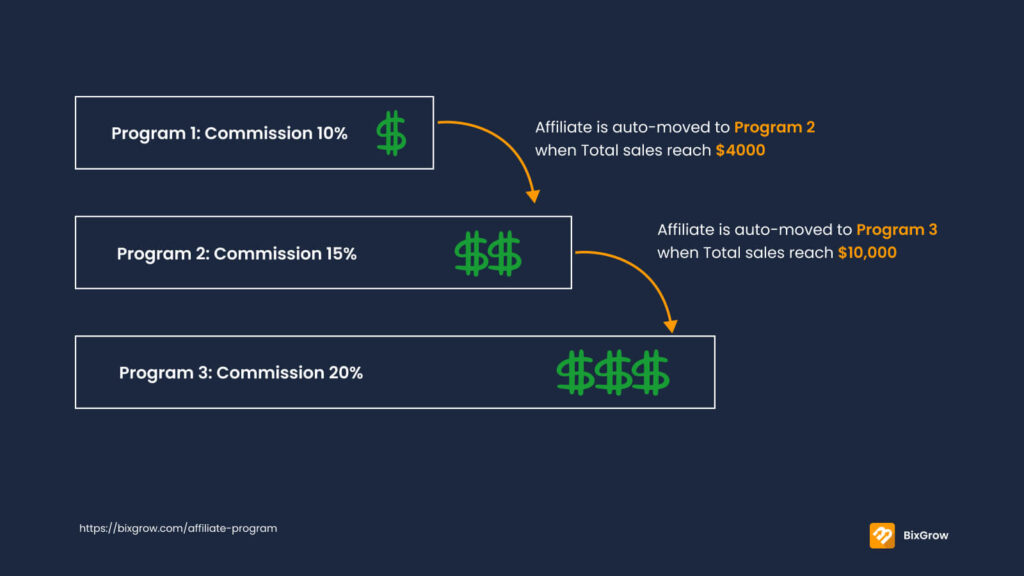
- Tiered: You increase the commission rate as affiliates drive more sales, rewarding your top performers. This is a powerful motivational tool.
B. Commission Rates: What You Pay
Once you've chosen a model, you need to set the rate. This rate needs to be competitive enough to attract affiliates but sustainable for your business.
1. Research Industry Benchmarks: What are typical rates in your product niche?
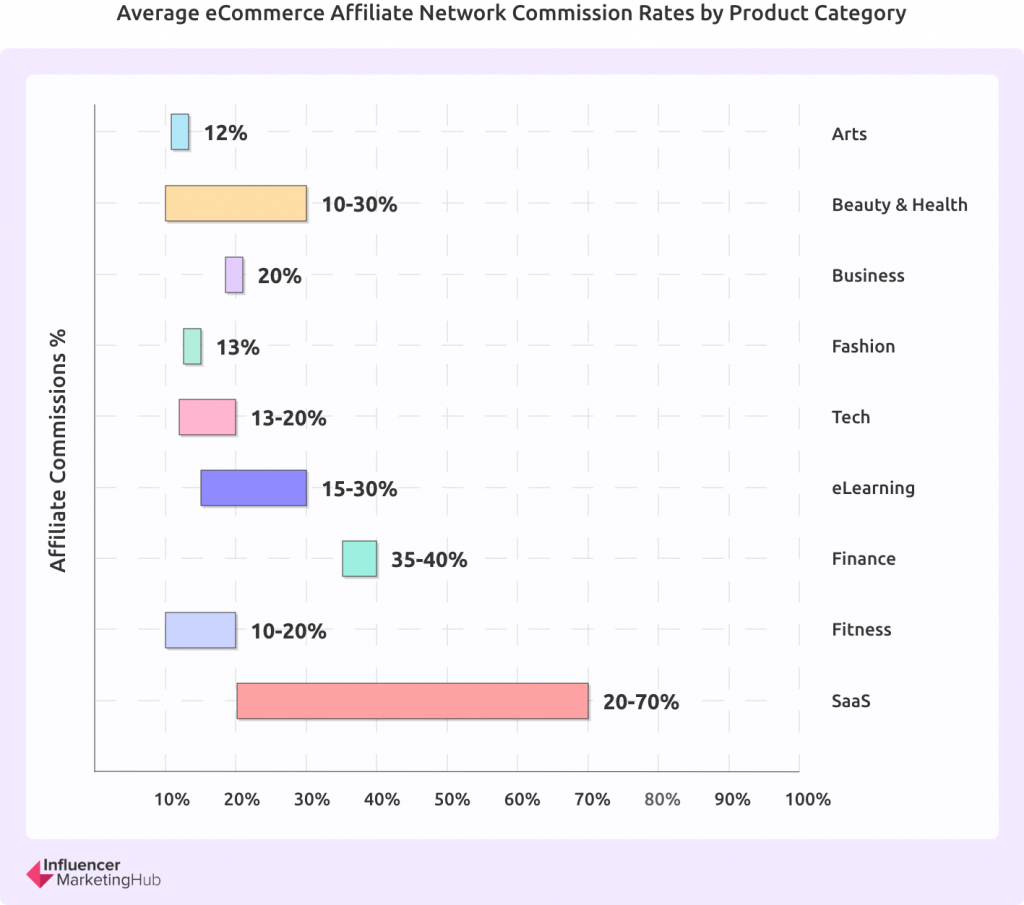
For more specific benchmarks, the following resource provides practical starting points for various direct-to-consumer (DTC) niches.
Affiliate Commission Rates by Industry in 2026 (Data + ...
This article, 'Affiliate commission rates by industry in 2026' from ReferralCandy, offers concrete commission ranges for various e-commerce product categories.
Read the section titled 'Ecommerce affiliate commission ranges'. Find the categories that are most relevant to the products you plan to sell (e.g., Apparel, Electronics, Pet products).
A common starting point for many e-commerce products is 10-15% of the sale value.
2. Research Your Competitors: A very practical way to determine a competitive rate is to see what other major retailers are offering. Most large companies have a link to their "Affiliate Program" in the footer of their website.
How to Create an Affiliate Program for your Small Business | Google and Beyond Webinar Archive
Let's return to the W3 Consulting webinar. The speaker does a live walkthrough of the affiliate program pages for Walmart, Best Buy, Target, and Amazon, showing you exactly where to find their commission schedules and terms.
Watch from 47:41 to 55:38. Pay close attention to how he finds and analyzes the 'Referral Fee Schedules' and FAQs on these major retailer sites. This is a practical research method you can use yourself.
C. Cookie Duration (Attribution Window): How Long You Give Credit
When an affiliate sends a visitor to your site, a small tracking file (a "cookie") is placed on the visitor's browser. The cookie duration determines how long that affiliate will receive credit for a sale if the visitor doesn't buy immediately.
For example, with a 30-day cookie:
- A customer clicks an affiliate's link on Day 1.
- They browse but don't buy.
- They come back to your site directly on Day 25 and make a purchase.
- The original affiliate gets credit for the sale.
This is a crucial part of your program's design. A longer duration is more attractive to affiliates, while a shorter one protects you from paying for sales that happen long after the initial referral.
Affiliate Commission Guide for 2026 (Standard Rate & ...
The Rewardful guide provides an excellent comparison of lifetime vs. time-limited commissions.
Read the section titled 'Lifetime vs. Time-Limited Affiliate Commissions: Which Is Better?'. The pro/con tables are particularly useful for understanding the trade-offs.
For most e-commerce stores, a 30-day cookie duration is a standard and competitive starting point.
Test your understanding!
You are planning to sell a new electronic gadget.
- Cost of Goods: $20
- Selling Price: $80
- Other Costs (shipping, fees): $15 per sale
- Desired Profit: $20 per sale
Question: What is the absolute maximum commission percentage you can offer an affiliate for this product?
Show answer
- Calculate Gross Margin: $80 (Price) - $20 (Cost of Goods) = $60
- Calculate Available Margin before Commission: $60 (Gross Margin) - $15 (Other Costs) - $20 (Desired Profit) = $25
- Calculate Maximum Commission Percentage: ($25 / $80 Sale Price) * 100 = 31.25%
Any commission higher than 31.25% would eat into your desired profit margin. A realistic commission would be much lower (e.g., 10-15%) to leave a buffer.
4. Putting It All Together: Program Design Templates
Now that you understand the components, you can use them to design your initial program structure. The following resource provides excellent, practical templates you can adapt for your business.
Affiliate Commission Rates by Industry in 2026 (Data + ...
The ReferralCandy article offers simple, effective templates for different commission structures that you can use as a blueprint.
Review the 'Templates you can copy' section. Pay special attention to the 'Percent-of-sale template' and the 'Hybrid template' as they are highly relevant for a new e-commerce store.
Here is an example of a competitive starter program for an e-commerce product, based on these templates:
- Commission Model: Percentage-of-Sale, Tiered
- Base Rate: 12% of net sale value
- Eligibility: New customer orders only (to focus on acquisition)
- Tier 1: Rate increases to 15% after an affiliate generates $2,000 in monthly sales.
- Cookie Duration: 30 days
- Payout Schedule: Monthly, 30 days after the end of the month (to account for returns/refunds).
This structure is simple, competitive, rewards top performers, and protects your profitability.
Conclusion
In this lesson, you've learned the strategic framework for building a competitive and profitable affiliate program. You are no longer just thinking about how to get traffic, but how to design a system that motivates others to do it for you.
Key Takeaways:
- Profitability First: Always calculate your product margins before setting a commission rate.
- Structure is Key: Your program is defined by its commission model (e.g., percentage, tiered) and its cookie duration.
- Research is Essential: A competitive rate is based on industry benchmarks and what your direct competitors are offering.
- Start with a Solid Template: A 10-15% commission with a 30-day cookie is a strong and common starting point for most e-commerce products.
Next Up:
Designing the program is the first step. The next is implementing it. In our next lesson, we will cover how to select and set up an affiliate management platform. These platforms provide the technology to track clicks, sales, and commissions, and give your affiliates a dashboard to manage their efforts.