
Introduction
Hello! In our last lesson, we explored the incredible world of the Zenú, a culture that actively engineered its flat, flood-prone environment into a productive and mythologically rich landscape. We saw how they inscribed their stories of creation and fertility directly onto the land through a massive network of canals.
Today, we journey from the open floodplains of the Caribbean coast into the dense, humid world of the Pacific rainforest to meet the Embera people. Our goal for this lesson is to describe the rainforest environment and lifestyle of the Embera people. This is a crucial first step in understanding their unique mythology, which we will explore in subsequent lessons.
Where the Zenú reshaped their world, the Embera have developed a lifestyle that is deeply integrated with their environment, moving within its logic rather than trying to transform it. Your background in user experience and systems thinking will be valuable here. Think of the Embera lifestyle as a highly sophisticated "design for living," where every element—from their homes to their food to their art—is a direct, elegant response to the opportunities and constraints of one of the world's most biodiverse and challenging environments.
1. The Environment: Life in the Biogeographical Chocó
The Embera traditionally inhabit the biogeographical Chocó, a region stretching along Colombia's Pacific coast and into Panama. This is not just any forest; it's one of the wettest and most biodiverse places on Earth.
To truly appreciate the context of the Embera's world, let's start by immersing ourselves in their environment.
How I Hiked the Jungles of Panama and Met the Emberá Tribe
This video, while filmed in Panama, documents a trek through the same type of rainforest inhabited by the Embera. It offers a powerful, first-hand visual sense of the humidity, the challenging terrain, and the overwhelming presence of nature.
Please watch from the beginning until timestamp 07:42. As you watch, pay close attention not just to the scenery, but to the experience of moving through it: the sweat, the slippery rocks, the reliance on river travel, and the sheer density of the vegetation.
The video gives you a feel for the landscape. Now, let's add some detail from an ethnographic study.
“All Within the Same Thought”: Embera People Relations ...
This academic paper, '“All Within the Same Thought”', provides a concise description of the Embera's territory in the Serranía de Abibe, a mountain range within the Chocó region.
Please read the two paragraphs under the heading 'The Embera of Polines and Yaberaradó: territory and culture'. This section begins with 'Although the Embera traditionally settled...' and ends with '...the headquarters for spiritual entities.' Focus on the descriptions of the landscape: sharp slopes, narrow valleys, and the climate.
From these resources, we can summarize the key characteristics of the Embera's rainforest environment:
- Extreme Humidity and Rainfall: It is a neotropical area defined by a hot, wet climate. This abundance of water shapes everything.
- Complex Terrain: The landscape consists of sharp, steep slopes, narrow valleys, and river plains. Travel is often difficult and dictated by waterways.
- Dominant Rivers: Rivers are the highways of the rainforest. They are often short but powerful, carving their way from the mountains to the sea. As the reading notes, features like waterfalls are not just geographical but also hold deep symbolic meaning, which we'll explore later.
This environment is the foundation upon which the Embera lifestyle is built.
2. A Lifestyle of Adaptation
The Embera do not live in large, concentrated cities. Their way of life is a masterclass in adapting to the rainforest, using its resources sustainably, and respecting its power.
Settlement and Housing
The traditional Embera settlement pattern is dispersed, with extended family groups forming the most important social units. They live in small communities or even isolated family homes along the riverbanks.
Perhaps the most iconic feature of their adaptation is their housing.
How I Hiked the Jungles of Panama and Met the Emberá Tribe
The same video from our jungle trek now shows us the Embera village, providing a clear look at their architecture.
Please watch the short segment from 07:42 to 08:26. The narrator provides a simple and direct explanation for why the houses are built the way they are.
As the video explains, the Embera build their homes on tall stilts. These elevated structures, traditionally with thatched roofs, are a direct and ingenious design solution to several environmental challenges:
- Protection from moisture and floods: In a region with such high rainfall, raising the living space is essential.
- Safety from wildlife: The elevation provides security from snakes and other ground-dwelling animals.
- Ventilation: The open-sided design allows for maximum airflow, crucial in the hot, humid climate.
Subsistence: Living from the River and Forest
The Embera's diet is sourced directly from their immediate environment. Theirs is a mixed-subsistence economy based on small-scale agriculture, fishing, hunting, and gathering.
Comunidad Indigena EMBERA Jagua, CHOCO Nuqui Colombia
This short documentary focuses on the Embera Jagua community in Chocó, Colombia. A community member explicitly lists the core components of their diet and economy.
Please watch from 01:29 to 02:27. Listen for the primary products they cultivate and hunt, which form the 'base of their diet.'
As you heard, the Embera cultivate crops in small family plots (chagras). The key components of their diet are:
- Agriculture: Plantain (
plátano) is a primary staple, along with corn (maíz), rice (arroz), and yucca. - Fishing: The abundant rivers provide a constant and essential source of protein.
- Hunting: Men hunt for mammals and birds in the surrounding forest.
This system is not about large-scale, intensive farming, but rather a diverse and resilient strategy that relies on the natural productivity of the ecosystem.
Test your understanding!
Based on what you've learned about the Embera's environment and lifestyle, explain the connection between the high rainfall of the Chocó region and two specific aspects of Embera life: their housing and their transportation methods.
Show answer
The connection is direct:
- Housing: The extremely high rainfall makes the ground consistently damp and prone to flooding. The Embera's elevated stilt houses are a direct architectural adaptation to lift their living space above the wet ground, keeping it dry and safe.
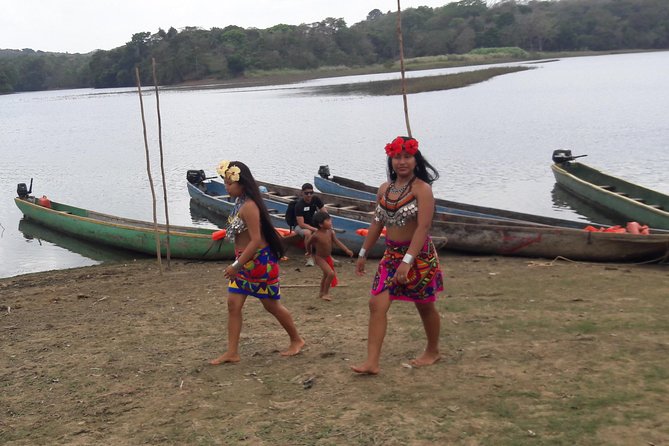
- Transportation: The high rainfall feeds a vast and complex network of rivers. In a dense jungle with steep, difficult terrain, these rivers become the most efficient and practical "roads." The Embera's reliance on dugout canoes for travel, as seen in the image, is a direct result of the river-dominated landscape.
Culture and Art: Expressions of the Environment
The Embera's connection to the rainforest is also expressed vividly in their art and cultural practices.
This article from the organization Akubadaura provides a wonderful overview of key Embera cultural practices that are tied to the environment.
Please read the sections titled 'Traditional painting' and 'Handicrafts: weavings of life'. Focus on how these practices use materials from the forest and how their designs reflect the natural world.
As you read, the forest is not just a backdrop; it is the source and subject of their art.
-
Body Painting (
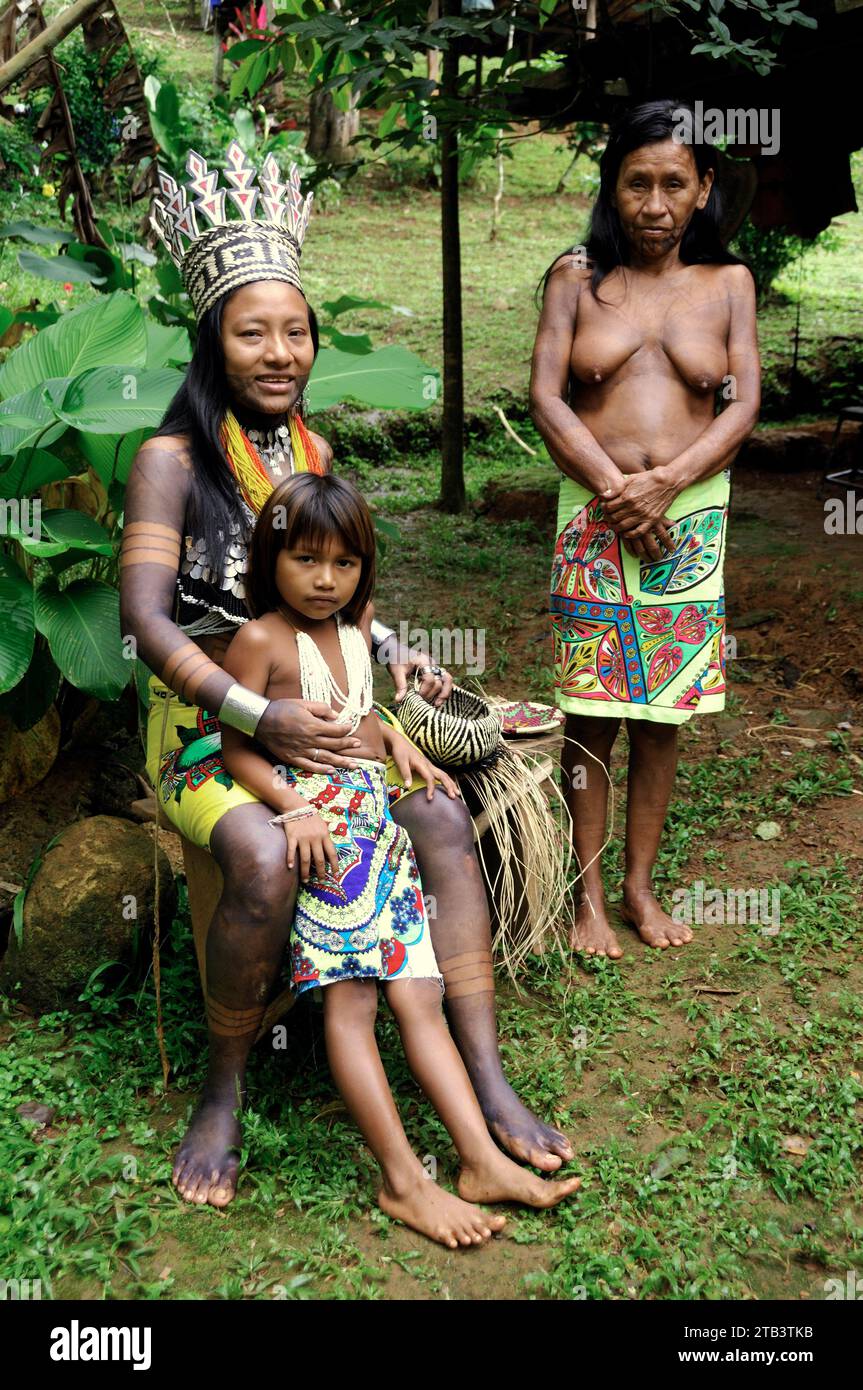
Kipara): The black pigment used for their intricate body and facial paintings comes from the fruit of the Jagua tree. The designs themselves are not merely decorative; they are a language of symbols representing plants, animals, and cosmic elements, meant to protect, beautify, and communicate with the spirit world. -
Weaving: Their crafts, particularly woven baskets and beadwork, are described as "weavings of life." The designs often narrate daily activities or represent the jungle, rivers, and animals. The choice of colors can even be symbolic, with greens and browns representing the forest.
Conclusion
In this lesson, we have established the essential context for understanding the Embera people. We've seen that their world is the dense, wet, and vibrant rainforest of the biogeographical Chocó. Their lifestyle is not one of conquering this environment, but of living in harmony with it.
Key Takeaways:
- Rainforest Environment: The Embera inhabit one of the world's wettest regions, a landscape of steep mountains, dense vegetation, and powerful rivers that are central to life.
- A Lifestyle of Adaptation: Their culture is a 'design for living' in the rainforest, exemplified by their elevated stilt houses for protection and ventilation.
- Subsistence from Nature: Their economy is based on a balanced use of the ecosystem through small-scale farming (plantains, corn), fishing, and hunting.
- Art as a Reflection of the World: Cultural practices like body painting with Jagua fruit and weaving intricate designs of animals and plants demonstrate a deep, tangible connection between their daily life and their natural surroundings.
Preview of the Next Lesson:
Now that we have a clear picture of the Embera's physical world and way of life, we are ready to explore their spiritual world. In the next lesson, we will delve into their mythology by recounting the Embera creation myth featuring the deity Caragabí. We will see how this story of origins provides the foundation for their relationship with the forest, its animals, and its powerful spirits.
Can't find a good explanation? Sign up and we'll make it for you
Sign up