
Hello! Welcome back to your course on Medical Instrumentation.
In our last lesson, we finished our deep dive into the heart's electrical and mechanical activity by examining photoplethysmography (PPG), the optical technology behind heart rate monitoring in wearables. We saw how light can be used to detect the pulse and the engineering principles involved.
Today, we begin a new module on Hemodynamics, the study of blood flow and pressure. We'll start with one of the most fundamental vital signs: blood pressure. This lesson directly addresses the learning outcome: Compare direct (invasive) and indirect (non-invasive) methods of blood pressure measurement.
We will break down the two main philosophies of measuring blood pressure: the "gold standard" direct method used in critical care and the ubiquitous indirect cuff-based method. Understanding the principles, advantages, and limitations of each is crucial for both exam preparation and for appreciating the data generated by various medical and wearable devices. For your work at Neuraease, knowing how this key cardiovascular parameter is measured provides context for a more holistic view of physiological stress.
1. The "Gold Standard": Direct (Invasive) Measurement
The most accurate way to measure blood pressure is to place a sensor directly inside an artery. This is known as the direct or invasive method. It is the benchmark against which all other methods are compared.
The core components of this system are:
- An intra-arterial catheter inserted into an artery (commonly the radial artery in the wrist).
- A column of saline-filled, rigid tubing that transmits the pressure from the blood to an external sensor.
- A pressure transducer that converts the mechanical pressure waves into an electrical signal.
- A monitor that processes and displays the continuous blood pressure waveform.
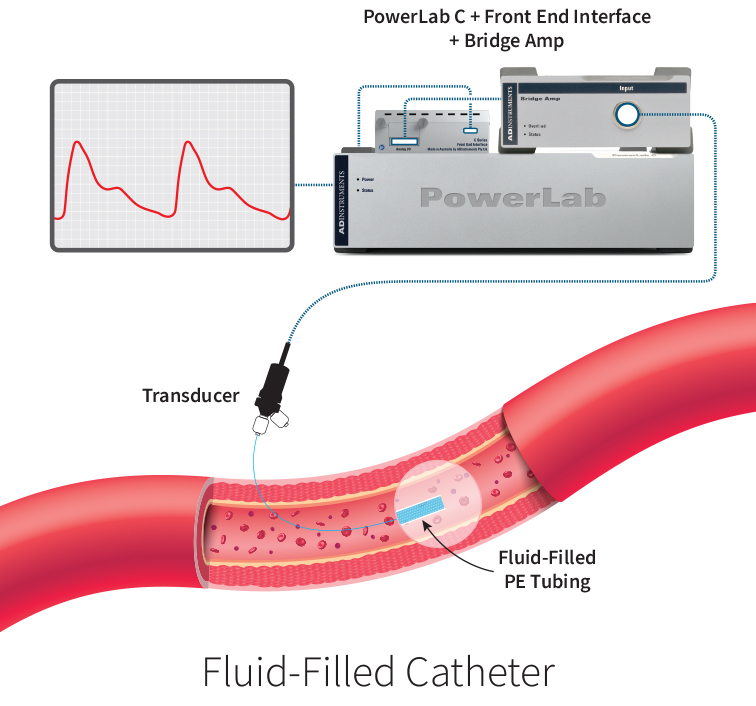
The accuracy of this system depends entirely on how well it's set up. To understand the key principles and potential pitfalls, please watch the following video from OPENPediatrics.
Transducers in Invasive Pressure Monitoring by J. DiNardo | OPENPediatrics
This video, 'Transducers in Invasive Pressure Monitoring,' explains the practical aspects of setting up an arterial line. It clearly demonstrates the concepts that are most critical for ensuring an accurate measurement.
Please watch the following three segments: Introduction to Transducers (00:24 - 01:36): Focus on how the system converts a mechanical signal into a digital waveform. Zeroing the Transducer (02:53 - 04:23): Understand why the transducer must be calibrated to atmospheric pressure as its 'zero' reference. Importance of Placement (04:23 - 08:07): This is the most crucial part. Pay close attention to how the vertical height of the transducer relative to the patient's heart directly adds or subtracts from the pressure reading. This concept of 'leveling' is a major source of potential error.
Key Characteristics of Direct (Invasive) BP Measurement:
- Advantages:
- Accuracy: Considered the "gold standard."
- Continuous: Provides a real-time, beat-to-beat blood pressure waveform. This is essential for tracking rapid changes.
- Waveform Analysis: The shape of the waveform itself provides diagnostic information about cardiac function and vascular resistance.
- Arterial Access: The catheter allows for repeated, pain-free blood sampling for lab tests (like blood gases).
- Disadvantages:
- Invasive: Requires puncturing an artery, which carries risks like bleeding, infection, clotting (thrombosis), and nerve damage.
- Complex & Costly: Requires specialized equipment, sterile technique, and trained personnel.
- Sources of Error: Prone to errors from improper leveling, air bubbles in the line (damping), or resonance (ringing), which can distort the reading.
2. The Everyday Method: Indirect (Non-Invasive) Measurement
The method you are familiar with from a doctor's office or a home BP machine is the indirect or non-invasive method. The principle here is to use an external inflatable cuff to apply counter-pressure to an artery (usually the brachial artery in the arm), temporarily stopping blood flow. The pressure is then slowly released, and the pressures at which blood flow returns and then becomes smooth again are measured.
There are two main techniques for this:
- Auscultatory Method: A stethoscope is used to listen for the "Korotkoff sounds"—the tapping sounds of turbulent blood flow returning as the cuff deflates. The pressure at the first sound is Systolic Blood Pressure (SBP), and the pressure where the sound disappears is Diastolic Blood Pressure (DBP).
- Oscillometric Method: This is what automated devices use. Instead of listening, the device measures pressure oscillations within the cuff caused by the pulsating artery. The machine's algorithm identifies the point of maximum oscillation, which corresponds very well to the Mean Arterial Pressure (MAP). It then uses a proprietary algorithm to estimate SBP and DBP from the oscillation envelope.
Let's focus on the oscillometric method, as it's most common in modern instrumentation.
BP Monitoring (invasive, non-invasive, pulse pressure variation, phys) (Dr. Hessel)
This clip from 'BP Monitoring' by the University of Kentucky Department of Anesthesiology provides an excellent overview of the oscillometric method.
Watch from 04:25 to 07:10. Focus on the relationship between the decreasing cuff pressure and the amplitude of the arterial oscillations. Note which pressure (Systolic, Diastolic, or Mean) is measured most accurately by this method.
The graph below visualizes what the video describes. The automated cuff measures the envelope of the oscillations and finds its peak.

Key Characteristics of Indirect (Non-Invasive) BP Measurement:
- Advantages:
- Non-invasive & Safe: Carries minimal risk.
- Simple & Inexpensive: Easy to perform with minimal training and affordable equipment.
- Portable: Can be used in virtually any setting (clinic, home, ambulance).
- Disadvantages:
- Intermittent: Provides only discrete snapshots of blood pressure, not a continuous reading.
- Less Accurate: Susceptible to errors from wrong cuff size, patient movement, or irregular heart rhythms (arrhythmias).
- Inaccurate at Extremes: Tends to be unreliable in patients with very high or very low blood pressure (hypertension or shock).
3. Head-to-Head Comparison
Now that we understand the basics of both methods, we can compare them directly. The choice between them is always a trade-off between accuracy and risk.
To get a comprehensive overview, please study the comparison table in the following article. It elegantly summarizes the key differences across several domains.
Invasive and non-invasive measurement of blood pressure
The article 'Invasive and non-invasive measurement of blood pressure' from Deranged Physiology provides a fantastic, practical comparison. We will focus on the summary table it presents.
Please read the section titled 'Invasive, non-invasive; what's the difference?'. Focus specifically on the table 'Blood Pressure Measurement: Invasive vs Non-Invasive Methods'. This table is an excellent summary for exam preparation.
Let's synthesize this information into the most critical points of comparison.
| Feature | Direct (Invasive) Method | Indirect (Non-Invasive) Method |
|---|---|---|
| Principle | Intra-arterial sensor measures pressure directly. | External cuff applies counter-pressure to occlude an artery. |
| Continuity | Continuous, beat-to-beat waveform. | Intermittent, discrete measurements. |
| Accuracy | Gold standard. High accuracy if set up correctly. | Lower accuracy. An approximation of central pressure. |
| Primary Use Case | ICU, operating room, critical patients, titrating potent drugs. | Routine screening, home monitoring, stable patients. |
| Key Advantage | Real-time data for immediate decision-making. | Safety, simplicity, and accessibility. |
| Key Disadvantage | Invasive risk (infection, bleeding, clots). | Cannot track rapid changes. |
| Common Errors | Leveling errors, air bubbles (damping), resonance (ringing). | Wrong cuff size, patient motion, arrhythmias. |
The Dilemma: When Measurements Disagree
A fascinating situation arises when a patient has both an invasive line and a non-invasive cuff, and they show different readings. Which do you trust?
The article from Deranged Physiology you just looked at discusses this brilliantly. The key takeaway is:
- In a stable patient: The non-invasive brachial cuff reading may actually be a better representation of central blood pressure (at the aorta) than a reading from a distal invasive catheter (e.g., in the wrist).
- In an unstable patient (e.g., in shock): Non-invasive methods become very unreliable. The invasive measurement, even if distal, is considered more trustworthy because it is not as affected by the poor circulation that accompanies shock.
Test your understanding!
Imagine you are in an Intensive Care Unit (ICU). A patient who just had major surgery is on medications to keep their blood pressure stable.
- The patient's automated cuff on their left arm reads 95/60 mmHg. Their invasive arterial line in their right wrist reads 120/55 mmHg. Why might the systolic pressures be so different?
- Which measurement (invasive or non-invasive) would you primarily use to guide the medication dosage for this critically ill patient, and why?
- The nurse tells you the invasive monitor's systolic reading is fluctuating wildly between 110 and 140 with each beat, but the mean pressure is steady at 75 mmHg. What is the most likely technical problem?
Show answer
- The difference is likely due to pulse pressure amplification. As the pressure wave travels from the central aorta to peripheral arteries (like the radial artery in the wrist), the artery walls become stiffer. This causes the systolic pressure to increase and the diastolic pressure to decrease, while the mean pressure stays relatively constant.
- You would use the invasive measurement. For a critically ill patient, especially one on potent medications, the continuous, real-time data from the arterial line is essential for making immediate and accurate adjustments. The non-invasive cuff only gives intermittent snapshots and is less reliable in unstable hemodynamic states.
- The most likely problem is resonance or ringing in the transducer system. This is a technical artifact where the system's natural frequency causes it to "overshoot," artificially exaggerating the systolic peak and underestimating the diastolic trough. As noted in the lesson, the Mean Arterial Pressure (MAP) is mathematically calculated and is not affected by this artifact, which is why it remains stable and is often considered the most reliable value in such situations.
Conclusion
Today, we have contrasted the two fundamental approaches to measuring blood pressure. You now know the underlying principles, equipment, and the critical trade-offs between them.
Key Takeaways:
- Direct (Invasive) Measurement is the "gold standard" for accuracy and provides a continuous waveform, but it is risky and complex. It's reserved for critically ill patients.
- Indirect (Non-Invasive) Measurement is safe, simple, and provides intermittent readings. It is used for routine monitoring and screening in stable individuals.
- The choice of method depends entirely on the clinical context and the required balance between accuracy and safety.
- Both methods have unique sources of error. For invasive lines, leveling and damping/resonance are key. For non-invasive cuffs, cuff size and patient motion are critical.
Preview of the Next Lesson:
We have introduced the two main non-invasive techniques: auscultatory and oscillometric. In our next lesson, we will delve deeper into both. We will explore the physics of the Korotkoff sounds used in manual measurement and the specific algorithms and design considerations for automated oscillometric devices.
Can't find a good explanation? Sign up and we'll make it for you
Sign up