
Introduction
Welcome to your fifth lesson in the module on African Philosophical Traditions. In our last two lessons, we explored concrete examples of philosophical thought from the continent. We analyzed Zera Yacob's defense of individual reason in his Hatata and contrasted it with the communal ethics of Ubuntu, encapsulated in the phrase "I am because we are." These examples demonstrate a rich diversity of ideas, which naturally leads to a fundamental question: What exactly counts as "African philosophy"?
This is not a simple question, and the answer is the subject of a major, ongoing debate among philosophers. Today, your learning outcome is to analyze the debate about the nature of African philosophy: ethnophilosophy, sage philosophy, and professional philosophy.
We will move from studying specific philosophies to a meta-philosophical level, examining how the discipline itself is defined. We will explore three influential schools of thought on this question:
- Ethnophilosophy, which seeks to articulate a collective worldview from cultural materials.
- Sage Philosophy, which documents the thinking of specific, wise individuals.
- Professional Philosophy, which applies the rigorous, argumentative methods of academic philosophy to African topics.
Understanding this debate is crucial for a university-level study of the subject, as it provides the critical framework for evaluating all the material we have covered and will cover. It requires us to think not just about philosophy, but about what philosophy is.
1. Ethnophilosophy and Its Critics
One of the earliest and most controversial answers to the question "What is African philosophy?" was to identify it with the shared, traditional wisdom of a people—their myths, proverbs, linguistic structures, and customs. This approach is known as ethnophilosophy. It attempts to reconstruct a single, collective "philosophy" for an entire ethnic group (e.g., "Bantu philosophy").
Let's begin by watching a video that sets the stage for this debate and introduces the powerful critiques leveled against ethnophilosophy by a group of thinkers often called "professional philosophers."
The video 'what is African Philosophy?' introduces the central questions of the debate and explains the core arguments of two key critics of ethnophilosophy, Paulin Hountondji and Kwasi Wiredu.
Please watch the segment from 01:19 to 13:24. As you watch, focus on the answers to these questions: What is 'ethnophilosophy' and what materials does it use (myths, proverbs, etc.)? Why do Hountondji and Wiredu argue that philosophy must be like a 'science'? What does this imply about rigor and method? Why can't you simply appeal to tradition or community for a philosophical claim? What are the main problems with ethnophilosophy? (e.g., freezing philosophy in the past, denying individual thought, the 'British tea' analogy).
The video lays out a powerful case against ethnophilosophy, arguing that philosophy must be an activity of explicit, critical, and individual argument, not an anonymous, collective belief system. The most influential critic of ethnophilosophy is Paulin Hountondji from Benin. To engage with this debate in the rigorous, text-driven manner you prefer, let's turn to his own words.
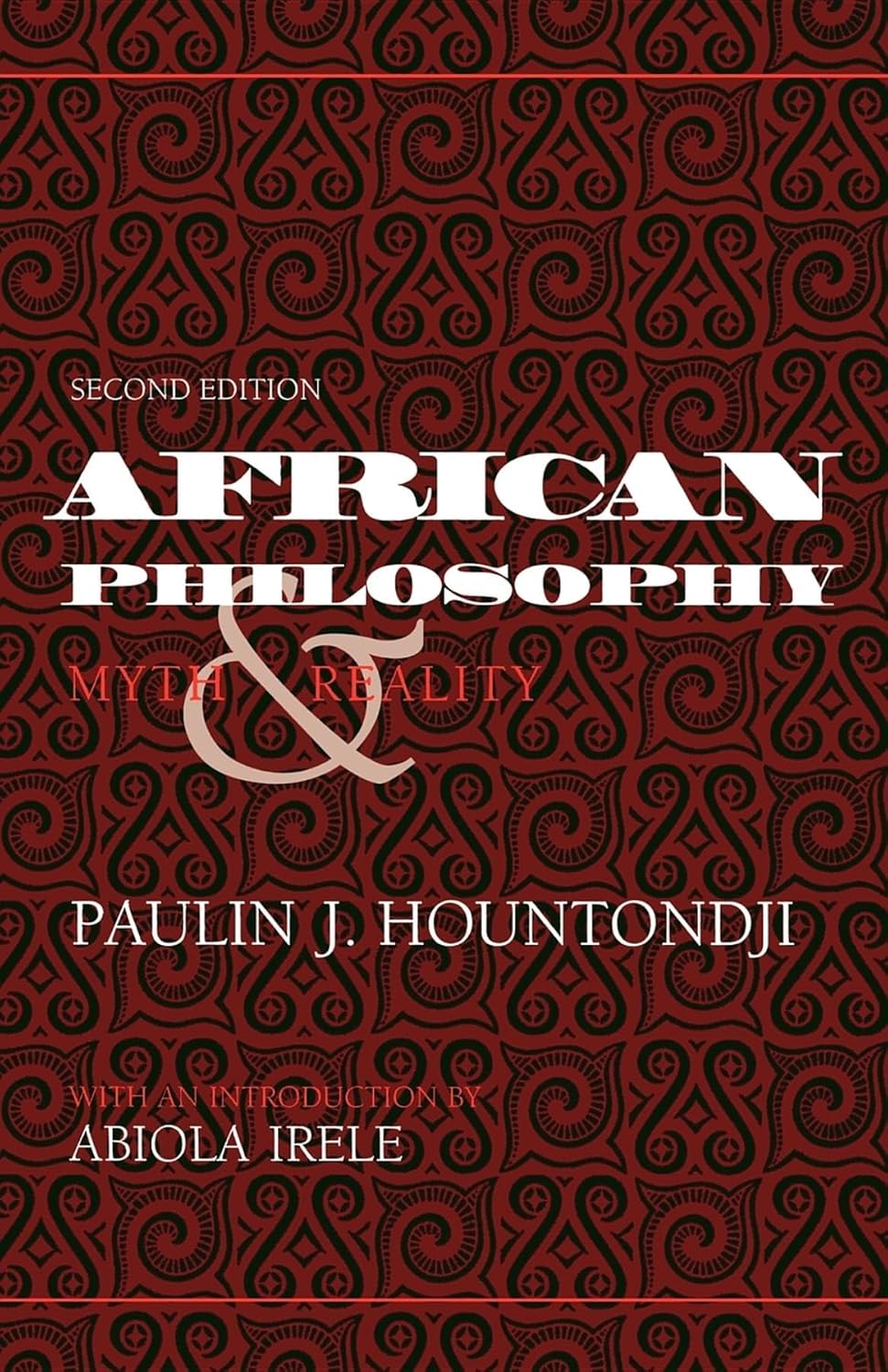
This reading is an excerpt from Hountondji's seminal work, 'African Philosophy: Myth and Reality'. Here, he directly confronts the concept of ethnophilosophy by analyzing its origins and assumptions.
Please read the following sections from the PDF: Start at the section 'Archaeology: Western 'ethnophilosophy''. Read this section and the following one, 'Political criticism' (page 20-21). Pay attention to Hountondji's analysis of Placide Tempels' Bantu Philosophy as a key example. Note who Tempels' intended audience was and the political function of his work. Read the short footnote number 8 on page 22 (physically located in the footnotes section on page 24). This footnote provides Hountondji's precise definitions for philosophy, 'philosophy', and ethnophilosophy. This is a crucial distinction for understanding his entire argument. Focus on understanding why Hountondji calls ethnophilosophy a 'myth' created largely for a European audience.
Hountondji's critique is devastating. He argues that ethnophilosophy is not an authentic expression of African thought but a European invention that treats Africans as objects of study rather than as thinking subjects. He claims it projects a simplistic, static, and collective "philosophy" onto diverse peoples, diverting attention from real political issues and the actual work of individual African thinkers. For Hountondji, philosophy proper is a body of explicit, argumentative texts, a scientific literature created by individuals in dialogue with one another.
2. Sage Philosophy: The Search for the Critical Individual
Hountondji's critique left a significant question: If we reject ethnophilosophy, does that mean there was no real philosophy in Africa before the arrival of university-trained academics?
The Kenyan philosopher Henry Odera Oruka offered a compelling third way. He agreed that philosophy must be critical and individual, but he argued that such thinkers have always existed within traditional African communities. He proposed an empirical research project to find and record them. This approach is called Sage Philosophy.

The following reading from the Stanford Encyclopedia of Philosophy provides a clear and authoritative overview of Oruka's project.
The entry on 'African Sage Philosophy' details H. Odera Oruka's project, its motivations, and its key concepts. This will provide a structured understanding of this important school of thought.
Please read the following sections from the webpage: Section 1, 'Oruka's Project': This introduces the purpose of the project and gives examples of dialogues with sages. Section 4, 'Ethnophilosophy, Unanimity and African Critical Thought': This section directly connects Sage Philosophy to the debate we've just discussed, showing how Oruka used his project to challenge the ethnophilosophical idea of 'unanimity'. Section 5, 'What counts as Sage Philosophy?': This is the most crucial part. Focus on Oruka's distinction between a folk sage (who narrates cultural beliefs) and a philosophic sage (who critically re-examines beliefs based on reason).
Oruka's distinction is key to the entire debate.
- Folk Sage: A person wise in the traditions of their community. They can narrate the myths, proverbs, and beliefs of the people with great accuracy. Oruka would classify a figure like Ogotemmêli (mentioned in the text) as a folk sage.
- Philosophic Sage: A person who is not content to simply narrate tradition. They possess the "critical, second-order type of thinking" that allows them to question, re-examine, and justify or reject beliefs based on rational grounds.
Sage Philosophy was therefore a direct response to both ethnophilosophy and its critics. Against ethnophilosophy, it proved that traditional thought was not anonymous or monolithic. Against the skeptics among professional philosophers, it provided empirical evidence of critical, philosophical thinking that existed before academic philosophy took root in Africa.
3. Professional Philosophy in Action
The third school, Professional Philosophy, isn't so much a distinct content area as it is a methodological stance. It is the position advocated by thinkers like Hountondji, Wiredu, and, in his own way, Oruka. It holds that philosophy is a universal discipline characterized by rigorous analysis, logical argument, and critical engagement with texts and ideas. From this perspective, an African philosopher is simply a philosopher who applies these universal tools to questions and concepts relevant to their African context.
A central tenet of this school is to be wary of broad, romantic generalizations about "African thought" versus "Western thought," which are often the product of ethnophilosophy. Let's watch one final video that shows this critical method in action, deconstructing one of the most common generalizations.
African Philosophy "vs." Western Philosophy
In 'African Philosophy "vs." Western Philosophy', the speaker applies a critical, professional-philosophical lens to the popular idea that African philosophy is inherently communitarian while Western philosophy is individualist.
Watch from 09:37 to 19:31. This is a clear demonstration of the professional approach. Notice how the speaker questions the very premise of a homogeneous 'African philosophy' or 'authentic African identity'. Pay close attention to the counterexamples used to break down the simple binary (e.g., communitarianism in Aristotle, individualism in Igbo thought). Reflect on the argument against making the 'hunt for difference' the main goal of philosophy.
This video exemplifies the professional approach. It doesn't accept generalizations at face value. Instead, it interrogates them, demands evidence, points out counterexamples, and analyzes the underlying assumptions. This critical, argumentative method is what professional philosophers see as the heart of the discipline, whether it's practiced in Africa, Europe, or anywhere else.
Conclusion
Today we have navigated the complex and essential debate over the very nature of African philosophy. This meta-discussion reveals that defining a discipline is itself a philosophical act, shaped by history, politics, and methodology.
Key Takeaways:
- Ethnophilosophy identifies philosophy with the collective, often unwritten, worldview of a people. It has been heavily criticized by figures like Paulin Hountondji for being uncritical, anonymous, static, and a projection serving colonial-era interests.
- Sage Philosophy, pioneered by H. Odera Oruka, is an empirical project to identify and document individual critical thinkers within traditional African societies. It distinguishes between folk sages (who transmit tradition) and philosophic sages (who rationally evaluate it).
- Professional Philosophy views philosophy as a universal, rigorous, and argumentative discipline. Its proponents use the tools of philosophical analysis to address questions relevant to Africa, while remaining skeptical of uncritical generalizations and the "hunt for difference."
This debate provides the intellectual tools to critically assess different kinds of claims about African thought. In our next module, we will shift our focus to Medieval Western Philosophy, beginning with the influence of Plotinus and Neoplatonism. While the historical and cultural context will change dramatically, the fundamental skills of analyzing arguments, questioning assumptions, and defining terms—skills we have sharpened today—will remain indispensable.
Can't find a good explanation? Sign up and we'll make it for you
Sign up