
Introduction
Welcome to your fourth lesson in our module on African Philosophical Traditions. In our last lesson, we delved into the world of Zera Yacob, a 17th-century Ethiopian philosopher. His Hatata championed a method of independent rational inquiry, where the solitary individual, through the power of reason, could discern universal truths. This represented a profoundly individualistic approach to philosophy, born from his personal experience of isolation.
Today, we turn to a philosophy that offers a powerful and influential contrast. Your learning outcome is to explain the concept of Ubuntu and its implications for personhood and communal ethics.
Ubuntu is a philosophy rooted in the cultures of Southern Africa that places community and interconnectedness at the very center of human existence. It moves away from the question "What am I?" and instead asks, "Who are we?" We will explore its core tenets and analyze how this communal worldview fundamentally shapes the understanding of what it means to be a person and how we ought to live together. This lesson will provide a crucial counterpoint to the individualism of Zera Yacob and will prepare you for later comparisons with Western philosophical traditions.
1. What is Ubuntu? "I am because you are"
The concept of Ubuntu is famously captured in the maxim, "I am because you are" or, in its Nguni form, umuntu ngumuntu ngabantu—"a person is a person through other people." Let's begin by exploring this core idea.
To start, watch this short, evocative introduction from the BBC.
What we can learn from the African philosophy of Ubuntu - BBC REEL
The video 'What we can learn from the African philosophy of Ubuntu' provides a concise and clear explanation of the central meaning of Ubuntu.
Please watch the segment from 00:35 to 01:18. Focus on the explanation of the phrase 'I am because you are, you are because we are' and the idea of interdependence.
This idea of fundamental interdependence is the bedrock of Ubuntu. It's not just a moral ideal but is considered a description of the very nature of human reality. For a more formal, academic definition, let's turn to a text.
[PDF] A critical analysis of ubuntu as the nexus of identity development in ...
The paper 'A critical analysis of ubuntu' provides a detailed look at the term's origins and meaning. Since you prefer a text-driven approach, this will ground our understanding in the scholarly literature.
Please read the 'Introduction' and the first two paragraphs of the section 'Definition of ubuntu as cultural development'. Pay attention to: The meaning of the maxim 'umuntu ngumuntu ngabantu'. The linguistic roots and variations of the term 'Ubuntu' across Africa. The challenge of defining an African concept like Ubuntu in a Western language and framework.
As the resources highlight, Ubuntu is more than a simple slogan. It's a comprehensive worldview asserting that our humanity is not something we possess in isolation; it is co-created and sustained through our relationships and our community.
2. Personhood in Ubuntu: The Relational Self
How does Ubuntu's emphasis on community change the definition of a person? In many Western traditions, which we will explore later, personhood is often linked to internal, individual capacities—like rationality (Descartes' "I think, therefore I am"), memory, or a soul. Ubuntu proposes a radically different, relational view of identity.
The following video breaks down this concept and contrasts it with traditional Western theories of personal identity.
What is Ubuntu Philosophy? (African Philosophy)
The video 'What is Ubuntu Philosophy?' from Carneades.org offers a structured philosophical analysis of how Ubuntu impacts the concept of personal identity.
Watch the segment on identity from 02:35 to 08:03. Focus on how the speaker explains a 'relational' view of identity and how it differs from psychological, somatic, and narrative theories. Consider the thought experiment about the person who undergoes a radical personality change.
The video illustrates that under an Ubuntu framework, who you are is constituted by both your internal narrative and the web of relationships you are part of. Personhood is not a static property but a dynamic process of becoming more human through community.
To deepen this understanding, let's examine how philosophers describe this process.
[PDF] A critical analysis of ubuntu as the nexus of identity development in ...
Returning to 'A critical analysis of ubuntu,' this next reading explores exactly how personhood is developed within the community.
Please read the section 'Ubuntu philosophy and identity development'. Note the claims from thinkers like John Mbiti ('society creates the child into a social being') and Augustine Shutte ('our deepest moral obligation is to become fully human... by entering more and more deeply into community').
To synthesize these ideas, consider the following contrast:
| Aspect of Personhood | Individualistic View (e.g., Descartes, Locke) | Ubuntu Relational View |
|---|---|---|
| Source of Identity | Internal attributes: consciousness, reason, memory. | External relationships and community participation. |
| Nature of the Self | The self is pre-social, autonomous, and self-contained. A "standalone process." | The self is constituted by others, interdependent, and open. A "networked node." |
| Definition of Person | Being a person is a metaphysical fact. | Becoming a person is a moral and social achievement. |
| Core Maxim | "I think, therefore I am." | "I am because we are." |
This fundamental difference in defining the person has profound implications for ethics.
3. Communal Ethics: Harmony, Responsibility, and Restorative Justice
If a person's humanity is tied to the well-being of others, then ethics is no longer solely about individual rights or personal virtue. Instead, moral action becomes about promoting communal harmony and mutual flourishing.
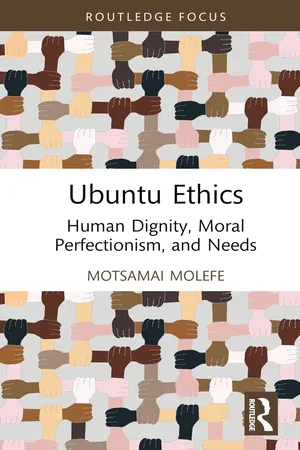
Let's explore the practical ethical implications of Ubuntu, from economic decisions to the practice of justice. The same analytical video from Carneades.org provides excellent, concrete examples.
What is Ubuntu Philosophy? (African Philosophy)
We will now watch two more segments from 'What is Ubuntu Philosophy?' to see how the theory of relational personhood translates into a distinct ethical framework.
First, watch the segment on economic rationality (08:03 - 13:01). Notice how Ubuntu provides a rationale for choices that seem 'irrational' from a purely self-interested perspective. Next, watch the segment on justice (13:01 - 19:00). This is a crucial application. Focus on: The distinction between retributive and restorative justice. The role of Ubuntu in South Africa's Truth and Reconciliation Commission, as articulated by Desmond Tutu and Nelson Mandela. The argument that acts of revenge or oppression diminish the humanity of the perpetrator as well as the victim.
The example of the Truth and Reconciliation Commission is perhaps the most powerful real-world application of Ubuntu philosophy. Rather than seeking punishment (retributive justice), the goal was to heal relationships and restore the humanity of both the oppressed and the oppressor (restorative justice), thereby rebuilding the community.
To connect these ethical applications to their philosophical foundations, let's turn to our final reading.
[PDF] Ubuntu as An African Conception of Personhood Towards a Holistic ...
The paper 'Ubuntu as An African Conception of Personhood' provides the theoretical underpinnings for the communal ethics we've just seen in practice.
Please read two parts of this paper: In the section 'The Concept of Ubuntu,' read the paragraph describing Mogobe Ramose's 'onto-triadic structure' (starts with 'Ramose proposes that the structure of being...'). Note how this structure connects the living, ancestors, and the divine, creating an interconnected web of existence with ethical implications. Read the entire short section 'Ubuntu and the Communalism Thesis of John Mbiti.' This explicitly links Ubuntu to the idea that individual identity is shaped by the community.
As Mbiti and Ramose's work shows, the ethical demand to act for the community's well-being flows directly from the metaphysical claim that one's very being is tied to that community. An action is right insofar as it promotes harmony and enhances this interconnectedness; it is wrong insofar as it creates discord and diminishes humanity—both your own and that of others.
Conclusion
In this lesson, we have explored the rich philosophy of Ubuntu, a worldview that stands in stark contrast to the individualism of Zera Yacob and many Western traditions. It offers a compelling vision of humanity as fundamentally interconnected.
Key Takeaways:
- Core Tenet: Ubuntu is encapsulated by the maxim umuntu ngumuntu ngabantu—"a person is a person through other people." It posits that interdependence is the fundamental reality of human existence.
- Relational Personhood: Unlike views that ground personhood in internal states like reason, Ubuntu defines a person through their relationships. One's identity is not a given but is achieved and sustained through participation in a community.
- Communal Ethics: The primary moral goal is to foster harmony, solidarity, and mutual care within the community. The well-being of the individual is inextricably linked to the well-being of all.
- Restorative Justice: In practice, Ubuntu ethics favors restorative justice, which seeks to heal broken relationships and restore humanity, over retributive justice, which focuses on punishment.
We have now examined two very different, powerful philosophies from the African continent: Zera Yacob's individualistic rationalism and the communalism of Ubuntu. In our next lesson, we will step back and analyze the scholarly debate about the nature of African philosophy itself, considering terms like "ethnophilosophy," "sage philosophy," and "professional philosophy." This will help you situate the ideas we've discussed within a broader methodological context.
Can't find a good explanation? Sign up and we'll make it for you
Sign up