Welcome to the final lesson of your course! In our last session, we built your comprehensive 90-day launch plan, a concrete roadmap to take your accelerator and fund from concept to reality. That plan is your "how." This lesson focuses on the equally critical "why" and "what's next"—how you will measure success and ensure your program evolves to become a top-tier launchpad for AI startups.
This capstone lesson addresses the final learning outcome of the course: Define key success metrics and a framework to evaluate program effectiveness and iterate.
A plan without a system for measuring progress is just a guess. By the end of this 60-minute session, you will have a framework for defining what success looks like, tracking it with the right metrics, and using that data to continuously improve your program. This is the key to delivering value to your portfolio companies, proving your impact to Limited Partners (LPs), and building a sustainable, long-term business.
1. The Anatomy of a Powerful KPI
Before we can select metrics for your accelerator, we need a clear definition of what makes a metric a "Key Performance Indicator" (KPI). A KPI is more than just a number; it's a measurable value that demonstrates how effectively a company is achieving key business objectives.
To establish this foundation, let's watch a short video that breaks down the essential components of a well-defined KPI.
How to Develop Key Performance Indicators
The video 'How to Develop Key Performance Indicators' from OnStrategy provides a clear, practical definition. It will introduce you to the four essential attributes of any good KPI and the difference between leading and lagging indicators—a crucial concept for venture capital.
Please watch the entire video. Pay close attention to the four attributes (Measure, Target, Source, Frequency) and the distinction between 'leading' and 'lagging' indicators.
As the video explained, a robust KPI must have:
- A clear measure: What are you measuring? (e.g., "Number of portfolio companies that raise a follow-on seed round.")
- A specific target: What is the desired numeric value? (e.g., "60%")
- An identified source: Where does the data come from? (e.g., "Quarterly founder surveys and PitchBook data.")
- A defined frequency: How often will you report on it? (e.g., "Annually.")
Critically, you must track both lagging indicators (outcomes, like a startup exit) and leading indicators (inputs/activities that predict future outcomes, like mentor engagement). For an accelerator, where the ultimate lagging indicators like fund returns can take 7-10 years, your ability to track and influence leading indicators is what will demonstrate progress to your LPs.
The following resource puts this in the specific context of an accelerator.
Tracking KPIs in accelerator programs
The article 'Tracking KPIs in accelerator programs' clarifies what makes a KPI valuable for an accelerator, distinguishing them from simple vanity metrics.
Please read the short introductory sections, down to (but not including) 'The most common KPIs for accelerators.' Focus on the two fundamental questions a useful KPI must answer.
The key takeaway is that your KPIs must answer two questions:
- Are you making a measurable impact on your startups' success?
- Are you meeting the expectations of your stakeholders (especially your LPs)?
2. Defining Your Accelerator's Success Metrics
With that foundation, we can now select the specific KPIs for your venture. We'll divide them into two categories:
- Portfolio Startup KPIs: Metrics that measure the health and growth of the companies in your program. Your program's goal is to improve these.
- Accelerator & Fund KPIs: Metrics that measure the performance of your program and your fund. These are what you report to LPs.
2.1. Portfolio Startup KPIs
As an accelerator manager, you are also a coach. You need to be fluent in the core metrics that define a healthy, high-growth startup. Your curriculum and mentorship should be geared toward helping founders understand and improve these numbers.
This next video is an excellent primer on the top metrics VCs use to evaluate early-stage companies. Understanding these is non-negotiable for you and the founders you back.
Startup Metrics & KPIs | Top 10 Metrics Used by VCs
The video 'Startup Metrics & KPIs' covers the essential metrics for any early-stage business. We will focus on the most critical ones for the pre-seed/seed stage companies you'll be targeting.
Please watch the following segments: Total vs. Recurring Revenue (MRR/ARR): 03:30 - 05:41 Growth (CMGR): 05:41 - 09:10 LTV:CAC Ratio: 10:42 - 14:21 Customer Retention (Cohort Analysis): 14:21 - 21:01 Burn Rate & Runway: 24:41 - 26:09 Focus on not just the definition, but why each metric is important for assessing a startup's health and scalability.
These five metrics form the dashboard for a typical early-stage startup:
- Monthly Recurring Revenue (MRR) & Growth: The primary measure of traction for SaaS businesses. The Compound Monthly Growth Rate (CMGR) provides a smoothed-out view of the growth trajectory.
- LTV:CAC Ratio: Perhaps the single most important metric for scalability. It answers: "For every dollar we spend to acquire a customer, how many dollars of profit do we get back over their lifetime?" A ratio greater than 3:1 is typically considered healthy.
- Retention (via Cohort Analysis): Shows if your product is sticky. High retention and "net negative churn" (where revenue from existing customers grows over time) are powerful signals of product-market fit.
- Burn Rate & Runway: The most fundamental operational metric. It determines when the company needs to fundraise again.
As an AI-focused accelerator, you'll also want to guide your startups to track domain-specific KPIs, such as:
- Data Acquisition Cost: How much does it cost to acquire the proprietary data that fuels their model?
- Model Performance Metrics: Precision, recall, F1 score, or other relevant accuracy measures.
- Inference Cost: How much does it cost to run the model to serve one user or request? This is crucial for gross margin.
2.2. Accelerator & Fund KPIs
While you help your startups with their KPIs, you need to track your own. These are what you will use to evaluate your program's effectiveness and report back to your LPs.
Tracking KPIs in accelerator programs
The resources 'Tracking KPIs in accelerator programs' and 'Measuring Accelerator Performance' provide an extensive list of potential metrics. We will synthesize the most important ones for your context.
First, read the section 'The most common KPIs for accelerators' to get an overview. Then, quickly scan 'Why different accelerators need different KPIs' and 'How to define the right KPIs for your accelerator' to understand how to tailor these to your specific goals.
Here is a consolidated list of essential KPIs for your accelerator and fund, categorized as leading and lagging indicators:
Leading Indicators (Early Signals of Success):
- Deal Flow Quality: Number of qualified applications per cohort.
- Founder & Mentor Engagement: Workshop attendance, mentor meeting frequency, mentor NPS (Net Promoter Score).
- Founder Progress on KPIs: Percentage of the cohort that hits pre-defined milestones on their own KPIs (e.g., achieving 10% CMGR).
- Founder NPS: How likely are your founders to recommend the program to a peer?
- Demo Day Investor Turnout: Number of qualified, active investors attending your demo day.
Lagging Indicators (Proof of Long-Term Impact):
- Follow-on Funding Rate: % of companies that raise a seed or Series A round within 18 months of the program.
- Follow-on Funding Amount: Total capital raised by your portfolio companies.
- Startup Survival Rate: % of companies still in operation 3 years post-program.
- Alumni Engagement: % of alumni who return as mentors or invest in future cohorts.
- Fund Performance: Ultimately, your LPs care about financial returns. You will track Total Value to Paid-In (TVPI), Distributions to Paid-In (DPI), and Internal Rate of Return (IRR). (These are advanced fund metrics you first saw in Module 5, and they will become the primary lagging indicators of your success as an investor).
Your key challenge is to use the leading indicators to tell a convincing story of progress long before the lagging indicators are realized.
Test your understanding!
You are preparing your first annual update for your LPs after one year of operation. Your first cohort of 8 companies just graduated 6 months ago. Which three KPIs (a mix of leading and lagging) would you highlight in your report to demonstrate early traction and justify their investment? Why?
Show answer
In an early LP update, you need to show progress even though it's too soon for major exits. A strong report would highlight:
- Founder NPS: This is a powerful leading indicator. A high score (e.g., "Our founder NPS for Cohort 1 was 85") tells LPs that your core "customers"—the founders—find the program immensely valuable. This signals you are building a strong brand that will attract top talent in the future.
- Portfolio Progress on Key Metrics: This shows your program works. You can present this as an aggregate: "Across the cohort, average MRR grew by 300% during the program, and 6 of 8 companies achieved a positive LTV:CAC ratio before demo day." This demonstrates you are effectively de-risking the companies.
- Follow-on Funding (Early Signal): While it's early, this is a crucial lagging indicator. You could report: "To date, 3 of our 8 companies (37.5%) have already closed a total of $2.5M in follow-on capital from outside investors." This is a concrete, external validation of the quality of your portfolio and your program.
3. The Framework for Evaluation and Iteration
Defining KPIs is just the first step. The real value comes from building a system to collect, analyze, and act on the data. Given your background in computer science, you can think of this as an agile development loop for your accelerator.
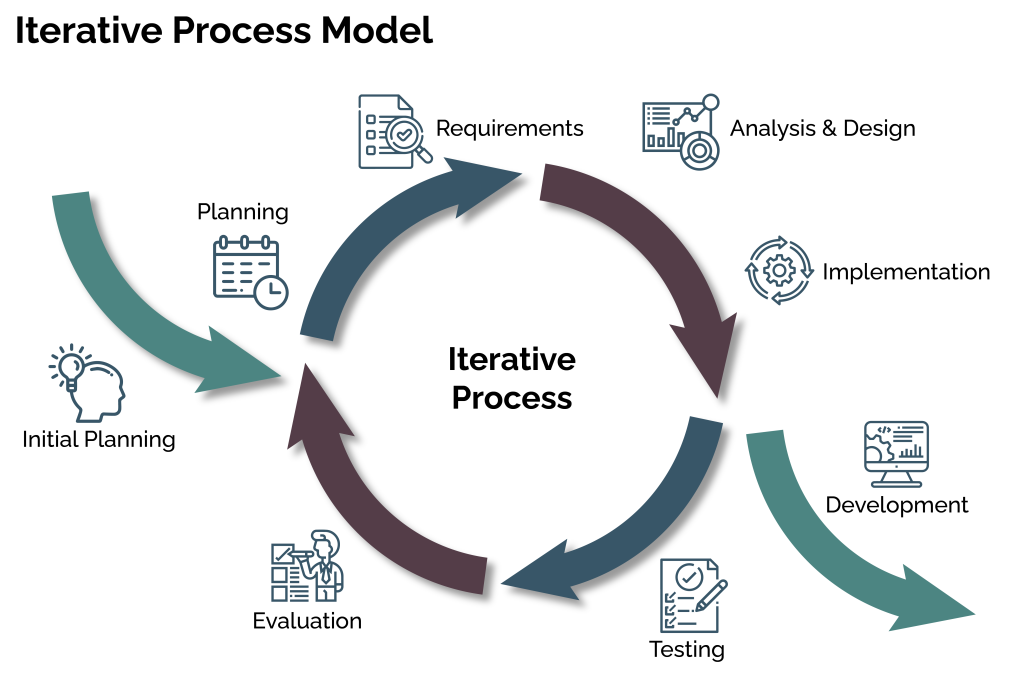
To implement this model effectively, we can use a simple but powerful framework known as the "4Cs of Accelerator Measurement."
Measuring Accelerator Performance: Potential Metrics and the “4Cs”
The Kauffman Foundation brief 'Measuring Accelerator Performance' introduces this excellent framework. It provides four guiding principles for creating a robust and credible measurement process.
Please read the section titled 'The “4Cs” of Accelerator Measurement: Consistency, Coordination,Comparison, and Continuation' on page 3.
Here's how to apply the 4Cs to your accelerator:
-
Consistency:
- Action: Collect the same data at the same intervals for every company.
- Example: Implement a mandatory monthly KPI report for all active portfolio companies and automated surveys at 3, 6, and 12 months post-program. Use tools like Airtable or a dedicated CRM to track this.
-
Coordination:
- Action: Use standardized metrics where possible. This allows you to benchmark your performance against the broader industry.
- Example: When reporting your fund's performance, use standard metrics like TVPI and IRR. When reporting startup success, use metrics recognized by global initiatives like GALI (Global Accelerator Learning Initiative). This adds immense credibility when speaking to future LPs.
-
Comparison:
- Action: To truly prove your program's impact, you need a baseline.
- Example: The gold standard is to track the performance of high-quality applicants you rejected from the program. While challenging for a solo GP, a simpler version is to record baseline metrics for every company on Day 1 of the program. The "delta" or change in those metrics by Demo Day is a direct measure of your program's value-add.
-
Continuation:
- Action: Your tracking obligation doesn't end at Demo Day. Venture capital is a long-term game.
- Example: Build a data-sharing clause into your program participation agreement, requiring startups to provide key financial and operational data on a quarterly or semi-annual basis for at least 5-7 years. To make this work, you must provide continuous value through a strong alumni network, as suggested in the Acterio article, to keep them engaged.
By building your measurement system around this iterative loop and the 4Cs, you create a learning organization that is destined to improve with every single cohort.
Conclusion
Congratulations on completing the final lesson of this course! You began with the goal of understanding the "A-Z" of launching your own AI-focused accelerator and fund. We have journeyed from the foundational business models and legal structures, through the intricacies of valuation and fundraising, to the operational realities of deal sourcing, program design, and now, performance measurement.
Key Takeaways from This Lesson:
- KPIs Must Align with Goals: Your chosen metrics must directly reflect the goals of your program and the expectations of your LPs.
- Track Both Startup and Program Health: You need one set of KPIs to coach your founders (MRR, LTV:CAC, Runway) and another to manage your business and report to investors (Follow-on Funding, Survival Rate, Fund Returns).
- Balance Leading and Lagging Indicators: Use leading indicators (e.g., founder engagement) to show progress while you wait for long-term lagging indicators (e.g., exits) to mature.
- Build an Iterative System: Don't just collect data. Use the "Iterative Process" model and the "4Cs" framework (Consistency, Coordination, Comparison, Continuation) to create a robust system for continuous improvement.
Your 90-day launch plan gives you the map, but this evaluation framework provides the compass. It will allow you to navigate, learn, and adapt, ensuring that the accelerator you launch is not only successful on day one but grows in impact and prestige for years to come. You now possess the strategic blueprint to build your firm. The rest is execution. Good luck.