Hello! Welcome to the final module of your course, "Business Launch and Operations."
In our last module, we focused on leveraging AI for internal fund operations, culminating in a lesson on using AI to scale your mentor-matching program. Now, we pivot from internal systems to the external-facing strategies crucial for launching your business.
This lesson addresses the learning outcome: Develop core positioning and a marketing message tailored to your ideal startup profile. For a solo GP launching a new accelerator, this is the most critical first step. Your ability to attract the high-quality, AI-focused startups you want to work with depends entirely on a clear, compelling, and differentiated message. We'll move from the how of running the program to the who you're running it for and why they should choose you.
1. The Foundation: Your Accelerator's "Investment Thesis"
In the venture capital world, an "investment thesis" is the guiding philosophy that dictates what a fund invests in and why. For your accelerator, this same concept serves as the strategic core of your positioning and marketing. It's your argument for why the best founders should join your program instead of another, or instead of going it alone.
A strong thesis answers four fundamental questions:
- Who: Who are you? What is your team's unique experience and network?
- What: What is your ideal startup profile? (Sector, stage, technology, etc.)
- Why: Why are you the right person to help them? What is your unfair advantage?
- How: How will you deliver value and help them succeed?
To understand this framework from a VC's perspective, watch the following video from Bedy Yang of 500 Global. As you watch, think about how each component applies not just to a fund, but to the positioning of your accelerator.
[VC Unlocked] Bedy Yang, Investment Thesis Fundamentals Webinar
This webinar, 'Investment Thesis Fundamentals' by 500 Global, provides a classic framework for defining an investment strategy. Pay close attention to how they break down the 'Who, What, Why, How' components.
Watch the sections that introduce the core framework and then dive into the 'Who', 'What', 'Why', and the importance of deal flow and brand building. The timestamps are: Introduction to the Framework: 01:10 - 02:29 The 'Who' (Your Team & Expertise): 06:49 - 09:59 The 'What' (Your Target Profile): 09:59 - 14:06 The 'Why' (Your Unfair Advantage): 14:06 - 16:00 Brand & Deal Flow: 25:39 - 29:24 Focus on how your personal background in pre-seed consulting and computer science informs your answers to these questions.
As the video emphasizes, your thesis must be built on your unique strengths. Your 10 years in pre-seed consulting give you a powerful answer to the "Who" and "Why". You have deep operational experience that most VCs lack. Your goal to launch a solo-led firm makes your personal brand and expertise the central pillar of your positioning.
2. Defining Your Ideal Startup Profile (The "What")
Casting too wide a net is a common mistake that dilutes an accelerator's effectiveness. The "What" of your thesis must be specific. Your interest in AI is a great starting point, but you need to add more layers to define your ideal startup.
Strategies to streamline the application process in ...
The article 'Strategies to streamline the application process...' from Acterio offers a practical guide for defining your target startup. While it's framed around the application process, the criteria it outlines are precisely what you need to define your core positioning.
Please read the section titled 'Approach for defining target startup profiles'. As you read through the criteria (Industry focus, Stage of development, Entrepreneurial qualities, etc.), start drafting answers for your own accelerator.
Based on this framework, consider these questions to build your ideal profile:
- Industry Focus: Are you targeting all AI startups, or specific applications like "AI for enterprise SaaS," "AI in healthcare," or "developer tools for AI"? Your expertise might be more impactful in certain verticals.
- Stage of Development: Your experience is in the pre-seed stage. This is a strong, specific focus. You can help teams go from a prototype to achieving product-market fit and preparing for their first institutional funding round.
- Entrepreneurial Qualities: What kind of founders do you work best with? Are they deeply technical founders who need commercial guidance? Or balanced teams?
- Innovation & Scalability: What does a "defensible" AI model look like to you? Are you looking for novel algorithms, proprietary data sets, or unique applications of existing models?
- Cultural Fit: As a solo GP, your relationship with founders will be close. What values are non-negotiable for you?
Answering these questions creates a clear picture of the startup you are built to serve. This clarity is the first step to attracting them.
3. Crafting Your Marketing Message
Once you know who you are and what you're looking for, you need to articulate why those founders should choose you. This requires translating your thesis into a compelling and clear marketing message.
This is where many programs go wrong, falling back on vague jargon.
B2B Positioning Strategy: Framework, Examples & Mistakes
This article, 'B2B Positioning Strategy,' is one of the best practical guides available. It's laser-focused on cutting through the noise and creating positioning that works. It provides an excellent framework and highlights critical mistakes to avoid, especially relevant to your AI focus.
This is a key resource. Please read these sections carefully: 'The 5 Positioning Mistakes B2B Teams Keep Making': Pay special attention to Mistake #4: 'Using AI as Your Differentiator.' This is crucial for you. 'The 4 Questions Every B2B Positioning Strategy Must Answer': This provides the strategic underpinning for your message. 'The 7-Box Canvas: Translating Strategy Into Messaging': This is a powerful, actionable tool you can use immediately to build your positioning.
Let's synthesize the key ideas from the article.
Avoiding the Traps
As the article warns, simply saying "we're an accelerator for AI startups" is not a differentiator anymore. It's a feature, not a benefit. Your messaging must go deeper. Your value isn't that you like AI; it's that your CS background and consulting experience allow you to provide specific, tangible value to AI-native companies that other programs cannot.
Answering the 4 Core Questions for Your Accelerator
Let's adapt the article's four questions to your context:
- What is it? An accelerator program for pre-seed startups.
- Who is it for? (Your ideal profile from the previous section). E.g., "technical founders building AI-native SaaS products."
- What does it replace? This is a key question. Are you replacing a founder's need to "go it alone"? Are you a better alternative to larger, less personal accelerators? Or are you replacing the need to hire a team of expensive consultants?
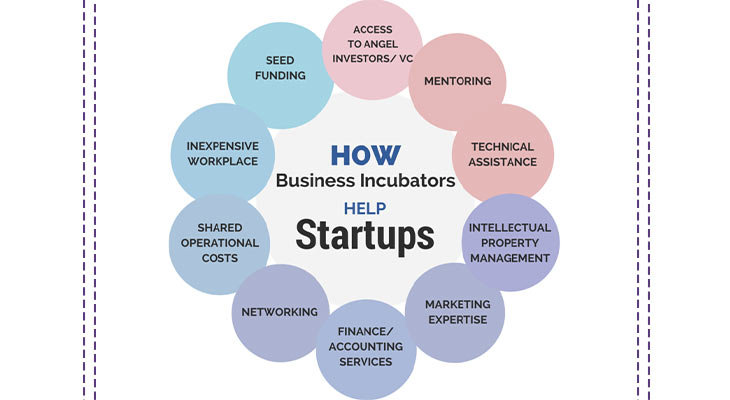
- Why is it better? This is your unique value proposition. It’s the combination of your hands-on support, your specific expertise, and the community you build.
The image below shows common value propositions for incubators. Your "Why is it better?" will be a unique combination of these, filtered through your personal expertise.
The 7-Box Canvas: Your Messaging Blueprint
The 7-Box Canvas from the article is the perfect tool to consolidate your thinking into a concrete messaging structure. It forces you to be specific.
Here’s a hypothetical example for your accelerator:
- Company type: Pre-seed B2B SaaS startups
- Target persona: Technical founders
- Product category: Accelerator Program
- Primary use case: Go from MVP to first 10 enterprise customers.
- Alternative: Doing it themselves or joining a generic, large-cohort accelerator.
- Problem: Technical founders struggle with GTM strategy, sales, and fundraising narrative. Generic accelerators don't understand the nuances of building an AI-native product.
- Differentiation: A solo GP with 10 years of pre-seed consulting experience and a CS background, providing expert, hands-on guidance on both the technical and commercial challenges of scaling an AI startup.
Test your understanding!
Take 10 minutes to fill out the 7-Box Canvas for your own planned accelerator. Don't worry about perfect wording; focus on the substance. How does your unique combination of skills and goals translate into this framework?
- Company type:
- Target persona:
- Product category:
- Primary use case:
- Alternative:
- Problem:
- Differentiation:
Show answer
There is no single "right" answer, but a strong response would look something like this, demonstrating specificity and a clear connection to your background:
- Company type: Pre-seed startups with an AI/ML-native product.
- Target persona: Founder-led teams (1-4 people) with strong technical/engineering DNA.
- Product category: Solo GP-led Accelerator.
- Primary use case: Finding product-market fit and securing a seed funding round.
- Alternative: Y Combinator (too competitive/impersonal), bootstrapping (too slow), raising a pre-seed round without support (high risk of failure).
- Problem: Brilliant technical teams often build impressive technology but fail because they can't validate a business model, articulate a compelling market narrative, or navigate the fundraising process effectively.
- Differentiation: Intensive, one-on-one guidance from a dedicated partner with both a Computer Science background and a decade of experience helping over 50 pre-seed startups with their GTM and funding strategies. This isn't mentorship-by-committee; it's a true co-piloting experience.
4. Anchoring Your Positioning
A positioning strategy is useless if it only exists in a document. As the B2B Playbook article powerfully argues, your positioning must be public and consistent.
The first and most important place for it to live is your homepage. Your website is the "source of truth" that anchors all your marketing efforts. When a founder lands on your site, they should be able to answer "Is this for me?" within seconds. Your homepage copy should be a direct reflection of the 7-Box Canvas.
This forces clarity and ensures your sales decks, outbound emails, and social media content all stem from the same core message, creating a strong and consistent brand.
Conclusion
Developing your core positioning is not a one-time exercise but the strategic foundation of your entire business. It dictates who you target, what you promise, and how you differentiate. For a solo GP, a sharp, authentic message is your most powerful tool for attracting exceptional founders.
Key Takeaways:
- Adapt the VC "investment thesis" framework (Who, What, Why, How) to define your accelerator's strategic positioning.
- Get highly specific about your ideal startup profile across multiple dimensions: industry, stage, team composition, and technology.
- Craft your marketing message using a clear framework like the 7-Box Canvas, focusing on the specific problem you solve and your unique differentiation.
- Avoid common pitfalls, especially using "AI" as a generic differentiator. Your value is in how your AI expertise helps founders.
- Anchor your positioning on your homepage to ensure it becomes the source of truth for all your communications.
Preview of the Next Lesson
With your core positioning defined, you have a qualitative plan for your accelerator. The next logical step is to build the quantitative plan. In our next lesson, we will tackle the learning outcome: "Outline a unified financial model for the accelerator and fund, projecting cash flow and sustainability." This will involve translating your strategic vision into the numbers that will guide your business operations and fundraising efforts.