
Hello! Welcome to the sixth and final lesson of our second module on the Venezuelan crisis.
In our last lesson, we used the Power/Interest Grid to map how the failed 2002 coup allowed Hugo Chávez to consolidate his power, purging opponents from the military and the state oil company, PDVSA. We concluded that this consolidation gave him a free hand to radicalize his political project.
Introduction
Today's Focus: The Transformation of PDVSA
This lesson addresses the final learning outcome for Module 2: Describe how the role and management of PDVSA, the state oil company, were altered by the Chávez administration after the 2002 oil strike.
PDVSA was once considered the crown jewel of Venezuela's economy—a world-class, professionally run state enterprise. However, the events following the 2002 coup and the subsequent oil strike fundamentally changed its DNA. We will examine how Chávez transformed it from a relatively autonomous commercial entity into a direct instrument of his political and social agenda. Understanding this shift is crucial, as the fate of PDVSA is inextricably linked to the country's economic collapse.
Recap from Last Lesson:
We saw that after the failed coup, Chávez's opponents in business and labor launched a general strike. A key part of his response was to fire 18,000 PDVSA employees, effectively breaking the company's independent power base. Today, we explore the profound consequences of that decision.
This lesson should take you approximately 60 minutes to complete.
1. PDVSA: The "State within a State"
Before we dive into the changes, it's important to understand what PDVSA was. After the oil industry was nationalized in 1976, PDVSA was established to manage it. For decades, it was run with a high degree of professionalism and technical expertise, largely insulated from day-to-day politics. It was a source of national pride and, critically, the source of most of the government's revenue. However, its autonomy and technocratic culture were often seen by Chávez as a bastion of the old elite, operating as a "state within a state."
To quickly grasp its origins and significance, please watch this short clip.
Activity 1: PDVSA's Origins (Est. 5 minutes)
Focus on: How the nationalization of the oil industry led to the creation of PDVSA and its central role in the Venezuelan economy.
2. The 2002-2003 Strike: The Breaking Point
As we touched on in the last lesson, the opposition's next major challenge to Chávez after the failed coup was a general strike, which began in December 2002. The strike's most potent weapon was the shutdown of the oil industry, led by PDVSA's own management and technical staff.
This was a direct confrontation. The opposition aimed to cripple the government by cutting off its revenue, while Chávez saw it as an act of economic sabotage led by the very "state within a state" he distrusted.
Activity 2: The Strike and the Purge (Est. 15 minutes)
Please read the following resource to understand the timeline of the strike and the government's decisive response.
Focus on:
- How the strike, led by PDVSA management, paralysed the oil industry.
- The immediate impact on oil production.
- Chávez's response: the summary dismissal of over 18,000 employees, which amounted to about 40% of the company's workforce.
This event, often called the "PDVSA purge," was not just about breaking a strike; it was about breaking the company's institutional independence forever. The immediate effect on production was stark.
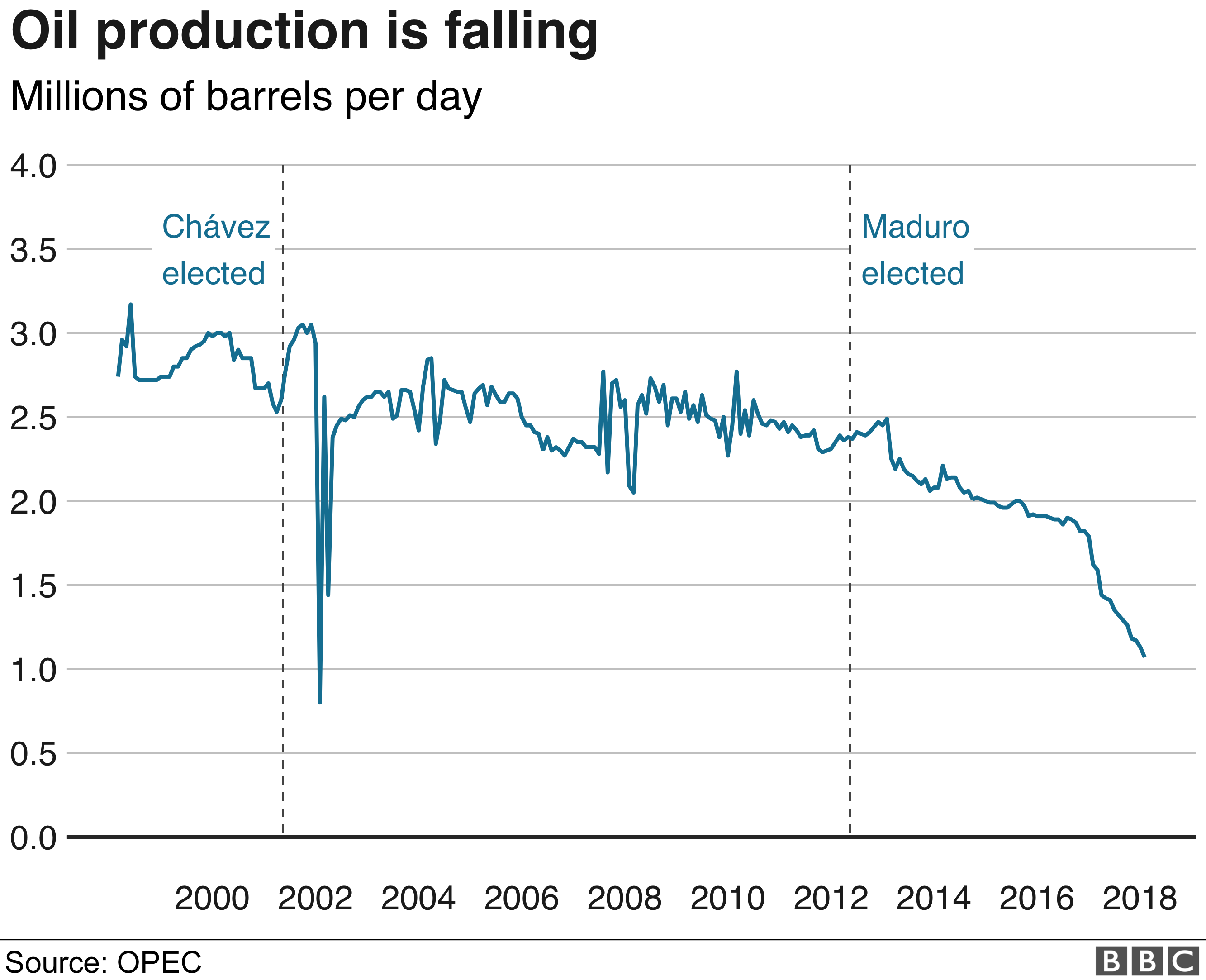
This graph shows Venezuela's oil production from 1999 to 2018. Note the sharp dip in 2002-2003, which corresponds directly to the oil strike. While production recovered partially, it never returned to its previous peak and began a long-term decline.
3. A New PDVSA: "Red, Red from Top to Bottom"
The purge of 2003 created a vacuum of expertise, but for Chávez, it was a political necessity and an opportunity. He could now rebuild PDVSA in his own image. This led to two fundamental changes in the company's management and role.
Change 1: Management by Loyalty (Politicization)
The thousands of experienced technocrats, engineers, and managers who were fired were replaced by people chosen primarily for their political loyalty to the Bolivarian Revolution. Meritocracy gave way to political allegiance.
This shift was openly articulated by the government. In 2006, the Energy Minister (and head of PDVSA), Rafael Ramírez, famously stated that "PDVSA is red [the color of Chávez's party], red from top to bottom," and that employees who did not support the president should "go to Miami."
Change 2: From Profit Center to Social Fund
With a loyalist management in place, Chávez could change PDVSA's core mission. It was no longer primarily a commercial enterprise focused on maximizing production and profit. Instead, it became the de facto treasury for the revolution, its revenues directly diverted to fund the government's ambitious social welfare programs, the Misiones Bolivarianas.
Activity 3: Remaking the Company (Est. 20 minutes)
The following resources provide more detail on this profound transformation.
-
First, watch this short video segment which succinctly summarises the change.
Focus on: How Chávez "gutted" PDVSA and repurposed it to fund social programs. -
Next, read these sections for a more in-depth look at the consequences.
PDVSA (Politicization of PDVSA and the 2002-2003 Strike; Shift to Social Spending and its Consequences)
Focus on:- The "brain drain" of skilled workers to other countries and the impact on the company's research and safety record.
- The explicit shift from an autonomous, profit-driven company to a direct government arm for social spending.
The new political identity of the company was made visible on its own infrastructure.
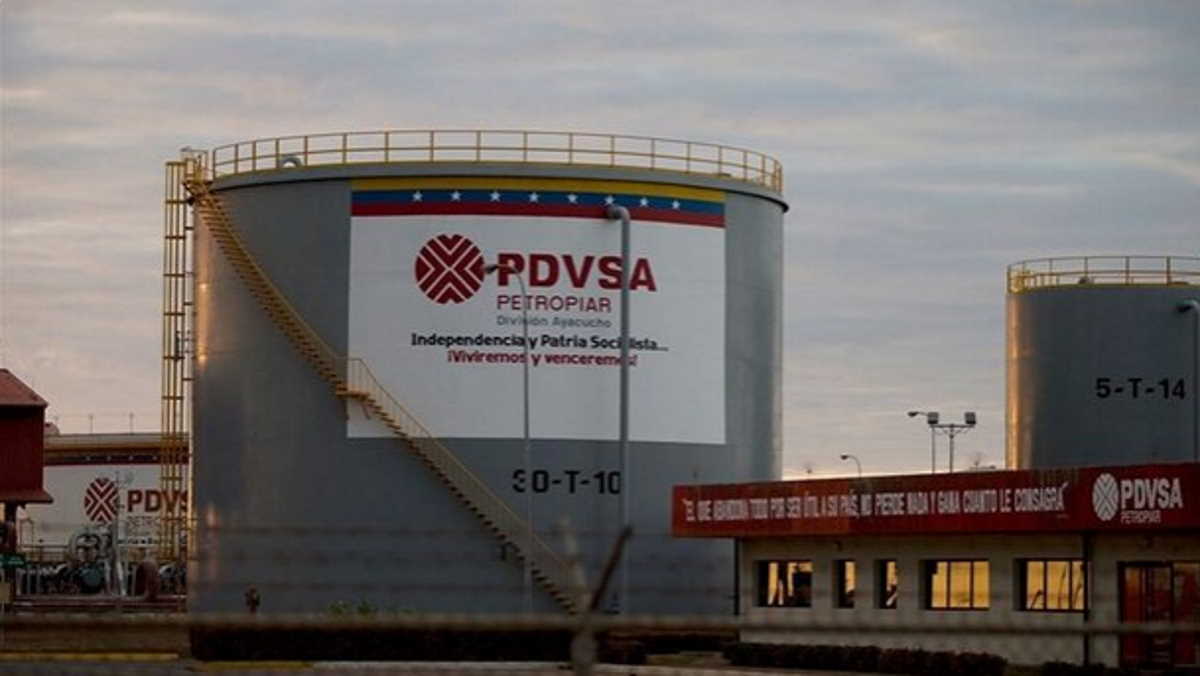
This image shows oil storage tanks at a PDVSA facility. The slogan painted on the side reads "Independencia y Patria Socialista ¡Viviremos y venceremos!" (Independence and Socialist Homeland! We will live and we will win!). This is a powerful visual symbol of PDVSA's transformation into an ideological and political tool of the state.
4. A Critical Policy Choice: Spending vs. Investing
The decision to use PDVSA as a social fund had enormous short-term political benefits for Chávez, cementing his popularity. However, from a policy and economics perspective, it was a fateful choice with devastating long-term consequences.
By diverting oil revenues directly to social spending, the government starved PDVSA of the capital needed for reinvestment. Oil infrastructure requires constant, massive investment to maintain existing production levels, let alone develop new fields. Without it, a decline is inevitable.
This approach stands in stark contrast to how other oil-rich nations have managed their wealth. The comparison with Norway is particularly instructive and relevant to your background in policy analysis.
Activity 4: A Tale of Two Oil States (Est. 10 minutes)
Please watch this segment comparing Venezuela's approach to its oil wealth with that of Norway.
Focus on: The key difference between Venezuela's strategy of direct spending and Norway's strategy of creating a sovereign wealth fund to ensure long-term sustainability.
This comparison highlights the core of the issue: Venezuela chose to spend its oil income, while Norway chose to invest it. This made the entire Venezuelan economic model dependent on high oil prices and the operational capacity of a deteriorating PDVSA.
Conclusion
Key Takeaways
- The 2002-2003 oil strike was the catalyst for a complete transformation of PDVSA.
- Chávez's response—firing nearly 19,000 employees—purged the company of its technical expertise and institutional independence, a phenomenon known as "brain drain."
- Management was altered by replacing experienced professionals with political loyalists, shifting the company's culture from meritocratic to political.
- PDVSA's role was altered from a profit-driven commercial enterprise to a direct funding arm for the government's social programs (Misiones), effectively becoming a political piggy bank.
- This policy of diverting revenue to spending rather than reinvesting in infrastructure crippled the company's long-term operational capacity and made the entire Venezuelan economy hyper-dependent on fluctuating oil prices.
Preview of the Next Module
We have now concluded Module 2, having traced Chávez's rise and consolidation of power. You've seen how he took control of the state's key institutions, culminating in the transformation of PDVSA.
In our next lesson, we will begin Module 3: The Economics of '21st Century Socialism'. We will examine the specific economic policies—such as price controls—that were funded by this newly captured oil wealth and analyze their direct impact on the Venezuelan economy using basic economic principles.
Can't find a good explanation? Sign up and we'll make it for you
Sign up